
Business
SriLankan Airlines clarifies issues surrounding aircraft leases


SriLankan Airlines Ltd. welcomes and respects the rich debate in the public space on matters concerning the Operation of the Airline in General and the ‘Notice of Procurement’ for the Lease of Aircraft in specific. The Board and Management are of the opinion that the discussion on these topics would benefit from more full information.
At the outset, we believe that the response to the following question would set the foreground for a more informed analysis of the areas of interest.
What was the Rationale of the Proposal from Management, and Approval by the Board, to Explore Aircraft Leasing Options in the Global Market?
The proposal from Management was primarily focused on the replacement of Twelve (12) expiring/expired aircraft leases. Nine (09) Aircraft will leave the fleet commencing year-end through to 2025 and Three (03) have left the fleet already during the pandemic period.
Not taking timely action to explore the global market for lease options would effectively translate to scaling down the Airline through route cancellation. In the absence of a Direction or Decision by the Shareholder (Government of Sri Lanka – GoSL) to Scale Down or Shut Down the Airline (along with the dire consequences of such action to debt holders including the State Banks), such failure to act would have been a dereliction of duty on the part of the Board of Directors.
The interplay between Sri Lanka’s Foreign Exchange Crisis and the Operational strategies of SriLankan Airlines was also an important consideration. This topic is dealt with in more detail through specific questions and answers, but the salient fact is that SriLankan, with 85% of its earnings in US Dollars, is a Foreign Exchange contributor to the Sri Lankan Economy (similar to an Export Business). Shrinking the Foreign Exchange earning capacity of the Airline through fleet contraction would in fact be negative to the Country’s Foreign Exchange situation.
The Management proposal was also centered on the fact that the lease market rates are very low at present (savings of 20%-40% relative to the current fleet). The Airline also has the further opportunity to significantly reduce operating costs through the securing of Aircraft which are more fuel-efficient and cheaper to maintain. These are all factors that would improve the USD Cash Flows of the Airline.
The Management additionally sought approval to explore the viability of expanding the fleet by up to Nine (09) Aircraft during the period 2023-2025 to exploit forecasted tourism demand in the years ahead at lower lease and operating costs.
The above and other salient subjects and discussion points are further addressed through the Specific Questions which follow.
At this stage, has SriLankan Airlines Committed to the Lease of (even a single) Aircraft – No
Even at a future stage of the process, if for whatever reason the Airline wishes not to proceed with Leasing Aircraft, would the Airline be still compelled to Lease 21 Aircraft? No, the Airline would be free to Lease as few or as many aircraft as it wishes or to cancel the entire process. The entire process is on a Strictly Non-Binding basis.
Was the Intent of the Airline to Lease Brand New Aircraft? No, the Airline’s focus was on exploring the Global Market for Used Aircraft, to significantly reduce its operating cost structure.
Would Aircraft leases burden the State? No, all leases will be funded through the company’s foreign currency cash flows.
When would the Airline need to take a Decision whether (or not) to Lease Aircraft – and the related quantity, aircraft type, aircraft age, etc.? From the Airline’s perspective, it would be ideal if the Procurement Process was progressed to the level of decision making by October 2022. Failure to do so may result in the cancellation of several routes from March 2023 onwards and the contraction of revenues.
Does SriLankan Airlines draw on Foreign Exchange Resources of the Sri Lankan Economy? No, SriLankan with 85% of its revenues in foreign currency is a net foreign currency earner under normal operating conditions. It should be noted, however, that the Airline Business is susceptible to major disruptions such as the pandemic or a country specific situation that deters tourism and international travel. s
Should SriLankan Airlines consider Replacement of Expiring Leases and Aircraft Additions when Sri Lanka was facing a Foreign Exchange Crisis? Since the Airline’s operations generate foreign currency inflows, shrinking the fleet and resulting foreign currency cash flows will have a negative impact on the country’s foreign exchange balances, while growing the foreign currency cash flows would have a positive impact. The Airline should therefore continue to evaluate the business case for Aircraft Replacement and the very selective addition of new cash generating routes, in the best interest of the Company and the Shareholder.
What are the steps which need to be completed for the Board to be able to make a recommendation to the Shareholder (Government of Sri Lanka) by the end of 2022?
Identification of Bona-Fide Bidders for Aircraft Leasing through a transparent process
Calling for lease Proposals from eligible bonafide bidders through a transparent process
Evaluation of the bids
Preparation of a Recommendation in terms of Timing, Quantity, Aircraft Type, Age and specifications.
Is it normal practice to make a public announcement of the intent to lease aircraft? It is Best Practice in the interest of Full Transparency and to allow any Potential Lessor to participate. This level of transparency we believe is a significant enhancement to the Airline’s Lease procurement process and should be a consistent practice within the overall governance framework going forward.
What is the current status of the Process? The current stage (Notice of Procurement) was limited to the Submission of Credentials to enable the identification of Bona Fide Bidders with requisite certification and Aircraft Supply over the period up to 2022. No pricing information was called for at this stage. The next stage would be to issue an RFP document to the Qualified Bona Fide Bidders. Based on the suggestion of the COPE, the progress to the next phase of Price Exploration has been deferred by 3 months.
What considerations would be taken into account prior to deciding whether or not to lease aircraft, and quantity, price and aircraft type, etc?
Business Case formulation and evaluation for each and every Aircraft Lease (whether a replacement for an expiring lease or for route addition).
Financial Situation of the Airline at the time under multiple scenarios
Macro-Economic Conditions at the time and projected going forward
The Business Case Evaluation for Aircraft Replacement and/or Addition would necessarily have to factor in the Risk of Exceptional Situations and their mitigation.
What other considerations are relevant to the decision to survey the Global Aircraft Leasing Market?
The Aircraft Leasing market is currently very favorable, with a high likelihood of SriLankan Airlines being able to secure savings of 20%-40% relative to lease rates being paid at present.
The additional opportunity to significantly reduce operating costs through the securing of Aircraft which are more fuel-efficient and cheaper to maintain.
The Notice of Procurement points to the Potential number of Aircraft to be Leased up to the Year 2025 as 21. How is this number derived? The quantity being explored includes 12 replacement aircraft. Nine (09) Aircraft will leave the fleet commencing year end through to 2025 and Three (03) have left the fleet already during the pandemic period. The Management is also exploring the market conditions for a further 9 Aircraft during the period up to 2025 in line with Tourism and International Travel Forecasts published by reputed International Organisations such as IATA (International Air Transport Association).
Sri Lanka announced the Selective Suspension of External Debt Servicing on 12th April – what impact would this have? The downgrade of Sri Lanka’s ratings to default levels is likely to result in potential lessors adding a risk premium to pricing levels in the market. It is nevertheless likely that Lease Costs inclusive of such premium would remain more favorable than lease rates paid by the Airline at present.
To what extent was the Board aware of the Economic Crisis in Sri Lanka
The Board was fully aware of the deteriorating economic conditions in Sri Lanka, which have impacted day to day operations and have been extensively deliberated. A large number of strategic initiatives were launched to mitigate the impact of the crisis on the various dimensions of the Airline’s operation. The strategies adopted by the Airline enabled it to deliver an Operating Profit for the January-March Quarter notwithstanding the worsening economic conditions
With specific reference to the Commencement of a Process to Investigate Pricing of Aircraft leases, for reasons explained above, there was no reason to hold back such an initiative since circa 50% of the fleet leases are expiring and initiatives targeting Direct Cost Savings and the continuation and growth of foreign currency Cash Flows, will directly benefit the company and the Shareholder (GoSL).
The Notice of Procurement was released on the 10th of April 2022. As stated before the COPE, the Company had no knowledge of the intent of the government to announce a Selective Suspension of External Debt Servicing on 12th April. As explained above, this would have some impact on Lease Prices, but it is likely the Airline would have the opportunity to benefit from lower (than current) lease prices regardless.
What is the Financial Situation of SriLankan Airlines?
Promisingly, the Airline has recorded a Group Operating Profit in US Dollar Terms for the January – March Quarter of 2022. This was the first profitable Quarter (in USD terms) after 6 Years. Significantly it is also the first 4th quarter profit (in USD terms) since 2006.
The Airline has, however, over a long period of time, accumulated an unsustainable level of debt which currently stands at USD 878 Mn.
Significantly, and notwithstanding the Operating Profitability achieved in US Dollar Terms, the carriage of USD Debt would, due to the recent devaluation of the LKR by over 50% result in the recording of a non-cash exchange loss (due to revaluation of debt) of circa LKR 146 Bn in the LKR statutory financial statements.
A majority of this debt is held by the State Banks and the Ceylon Petroleum Corporation (CPC). Other significant debt includes a Government Guaranteed USD Bond for USD 175 million reissued in 2019.
Over the Past Year, based on enhanced operating profitability and Foreign Exchange Cash Flows, the Airline has commenced paying down debts to CPC, in addition to ensuring timely servicing of other long-term debt.
What were the main drivers of improved operational performance
Operating Profit during December 2021 and January to March 2022, has been achieved through a two-pronged strategy – Cost Restructuring and Opportunistic New Revenue Capture based on new routes, and adapting capacity to demand for both passenger and cargo traffic
Cost Restructuring at SriLankan is based on several phases and the Initiative to Rebase the Cost of Leases to Current (favorable) prices is a critical phase moving forward
What was the Impact of the Pandemic on the Global Industry and SriLankan Airlines in particular?
Globally, the devastating impact of the Pandemic resulted in 26 Airlines entering restructuring and 37 Airlines being shut down
Relative to the global industry, SriLankan has fared reasonably well, with a post-pandemic operating structure that provides a foundation for profitable operations.
Several factors made this possible:
Sacrifices made by the employees of the Airline, a majority of whom took deep salary cuts over an extended period.
Equity injection by the Shareholder of LKR 45.7 billion in 2020.
Successful Cost Restructuring (which brought down operating costs by USD 100 Million during the pandemic) and Exploitation of Market Opportunities – Cargo Services, Repatriation Services, New Demand Capture – for example between India and Australia.
Shouldn’t SriLankan Airlines be Shut Down? Sold? Liquidated and Restarted etc.?
These are valid questions. The critical issue which constrains the Options available is the fact that insolvency or bankruptcy at SriLankan would have a serious impact on the State Banks and CPC which hold a bulk of the historical debt.
Restructuring or Capitalisation of debt and/or liquidation and restart (as some Airlines have done) are decisions that need to be taken by the Shareholder (Government of Sri Lanka) and are beyond the purview of the Board. The Board has however provided the Shareholder with several going forward scenarios along with envisaged outcomes and impacts.
In the absence of such direction by the Shareholder, it is the fiduciary duty of the Board of Directors to maximize the operating performance of the company.
The focus of the Board and Management has been to achieve Profitable Operations and to Commence Paying down long outstanding debt.
How is the Board of Directors Appointed and Remunerated?
Board members are appointed by the Shareholder of the Airline – the Ministry of Finance
The current Board of the Airline was appointed in January 2020 shortly prior to the Pandemic
At the point of appointment, current board members resolved not to accept any remuneration or benefits whatsoever.
Board members extended time and effort towards the management of the Airline on a purely honorary basis.
To be continued

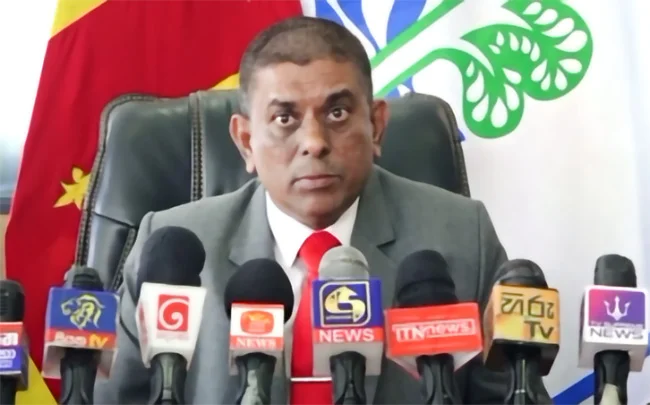
Parliament yesterday took up for debate and vote a sweeping overhaul of Sri Lanka’s main environmental law, in what the Central Environmental Authority (CEA) hopes will become the country’s first major legal reset on environmental protection in 38 years.
The National Environmental (Amendment) Bill, taken up for its final reading in the House, is being seen by environmental officials as a critical attempt to modernise an outdated legal framework that has struggled to keep pace with mounting pollution, hazardous waste, ecological degradation and the environmental fallout of unplanned development.
In a sign of the importance attached to the Bill, senior CEA officials remained in parliament throughout the day as the debate unfolded, amid growing expectations within the environmental sector that the revised law would strengthen the Authority’s hand in regulation, enforcement and environmental planning.
CEA chairman Prof. Tilak Hewawasam described yesterday as a “very special day” for the Authority and said the proposed amendments were long overdue.
“Yesterday was a very special day for the Central Environmental Authority. The Bill to amend the National Environmental Act was read in parliament for the final time, debated and voted on. This was the third revision of the Act and came 26 years after the previous amendment. While the 2000 revision was only a minor one, the 1988 amendment was a comprehensive reform that provided the legal framework and tools such as the EPL and EIA for environmental protection and environmental management in Sri Lanka. After 38 years, another comprehensive revision has now been proposed to Parliament, Hewawasam told The Island Finacial Review.
He said the CEA leadership and senior staff had closely followed the proceedings, hopeful that parliament would clear the Bill and pave the way for a stronger legal framework for sustainable development.
“We were very eager to see this revised Act passed and enacted by parliament, as it will provide the legal framework needed to drive and accelerate the country’s sustainable development, he said.
The push for reform comes at a time when the country’s environmental governance framework is under increasing strain from industrial pollution, mounting solid waste, chemical hazards, encroachment into environmentally sensitive zones and the widening conflict between economic activity and ecological safeguards.
Environmental officials say the revised law is intended to close long-standing legal and institutional gaps that have weakened environmental enforcement and slowed regulatory action.
Among the major changes proposed are provisions to legally recognise Strategic Environmental Assessments (SEA), strengthen the CEA’s authority to issue binding orders instead of merely recommendations, tighten controls on hazardous waste and chemicals, expand producer responsibility in waste management, and empower authorities to act more decisively against unauthorised constructions and environmentally harmful activities in protected and ecologically sensitive areas.
By Ifham Nizam

Residents of La Serena recently came together in a spirit of quiet reflection and shared devotion for a Vesak Bhakthi Gee recital, transforming the serene beachfront setting into an evening of song, mindfulness and gentle celebration.
The programme, organised for residents and invited guests, featured a collection of Buddhist devotional songs that captured the essence of Vesak, fostering a sense of inner peace and spiritual fulfilment. Voices joined in harmony, creating a deeply moving atmosphere rich in meaning and memory.
With around 60 per cent of La Serena residents being expatriate Sri Lankans, the event was particularly evocative. One resident observed that having lived overseas for many years, they had missed Sri Lankan cultural and religious celebrations, making the celebration especially meaningful.
Beyond the music, the gathering strengthened the bonds of community that define life at La Serena, encouraging connection, conversation and companionship among residents. Rooted in Sri Lankan cultural and religious tradition, the event reflected the resort’s commitment to enriching emotional and spiritual well-being through thoughtfully curated experiences.
La Serena is a purpose-built beachfront retirement resort in Uswetakeiyawa, offering a secure and dignified environment for assisted living. Combining the privacy of independent living with access to personalised care and shared amenities, it fosters a vibrant, connected lifestyle where residents can enjoy comfort, companionship and peace of mind.

Sarvodaya Development Finance PLC (SDF) delivered a strong financial performance for the year ended 31 March 2026, recording significant growth in income, profitability, portfolio expansion, and asset quality while continuing its commitment to responsible and inclusive finance.
For the financial year under review, SDF reported total income of LKR 6.42 billion, a year-on year increase of 46.8%. Interest income rose by 43.8% to LKR 5.85 billion, driven by business expansion and growth in earning assets. Net Interest Income increased by 35.4% to LKR 3.58 billion, while Total Operating Income grew by 40.8% to LKR 4.15 billion, reflecting the Company’s ability to generate strong and sustainable earnings.
Profitability improved substantially during the year. Operating Profit before Tax on Financial Services increased by 59.9% to LKR 1.82 billion, while Profit Before Tax rose by 63.8% to LKR 1.36 billion. Profit for the Year increased by 73.1% to LKR 820.1 million compared with LKR 473.8 million in the previous year. Earnings per share improved to LKR 5.48, demonstrating enhanced value creation for shareholders.
The Company’s balance sheet expanded significantly, with total assets increasing by 65.8% to LKR 37.37 billion as at 31 March 2026. Financial assets at amortized cost, including loans and receivables, grew by 67.2% to LKR 20.60 billion, while lease rental receivables increased by 34.0% to LKR 9.19 billion. SDF also strengthened its funding profile through debt securities, including Sustainable Bonds, amounting to LKR 2.09 billion.
Commenting on the performance, Chief Executive Officer, Nilantha Jayanetti stated, “The results achieved during FY2025/26 reflect the strength of our business model, disciplined growth strategy, and commitment to delivering responsible financial solutions. We remain focused on creating sustainable value while supporting communities and enterprises across Sri Lanka.”
SDF maintained a strong capital position, with a Tier 1 Capital Adequacy Ratio of 15.48% and a Total Capital Adequacy Ratio of 22.13%, both comfortably above regulatory requirements. Asset quality also improved, with the Gross Stage 3 Loans Ratio declining to 4.93% from 7.88% and the Net Stage 3 Loans Ratio improving to 2.94% from 5.70%. The Stage 3 Impairment Coverage Ratio strengthened to 42.60%.
Operational efficiency improved as the Cost-to-Income Ratio reduced to 42.99%, while Return on Equity increased to 19.60%. Reflecting its stronger financial position, SDF’s external credit rating was upgraded to Lanka Ratings (SL) BBB- Stable.
With a network of 56 branches, SDF remains committed to advancing financial inclusion, supporting sustainable enterprise growth, and contributing to Sri Lanka’s long-term socio-economic development.

Vinicius nets twice and Neymar returns as Brazil ease by Scotland

Two powerful quakes shake Venezuela

Showers will occur in the Western, Sabaragamuwa and North-western provinces and in Galle, Matara, Kandy and Nuwara-Eliya districts

Proposed EPF-ETF merger harmful to private sector workers – FSP

Opposition argues that National Environment Amendment Bill is unconstitutional

ITAK makes representations to BJP TN President

‘Dates have the highest sugar content to fight Coronavirus’

Sunday Island 27 December – Headlines

#SundayIsland 17th December – Headlines

Sunday Island – 28th March

Sunday Island Headlines – 21 March

Sunday Island – 21st February – Headlines
-

 News6 days ago
Creditor receives USD 2.5 mn as Lankan public bears loss from theft of Treasury funds
-

 News5 days ago
Creditor not yet paid
-

 News5 days ago
Consumers bearing 22% tax burden despite 18% VAT claim: Dr. Harsha de Silva
-

 Features4 days ago
Nanda Pethiyagoda Wanasundara as three generations of family saw her
-

 Features3 days ago
Sri Lanka developing independent hydrographic capabilities
-

 Opinion6 days ago
SriLankan Airbus struck by lightning
-

 Latest News3 days ago
Sooryavanshi thumps fastest List A fifty as India A win tri-series
-

 Editorial4 days ago
Fuel crisis: Beyond price debate