
Latest News
Sri Lanka’s spinners, Pakistan’s ODI form, off-field cuteness among things to watch out for

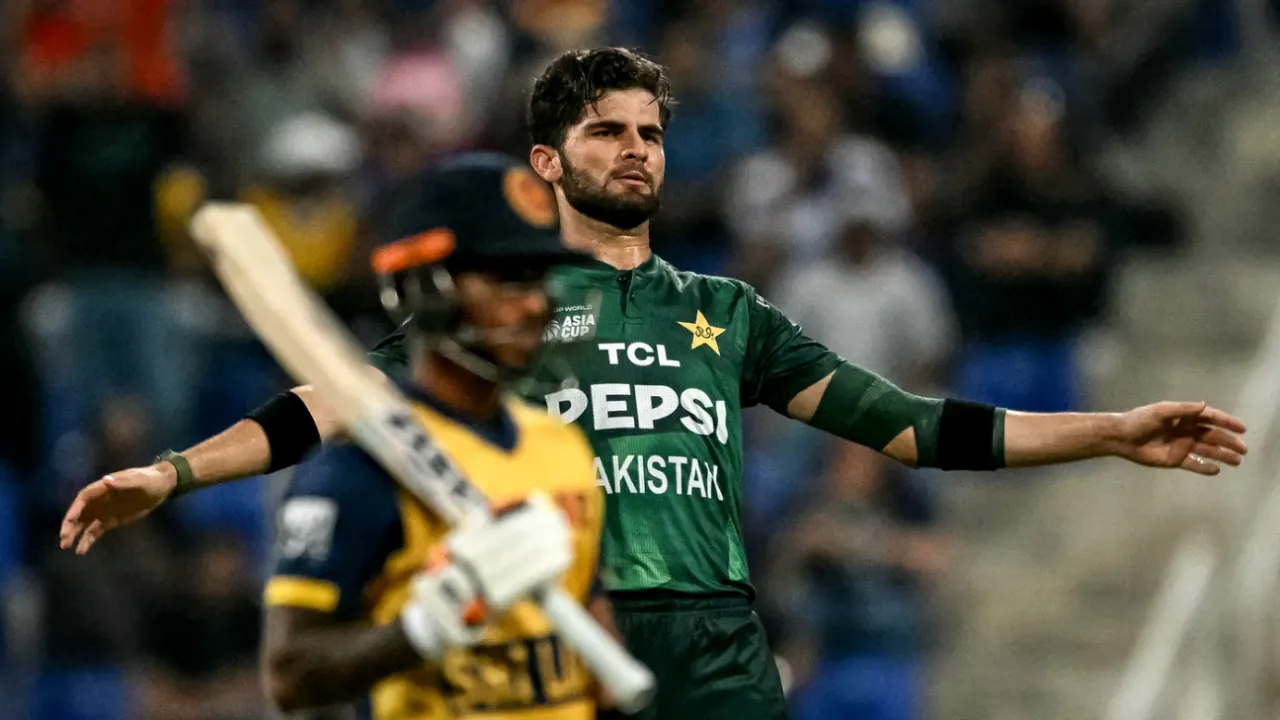
So we have arrived at another bilateral ODI series. Believe it or not, these were all the rage back in the first half of the 2010s – used so frequently as schedule-filler, to bulk up tours. T20Is and T20 leagues serve that purpose now, and the ODI World Cup is not till 2027. Still, this is a chance for Pakistan and Sri Lanka to do some building towards the next big event. Here are five things to watch for the three-match series starting on today.
What is clear is that both Sri Lanka and Pakistan are middling ODI sides. The rankings are some reflection – Sri Lanka are currently fourth on the ODI charts, and Pakistan are fifth, and neither side has had a glut of ODIs this year. The difference, though, is that Sri Lanka appear to be an ODI outfit on the rise, having won seven of their 10 matches this year. Pakistan have lost 10 of their 14, and had also crashed out of their “home” Champions Trophy.
There is a little recent uptick for Pakistan, however. They sneaked a victory in the first ODI against South Africa earlier this month, then strode to a thumping win over them in the third ODI to seal a 2-1 series win. That was against a depleted South Africa, and Sri Lanka have sent a full-strength squad.
Still, for a team that was looking for inspiration, perhaps their first series under Shaheen Shah Afridi has provided a new beginning.
So fragile have their runs of form been in the last couple of years, you praise Pakistan batters at your peril. But so far, young left-hand batter Saim Ayub has been putting together the makings of a good ODI career. He has only played 15 innings in the format so far, so we are at the very early stages. But he averages 50.85, and crucially has a strike rate of exactly 100, having hit 712 runs so far.
Against South Africa, he made scores of 39, 53, and 77 off 70 in the third ODI. This is the kind of consistency that could prove helpful in concert with Fakhar Zaman’s more erratic returns from the other end. This will be Ayub’s first series against Sri Lanka.
While Sri Lanka have won three series this year , against Australia, Bangladesh, and Zimbabwe, only the Zimbabwe win came away from home. Generally, over the course of the last two years, as they have rebuilt under captain Charith Asalanka and coach Sanath Jayasuriya, much of their limited-overs success has come at Sri Lankan venues still famed for the turn their tracks offer. The surfaces in Pakistan will likely be more batting-friendly, which will test Sri Lanka’s spinners in particular. This is the less-favoured of Wanindu Hasaranga’s formats, and Maheesh Theekshana has been far from his best in 2025. Sri Lanka will need them to assert themselves.
By his own increasingly-high standards, 2025 has been just a middling year for Pathum Nissanka in ODIs. In ten innings, he has hit one century and two fifties, and has an average of 32.40, and a strike rate of 84.81. He has been expanding his game in other formats, however. He has hit two Test hundreds in just three innings this year, and his most-recent T20I knock was an outstanding 107 off 58 balls against India. If the surfaces in Rawalpindi are on the flatter side, Nissanka may be a serious force.
Asia’s rivalries are packed with machismo and cheap political posturing these days, but one that continues to buck the trend is the Sri Lanka-Pakistan relationship. In their match in the Asia Cup, Abrar Ahmed mimicked Hasaranga’s wicket celebration (which Hasaranga had himself pinched from football player Neymar Jr.), and Hasaranga mimicked Abrar’s wicket celebration in return. Although this had the potential to turn tense, the players met after the match, and were seen animatedly bro-ing out together (this is the scientific term).
That clip of them shaking hands and half-embracing then became a little piece of viral “brotherhood” content, in an otherwise acrimonious and shameful Asia Cup. The general vibe of Pakistan vs Sri Lanka fixtures over the last 15 years has been that although there can be on-field altercations, the tension seems to almost invariably give way to off-field cuteness.
[Cricinfo]

Six American soldiers were killed in an Iranian strike against a military facility in Kuwait on Sunday, the US has confirmed.
US Central Command originally said three soldiers died in the incident but officials confirmed on Monday that the death toll had doubled, after one person succumbed to their injuries and two more bodies were found in the rubble.
Defence Secretary Pete Hegseth confirmed a US bunker in Kuwait was hit after a missile was launched during Iran’s original retaliation evaded air defences.
The six deaths are the only fatalities confirmed by the US military since it launched a new war against Iran with Israel.
Hegseth said a “powerful weapon” struck a “tactical operations centre that was fortified”, without providing further details about the site’s location.
Three US military officials with direct knowledge of Iran’s attack told the BBC’s US partner CBS News that the service members were in a makeshift office space in Kuwait.
They questioned whether the building had been adequately fortified, telling CBS News a trailer was being used as an office, with 12ft (3.7m) steel-reinforced concrete barriers to shield it.
The US has a long-standing defence relationship with Kuwait, and more than 13,000 American soldiers are stationed in the Gulf nation.
Iran has responded to attacks against it by launching missiles at Gulf countries allied with the US. Bahrain, UAE, Saudi Arabia, Oman and Qatar have all also seen strikes.
Separately in Kuwait, the US confirmed three fighter jets were downed after what it described as an incident of “friendly fire” on Monday.
Footage showed the jets spiraling to the ground. The pilots involved all managed to eject and survived the incident.
Iran state media claimed the Iranian military had shot down the jets, without providing evidence.
Latest News
Israel attacks presidential office in Tehran as reported death toll in Iran rises to 787
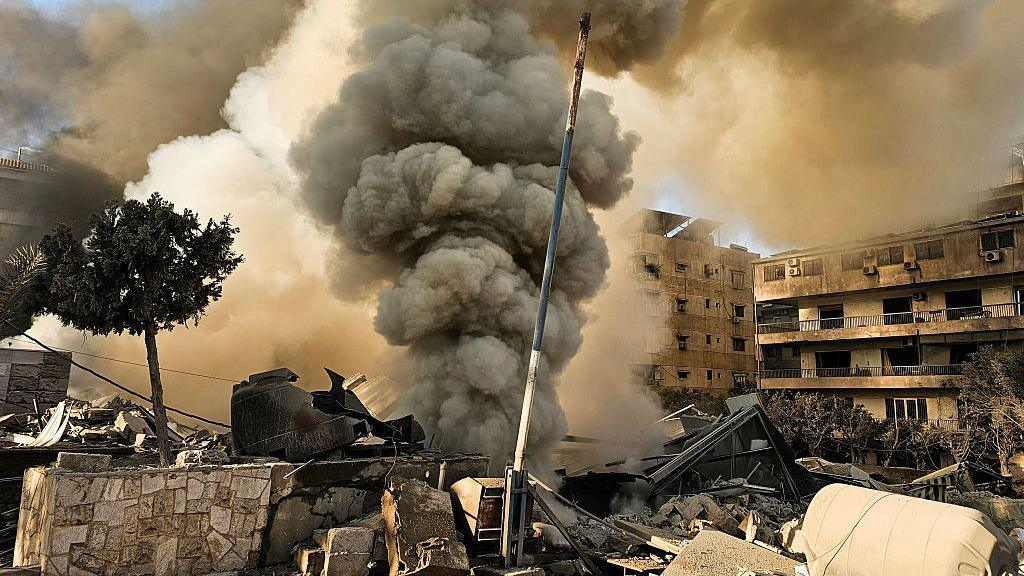
Israel says it has carried out new attacks on Iran’s “leadership compound” in Tehran, including the presidential office
One reporter inside Iran says ‘every part” of Teheran has been hit since Saturday, while new pictures show explosions in the east of the city.
The number of people killed since US-Israeli attacks began has reached 787, the Red Crescent says.
Elsewhere, Israel says ground troops will ‘advance and seize aditional strategic areas in Lebanon in order to stop attacks on Israel
The US embassy in Riyadh, Saudi Arabia, has been hit by two drones, seemingly from Iran
And the gas price on international markets has risen again – up 30% at one point o Tuesday morning, after 50% increases on Monday
Meanwhile, US President Donald Trump has again criticised Keir Starmer for initially denying access to British bases.
The US and Israel struck Iran on Saturday, killing Supreme Leader Ayatollah Ali Khamenei. Iran has retaliated with a wave of attacks across the region. On Monday, the US told Americans across the Middle East to “depart now”.
[BBC]

United States President Donald Trump has said the plan for the Iran war initially “projected four to five weeks”, adding the US military has the “capability to go far longer than that”.
Speaking on Monday from the White House, Trump outlined his administration’s justification for going to war against Iran alongside Israel, saying that Iran posed “grave threats” to the US, even as he again claimed that US strikes on Iran in June of last year led to the “obliteration of Iran’s nuclear programme”.
Trump also said that Iran’s ballistic missile programme was “growing rapidly and dramatically, and this posed a very clear, colossal threat to America and our forces stationed overseas”.
“The regime already had missiles capable of hitting Europe and our bases, both local and overseas, and would soon have had missiles capable of reaching our beautiful America,” Trump said, repeating a claim his administration has repeatedly made in the run-up to Saturday’s attack, for which US government officials have not provided any evidence.
The statements were significant, with Trump appearing to pivot from claims that Iran posed an immediate threat to the US. Instead, he characterised the Iranian government as potentially posing a longer-term threat.
“The purpose of this fast-growing missile programme was to shield their nuclear weapon development and make it extraordinarily difficult for anyone to stop them from making these – highly forbidden by us – nuclear weapons,” Trump said.
“An Iranian regime armed with long-range missiles and nuclear weapons would be an intolerable threat to the Middle East, but also to the American people,” Trump said.
“Our country itself would be under threat, and it was very nearly under threat,” Trump said.
Under both US domestic law and international law, attacks on a foreign country must be in response to an immediate threat. Under the US Constitution, only Congress can declare war, while the president can act unilaterally in response to an imminent threat.
Trump has released two video speeches since the US and Israel began their attacks, including saying in a recorded message released yesterday that Iran had waged a “war against civilisation”.
He also predicted there would likely be more US military personnel deaths after the Pentagon confirmed the first three members of the military killed in the Middle East on Sunday.
To date, at least 555 people have been killed in Iran, 13 have been killed in Lebanon, 10 killed in Israel, three killed in the United Arab Emirates, and two killed in Iraq, with Oman, Bahrain and Kuwait each reporting one death amid Iranian retaliations in the region.
On Monday, shortly after the Pentagon confirmed a fourth member of the US military had died, Trump did not give a clear timeline for the operations.
He said “Right from the beginning, we projected four to five weeks, but we have capability to go far longer than that.”
Trump added that the military had originally projected four weeks to “terminate the military leadership” of Iran.
To date, Iran’s Supreme Leader Ali Khamenei and several other top officials, including the head of Iran’s Islamic Revolutionary Guard Corps (IRGC), have been confirmed killed in US-Israeli strikes.
“We’re ahead of schedule there by a lot,” Trump said.
Trump spoke shortly after Pentagon chief Pete Hegseth took questions from reporters for the first time since the attacks began.
Hegseth appeared to respond to concerns from Trump’s own “Make America Great Again” (MAGA) movement about entering into a prolonged war.
Trump had vowed to end US interventionism during his presidential campaign, promising to focus on domestic needs over adventurism abroad.
“This is not Iraq. This is not endless,” Hegseth said.
“This operation is a clear, devastating, decisive mission. Destroy the missile threat, destroy the navy, no nukes,” he said.
“Israel has clear missions as well, for which we are grateful, capable partners,” he said, without defining Israel’s mission.
Israeli Prime Minister Benjamin Netanyahu has long called for the toppling of Iran’s government
Hegseth further vowed to fight the war “all on our terms, with maximum authorities, no stupid rules of engagement, no nation-building quagmire, no democracy building exercise, no politically correct wars”.
[Aljazeera]
Six US soldiers killed in Iranian strike on Kuwait base

Israel attacks presidential office in Tehran as reported death toll in Iran rises to 787

Attorney At Law S K Sangakkara pasess away

SriLankan Airlines Update on Middle East Operations

Trump says Iran war projected to last 4 to 5 weeks, could go ‘far longer’

Qatar downs two Iranian fighter jets as conflict widens

‘Dates have the highest sugar content to fight Coronavirus’

Sunday Island 27 December – Headlines

#SundayIsland 17th December – Headlines

Sunday Island – 28th March

Sunday Island Headlines – 21 March

Sunday Island – 21st February – Headlines
-

 Opinion5 days ago
Jamming and re-setting the world: What is the role of Donald Trump?
-
 Features5 days ago
An innocent bystander or a passive onlooker?
-

 Features6 days ago
Ratmalana Airport: The Truth, The Whole Truth, And Nothing But The Truth
-

 Features7 days ago
Building on Sand: The Indian market trap
-

 Business7 days ago
Dialog partners with Xiaomi to introduce Redmi Note 15 5G Series in Sri Lanka
-

 Opinion7 days ago
Future must be won
-

 Business6 days ago
IRCSL transforms Sri Lanka’s insurance industry with first-ever Centralized Insurance Data Repository
-

 Opinion2 days ago
Sri Lanka – world’s worst facilities for cricket fans