
Sports
Sri Lanka’s RPS blueprint

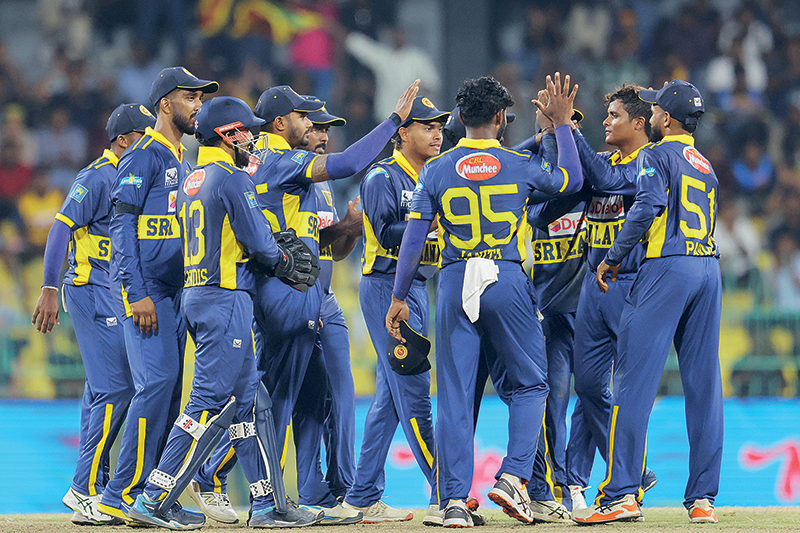
Sri Lanka’s home ODI record since the wreckage of the 2023 World Cup has been a study in quiet efficiency. Ninth place in India and an early Champions Trophy exit could have sent the wheels spinning, but instead the hosts have responded by turning their backyard into a fortress. Since then, Sri Lanka have played seven ODI series at home and won all of them. These are not against minnows, but against the heavyweights, including World Cup finalists Australia and India. Beat England again on Saturday and within the space of 18 months, the so-called Big Three would have been ticked off one by one.
Much of this good work has been done at the R. Premadasa Stadium, a venue that has become Sri Lanka’s tactical sweet spot. There are murmurs, as always, about doctored pitches handing the hosts an unfair edge, but that argument doesn’t quite stand. The current England series has been played on honest strips and in any case, this is no longer the Sri Lankan line-up of old, blessed with nimble feet and wrists made for slow bowling. Apart from Kusal Mendis, the current batting group struggles badly against spin, particularly wrist spin, which explains why Pakistan doubled up with leg-spinners recently and why England rolled out Adil Rashid and Rehan Ahmed in the opening ODI.
The RPS blueprint is fairly straightforward: bat first, post something in the region of 275, then squeeze. Patience is the currency here. After the 30th over of the chase, the surface begins to grip, the ball talks a little more and visiting sides often find themselves strangled by scoreboard pressure rather than outright turn.
The opening win against England, however, didn’t quite follow the script. Sri Lanka’s seamers sprayed it around towards the end, struggling for line and control, perhaps guilty of overcooking the wide yorker. That is where solid coaching support becomes priceless, brains in the dugout to complement Sanath Jayasuriya, not attention-seekers chasing social media applause.
The old saying goes that the ends don’t justify the means, but winning has a way of papering over cracks. The public may forget the flaws, but coaches can’t afford to. Margins at this level are wafer-thin and what slips by on one day can bite hard on another.
One major positive was Kusal Mendis finally embracing the anchor’s role. Without him, Sri Lanka might well have been bowled out inside the 50 overs. Too often Mendis has dazzled with a rapid 30 before gifting his wicket with a low-percentage stroke. This time, it was a back-to-the-wall innings – cramps, pressure and all – and he refused to throw in the towel.
The maturity was evident in the final over. Sitting on 92, Mendis resisted the temptation to hog the strike in search of a hundred, instead backing Dunith Wellalage. The youngster repaid the faith in style, clouting three boundaries and a six as 23 runs came off the over – the decisive burst in a 19-run victory.
Mendis also effected two sharp stumpings and many in the press box had him pencilled in as Player of the Match. But the nod went to Wellalage and rightly so. His all-round contribution tilted the contest Sri Lanka’s way and that stunning catch to dismiss Rehan Ahmed was pure athleticism and good presence of mind.
Off the field, the British tourists outnumbered locals in the stands and beer sales reportedly went through the roof on Thursday. Colombo’s leading hotels are full, a timely shot in the arm for the economy. Now the hosts must play their part off the pitch as well – clear signboards, directions to washrooms and basic facilities go a long way.
by Rex Clementine ✍️



Well, everything about this game is big picture. If we needed a reminder of how much in cricket is sustained by this fixture, it came over the past two weeks, when it dangled over the precipice of not happening at all. The result of an India-Pakistan match might feel like it means everything, but, as the ICC view has appeared for at least the last decade and a half, it doesn’t have to mean anything at all. It just needs to happen.
And then there’s the rivalry. Indian captain Suryakumar Yadav triumphantly declared, after the second of three Asia Cup wins over Pakistan in Dubai, that this was no longer a rivalry, as if it were solely the cricket played within the boundary that had set its terms. India may now measure its cricketing standards against teams that play superior cricket to Pakistan, but crowds still pack stadiums more consistently against this side, and it draws more eyeballs than games against purportedly better competition. In Pakistan, meanwhile, there has never really been an attempt to deny that a win against India matters most of all.
Perhaps it is absence that has made Pakistan supporters’ hearts grow fonder. They have won three games against India in the past decade, and two of them have become iconic enough to be referred to in numerical shorthand. You’d need little further explanation in Pakistan beyond “180 runs” and “152-0” to know what you were talking about. But while they represent two of Pakistan’s three wins, the 17 defeats on the other side of the ledger have clustered into one sad muckheap.
The slightly smaller picture is that this game doesn’t have much riding on it from the tournament’s perspective. Both sides have come through scares to compile 2-0 records against less fancied opposition, and a defeat is unlikely to complicate progress to the next round for either. This, really, is a game that exists for its own sake, outside the context of the tournament it is a part of.
On the field, well, we know the score. India have both a cricketing and psychological edge, having won their three games against Pakistan at the Asia Cup in three different ways. They won with the ball in the first, the bat in the second, and the mind in the final, opening up further wounds in a rivalry whose tide Pakistan are struggling to find ways to reverse. India’s top order is uniquely devastating in T20Is, their middle order has heft, their spin has dazzling world-class variety, and their fast bowling has Jasprit Bumrah. There are increasingly few nits to pick with any of it.
It can feel bleak at times for Pakistan, but only those who know little about Pakistan cricket will assume they go in without hope. Curiously, for all the gulf that has opened up between these sides, Pakistan will be scratching their heads wondering how they don’t come into this match with a three-game T20 World Cup win streak over India. After their decisive win in 2021, they let victory slip from their hands in Melbourne in 2022 and in New York in 2024. It is where they will have learned how vast the difference between hope and belief is, and in moments where the match presents them with opportunities, as those two and last year’s Asia Cup final did, Pakistan will need to find a way to grasp them.
India against Pakistan gets talked about a lot, and almost never for the right reasons. But, for a few hours on Sunday, that’s exactly what could happen. That, in itself, is perhaps a good enough reason to get a game on Sunday, and, with any luck, a good one.
Perhaps no player in this India side loves playing against Pakistan more than Hardil Pandya. Against this opposition, he has a better bowling average, a better bowling economy rate and a better bowling strike rate than his overall T20I numbers. While his T20I batting numbers against Pakistan are not great, every Pakistan fan remembers his 43-ball 76 in a losing cause in the 2017 Champions Trophy final. In the last three games, he has dismissed Babar Azam, Saim Ayub and Fakhar Zaman, with his two-in-one credentials in this fixture offering India the ultimate luxury.
Shaibzada Farhan has played three matches against India, all within two weeks of each other. He scored 40 in the first, following up with two half-centuries, and helped Pakistan get off to dream starts in two games against India at the Asia Cup. Most famous was his relative comfort in dealing with Jasprit Bumrah, against whom he scored at a strike rate of 150 without once losing his wicket. He struck him for three sixes during that purple patch, more than any other batter has managed against Bumrah in their T20I careers. If Pakistan are to finally get over the line against India, they may require the same overperformance at the top, even if Bumrah is a hard man to keep down for long.
Abhishek Sharma has made a recovery in time for the game and will replace Sanju Samson. India wish to add another spin option, which likely means one of Washington Sundar or Kuldeep Yadav will come in for Arshdeep Singh.
India (probable): Ishan Kishan (wk), Abhishek Sharma, Tilak Varma, Suryakumar Yadav (capt), Hardik Pandya, Shivam Dube, Rinku Singh, Axar Patel, Kuldeep Yadav, Varun Chakravarthy, Jasprit Bumrah.
Pakistan have shown a willingness to stick with Babar Azam in the middle order, and with a commanding performance over USA, there is little immediate clamour for change. There remains a possibility of Fakhar Zaman being brought in, possibly as Usman Khan’s replacement, which would hand Farhan the gloves. Wholesale changes, however, are unlikely.
Pakistan (probable): Sahibzada Farhan (wk), Saim Ayub, Salman Agha (capt), Babar Azam, Shadab Khan, Usman Khan (wk)/Fakhar Zaman, Mohammad Nawaz, Faheem Ashraf, Shaheen Shah Afridi, Usman Tariq, Abrar Ahmed

There are few sweeter sights in sport than Australia being knocked off their perch. With a population no larger than Sri Lanka’s, they punch above their weight in everything from cricket to the Olympics to rugby. Success breeds envy and the Aussies have long dined at the top table. So, when they were served humble pie by Zimbabwe on Friday, there were more than a few quiet smiles around Colombo.
Australia have earned a reputation for bit of arrogance. Their delay in naming a replacement for the injured Josh Hazlewood raised eyebrows. The grapevine suggested they were backing themselves to stroll through the group stage and tailor the replacement according to oppositions in the second round. Looking too far down the track, however, is a risky business, in sport and in life. As Lord Buddha preached, live in the present. The Aussies, it seems, were already eyeing the semi-finals before surviving the preliminaries.
Now their backs are firmly against the wall. Defeat to Sri Lanka on Monday would mean curtains for the former champions. Sri Lanka themselves are walking a tightrope, one loss would leave them sweating over calculators with Net Run Rate coming into the equation.
On paper, Australia remain the superior outfit. Zimbabwe are not supposed to outmuscle them. But cricket, especially at RPS, is not played on paper. It is played on a surface that demand nous. Zimbabwe sized up conditions to perfection. Australia, by contrast, attempted to impose a brand of T20 that belongs on truer decks, see ball, hit ball, clear ropes, repeat.
That approach can be box-office entertainment elsewhere. At RPS, it is a fool’s errand.
Australia have already lost two bilateral series to Sri Lanka at this venue in the last four years. They should have known better. T20 may be a game of flair, but RPS is a theatre of graft. It demands elbow grease, soft hands and sharp cricketing brains. It is about rotating strike, playing percentages and waiting for the loose ball rather than manufacturing one. Trying to muscle every other delivery into the stands is asking for trouble and trouble duly arrived. Several Australian batters perished chasing glory shots, undone by impatience rather than skill.
Zimbabwe opener Brian Bennett offered a masterclass in tempo. His 64 off 56 balls will not feature in any highlight reel, but it was worth its weight in gold. Even after raising his half-century and with wickets in hand, Bennett refused to throw caution to the wind. No wild hoicks, no cowboy cricket. He batted deep and shepherded the innings. Once the target crept towards 170 it was game on.
There is a method to succeeding at RPS. It is not a playground for flat-track bullies. It rewards those willing to roll up their sleeves, not those swinging from the hip.
One of the so-called “big three” has already stumbled in what will go down as one of the tournament’s major upsets. Others who mistake Colombo for a batting paradise may follow.
Sri Lanka, though, will not have home advantage at RPS against Australia. Their showdown is set for Pallekele, where the ball comes on sweeter and the outfield runs like a greyhound. That is terrain Australia will relish.
But in Colombo, the lesson has been served: respect the pitch, or be prepared to eat humble pie.
by Rex Clementine

The TASS WELLNESS RUN powered by NESTOMALT, will energize Colombo today [15 February 2026], starting at 5.30 a.m. at Viharamahadevi Park. The event brings together individuals from every corner of the community to celebrate fitness, movement and the power of leading an active, wholesome lifestyle.
Designed to be inclusive and high‑spirited, the run features 5 km and 10 km race categories, giving everyone – from first‑time joggers to seasoned runners – the chance to take on an exciting challenge at their own pace.
More than just a run, the TASS WELLNESS RUN powered by NESTOMALT champions the importance of daily physical activity, inspiring Sri Lankans to embrace habits that support long‑term physical and mental wellbeing. With an energizing start to the morning, the event reinforces NESTOMALT’s commitment to helping individuals and families stay active, strong and empowered, making wellness not just a moment, but a way of life.

Fairly heavy showers are likely at some places in the Rathnapura, Kalutara, Galle and Matara districts

India vs Pakistan is finally here. Over to cricket now

“We Are Building a Stable, Transparent and Resilient Sri Lanka Ready for Sustainable Investment Partnerships” – PM

US military kills 3 in latest attack on boat in the Caribbean

Prez AKD congratulates BNP’s Tarique Rahman on B’desh election win

Massive Sangha confab to address alleged injustices against monks

‘Dates have the highest sugar content to fight Coronavirus’

Sunday Island 27 December – Headlines

#SundayIsland 17th December – Headlines

Sunday Island – 28th March

Sunday Island Headlines – 21 March

Sunday Island – 21st February – Headlines
-

 Business4 days ago
Autodoc 360 relocates to reinforce commitment to premium auto care
-

 Midweek Review4 days ago
A question of national pride
-

 Opinion3 days ago
Will computers ever be intelligent?
-

 Midweek Review4 days ago
Theatre and Anthropocentrism in the age of Climate Emergency
-

 Editorial6 days ago
The JRJ syndrome
-

 Opinion4 days ago
The Walk for Peace in America a Sri Lankan initiative: A startling truth hidden by govt.
-

 Foreign News6 days ago
Portugal elects Socialist Party’s Seguro as president in landslide
-

 Foreign News7 days ago
Washington Post chief executive steps down after mass lay-offs