
Features
Sri Lanka’s great IMF lie

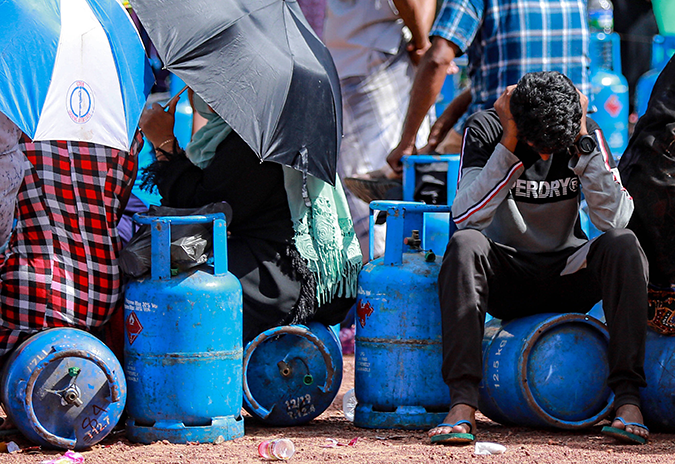
Decades of looking to the IMF for salvation has yielded only crises. Sri Lanka’s economic crisis demands urgent relief measures for a desperate citizenry and a new, self-sufficient model of development
by Ahilan Kadirgamar and Devaka Gunawardena
Sri Lanka has been subject to a great lie: the IMF solution! For close to a year now, the country has been implementing the International Monetary Fund’s recommendations with complete obedience. The sudden devaluation of the Sri Lankan rupee, a drastic increase in interest rates, the withdrawal of fuel subsidies and severe cuts to state expenditure all amount to harsh austerity measures. The consequence is economic devastation as the country sinks into a depression. Millions now suffer dwindling incomes, tremendous increases in the cost of living, food insecurity and even starvation.
Yet the much-touted IMF funds presented as a way to salvation, a meagre USD 2.9 billion over four years under the proposed agreement, have proved elusive. Compare this amount to Sri Lanka’s foreign earnings for last year, which added up to USD 18 billion. The IMF insists that Sri Lanka first convince a range of creditors to commit to restructuring its defaulted external debt before the organisation’s Executive Board will release the funds. But Sri Lanka’s economy is in free fall. Its GDP contracted by roughly a tenth last year and is on the path to continued contraction this year. Under these circumstances, the IMF agreement and its paltry funds may as well go into the dustbin.
Some of us have seen this crisis coming for a long time. A few months after the end of the civil war in May 2009, Sri Lanka obtained an IMF Stand-By Arrangement of USD 2.6 billion. This gave the green light to a considerable inflow of speculative foreign capital, in addition to commercial borrowings at extremely high interest rates in the form of International Sovereign Bonds (ISBs). At that point, the warning bells began ringing for critical analysts who could see the consequences. But back-slapping and self-congratulation among Sri Lanka’s elites continued amid a boom in economic growth built on a dubious basis, including speculative investment in urban beautification and needlessly large infrastructure projects. This debt-driven boom soon petered out.
Sri Lanka then faced balance-of-payments problems, which pushed it towards an IMF Extended Fund Facility of USD 1.5 billion in June 2016. Some of us sounded the alarm again as the government at the time, led by Ranil Wickremesinghe, pursued another IMF-led solution. But, again, our critique fell on deaf ears. Worryingly, the following month, with the IMF’s approval, Sri Lanka went ahead and floated another USD 1.5 billion in ISBs. Indeed, the latest IMF agreement – the 16th deal between Sri Lanka and the organisation over the decades – offered nothing new. Rather, it promoted Sri Lanka’s continued liberalisation of trade and capital accounts, dating back to the opening of the economy in 1978. The crisis tendencies in the Sri Lankan economy were ramified through adherence to IMF packages.
Historical memory is short in Sri Lanka, particularly among the elite. The crisis accelerated with the onset of the Covid-19 pandemic three years ago. Again, we warned of the imminent dangers of an unsustainable balance of payments and the need to drastically reassess and reprioritise imports for the purpose of maintaining foreign reserves, given decreasing streams of foreign earnings. That would have meant restricting the import of luxury consumer goods while using the available foreign exchange for essential supplies and intermediate goods necessary to boost domestic production. The arrogant Rajapaksa regime then in power nevertheless persisted in the blind hope that fortunate times were just around the corner. It argued that tourism, for example, would soon pick up. Meanwhile, the opposition and neoliberal think-tanks proposed yet another IMF agreement as the magic bullet. Worse, they even started calling for an early default on Sri Lanka’s external debt. Their convoluted logic was that once the country defaulted, it would have to surrender to the IMF and all its conditionalities, such as austerity and fiscal consolidation. There could be no way forward other than with the IMF.
That is exactly what the government led by Gotabaya Rajapaksa did in April 2022. It prematurely defaulted on its external debt while the finance minister went on pilgrimage to Washington DC to the annual meetings of the IMF and the World Bank. The default was premature because only USD 78 million in debt-servicing was due that month, while the next large ISB repayment, of USD 1 billion, was due in July 2022. Only in Sri Lanka could the elite celebrate when the country defaulted on its sovereign debt for the first time in its history. They were confident that Sri Lanka would get bridge financing from donors, an IMF agreement with additional funds in three months, and a rapid process of debt restructuring. Ten months later, the outcome of these expectations remains a shameful zero. There is no more bridge financing. No IMF funds. And an agreement on debt restructuring appears uncertain at best.
Given all the above, Sri Lanka is a case in point of consistently insipid economic policymaking. It is also a study in how the myth of an IMF quick-fix can paralyse a country, putting on hold policies and relief measures urgently needed to help a citizenry drowning in economic depression. As the country awakes to the great lie of an IMF solution, it is forced to go back to the drawing board – not just to deal with the social devastation and political backlash that the IMF agreement is bound to generate, but also because the global order that provided its reference points is unravelling.
From debt to a new development model
Sri Lanka’s long engagement with the IMF and the broader neoliberal policy consensus – austerity, privatisation, and the liberalisation of trade and capital markets – has been an utter and complete failure. Nevertheless, for the IMF and Sri Lanka’s establishment, resolution of the crisis appears to call for the introduction of austerity measures like the ones applied to many other countries that have experienced sovereign default, along with restructuring of defaulted debt. The idea is that Sri Lanka’s problems are rooted in a fundamental mismatch between its macroeconomic indicators and the debt it has accumulated.
This framework is being applied, however, in the context of a world order that is fast breaking down because of the contradictions of neoliberal globalisation. Over the last decades, the push for free trade, unfettered global financial flows and the privatisation of essential services has continued to expose countries to the crisis-ridden dynamics of global capitalism. But everything appears to be coming to a head, epitomised in many ways by the case of Sri Lanka. As major publications such as the Financial Times have noted, although exogenous shocks such as the Covid-19 pandemic and war in Ukraine have played a role, these have interacted with underlying trends in the global economy. This includes extreme wealth inequality and an unsustainable model of growth driven by financialisation, exposed most vividly by the global financial crisis of 2008.
In the aftermath of the 2008 crisis, however, and coincident with the end of the civil war, Sri Lanka was one of a series of emerging market “success stories” celebrated by boosters of neoliberalism. Now that the country’s shaky financial structure has been exposed, establishment commentators around the world are instead using Sri Lanka as an example of crony capitalism and corruption. Supposedly, such bad actors can only be routed by further imposing the rationality of the market on public institutions. Whereas the big banks in the United States responsible for the 2008 crisis obtained bailouts from the state because they were “too big to fail,” Sri Lanka is apparently small enough that the rules of moral hazard once again apply. The failed logic of the neoliberal development model – including the reliance on external-oriented policies, from tourism to foreign commercial borrowings – here justifies further entrenching it through austerity. Because of the country’s severe economic crisis, however, such a remedy means that people suffer and possibly even perish from what the sociologist Karl Polanyi called “social exposure.” Child malnutrition is skyrocketing and food insecurity is becoming pervasive – recent estimates from the UN’s Food and Agriculture Organisation indicate that roughly a fourth of Sri Lanka’s population is food insecure. Even this extreme suffering is unlikely to dislodge the elite consensus about an IMF solution. But the disruptive political and social consequences, and resulting waves of agitation, will continue.
Moreover, Sri Lanka’s crisis is occurring at the conjuncture of major global developments. Global growth, especially in trade, is likely to continue slowing in the face of a complex set of challenges, from geopolitical polarisation to the impact of climate change. In this scenario, how can Sri Lanka’s debt be made sustainable by further exposing the country to these chilling headwinds? The central plank of the IMF solution – that Sri Lanka achieve a primary surplus by 2025 – stands in direct contradiction to the lack of the public investment needed to cope with these shocks. Conventional debt-sustainability analysis is predicated on the belief that by engaging in macroeconomic reforms such as fiscal consolidation, defaulting countries can regain their financial footing by having the surplus funds to both repay old loans and service new ones. However, in the case of Sri Lanka, which is already undergoing an economic depression, national private investment is withdrawing, and speculative capital is fleeing the country. The idea that foreign investors will step in to fill the breach flies in the face of Sri Lanka’s long experience with similar false projections.
Sri Lanka did not always have an unshakeable belief in the benefits of subordination to global capital. After the 1956 general election, there was a clear push to challenge the colonial relations in which the country’s comprador elites were embedded. Through a new balance of class forces, there was much greater emphasis on industrialisation focussed on import substitution, to try and diversify the economy away from plantation exports. Sri Lanka undertook major investments in critical industries, such as those producing intermediate and capital goods, including with support from socialist countries. But even these efforts were constrained by over-reliance on a narrow political base among the urban working class and a lack of rural mobilisation. By the time of the global economic downturn of the 1970s, the radical wing of the left-leaning United Front was led by NM Perera, the finance minister. It made a belated attempt to prioritise self-sufficiency in food production and address the immediate concerns of working-class people, especially given rising global prices for essential goods. But these efforts failed due to internal contradictions within the ruling coalition led by the bourgeois Sri Lanka Freedom Party, the consolidation of Sinhala Buddhist nationalism and state repression, external pressure from the West and the rising frustration of the electorate.
The subsequent regime, led by JR Jayewardene, introduced the open-economy reforms in 1978, which meant a strong emphasis on liberalisation. Sri Lanka’s engagement with the outside world reverted to subordination to powerful institutions that represented the interests of global capital. The IMF and the World Bank provided the necessary justification in terms of access to external finance. Meanwhile, the Jayewardene regime suppressed organised labour, including by crushing the general strike of 1980. In this and other ways, the regime prepared a more conducive terrain for extraction and exploitation. The beginning of the civil war between the government and Tamil separatists in the country’s north and east in 1983 put some constraints on this approach, as the state continued to rely on mobilisation in the south. But the overall trajectory was epitomised by the collapse of any real alternative to neoliberal policies. The consensus was that for Sri Lanka to develop it would have to import its economic vision from outside – a vision clearly shaped by the interests of global capital. The processes of financialisation and debt-driven growth accelerated with the end of the civil war.
This strategy has failed to bear fruit in terms of real improvements in working people’s livelihoods. It has also triggered the current crisis. Nevertheless, in the many years since Sri Lanka embarked on liberalisation, justification for foreign commercial borrowing has been rooted in the enduring assumption that the country need only “unlock its growth potential”. A range of services and industries meant to earn foreign exchange have been bandied as model opportunities. After the early days of the open economy, it became clear that a developed garment industry was not a precursor to moving up the “global value chain.” This was especially true in the absence of a clear, concerted intervention by the state in the form of industrial policy. Global institutions and policy-makers then pivoted to celebrating the rise of the service economy, including the boom in tourism. Sri Lanka continued to depend, however, on a hidden economy of remittances from migrant workers abroad, which is also now under strain.
The idea that Sri Lanka can achieve higher stages of development by pursuing the same growth path rooted in dependency on the external sector is a non-starter. The neoliberal development model has collapsed. The Sri Lankan establishment has practically admitted as much by seeking lower-income status for the country to obtain more concessional financing from international donors and aid agencies. At the same time, the government, led by Ranil Wickremesinghe, is eager to celebrate the return of tourists after a long absence caused by the Covid-19 pandemic and the Easter Sunday terror attacks in 2019. But the reality is that tourism will not be enough to revive Sri Lanka’s growth during a period of painful austerity. The same goes for any number of hare-brained ideas that may now be touted by the country’s economic establishment in the absence of serious thinking about an alternative development model.
Sri Lanka’s lop-sided economic structure, with a bloated import bill and unrestrained financial speculation, now faces a reckoning. The years of conspicuous consumption through imports from abroad are over. The question is, how can investment be channelled into those sectors necessary for the country to achieve self-sufficiency in the goods and services ordinary people need for survival? This perspective is a far cry from the IMF solution, which presupposes Sri Lanka’s continued subordination to a global economic structure that has clearly failed. Taking up the question of an alternative means returning to issues that had supposedly been bypassed with the triumph of neoliberal globalisation. It requires revisiting the many “reforms” – from the push for trade and capital-account liberalisation to the promotion of foreign direct investment and privatisation – that it has entailed.
Towards self-sufficiency
Under these circumstances, the idea of self-sufficiency offers a crucial response to the rapidly changing, uncertain global order. This churn may provide an opportunity for foresighted actors within Sri Lanka to demand a fundamental re-conceptualisation of how external engagement fits into the country’s development model. If it is imperative to revive the country’s domestic food production, for example, how would this flow into a broader rethinking of the composition of intermediate imports needed for production? What type of external financing would be necessary to develop the domestic food system?
Sri Lanka’s domestic debt is also a critical part of the equation for overcoming the current economic depression. That includes the need for counter-cyclical spending, as opposed to pro-cyclical policies of fiscal consolidation. But external development finance would also continue to play a role. The key question is whether such borrowings are integrated into a process of planning, so that an alternative development vision takes precedence over the mainstream understanding of market-steered investment that has long shaped countries such as Sri Lanka. The country must push back against global capital geared towards the sole end of financial extraction. Indeed, the lion’s share of foreign direct investment into Sri Lanka went into speculative investment in real estate rather than ventures that increased local industrial production. Development financing should be reconfigured as part of a bottom-to-top restructuring of the economy, along with changes in trade policy away from excessive imports. That is necessary both to repay the current debt – with deep haircuts for creditors, if not debt cancellations – and as a means to develop Sri Lanka in the long run.
This alternative goes back to similar points made by development economists such as Ha-Joon Chang and Abhijit Sen, who were early critics of the Washington Consensus. Such critical economists recognised the flaws in the previous model of import substitution, but they framed it as an ongoing concern of the balance of social and class forces required to ensure that capital, as it grows, is also disciplined to invest in critical sectors. In Sri Lanka’s case, that process of disciplining capital must now include prioritising imports of essential and intermediate goods necessary for production. It also requires revamping the defunct public-distribution system to ensure food security and prevent outright starvation. As the economy stabilises, further measures must also include redistribution and investment through a wealth tax on existing property and assets.
Sri Lanka has to have stronger debates about its development vision, including a rethink on relations between its rural and urban arenas. There must be greater room for rural industries rooted in the livelihoods and reproductive needs of ordinary people. This is a far cry from the elites’ vision of the economy, which has repeatedly driven Sri Lanka into financial difficulties. There is now tremendous anger in the country because of the devastating fall in living standards. This discontent, in addition to the unravelling global order, may finally trigger a break with liberalisation.
For the IMF, of course, a programme rooted in self-sufficiency with wealth taxes and reinvigorated public investment will be a step too far. It is entrenched in its own institutional processes, despite the organisation’s fuzzy rhetoric around its newfound supposed awareness of the social implications of austerity-driven bailout agreements. Nevertheless, Sri Lanka’s crisis may offer a turning point for those global and domestic coalitions that are aiming to push back against renewed subordination to global financial capital. That means rethinking a number of trends that have long coalesced under the banner of economic liberalisation. After decades of repeated mistakes and failures, with consequences for the people on an unprecedented scale, will the establishment at last be forced to reconsider Sri Lanka’s development model? Himal Southasian



by Prof. C. A. Saliya
 When people picture wealth, they often imagine luxury cars, large homes and expensive holidays. But financial advisers who work with wealthy clients describe a different picture: people who spend carefully, keep cash aside, invest patiently and understand the risks they take.
A recent Research NZ report, based on interviews with financial advisers, found that many wealthy people are discreet about money. They tend to live within their means, maintain emergency savings, take calculated investment risks and pay close attention to tax and financial structures.
For Sri Lankan families facing high living costs, loan repayments and uncertainty about the future, the lesson is not that everyone must become rich overnight. It is that better financial habits can create greater security over time.
Wealth is often quiet
One of the strongest habits associated with long-term financial stability is controlled spending. Many people with high incomes do not automatically increase their lifestyle every time they earn more. Instead, they decide in advance what they can afford, save consistently and avoid treating every salary increase as permission to spend more.
This does not mean denying life’s small pleasures. It means knowing the difference between a need, a want and a purchase made only to impress others.
In Sri Lanka, where social pressure can sometimes encourage visible spending on weddings, vehicles, clothing or celebrations, this is a difficult but useful principle. A household that earns well but spends everything may look prosperous while remaining financially fragile. By contrast, a family that saves even a modest amount regularly can build options: education for children, a medical reserve, a home deposit or capital for a small business.
The Central Bank of Sri Lanka’s financial-literacy survey found that bank-account ownership is high, but financial behaviour remains a concern. Its later roadmap notes that Sri Lankans show satisfactory financial knowledge compared with other countries, while positive everyday financial behaviour still lags behind.
Knowledge, in other words, is not enough. People also need routines.
Keep an emergency fund before taking bigger risks
The wealthy people described in the RNZ article often kept readily available savings for genuine emergencies and avoided using these funds for ordinary spending.
This is perhaps the most practical lesson for an average family. An emergency fund is not money that “does nothing.” It is money that protects a household from making a desperate decision when illness, job loss, vehicle repairs or an unexpected school expense arrives.
For some, the first target may be one month of essential expenses. Over time, it can be increased. The point is not perfection; it is having a buffer.
Without one, families may turn to costly borrowing, informal lenders or repeated credit-card debt. Research on household finance shows that weak credit knowledge, cross-borrowing and reliance on informal debt can increase the risk of over-indebtedness.
Saving alone may not be enough—but investing requires care
Saving is the starting point, not always the final destination. Money kept entirely in cash or low-return accounts can lose purchasing power over time, especially when prices rise. This is why financially secure people often invest—not recklessly, but with an understanding that long-term returns usually require some level of risk.
The key phrase is calculated risk. That means asking basic questions before investing: What is the business model? Is the institution regulated? How easily can I access my money? What happens if the investment falls in value? Am I being promised unusually high returns? Do I understand where my money is going?
A proper investment plan should not depend on rumours, social-media tips or promises of “guaranteed” profits. It should be diversified where possible—spread across suitable assets rather than placed in a single company, property deal or scheme.
For a young worker, investing may begin with a small, regular contribution. For a business owner, it may mean reinvesting carefully in a viable enterprise. For a family nearing retirement, capital protection and predictable income may matter more than aggressive growth. There is no single plan for everyone.
Debt can build wealth or destroy it

The RNZ article also makes a more controversial point: wealthy people sometimes use other people’s money, through debt or outside equity, to build businesses or buy assets. When investment returns exceed borrowing costs, borrowing can magnify gains. But the reverse is equally true: when returns fall or income is interrupted, debt magnifies losses.
This distinction is crucial in Sri Lanka.
Debt used for a productive purpose—such as a well-researched business, equipment that generates income, or an asset with manageable repayments—can be different from debt used for consumption. Borrowing for status purchases, repeated expenses or a lifestyle beyond one’s income can quickly become a burden.
Before taking a loan, families should calculate the monthly repayment under difficult conditions, not only favourable ones. Could the instalment still be paid if income falls? Is the interest rate fixed or variable? Is there enough emergency savings left after the initial payment? These questions may feel cautious, but caution is often what keeps a financial setback from becoming a crisis.
Pay attention to taxes and paperwork
Another quiet habit of financially successful people is paying attention to tax. They understand that the amount earned is not the same as the amount kept. They keep records, claim lawful deductions where applicable and structure businesses or investments properly.
The quiet habits
For self-employed people and small-business owners, this can be especially important. Clear records of income, expenses, invoices and taxes are not merely administrative chores. They help owners understand whether a business is truly profitable and make it easier to obtain formal finance when needed.
This is not an argument for avoiding tax. It is an argument for understanding the rules, meeting obligations and using legitimate options available under the law. When in doubt, taxpayers should seek advice from a qualified professional.
The human side of money
The most important lesson is that wealth is rarely created by one dramatic decision. It is usually built through repeated small choices: saving before spending, avoiding unnecessary debt, learning before investing, and staying patient when others are chasing quick gains.
A literature review of household finance supports this practical view. Studies consistently associate financial literacy, planning, self-control and budgeting with better saving and investment decisions. At the same time, the research warns that financial outcomes are shaped by income, access to formal financial services and economic conditions—not simply by individual discipline.
That matters in Sri Lanka, where many households are working hard simply to meet daily needs. Advice about wealth should never become blame. Not everyone starts with the same income, family support or opportunity.
But the habits that strengthen financial resilience are available in some form to most people: keep records, build a buffer, question easy-money promises, borrow carefully and make decisions based on long-term goals rather than short-term appearances. (See table)
Wealth may not always look glamorous. Often, it looks like an emergency fund nobody sees, an investment made patiently, a loan avoided, and a family that sleeps more peacefully because it has planned ahead.
(Prof. C. A. Saliya, is a charted accountant, academic, researcher and former banker. He is the author of SAMAJA GAVESHAKAYA and Springer Publication DOING SOCIAL RESEARCH. He can be contacted at saliya.ca@gmail.com. The views expressed in this article are his own and do not necessarily represent those of the organisations with which he is affiliated.)
by Prof. Ranjith Bandara,
Emeritus Professor, University of Colombo
This article examines why community exclusion, excessive bureaucratic control, unequal distribution of conservation benefits, weak institutional accountability, and short-sighted political leadership continue to undermine wildlife conservation in Sri Lanka.
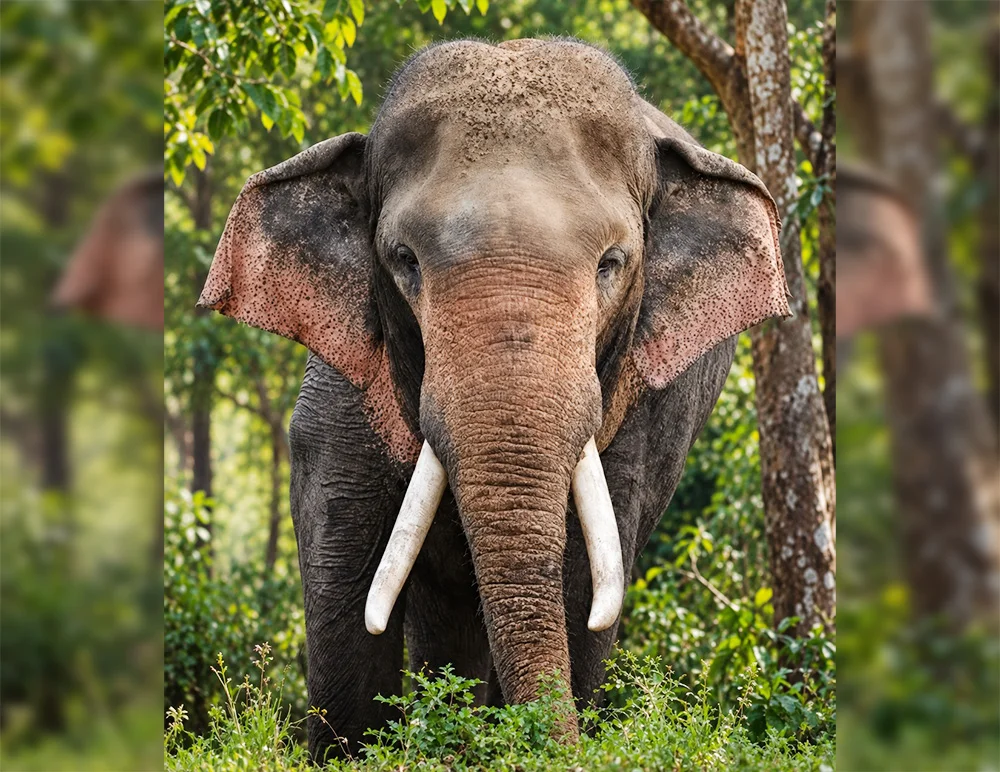
The death of Tusker Kavantissa is more than the loss of one of Sri Lanka’s most remarkable wild elephants. It exposes uncomfortable questions about how we protect our natural heritage, how conservation decisions are made, and why repeated warnings have failed to produce meaningful reforms. His death should compel us to examine not only what happened to one extraordinary animal, but also the deeper weaknesses in our wildlife conservation system.
Tusker Kavantissa, one of Sri Lanka’s most prominent wild tuskers, died on 16 October, 2026, after receiving veterinary treatment for an injury, reportedly caused by gunfire. Although the wound had shown some improvement, his health subsequently deteriorated. The precise cause of death requires confirmation through a proper post-mortem examination. Nevertheless, the circumstances raise serious questions about preventive protection, wildlife management, and institutional preparedness.
The wider picture is equally disturbing. According to recently reported figures, Sri Lanka has lost an average of approximately 402 elephants and 138 people annually, since 2019, due to human–elephant conflict. These figures reflect a continuing national tragedy affecting both wildlife and rural communities.
What Sri Lanka faces today is not merely a wildlife conservation problem. It is also a crisis of environmental governance, shaped by institutional weaknesses, political decisions, and the failure to recognise the economic and social realities of conservation.
Conservation without communities
One of the fundamental weaknesses of our conservation approach is that local communities are often treated as subjects of regulation rather than partners in conservation. They are expected to bear the risks, respect restrictions, and cooperate with government programmes, yet their influence over decisions affecting their lives remains limited.
For rural families living alongside wild elephants, conservation is not an abstract environmental objective. It directly affects their safety, agricultural income, property, and everyday lives.
Farmers frequently possess valuable knowledge about elephant movements, vulnerable locations, seasonal changes, and practical protection measures. Yet conservation interventions are sometimes designed without adequately considering this experience.
When decisions are imposed from above, communities may feel excluded from programmes they are expected to support. This weakens trust, reduces cooperation, and ultimately undermines conservation outcomes.
We must recognise that protecting elephants and protecting farmers are not conflicting objectives. Both are essential. A conservation policy that safeguards wildlife while neglecting human security cannot be considered successful.
The real challenge is to replace conservation imposed on communities with conservation undertaken alongside them. Meaningful participation requires more than consultation meetings. Communities must have a genuine role in planning, implementing, monitoring, and evaluating conservation activities.
Bureaucratic authority versus public accountability
Wildlife conservation requires strong institutions, professional expertise, and effective regulations. However, excessive bureaucratic control can become an obstacle when administrative authority takes precedence over practical outcomes.
Decision-making in Sri Lanka’s conservation system remains heavily dependent on central institutions. Administrative procedures, overlapping responsibilities, and limited coordination can delay responses to urgent problems.
More importantly, excessive centralisation can discourage local innovation and prevent communities from contributing practical solutions.
When administrative authority becomes more important than results, conservation risks becoming an exercise in controlling people rather than protecting nature.
This criticism should not be confused with questioning the dedication of frontline wildlife officers and veterinarians. Many work under difficult conditions with limited resources. The efforts undertaken to save Tusker Kavantissa deserve recognition.
However, individual commitment cannot compensate indefinitely for institutional weaknesses.
We must ask whether our conservation institutions have the capacity to identify risks early, protect vulnerable animals, coordinate emergency responses, and evaluate the effectiveness of their interventions.
Public accountability should, therefore, extend beyond compliance with administrative procedures to measurable conservation outcomes.
Who bears costs, and who receives benefits?
Perhaps the most neglected dimension of wildlife conservation in Sri Lanka is the unequal distribution of its economic costs and benefits.
Wild elephants contribute substantially to tourism, biodiversity, cultural heritage, and the country’s international image. Their conservation generates benefits enjoyed by society as a whole.
Yet the financial and personal costs are concentrated among rural communities living within elephant habitats.
A study published in 2023, involving 300 farming households in southern Sri Lanka, revealed a striking imbalance. Although these households lived near two national parks, none received economic benefits from tourism. Meanwhile, 57 percent had experienced elephant-related crop damage.
The findings raise a fundamental economic question: if the entire country benefits from elephant conservation, why should a relatively small and vulnerable section of society bear a disproportionate share of its costs?
Conservation cannot remain economically sustainable when its benefits are widely enjoyed but its costs are concentrated among those least able to bear them.
A separate study, published in 2024, involving 439 affected farming households, examined the possibility of financing compensation through tourism revenue. It demonstrated the potential for tourism-based financial mechanisms to support human–elephant coexistence.
The policy implications are significant
A proportion of wildlife tourism revenue could be directed towards affected communities through transparent benefit-sharing arrangements. Such measures could support compensation, village protection, local employment, community enterprises, and agricultural improvements.
However, financial compensation alone is insufficient. The 2023 study also indicated that fear of elephants and concerns about crop damage strongly influenced community attitudes. People must feel safe in their homes and farms, not merely receive payment after suffering losses.
Equitable benefit-sharing is, therefore, more than an act of generosity. It is an economic and social requirement for sustainable conservation.
Political decisions and absence of long-term vision
The weaknesses in wildlife conservation cannot be attributed solely to public officials. Political leadership must accept its share of responsibility.
Poor land-use planning, habitat fragmentation, obstruction of elephant movement corridors, and development decisions that inadequately consider environmental consequences have contributed to human–elephant conflict.
Political decisions made for immediate gains can create environmental and economic costs lasting for decades.
Another weakness is the preference for visible, short-term interventions.
Constructing electric fences, relocating elephants, and launching emergency operations can attract considerable publicity. However, such interventions should be evaluated according to their effectiveness, not their visibility.
Political leadership should be judged not by the number of conservation programmes announced, but by the lives protected, conflicts prevented, and long-term improvements achieved.
There is also a serious problem of policy continuity. Conservation cannot be governed according to electoral cycles or changing political priorities.
Elephant habitats, migration patterns, and ecological processes do not change with governments. Successful conservation, therefore, requires consistent national commitments extending beyond individual political administrations.
Without such continuity, public investment may be wasted while the underlying problems remain unresolved.
Problem is not always a lack of policy
Sri Lanka’s conservation crisis cannot be explained simply by a shortage of scientific knowledge or policy recommendations.
In many instances, the greater challenge lies in translating available knowledge into coordinated, adequately funded, and politically supported action.
The National Action Plan for the Mitigation of Human–Elephant Conflict, prepared in 2020, proposed a science-based approach that emphasised community participation, protection of villages and agricultural land, and more effective conflict-management strategies.
Yet an important question remains: how much of this plan has been implemented successfully?
Have implementation difficulties arisen from inadequate resources, weak institutional coordination, administrative resistance, or insufficient political commitment?
An independent assessment of the plan’s implementation would help identify these obstacles and establish clear responsibilities.
We must also recognise that a substantial proportion of Sri Lanka’s wild elephants live outside protected areas. Attempting to confine all elephants within national parks and forest reserves is, therefore, neither realistic nor sustainable.
Effective conservation requires land-use policies informed by elephant ecology, settlement patterns, agricultural needs, and the practical realities of human–wildlife coexistence.
A sound policy that remains largely unimplemented offers little protection to either elephants or people.
Towards more responsible conservation system
Sri Lanka needs a fundamental change in how wildlife conservation is governed.
Four priorities deserve immediate attention.
First, local communities must become genuine partners in conservation management, with meaningful responsibilities and decision-making opportunities.
Second, conservation benefits must be distributed more fairly. Wildlife tourism should contribute directly to protecting the livelihoods and safety of communities that bear conservation costs.
Third, existing national conservation plans should be independently reviewed to identify implementation gaps and establish a realistic timetable for corrective action.
Fourth, conservation institutions must become more accountable for measurable outcomes, including reductions in human deaths, elephant mortality, crop losses, and property damage.
These reforms require cooperation among wildlife, forestry, agriculture, land, irrigation, and local government institutions.
They also demand political leadership willing to prioritise long-term results over short-term publicity.
For exceptional animals, such as Tusker Kavantissa, improved risk monitoring, preventive protection, and timely veterinary responses are particularly important. However, conservation should not be limited to protecting a few well-known animals.
Every wild elephant has ecological value, just as every person living alongside elephants has an equal right to safety.
The objective must be a system that protects both.
Lesson tusker Kavantissa leaves behind
The death of Tusker Kavantissa should not become another moment of national sorrow that gradually fades from public memory. It should mark a turning point in how Sri Lanka approaches wildlife conservation.
A proper investigation into his death is essential. Equally important is an honest examination of the conservation system within which such tragedies continue to occur.
The real challenge is not choosing between people and elephants. It is creating a system in which both can coexist safely, and where the responsibilities, costs, and benefits of conservation are shared fairly.
This requires more than scientific expertise and stronger regulations. It demands accountable institutions, meaningful community participation, economic fairness, and political leadership guided by a clear long-term vision.
Our greatest failure would not be the loss of Tusker Kavantissa alone. It would be allowing the same weaknesses in our conservation system to claim more lives while we continue to avoid the reforms that could prevent them.

by Jehan Perera
The government appears set to overcome the first major challenge to one of its foundational principles. It has faced down demands from sections of the Buddhist clergy and opposition parties to release Ven. Galagodaatte Gnanasara from his prison sentence for contempt of court.
Ven Gnanasara is best known as the general secretary of the Bodu Bala Sena, a nationalist Sinhala grouping. The government seemed unfazed by a protest march organised by Buddhist monks and the opposition parties and its supporters organised an even bigger march to support the government’s position. It is notable that the general population did not get involved in either march in any substantial number. The issue has now become a test of whether the government will uphold its commitment to apply the law equally, irrespective of a person’s position or status, even when doing so brings it into conflict with a powerful constituency.
The case has a specific legal history. Ven. Gnanasara was sentenced to six years’ imprisonment by the Court of Appeal in 2018 for contempt of court in a case involving former military personnel where he disrupted the proceedings. The Supreme Court rejected his appeal in 2018. Former President Maithripala Sirisena subsequently granted him a presidential pardon in 2019. Last month, the Supreme Court invalidated that pardon. The initial demand by Buddhist monks and their lay supporters was that Ven. Gnanasara should be permitted to wear his Buddhist robes when appearing in public before the courts. The government has indicated its willingness to examine the procedures governing the treatment of Buddhist monks in prison, in consultation with the relevant religious authorities. However, the initial demand has now been escalated into a demand for a presidential pardon.
One of the central promises of the National People’s Power (NPP) during its election campaign two years ago was to apply the law equally to all. This commitment has shaped the government’s approach to allegations of corruption and criminality involving individuals who previously wielded political power. The NPP government was swept into power on a wave of antipathy towards those in previous governments who were perceived to have abused their positions for private gain. The economic collapse Sri Lanka experienced in 2022, and the hardships endured across society, remain vivid in the public memory. The past two years have seen the government pursuing those accused of corruption and other offences. Several high-ranking members of previous governments have faced arrest and legal proceedings and been sentenced to jail.
Religious Concerns
The ability of opposition parties to mobilise widespread resistance against proceedings involving their leaders has been limited, as much of the general population continues to favour accountability for past financial crimes. However, the case of Ven. Gnanasara is different. It does not concern allegations of financial corruption, but the relationship between religious authority, the courts and the law of the land. This is where the distinction between respecting religious traditions and upholding the law becomes crucial. There is a sense among sections of the general population that Buddhist monks should not be treated on a par with others and that requiring Ven. Gnanasara to appear in court without his robes was unjust and contrary to the national ethos. Such sentiments reflect the special place Buddhism occupies in Sri Lanka’s history and society. Sinhala Buddhist nationalism has been a potent political force throughout the country’s history, drawing on a heritage that extends back more than two millennia. The question is whether respect for Buddhism needs to also entail the exemption of individual monks from the ordinary requirements of the law and thereby treat them differently.
The challenge would be to accommodate legitimate religious concerns through rational and lawful procedures without allowing religious status to become a source of legal privilege. The government has been amenable to addressing the issue of monastic robes, but has so far resisted the demand to release Ven. Gnanasara through a new pardon. President Anura Kumara Dissanayake and government members have made it clear that the government would not bend the law to accommodate any individual. They have taken the position that any shortcomings in existing rules should be addressed by changing the rules through proper procedures, rather than by making an exception for a particular individual. If the government holds its position, it will demonstrate that its commitment to the rule of law extends even to constituencies that have historically enjoyed considerable political influence.
This is important not only for the country’s democratic institutions but also for its economic future. Sri Lanka is seeking to recover from its economic collapse and establish the foundations for sustained growth. The International Monetary Fund’s analysis of Sri Lanka’s governance weaknesses has repeatedly emphasised the economic costs of corruption and institutional deficiencies. Its 2024 analysis of governance and growth concluded that comprehensive and coherent reforms could bring significant macroeconomic benefits. The IMF’s 2025 assessment also highlighted the importance of sustained governance reforms in unlocking the country’s growth potential. Investors, both domestic and foreign, need confidence that public institutions function according to predictable rules, that contracts and property rights are protected, and that political connections or social status will not determine how the law is applied.
Sensitive Issue
Sri Lanka has long sought the leap towards prosperity that has proved elusive under successive governments. Economic reform alone will not achieve it. The connection between the rule of law and economic prosperity is direct. Businesses are more likely to invest when they can expect disputes to be resolved fairly, public resources to be managed transparently and regulatory decisions to be made on rational grounds. No country can achieve a durable economic take-off if its institutions are perceived to operate according to political favour, inherited privilege or communal pressure. Sri Lanka cannot afford to return to a political culture in which powerful interests are shielded from accountability while ordinary citizens bear the costs.
Changing a political culture that has evolved over the decades if not centuries is a difficult undertaking, particularly in a country where political leaders have long relied on religious and communal identities to consolidate their support. It requires not only firmness but also sensitivity, dialogue and a willingness to reform laws and institutions where genuine deficiencies exist. The present controversy offers an opportunity to demonstrate that these objectives need not be in conflict. The government can respect the Buddhist clergy’s concerns about the treatment of monks in prison while refusing to grant an individual an exemption from a judicial sentence. It can recognise the importance of Buddhism to the country while maintaining that no religious or political authority stands above the law.
The question is whether national traditions and ethos are interpreted in ways that strengthen justice, responsibility and social harmony, or invoked to defend privileges that undermine them. The country needs a transformation in public expectations from privilege to accountability, from communal claims to equal citizenship, and from personal discretion to institutions governed by law.
The government’s handling of the case involving Ven. Gnanasara is therefore about more than one monk or one sentence. This particular case will determine whether the government can build a system in which no government, religious authority or politically influential individuals can place themselves beyond the law. A just society must be able to honour both its traditions and its commitment to equality before the law.

Showers above 100 mm are likely at some places in the Western, Sabaragamuwa, Central, North-western, Northern and Southern provinces and in Anuradhapura district.

Low-quality coal causes power cuts: Ex-LECO Chief

Power cuts continue

GL stresses importance of post-war Shangri-La investment after CIABOC questions him

Coal inquiry gets extension until 16 December

Dilshan, Hirupama named best athletes at All Island Schools Games Athletics Championships

‘Dates have the highest sugar content to fight Coronavirus’

Sunday Island 27 December – Headlines

#SundayIsland 17th December – Headlines

Sunday Island – 28th March

Sunday Island Headlines – 21 March

Sunday Island – 21st February – Headlines
-

 Features3 days ago
Kotahena:A Small Enclave, An Extraordinary Legacy
-
 News4 days ago
Asgiri Mahanayake calls for immediate release of Gnanasara Thera
-

 News3 days ago
Record 1,600 students take Russian Classical Ballet examination in Sri Lanka
-
 News6 days ago
AC President recuses himself from hearing prison attire case pertaining to Gnanasara Thera
-
 News5 days ago
Naval officer testifies Yoshitha received Rs. 5.15 mn in salaries during SLN service
-

 News3 days ago
Karannagoda pushed for £24,536 for Yoshitha’s UK training, Court told
-

 Editorial5 days ago
Saving Anojan: Beyond Executioner’s Blade
-

 News6 days ago
CID informs Fort Magistrate’s Court investigation into money laundering case against Namal completed