
Sports
Sri Lanka’s fast bowling resources excites Ravi Ratnayake

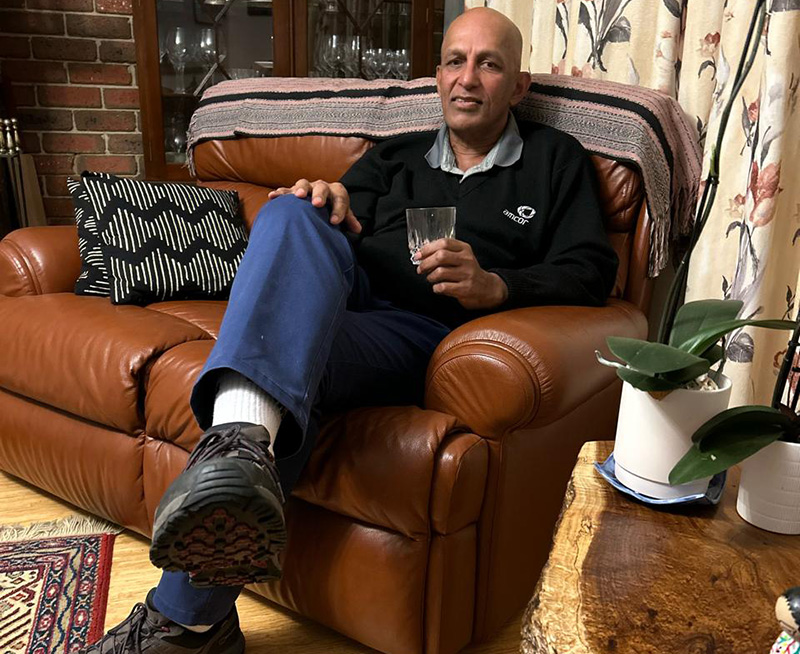
by Rex Clementine
These days, anyone who could roll his arm over is called an all-rounder. But time was when one guy opened batting and shared the new ball for Sri Lanka in Test match cricket. Ravi Ratnayake is his name.
Ravi at one point had the best bowling figures by a Sri Lankan in Tests. Against Pakistan, in Sialkot, he claimed eight wickets in an innings. The record stood for 13 years before Muttiah Muralitharan broke it. Even today, it’s the seventh best bowling figures by a Sri Lankan in Tests.
Ravi played all sports at school. He represented Trinity in basketball and rugby. He was part of three teams that played Bradby Shield from 1977 to 1979, The 1977 side was unbeaten in the school season.
“Those days anything that had to with sports and nothing to do with studies, I was in it. I loved playing sports,” Ravi recalls.
“I am six foot three inches tall and when I tell my Aussie friends that I played second row forward at school, they tell me that I am too small. They tell me that in Australia, I would fit in only as a winger.”
Ravi has been living in Australia since 1989 but he keeps a close eye on Sri Lankan cricket.
“The fast bowlers we have really excite me. They are very skillful, fit and intelligent. We used to win Test matches banking on our spin bowlers, but it’s good to see the quicks having a massive impact. I just hope that they can keep off injuries,” says Ravi.
“When we started Test playing cricket, there was little guidance for us. We had to figure out what we needed to do. I guess with little more guidance and support we could have done better. The people in the management during my time were task masters, but that kind of approach will not work with international sportsmen.”
“We had toured Pakistan in 1982 and had little success. But when we returned there in 1985, Mudassar Nasser told me that Ashantha de Mel and Rumesh Ratnayake bowled quicker than Wasim Akram and Imran Khan. That was some complement.”
“Imran Khan was someone who gave us a lot of tips about fast bowling. Soon we realized that there was nothing magic about reverse swing. But Pakistan players could do it so well, because they had tried that out at training for years.”
“I used to look up to Majid Khan and he told me that when we toured Pakistan in 1982, they used to wait for the loose ball before putting that away. But in 1985 he said we were different. Bad balls were few and rare.”
When Ravi was approached to open batting in Test cricket in Madras in 1982, he took up the challenge without any hesitation. “I had opened batting at school. My technique was pretty sound. I liked fast bowling but was not so good against spin. So, opening batting was something that I took up happily.”
“In the Gabba Test match in 1989 when Aravinda posted a brilliant 167, I shared a 148-run partnership with him. It was a record at Gabba. The record stood for a few years and when it was finally broken, an Australian friend of mine called me and said, your record is no more.”
The opportunities for Sri Lanka’s cricketers in 1980s were few. Virtually there was no international cricket taking place in Sri Lanka from 1987 to 1992 due to the war.
“I had a few years left in me but I retired aged 29 in order to settle down in Australia. I enjoyed my cricket. I am happy to see the progress the team has made in recent years.”









Afghanistan 200/4 in 20 overs (Rahmanulah Gurbaz 30, Ibrahim Zadran 95*, Sediqullah Atal 44, Azmatullah Omarzai 13; Dillon Heyliger 1-41,Jaskaran Singh 3-52) beat Canada 118/8 in 20 overs (Yuraj Sharma 17, Dilpreet Bajwa 13, Harsh Thaker 30, Nicholas Kirton 10, Saad Bin Zafar 28; Mujeeb Ur Rahman 1-23, Azmatullah Omarzai 1-18, Mohammad Nabi 4-07, Rashid Khan 2-19) by 82 runs.
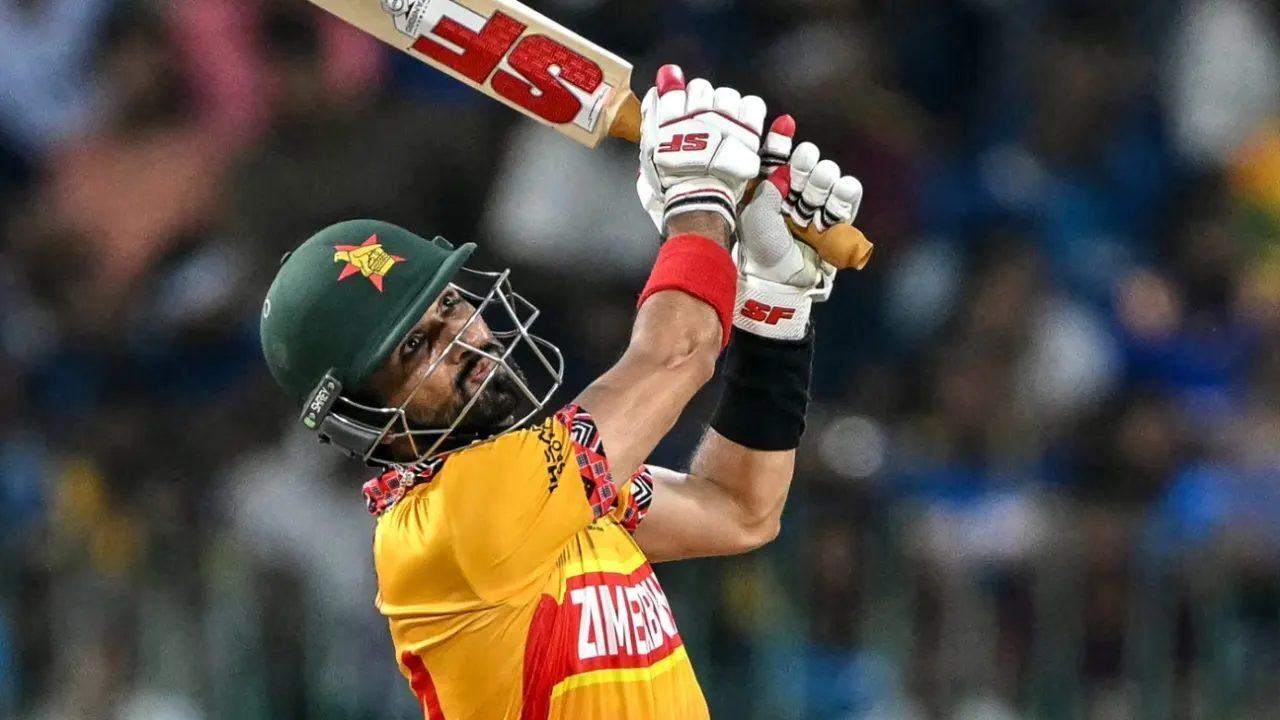
One time is a shock. Two times, and the second to beat hosts Sri Lanka at their own game, is Zimbabwe. Led by their canny bowling, Zimbabwe pulled Sri Lanka back from a flying start to keep them to 178 on a sluggish Premadasa track. Their opener Brian Benett, quickest scorer in their history, dropped anchor, stayed unbeaten like his team, and Sikandar Raza, Ryan Burl and Tadiwanashe Marumani did all the damage from the other end to seal their second-highest successful T20I chase.
Sri Lanka’s innings had three neat divisions: first 29 balls for 54 for 0, next 72 for 82 for 4 and then a finishing kick of 42 for 3 off the last 19 balls. Zimbabwe went Bennett and non-Bennett. Bennett scored 63 off 48; the other three combined for 102 off 64 balls. Raza was the decisive hand: 45 off 26 after the asking rate had gone past 11.
Brief scores:
Zimbabwe 182 for 4 in 19.3 overs (Brian Bennett 63*, Tadiwanashe Marumani 34, Ryan Burl 23, Sikandar Raza 45; Dasun Shanaka 1-26, Dushan Hemantha 2-36, Dunith Wellalage 1-27) beat Sri Lanka 178 for 7 in 20 overs (Pathum Nissanka 62, Kusal Perera 22, Kusal Mendis 14, Pavan Rathnayake 44, Dunith Wellalage 15*; Blessing Muzarabani 2-38, Graeme Cremer 2-27, Brad Evans 2-35) by six wickets
[Cricinfo]
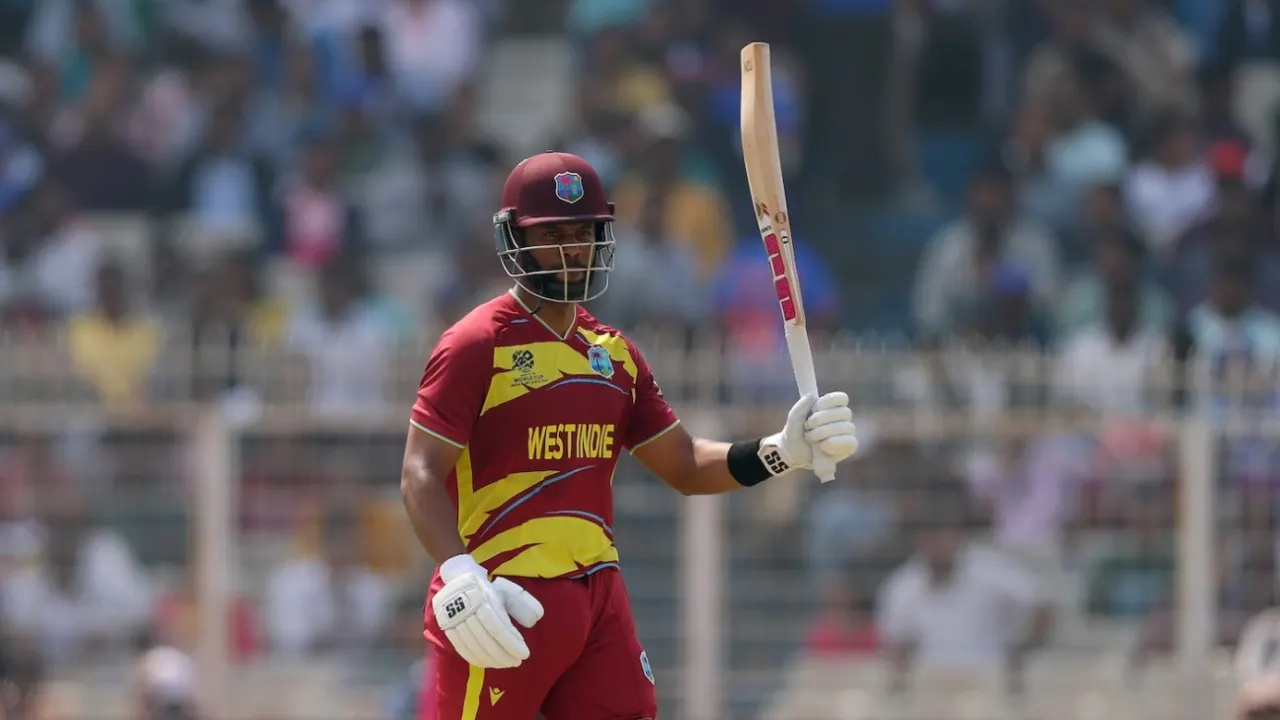
West Indies headed into the Super Eight of the T20 World Cup unbeaten after successfully defending 165 against Italy at Eden Gardens on Thursday. Spinners Chrishan Kalugamage and Ben Manenti impressed with the ball, and were backed up by some sharp fielding, but the batters couldn’t get the Italian job done.
While Italy exited their maiden World Cup with a win against Nepal and many memories to cherish, West Indies sealed their fourth successive win at the venue where they will face India in their final Super Eight fixture on March 1.
Italy may have sensed an opportunity for another win when they stifled West Indies’ power-packed middle order, but Marrhew Forde’s twin strikes in the powerplay decisively tilted the game in West Indies’ favour. Bowling three overs on the bounce, Forde dismissed both Justin Mosca and No. 3 Syed Naqvi, helping West Indies restrict Italy to 37 for 3 in six overs. Shamar Joseph then bagged four wickets to go with his four catches as Italy were bowled out for 123.
The win was set up by Shai Hope, who hit back-to-back half-centuries and dominated the early exchanges with an array of off-side drives. West Indies lost steam after Hope departed for 75 off 46 balls, but they regained it through their bowlers.
After West Indies were asked to bat first, they hit seven boundaries in the powerplay, and Hope was responsible for all of those. By the eighth over, the West Indies captain had zoomed to a 28-ball half-century. The first boundary by a West Indies player not named “Shai Hope” came in the tenth over when Roston Chase backed away and lifted left-arm spinner JJ Smuts over extra-cover.
Hope peppered the off side, scoring 46 of his 75 runs in that region. Anything that was remotely full and outside off was crashed in the arc between mid-off and point. When Italy dragged their lengths back, Hope was ready for it as well. Like when left-arm seamer Ali Hasan banged one into his upper body, Hope swatted him away over square leg for six in the fourth over. Hope was particularly severe on right-arm fast bowler Thomas Draca, taking him for 20 off nine balls.
Italy finally stopped him in the 16th over when legspinner Kalugagame bowled him with a tossed-up wrong’un.
Brief scores:
West Indies 165 for 6 in 20 overs (Shai Hope 75, Roston Chase 24, Sherfane Rutherford 24*, Matthew Forde 16*; Ali Hasan 1-24, Thomas Draca 1-22, Chrishan Kalugamage 2-25, Ben Manenti 2-37) beat Italy 123 in 18 overs (Anthony Mosca 19, JJ Smuts 24, Ben Manenti 26, Grant Stewart 12; Akeal Hosein 1-25, Shamar Joseph 4-30, Matthew Forde 3-19, Gudakesh Motie 2-24) by 42 runs
[Cricinfo]

Zadran, Nabi star as Afghanistan bow out with a big win

“Investments in Professional Education Are Investments in Institutional Strength and National Progress” – PM

Zimbabwe stun Sri Lanka to enter Super Eight unbeaten

Ex-UK Prince Andrew arrested on suspicion of misconduct in public office

Advisory for Severe Lightning issued to the Western and Sabaragamuwa provinces and Nuwara-Eliya, Galle and Matara districts

Navy and Coast Guard seize 04 Indian fishing vessels poaching in Sri Lankan waters

‘Dates have the highest sugar content to fight Coronavirus’

Sunday Island 27 December – Headlines

#SundayIsland 17th December – Headlines

Sunday Island – 28th March

Sunday Island Headlines – 21 March

Sunday Island – 21st February – Headlines
-

 Life style5 days ago
Marriot new GM Suranga
-

 Business4 days ago
Ministry of Brands to launch Sri Lanka’s first off-price retail destination
-

 Features5 days ago
Monks’ march, in America and Sri Lanka
-

 Features5 days ago
The Rise of Takaichi
-

 Features5 days ago
Wetlands of Sri Lanka:
-

 News5 days ago
Thailand to recruit 10,000 Lankans under new labour pact
-
 News5 days ago
Massive Sangha confab to address alleged injustices against monks
-

 News3 days ago
IMF MD here