
Business
Sri Lanka’s competitive edge: Intellectual Property Rights and the power of Geographical Indications


Geographical Indications (GI) can unlock higher export earnings by leveraging origin‑based values in tea, spices, and other agricultural products.
GIs enhance global recognition, secure premium prices, and access niche markets through branding and value addition.
Targeted GI reforms are essential to build a more resilient, value‑driven export economy.
With Sri Lanka’s export competitiveness steadily declining in major destination markets amid global economic uncertainty, the need to explore innovative tools for sustaining export growth has become urgent. Improving export competitiveness is essential for robust growth. One powerful, yet often underutilised, tool in this effort is the country’s intellectual property rights (IPR) system.
In an increasingly competitive global environment, countries cannot compete on volume alone. They must instead compete on value, capitalising on consumers’ willingness to pay a premium for products with unique qualities. This is where IPRs play a vital role. Geographical Indications (GI) are a tool for safeguarding the intellectual property of unique export products. They assure consumers and traders that the product comes from a specific place and has unique qualities, characteristics, or a reputation linked to that origin. Through certification, GIs enable premium prices for origin-based products such as tea, spices, and other agricultural goods while protecting the reputation of products from counterfeits.
Sri Lanka is globally renowned for its high-quality agricultural products, including tea, cinnamon, and other spices, coffee, king coconut, cashew, and regional fruits like Malwana Rambutan and Karthakolomban Mango. Yet, many of these products are still exported as raw commodities without adequate branding, leaving them vulnerable to price fluctuations and intensifying competition from similar products.
Agricultural exports in Sri Lanka have accounted for approximately 20–24% of total export earnings over the past five years. Tea alone accounted for 51% of agricultural exports and 10.9% of total exports in recent years. Sri Lanka ranked third in the world for tea exports in 2024. The highest percentage of the country’s tea exports goes to Middle East countries (43%), mainly Iraq, the UAE, Turkey, and Iran; 22% to Commonwealth of Independent States (CIS); 4% to China; and 3% to the USA. Further, Sri Lanka was ranked as the 15th most important exporter of spices in 2023 and continues to dominate the global market for true cinnamon, supplying 90% of the world’s demand, while also ranking highly for pepper, cloves, nutmeg, and coffee.
International experience shows that GI certification can significantly boost exports and expand market reach. For example, Cambodian Kampot pepper moved beyond niche markets after GI recognition in 2010, with production nearly doubling by 2017 and exports rising by over 250%. Similarly, Indonesian Muntok White Pepper experienced a tripling of exports by 2014 after obtaining GI status in 2010, highlighting how GI status can strengthen global market penetration.
Sri Lanka exhibits a strong comparative advantage across its key agricultural export commodities, as reflected in Revealed Comparative Advantage (RCA) values that consistently exceed unity. Ceylon Cinnamon, Ceylon Tea, and other major spice exports demonstrate remarkable specialisation, with high RCA values.
Market penetration, a ratio that indicates how widely a country exports a product, for Ceylon tea and spices, has fluctuated across key export markets, reflecting shifting demand and intensifying global competition. For spices, some markets such as Mexico and Peru show consistently high penetration levels, performance in Europe remains moderate, while markets like the USA and UAE indicate some decline. At the same time, emerging markets such as China are absorbing increasing shares, suggesting new opportunities for expansion.
Looking ahead, Sri Lanka can target emerging middle-class markets that pay premium prices for quality, origin-certified products by leveraging GIs to enhance branding, authenticity, traceability, and export competitiveness.
Why Sri Lanka’s GI Potential Remains Underutilised
Despite Sri Lanka’s strong comparative advantage and globally recognised products, the GI system remains underutilised due to several challenges, particularly low awareness among agricultural value chain stakeholders and inconsistent practices among smallholders, collectors, processors, and exporters. Strengthening the system requires improved coordination across the value chain, with a strong emphasis on effective traceability, monitoring, and control from farm to consumer.
Moreover, Sri Lanka’s GI system faces significant challenges, including weak IP enforcement against the misuse of geographical names, institutional fragmentation, inadequate inter-agency coordination, and the absence of a dedicated GI framework aligned with international standards. Sri Lanka currently lacks a dedicated GI division within the National Intellectual Property Office (NIPO), leading to limited clarity in guidelines and product classification. There is also no nationally recognised GI logo to support product differentiation and build consumer trust. In addition, the absence of a publicly accessible online GI registry reduces transparency within the system.
As a result, Sri Lanka is not yet fully capturing the value associated with the unique origin and reputation of its agricultural commodities.

Dilani Hirimuthugodage
Unlocking the Economic Value of GIs: From Legal Reform to MarketLed Growth
At present, the global demand favours traceable and authentic products, giving GIs an edge. Feasible steps to strengthen Sri Lanka’s GIs include launching targeted awareness and marketing campaigns to educate both producers and consumers about their value and supporting joint government–industry marketing initiatives. Sri Lanka can strengthen its GI system by aligning with international best practices through the establishment of a dedicated GI unit within NIPO, supported by clear guidelines and product classification, along with the introduction of a national GI logo to improve branding, product differentiation, and consumer trust. Moreover, it is essential to enforce stricter penalties and improve market surveillance against the misuse of the name.
This is a timely opportunity to reflect on the strategic role of IPRs in improving Sri Lanka’s export competitiveness. By effectively leveraging its origin-based strengths through a well-functioning IP system, Sri Lanka can transition towards a high-value, resilient export economy, ensuring that its unique agricultural heritage translates into sustainable growth and global recognition.
By Dilani Hirimuthugodage,
Research Economist,
Institute of Policy Studies of Sri Lanka (IPS)


The Asian Development Bank (ADB) has approved a $100 million results-based loan to help Sri Lanka transform its technical and vocational education and training (TVET) system, equip more young people with industry-relevant skills, and strengthen the country’s competitiveness and inclusive growth.
The Skills Development System Transformation Program will support the Government of Sri Lanka’s efforts in improving the quality and relevance of skills training, strengthening links between training providers and industries, and expanding employment opportunities for youth. The program will increase women’s employment opportunities in nontraditional jobs in fields including automotive technology, engineering, information and communications technology, construction, and renewable energy.
“A skilled workforce is essential to Sri Lanka’s long-term economic transformation and competitiveness,” said ADB Country Director for Sri Lanka Shannon Cowlin. “This program will help create stronger pathways from education to employment by making training more responsive to industry needs, expanding opportunities for young people and women, and ensuring that graduates have the skills required by a modern and evolving economy.”
Though Sri Lanka’s economy is recovering, it faces skills shortages in priority sectors, high youth unemployment, and low female labor force participation. Many employers report difficulty finding workers with the skills needed in a changing economy.
Aligned with the Government of Sri Lanka’s Technical and Vocational Education and Training Sector Strategic Framework 2026–2035, the nationwide program will be implemented from 2027 to 2031 and is expected to directly benefit more than 100,000 young people through improved access to quality, employment-oriented training.
By Ifham Nizam
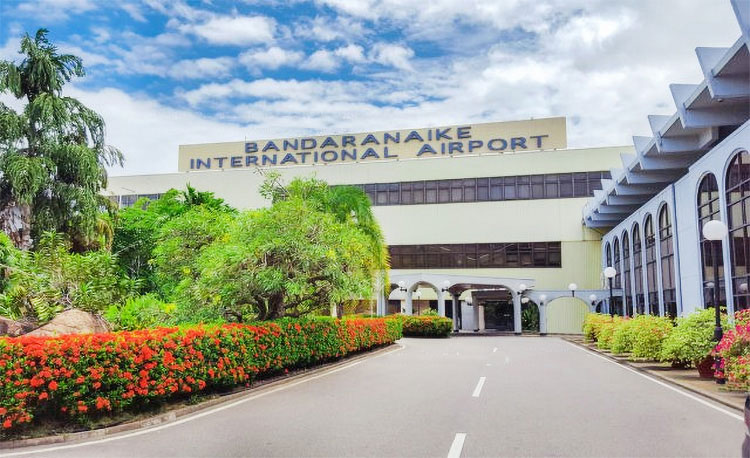
The government has cleared a USD 40.84 million and Rs. 8,548.75 million contract to build a dedicated aviation fuel pipeline from Muthurajawela to Bandaranaike International Airport (BIA), alongside a massive new fuel storage facility with a capacity of 92,000 cubic metres.
Energy Minister Anura Karunatilaka said the project represented a major investment in strengthening the infrastructure underpinning Sri Lanka’s aviation fuel supply and ensuring more reliable fuel availability at the country’s main international airport.
‘This project will provide the infrastructure required to strengthen the reliability and continuity of aviation fuel supplies to Bandaranaike International Airport, Karunatilaka said.
The contract has been awarded to China Petroleum Pipeline Engineering Company Limited, following an international competitive procurement process in which three bids were received.
The project will see a new aviation fuel storage tank complex constructed at Muthurajawela, together with the associated infrastructure required for handling and transferring aviation fuel.

By Hiran H Senewiratne
Trading activity on the Colombo Stock Exchange (CSE) gathered pace yesterday as global fuel prices began to show signs of easing, according to market analysts.In this context, both indices moved upwards. All Share Price Index up by 67.97 points while S and P SL20 up by 8.30 points.
Turnover stood at Rs 1.4 billion with seven crossings. Those crossings were reported in Sampath Bank 1.7 million shares crossed to the tune of Rs 238 million and its share price traded at Rs 140, Access Engineering two million shares crossed to the tune of Rs 159 million and its share price traded at Rs 79.50, LOLC one million shares crossed to the tune of Rs 129 million and its share price traded at Rs 129, HNB 100,000 shares crossed to the tune of Rs 38.4 million and its share price traded at Rs 384, JKH 1.9 million shares crossed to the tune of Rs 35 million and its share price traded at Rs 18.60, Hayleys 100,000 shares crossed to the tune of Rs 22.50 million and its share price traded at Rs 225 and Richard Pieris 847,000 shares crossed to the tune of Rs 22 million and its share price traded at Rs 25.50.
In the retail market top seven companies that have mainly contributed to the turnover were Sampath Bank Rs 114 million (813,000 shares traded), JKH Rs 100 million (5.3 million shares traded) LB Finance Rs 49 million (325,000 shares traded), HNB Finance Rs 30 million (27 million shares traded), HNB Rs 27 million (70000 shares traded), NTB Rs 25 million (82000 shares traded ) and Lanka IOC Rs 21 million (666,000 shares traded). During the day 65 million shares volumes changed hands in 10433 transactions.
The Banking and manufacturing sector counters performed well. In the banking sector Sampath Bank let the market while manufacturing sector especially JKH also significantly performed well. With the fuel revision Land IOC also a significant stock at the floor.
Meanwhile, First Capital Treasuries said that Ramesh Schaffter resigned as a Non-Independent Non-Executive Director with effect from October 1, to facilitate the restructuring of the company’s board.
Yesterday the Central Bank announced the US Dollar rate as against rupee. The rupee was quoted flat at Rs 330.65/80 to the US dollar in the spot market , while bond yields dropped, dealers said.

Ambassador of the UAE to Sri Lanka meets with the Prime Minister

EU rejects Trump’s diesel demand amid Iran war shortages

Sineth Jayawardena, Vijayakanth Viyaskanth in Sri Lanka squad for Pakistan T20Is

Bronze at stake as Bangladesh, Sri Lanka look to bring cheer to Asian Games contingents

Wanderers to host 2027 men’s ODI World Cup final as well as India vs Pakistan

Prime Minister joins Gandhi Jayanti Commemoration

‘Dates have the highest sugar content to fight Coronavirus’

Sunday Island 27 December – Headlines

#SundayIsland 17th December – Headlines

Sunday Island – 28th March

Sunday Island Headlines – 21 March

Sunday Island – 21st February – Headlines
-

 Editorial7 days ago
Birth of a bad law
-

 News5 days ago
Police remove Thileepan statue in Jaffna
-

 News7 days ago
TIN mandatory for key transactions from Nov. 1
-

 Features5 days ago
The 22nd Amendment, constitutional recovery and illiberal slippage
-

 Features5 days ago
Of foreigners as CEOs of Lankan ventures
-

 Latest News3 days ago
Gold winner Tharanga gets brand-new Honda Vezel from SLAAJ
-

 News5 days ago
Sajith rejects Jt. Opp. protest sabotage claim; SJB TU chief demands remedial action
-

 Features4 days ago
Thailand’s biggest new global star …