
Features
Sri Lankan pioneering superconductivity research

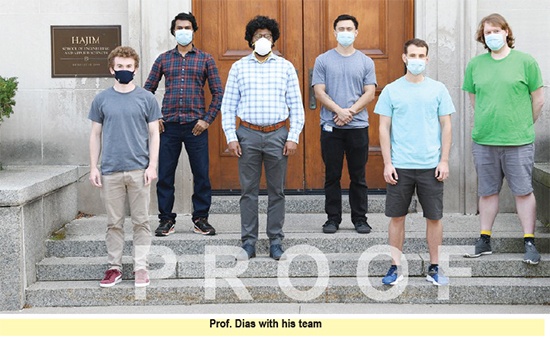
Prof Ranga Dias and team make world’s first-ever room-temperature superconductor
By Sajitha Prematunge
It is not a vaccine for COVID-19, but it could be the next best thing. The world’s first superconductor at room temperature, developed by a research team lead by Sri Lankan born physicist, Prof. Ranga Dias at the University of Rochester, USA, could potentially revolutionise everything from transport to energy industry.
The team recently discovered carbonaceous sulphur hydride (CSH), a new compound that acts as a superconductor at 15 °C at a pressure of 267 Giga Pascals (Gpa), or 2.6 million atmospheres (75 percent of the pressure at the earth’s core). The heady article in Nature magazine, which published this groundbreaking discovery in its cover story on October 15, may sound gobbledygook for some. Consequently, The Island interviewed University of Rochester, USA, Department of Physics and Astronomy and Department of Mechanical Engineering, Assistant professor Prof. Ranga Dias; Ph.D. student in Physics, Hiranya Pasan and Ph.D. candidate in Optics, Ashan Ariyawansa to put things in perspective.
A superconductor is a materiel that poses no electrical resistance. “We used two diamonds, each approximately 150 to 200 micron in diameter, on top of each other, to make what’s called a diamond anvil cell. The sample was sandwiched between the two diamonds and pressure applied.” Pasan explained that they could achieve pressures of up to 500 Giga Pascals with the diamond anvil cell. “For comparison, that’s more than the pressure at the earth’s core,” said Pasan. “The diamond anvil cell acts as a materiel search engine, that we use to test material at different pressure until we found the ideal conditions to achieve superconductivity for each material, allowing us to determine which materiel is the most effective. And the result was CSH, a compound belonging to a new class of dense hydrogen rich material.
What took so long?
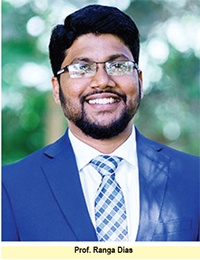 Even though their work was based on old theory, in existence for more than a century, there is still a lot of unknowns. “Even established theory does not explain the mechanism that goes into the making of a superconducting material,” said Dias. But they had two criteria going for them, the ideal superconductor should be of a lighter element that can make stronger bonds. This was the basic premise under which Dias and his team started working with carbon and sulphur. “Our success depended on the right elemental combination,” said Dias, a researcher on high-pressure physics, who had been working with carbon and sulfur for just over a decade.
Pressure variations can convert basic elements of the periodic table into something completely different. Dias explained complex high-pressure physics with a simple analogy. There are two people in a room who can’t interact with each other because they are on opposite corners of the room. Now have the walls close in on them until they are able to talk, shake hands and interact. “The same principle can be applied to elements. When pressurized, atoms and molecules become more interactive and make new bonds. This alters the actual chemical nature of the compound. That’s the beauty of high-pressure physics, it allows you to manipulate the identity of compounds to create whole new material with completely unexpected properties,” said Dias.
Previous research
Dias holds a Bachelor of Science degree from the University of Colombo. He turned his attention to metallic hydrogen research as an extension of his PhD research on high-pressure physics at the University of Washington. In 2017, Dias, then a postdoctoral fellow at Harvard University and Isaac Silvera, physicist at Harvard announced the discovery of metallic hydrogen in the Science magazine. Their experiment involved compressing hydrogen gas, which liquifies when cooled to minus 423 degrees Fahrenheit (minus 252.778 Celsius), and then solidifying it at lower temperatures. The claim came under heavy criticism for being based on a single observation, on reflectivity (an expected signature of metallic hydrogen), and without a direct measurement of the pressure involved. The original ‘metallic hydrogen’ sample was lost during the subsequent failure of the diamond anvil cell. Prof. Dias said: “It was a complete study. What is left is to describe the properties of metallic hydrogen, which we are actively working on. Research takes time. None of these experiments are easy.” He joined the University of Rochester, in 2017 as a professor, and is currently conducting further research on metallic hydrogen. He further explained that the Harvard group measured the pressure directly using standard methods that any high-pressure scientist used. Every high-pressure experiment ended with the failure of the diamond anvil cell, which means the loss of the sample. Consequently, Dias argued that there was nothing unusual about the fact that their diamond broke, resulting in the loss of the sample. “I think fellow competitors who were trying to make metallic hydrogen wasn’t happy that we got it right, their criticism has nothing to do with science but rather was a political attack on my previous advisor [Silvera].”
When asked how positive he is about the newly discovered carbonaceous sulphur hydride, in light of the previous backlash, Dias said that he doubted there was a connection. “They are two different experiments and very different samples. The hallmark of superconductivity is the complete absence of electrical resistance. And another property of superconducting materials is that when it is cooled below the superconducting transition temperature, the magnetic field lines are expelled from the material. We have observed both of these key properties on our carbonaceous sulphur hydride materials at high pressures.” Dias confident of the results.
Prof. Dias’ finding has definitely sparked investor interest. In fact, investors are already lining up to fund a research company, by the name of ‘Unearthly Materials’, set up under the leadership of Prof. Dias to carry out further research and to manufacture superconductors on a large scale. A financial capital of US $ 2 million, has already been provided by investors. Dias hopes it will culminate in a highly productive venture in three to five years.
Implications
Prof. Dias believes that the technology could open up a world of possibilities for medical imaging such as MRI, computing and consumer electronics such as mobile phones. Applications of his discovery include low-cost MRI scanners, magnetic levitation trains, and power lines with no electrical resistance. “A computer, for example, has a heavy cooling system with heat sink, fans and the like, but with a superconductor none of these will be necessary,” explained Hiranya Pasan, who was tasked with low temperature analysis in this research. With this kind of tech everything from car radiators to train tracks could become redundant. “A huge amount of energy is lost in transmission per year. It adds up to a lot of money,” pointed out Pasan. So, if someone were to mass produce superconducting wire, which offers no electrical resistance, he would save billions of or dollars for countless governments.
And then there is the Meissner effect, which in layman’s terms means to repel a magnet. Superconductors are strongly diamagnetic and expel magnetic fields. As such trains could employ magnets that levitate on superconducting material. “It produces no friction,” explained Pasan. Such frictionless high-speed trains could revolutionise the transport sector.
“The technology already exists,” explained Dias. Superconducting technology is used in MRI scanners, particle accelerators, and magnetic levitation trains of experimental scale in Japan, all of which involves large magnetic fields. “But it requires cryogenics.” Meaning that some metals reach superconductivity at extremely cold temperatures and, therefore, have to be cooled to about 10 to 20 Kelvin. For context, that’s minus 263.15 to 253.15 Celsius. The critical temperature of the first superconductor, discovered in 1911, was minus 269 °C, and the fact that no research has ever been able to find a material that acts as a superconductor in room temperature has been one of the major challenges in physics.
“The cryogenic factor is what makes the technology so expensive and therefore economically unviable,” pointed out Dias. So, if cryogenics were to be taken out of the equation, it would make medical imaging, for example, much more affordable and efficient. Prof. Dias explained that liquid helium is the most widely used coolant in superconducting applications, a resource fast diminishing.
He and his team were able to take the cryogenics out of the equation, but maintaining such gargantuan pressures make mass production of superconducting material virtually impossible. When asked how stable the new compound was Dias explained that CSH could be metastable, meaning that it may not revert to the original compound of carbon and sulphur once pressure is relieved. If not, it’s back to square one for the team as they would have to find another compound that acts as a superconductor at both room temperature and atmospheric pressure. The team revealed that they would conduct the ultimate experiment by relieving pressure, in the weeks to come, which Pasan has been tasked with. “Once we have a metastable superconducting material at ambient pressure, it’s just a matter of replicating it, using techniques like chemical deposition and Molecular-beam epitaxy (MBE), to achieve mass production.” Those were the standard techniques and therefore were affordable, he said.
Ground-breaking discoveries are made every few decades in the western world and they have little or no effect at all on developing nations such as Sri Lanka. So why is a superconductor at room temperature even significant for a country like Sri Lanka? “I don’t think that the GDP matters in terms of implications of such discoveries, said Dias. “What is rocket science is developing a superconductor at room temperature. When that’s a reality, application comes easy. Whether it was frictionless trains or MRI scanners, such technology can always be applied by replacing the existing technology with the new.”
Application of such technology in quantum computing would be difficult for a country like Sri Lanka, but Dias pointed out that the implications of the technology for energy transmission was of considerable significance to developing countries. As Pasan pointed out, a lot of electricity is lost during transmission. Dias argued that with a superconducting wire, that pose no resistance, third world power generation can be made more efficient, thereby increasing capacity. “This kind of application is not difficult to apply even in a developing country.” Dias assured that such technology would be affordable even for developing countries.
Local students
When asked about the practical difficulties Sri Lankan students have to face, Hiranya pointed out that as opposed to Sri Lanka, the US has a more student-centred education system, while Dias said there was a clear lack of enthusiasm for research in Sri Lanka. “During my time in Sri Lanka, we were hardly exposed to experiments, we rarely saw instruments, except at practicals during undergraduate years, simply because we didn’t have the facilities,” said Prof. Dias. “The system is exam-oriented, and as a result we lacked hands on experience.” Dias pointed out that in the US education system there was ample opportunity for research. “Even the exam questions here are very practical. It hones critical thinking instead of promoting memorising equations and just getting good grades.” Such a system increases research productivity, he said.
“Research lacks support in Sri Lanka, especially in terms of funding,” said Dias. “In the States we can acquire federal, corporate and other sources of funding. But in Sri Lanka we don’t have that kind of a mechanism.”
But things are looking up, said Ariyawansa. “Collaborative research on chemistry and biotechnology is undertaken increasingly in Sri Lanka,” he said, pointing out that industrial chemistry and nanotechnology were fast developing areas, but he admitted that physics was still lagging behind. “We now have institutions such as SLINTEC [Sri Lanka Institute of Nanotechnology], which has succeeded in attracting a lot of expatriate academics back into the country,” added Dias. He opined that such infrastructural support and funding would facilitate cutting-edge research.
When asked whether such cutting-edge research would have any practical applications in Sri Lanka and whether putting so much money and effort into research was viable in the absence of practical applications, Prof. Dias said that there would always be opportunities in terms of putting research into practice. “Commercial production of graphene by SLINTEC is a case in point. It’s a direct application. I’m sure that if Sri Lanka can produce high grade graphene, we can export it. Graphene has a lot of applications, especially in electronics. It’s used widely in the US, Japan, Europe and South Korea for semiconductor and mobile applications.”
The same principle can be applied to diamonds. “With the right combinations of material diamonds can be grown in the lab,” Dias pointed out that this could revolutionise the diamond industry. “This is already being done in the US,” said Dias, reiterating that material research would always have applications.


Message from Malaiyaha Tamil community to govt:
Insights from SSA Cyclone Ditwah Survey
When climate disasters strike, they don’t affect everyone equally. Marginalised communities typically face worse outcomes, and Cyclone Ditwah is no exception. Especially in a context where normalcy is far from “normal”, the idea of returning to normalcy or restoring a life of normalcy makes very little sense.
The island-wide survey (https://ssalanka.org/reports/) conducted by the Social Scientists’ Association (SSA), between early to mid-January on Cyclone Ditwah shows stark regional disparities in how satisfied or dissatisfied people were with the government’s response. While national satisfaction levels were relatively high in most provinces, the Central Province tells a different story.
Only 35.2% of Central Province residents reported that they were satisfied with early warning and evacuation measures, compared to 52.2% nationally. The gap continues across every measure: just 52.9% were satisfied with immediate rescue and emergency response, compared with the national figure of 74.6%. Satisfaction with relief distribution in the Central Province is 51.9% while the national figure stands at 73.1%. The figures for restoration of water, electricity, and roads are at a low 45.9% in the central province compared to the 70.9% in national figures. Similarly, the satisfaction level for recovery and rebuilding support is 48.7% in the Central Province, while the national figure is 67.0%.
A deeper analysis of the SSA data on public perceptions reveals something important: these lower satisfaction rates came primarily from the Malaiyaha Tamil population. Their experience differed not just from other provinces, but also from other ethnic groups living in the Central Province itself.
The Malaiyaha Tamil community’s vulnerability didn’t start with the cyclone. Their vulnerability is a historically and structurally pre-determined process of exclusion and marginalisation. Brought to Sri Lanka during British rule to work for the empire’s plantation economies, they have faced long-term economic exploitation and have repeatedly been denied access to state support and social welfare systems. Most estate residents still live in ‘line rooms’ and have no rights to the land they cultivate and live on. The community continues to be governed by an outdated estate management system that acts as a barrier to accessing public and municipal services such as road repair, water, electricity and other basic infrastructures available to other citizens.
As far as access to improved water sources is concerned, the Sri Lanka Demographic Health Survey (2016) shows that 57% of estate sector households don’t have access to improved water sources, while more than 90% of households in urban and rural areas do. With regard to the level of poverty, as the Department of Census and Statistics (2019) data reveals, the estate sector where most Malaiyaha Tamils live had a poverty headcount index of 33.8%; more than double the national rate of 14.3%. These statistics highlight key indicators of the systemic discrimination faced by the Malaiyaha Tamil community.
Some crucial observations from the SSA data collectors who enumerated responses from estate residents in the survey reveal the specific challenges faced by the Malaiyaha Tamils, particularly in their efforts to seek state support for compensation and reconstruction.
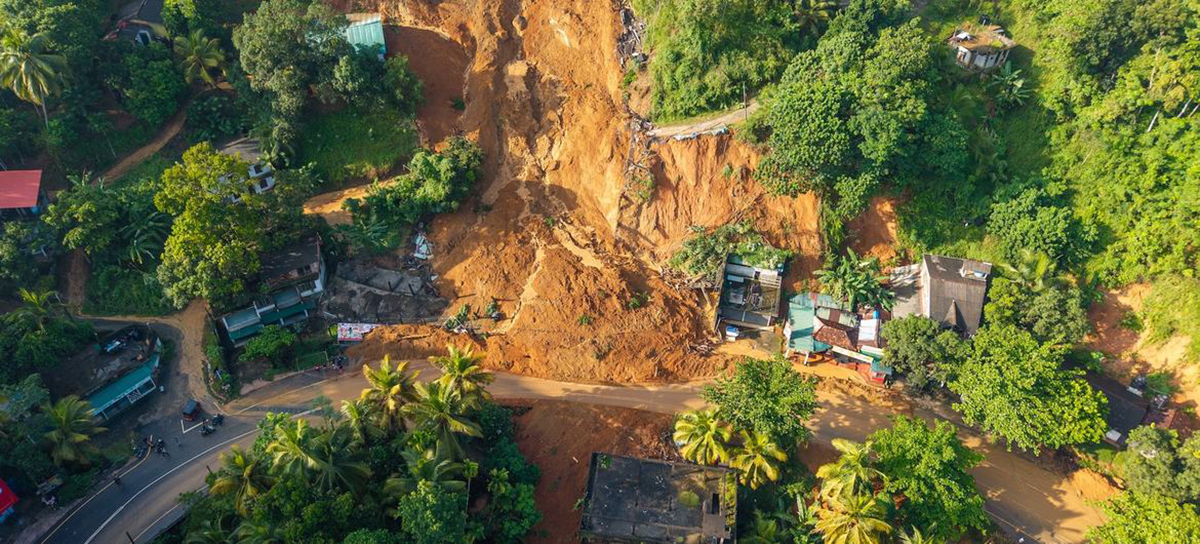
First, the Central Province experienced not just flooding but also the highest number of landslides in the island. As a result, some residents in the region lost entire homes, access roadways, and other basic infrastructures. The loss of lives, livelihoods and land was at a higher intensity compared to the provinces not located in the hills. Most importantly, the Malaiyaha Tamil community’s pre-existing grievances made them even more vulnerable and the government’s job of reparation and restitution more complex.
Early warnings hadn’t reached many areas. Some data collectors said they themselves never heard any warnings in estate areas, while others mentioned that early warnings were issued but didn’t reach some segments of the community. According to the resident data collectors, the police announcements reached only as far as the sections where they were able to drive their vehicles to, and there were many estate roads that were not motorable. When warnings did filter through to remote locations, they often came by word of mouth and information was distorted along the way. Once the disaster hit, things got worse: roads were blocked, electricity went out, mobile networks failed and people were cut off completely.
Emergency response was slow. Blocked roads meant people could not get to hospitals when they needed urgent care, including pregnant mothers. The difficult terrain and poor road conditions meant rescue teams took much longer to reach affected areas than in other regions.
Relief supplies didn’t reach everyone. The Grama Niladhari divisions in these areas are huge and hard to navigate, making it difficult for Grama Niladharis to reach all places as urgently as needed. Relief workers distributed supplies where vehicles could go, which meant accessible areas got help while remote communities were left out.
Some people didn’t even try to go to safety centres or evacuation shelters set up in local schools because the facilities there were already so poor. The perceptions of people who did go to safety centres, as shown in the provincial data, reveal that satisfaction was low compared to other affected regions of the country. Less than half were satisfied with space and facilities (42.1%) or security and protection (45.0%). Satisfaction was even lower for assistance with lost or damaged documentation (17.9%) and information and support for compensation applications (28.2%). Only 22.5% were satisfied with medical care and health services below most other affected regions.
Restoring services proved nearly impossible in some areas. Road access was the biggest problem. The condition of the roads was already poor even before the cyclone, and some still haven’t been cleared. Recovery is especially difficult because there’s no decent baseline infrastructure to restore, hence you can’t bring roads and other public facilities back to a “good” condition when they were never good, even before the disaster.
Water systems faced their own complications. Many households get water from natural sources or small community projects, and not the centralised state system. These sources are often in the middle of the disaster zone and therefore got contaminated during the floods and landslides.
Long-term recovery remains stalled. Without basic infrastructure, areas that are still hard to reach keep struggling to get the support they need for rebuilding.
Taken together, what do these testaments mean? Disaster response can’t be the same for everyone. The Malaiyaha Tamil community has been double marginalised because they were already living with structural inequalities such as poor infrastructure, geographic isolation, and inadequate services which have been exacerbated by Cyclone Ditwah. An effective and fair disaster response needs to account for these underlying vulnerabilities. It requires interventions tailored to the historical, economic, and infrastructural realities that marginalized communities face every day. On top of that, it highlights the importance of dealing with climate disasters, given the fact that vulnerable communities could face more devastating impacts compared to others.
(Shashik Silva is a researcher with the Social Scientists’ Association of Sri Lanka)
by Shashik Silva ✍️
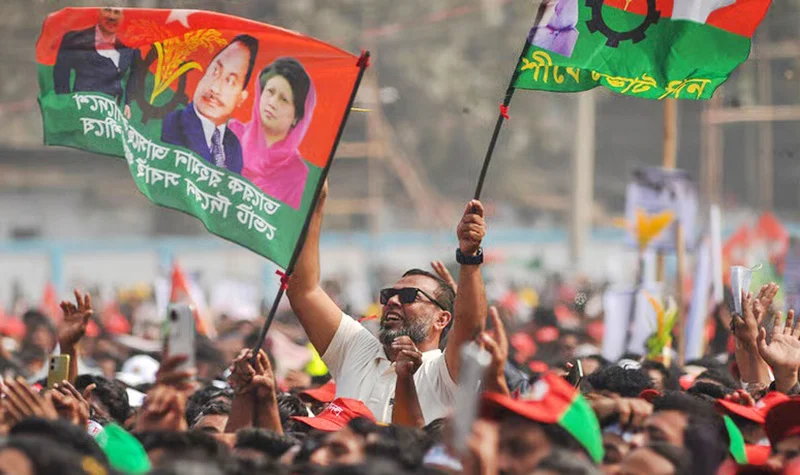
 Will the Bangladesh parliamentary election bring into being a government that will ensure ethnic and religious harmony in the country? This is the poser on the lips of peace-loving sections in Bangladesh and a principal concern of those outside who mean the country well.
The apprehensions are mainly on the part of religious and ethnic minorities. The parliamentary poll of February 12th is expected to bring into existence a government headed by the Bangladesh Nationalist Party (BNP) and the Islamist oriented Jamaat-e-Islami party and this is where the rub is. If these parties win, will it be a case of Bangladesh sliding in the direction of a theocracy or a state where majoritarian chauvinism thrives?
Chief of the Jamaat, Shafiqur Rahman, who was interviewed by sections of the international media recently said that there is no need for minority groups in Bangladesh to have the above fears. He assured, essentially, that the state that will come into being will be equable and inclusive. May it be so, is likely to be the wish of those who cherish a tension-free Bangladesh.
The party that could have posed a challenge to the above parties, the Awami League Party of former Prime Minister Hasina Wased, is out of the running on account of a suspension that was imposed on it by the authorities and the mentioned majoritarian-oriented parties are expected to have it easy at the polls.
A positive that has emerged against the backdrop of the poll is that most ordinary people in Bangladesh, be they Muslim or Hindu, are for communal and religious harmony and it is hoped that this sentiment will strongly prevail, going ahead. Interestingly, most of them were of the view, when interviewed, that it was the politicians who sowed the seeds of discord in the country and this viewpoint is widely shared by publics all over the region in respect of the politicians of their countries.
Some sections of the Jamaat party were of the view that matters with regard to the orientation of governance are best left to the incoming parliament to decide on but such opinions will be cold comfort for minority groups. If the parliamentary majority comes to consist of hard line Islamists, for instance, there is nothing to prevent the country from going in for theocratic governance. Consequently, minority group fears over their safety and protection cannot be prevented from spreading.
Therefore, we come back to the question of just and fair governance and whether Bangladesh’s future rulers could ensure these essential conditions of democratic rule. The latter, it is hoped, will be sufficiently perceptive to ascertain that a Bangladesh rife with religious and ethnic tensions, and therefore unstable, would not be in the interests of Bangladesh and those of the region’s countries.
Unfortunately, politicians region-wide fall for the lure of ethnic, religious and linguistic chauvinism. This happens even in the case of politicians who claim to be democratic in orientation. This fate even befell Bangladesh’s Awami League Party, which claims to be democratic and socialist in general outlook.
We have it on the authority of Taslima Nasrin in her ground-breaking novel, ‘Lajja’, that the Awami Party was not of any substantial help to Bangladesh’s Hindus, for example, when violence was unleashed on them by sections of the majority community. In fact some elements in the Awami Party were found to be siding with the Hindus’ murderous persecutors. Such are the temptations of hard line majoritarianism.
In Sri Lanka’s past numerous have been the occasions when even self-professed Leftists and their parties have conveniently fallen in line with Southern nationalist groups with self-interest in mind. The present NPP government in Sri Lanka has been waxing lyrical about fostering national reconciliation and harmony but it is yet to prove its worthiness on this score in practice. The NPP government remains untested material.
As a first step towards national reconciliation it is hoped that Sri Lanka’s present rulers would learn the Tamil language and address the people of the North and East of the country in Tamil and not Sinhala, which most Tamil-speaking people do not understand. We earnestly await official language reforms which afford to Tamil the dignity it deserves.
An acid test awaits Bangladesh as well on the nation-building front. Not only must all forms of chauvinism be shunned by the incoming rulers but a secular, truly democratic Bangladesh awaits being licked into shape. All identity barriers among people need to be abolished and it is this process that is referred to as nation-building.
On the foreign policy frontier, a task of foremost importance for Bangladesh is the need to build bridges of amity with India. If pragmatism is to rule the roost in foreign policy formulation, Bangladesh would place priority to the overcoming of this challenge. The repatriation to Bangladesh of ex-Prime Minister Hasina could emerge as a steep hurdle to bilateral accord but sagacious diplomacy must be used by Bangladesh to get over the problem.
A reply to N.A. de S. Amaratunga
A response has been penned by N.A. de S. Amaratunga (please see p5 of ‘The Island’ of February 6th) to a previous column by me on ‘ India shaping-up as a Swing State’, published in this newspaper on January 29th , but I remain firmly convinced that India remains a foremost democracy and a Swing State in the making.
If the countries of South Asia are to effectively manage ‘murderous terrorism’, particularly of the separatist kind, then they would do well to adopt to the best of their ability a system of government that provides for power decentralization from the centre to the provinces or periphery, as the case may be. This system has stood India in good stead and ought to prove effective in all other states that have fears of disintegration.
Moreover, power decentralization ensures that all communities within a country enjoy some self-governing rights within an overall unitary governance framework. Such power-sharing is a hallmark of democratic governance.

 Valentine’s Day is all about celebrating love, romance, and affection, and this is how some of our well-known personalities plan to celebrate Valentine’s Day – 14th February:
Merlina Fernando (Singer)
Yes, it’s a special day for lovers all over the world and it’s even more special to me because 14th February is the birthday of my husband Suresh, who’s the lead guitarist of my band Mission.
We have planned to celebrate Valentine’s Day and his Birthday together and it will be a wonderful night as always.
We will be having our fans and close friends, on that night, with their loved ones at Highso – City Max hotel Dubai, from 9.00 pm onwards.
Lorensz Francke (Elvis Tribute Artiste)
On Valentine’s Day I will be performing a live concert at a Wealthy Senior Home for Men and Women, and their families will be attending, as well.
I will be performing live with romantic, iconic love songs and my song list would include ‘Can’t Help falling in Love’, ‘Love Me Tender’, ‘Burning Love’, ‘Are You Lonesome Tonight’, ‘The Wonder of You’ and ‘’It’s Now or Never’ to name a few.
To make Valentine’s Day extra special I will give the Home folks red satin scarfs.
Emma Shanaya (Singer)
I plan on spending the day of love with my girls, especially my best friend. I don’t have a romantic Valentine this year but I am thrilled to spend it with the girl that loves me through and through. I’ll be in Colombo and look forward to go to a cute cafe and spend some quality time with my childhood best friend Zulha.
JAYASRI

Emma-and-Maneeka
This Valentine’s Day the band JAYASRI we will be really busy; in the morning we will be landing in Sri Lanka, after our Oman Tour; then in the afternoon we are invited as Chief Guests at our Maris Stella College Sports Meet, Negombo, and late night we will be with LineOne band live in Karandeniya Open Air Down South. Everywhere we will be sharing LOVE with the mass crowds.
Kay Jay (Singer)
I will stay at home and cook a lovely meal for lunch, watch some movies, together with Sanjaya, and, maybe we go out for dinner and have a lovely time. Come to think of it, every day is Valentine’s Day for me with Sanjaya Alles.
Maneka Liyanage (Beauty Tips)
On this special day, I celebrate love by spending meaningful time with the people I cherish. I prepare food with love and share meals together, because food made with love brings hearts closer. I enjoy my leisure time with them — talking, laughing, sharing stories, understanding each other, and creating beautiful memories. My wish for this Valentine’s Day is a world without fighting — a world where we love one another like our own beloved, where we do not hurt others, even through a single word or action. Let us choose kindness, patience, and understanding in everything we do.
Janaka Palapathwala (Singer)
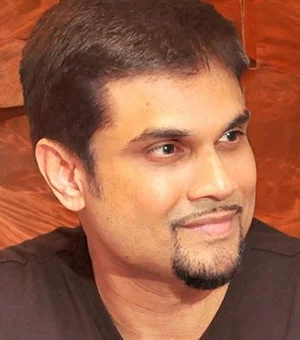
Janaka
Valentine’s Day should not be the only day we speak about love.
From the moment we are born into this world, we seek love, first through the very drop of our mother’s milk, then through the boundless care of our Mother and Father, and the embrace of family.
Love is everywhere. All living beings, even plants, respond in affection when they are loved.
As we grow, we learn to love, and to be loved. One day, that love inspires us to build a new family of our own.
Love has no beginning and no end. It flows through every stage of life, timeless, endless, and eternal.
Natasha Rathnayake (Singer)
We don’t have any special plans for Valentine’s Day. When you’ve been in love with the same person for over 25 years, you realise that love isn’t a performance reserved for one calendar date. My husband and I have never been big on public displays, or grand gestures, on 14th February. Our love is expressed quietly and consistently, in ordinary, uncelebrated moments.
With time, you learn that love isn’t about proving anything to the world or buying into a commercialised idea of romance—flowers that wilt, sweets that spike blood sugar, and gifts that impress briefly but add little real value. In today’s society, marketing often pushes the idea that love is proven by how much money you spend, and that buying things is treated as a sign of commitment.
Real love doesn’t need reminders or price tags. It lives in showing up every day, choosing each other on unromantic days, and nurturing the relationship intentionally and without an audience.
This isn’t a judgment on those who enjoy celebrating Valentine’s Day. It’s simply a personal choice.
Melloney Dassanayake (Miss Universe Sri Lanka 2024)
 I truly believe it’s beautiful to have a day specially dedicated to love. But, for me, Valentine’s Day goes far beyond romantic love alone. It celebrates every form of love we hold close to our hearts: the love for family, friends, and that one special person who makes life brighter. While 14th February gives us a moment to pause and celebrate, I always remind myself that love should never be limited to just one day. Every single day should feel like Valentine’s Day – constant reminder to the people we love that they are never alone, that they are valued, and that they matter.
I’m incredibly blessed because, for me, every day feels like Valentine’s Day. My special person makes sure of that through the smallest gestures, the quiet moments, and the simple reminders that love lives in the details. He shows me that it’s the little things that count, and that love doesn’t need grand stages to feel extraordinary. This Valentine’s Day, perfection would be something intimate and meaningful: a cozy picnic in our home garden, surrounded by nature, laughter, and warmth, followed by an abstract drawing session where we let our creativity flow freely. To me, that’s what love is – simple, soulful, expressive, and deeply personal. When love is real, every ordinary moment becomes magical.
Noshin De Silva (Actress)
Valentine’s Day is one of my favourite holidays! I love the décor, the hearts everywhere, the pinks and reds, heart-shaped chocolates, and roses all around. But honestly, I believe every day can be Valentine’s Day.
It doesn’t have to be just about romantic love. It’s a chance to celebrate love in all its forms with friends, family, or even by taking a little time for yourself.
Whether you’re spending the day with someone special or enjoying your own company, it’s a reminder to appreciate meaningful connections, show kindness, and lead with love every day.
And yes, I’m fully on theme this year with heart nail art and heart mehendi design!
Wishing everyone a very happy Valentine’s Day, but, remember, love yourself first, and don’t forget to treat yourself.
Sending my love to all of you.

Russia killed opposition leader Alexei Navalny using dart frog toxin, UK says

Tom Banton 63* sets up nervy win for England

Landslide Early Warnings issued to the districts of Kandy and Nuwara Eliya extended

Advisory for Severe Lightning issued to the Western, Sabaragamuwa and Southern provinces and Badulla and Nuwara-Eliya districts

Tucker 94* headlines Ireland’s thrashing of Oman

High risk of rain in marquee India vs Pakistan T20 World Cup game in Colombo

‘Dates have the highest sugar content to fight Coronavirus’

Sunday Island 27 December – Headlines

#SundayIsland 17th December – Headlines

Sunday Island – 28th March

Sunday Island Headlines – 21 March

Sunday Island – 21st February – Headlines
-
 Features7 days ago
My experience in turning around the Merchant Bank of Sri Lanka (MBSL) – Episode 3
-

 Business7 days ago
Remotely conducted Business Forum in Paris attracts reputed French companies
-

 Business7 days ago
Four runs, a thousand dreams: How a small-town school bowled its way into the record books
-
 Business7 days ago
ComBank and Hayleys Mobility redefine sustainable mobility with flexible leasing solutions
-

 Business4 days ago
Autodoc 360 relocates to reinforce commitment to premium auto care
-

 Midweek Review4 days ago
A question of national pride
-

 Opinion3 days ago
Will computers ever be intelligent?
-
 Midweek Review4 days ago
Theatre and Anthropocentrism in the age of Climate Emergency