
News
Sri Lankan Muslims deserve to be nationally recognised for resisting division – National Shoora Council


Muslims became the first major obstacle for LTTE creating a racial entity
The National Shoora Council (NSC) has welcomed the pledges made by President Anura Kumara Dissanayake that Sri Lanka will not be allowed to suffer another war, that there will not be any space for racist extremism in the country and that the nation belongs equally to all communities! President Dissanayake made these promises to the nation at the 17th National War Heroes’ Day commemoration held on May 19th at Battaramulla.
The NSC noted that Sri Lanka’s armed forces successfully led the war and defeated at tremendous cost and sacrifice, the LTTE’s thirty-year attempt to divide Sri Lanka. However, remembrance of this significant event cannot be limited only to the country’s armed forces. It is vital that the State must in addition, make a full frontal recognition of the contributions of the then President, as well as the citizens of this country, particularly the Muslims of Sri Lanka, not forgetting the invaluable support of Iran and Pakistan!
It is timely to recall at these anniversaries that the majority of Sri Lankan Tamils sought sharing of power based on a federal structure but did not support the division of the country. The Sri Lankan Muslims however, were very much unhappy with the then Tamil political leadership, following the 1976 Vaddukoddai resolution of 14th May 1976, which also, among other reasons, laid the foundation for the separatist struggle.
Muslims of Sri Lanka by 1989 firmly resisted the LTTE led attempt to set up a separate State. It is well known that the Tamil speaking Muslims paid a very heavy price for not falling in line with the LTTE’s Eelam project! President Dissanayake will remember that in October 1990, the LTTE drove out the entire 90,000 Northern Muslims, women, children and the elderly, giving them only two hours to quit with nothing in hand for their next meal!
In 1989 and 1990, in the East, LTTE killed over a thousand Muslims in several attacks and grabbed significant extent of agricultural lands owned by Muslim farmers. During this time, one of the worst massacre of Muslims in South Asia occurred with the LTTE killing 147 Muslims while performing night prayers in several Mosques in Kattankudy, followed by killing another 121 Muslims in Eravur. Furthermore, Haj pilgrims returning home were diverted at Kurukkalmadam killing nearly 35 of them! Later 69 Muslim farmers in Alanchipothana were mercilessly executed!
The confirmed number of innocent Muslims killed by the LTTE by 1990 coincidentally equalled the number killed in the horrific Easter attack of 21st April 2019! Everyone knows that the LTTE drove away the Northern Muslims and killed the Eastern Muslims because they did not support the LTTE but stood with the armed forces who fought against separatism!
All patriotic Sri Lankans will remember that several Malay Muslims served in key positions in the armed forces, a number of them were killed by LTTE, mostly while in action. Their dedicated services in the Army, Navy and the Air Force and in the deep penetrating units of the forces, during the war, were also widely believed to have angered the LTTE into massacring Muslims in the East and driving them out of the North!
In addition, Iran and Pakistan were two Muslim majority countries which helped Sri Lanka in its struggle to protect the territorial integrity of the country. In 1999, during the tenure of President Chandrika Bandaranaike Kumaratunga, Iran positively responded to the President’s call for urgent assistance by providing vital supplies to the armed forces in the war front!
In November 2007, President Mahinda Rajapakse, visited the Islamic Republic of Iran, arranged by the then Ambassador of Sri Lanka in Iran M M Zuhair PC, presently President of NSC and secured US $ 525 million for the Uma Oya, generating 120 MW of electricity cum Water project, diverting Uma Oya water eastwards to feed 5,000 hectares of fresh agricultural land in the Uva Province. In addition Iran provided US $ 105 million for Sri Lanka’s Rural Electrification Project.
Most importantly commencing January 2008, the critical period of the war, Iran provided a rolling facility valued at nearly US $ 650 million to Sri Lanka to purchase Iranian crude oil on four months’ interest free deferred payment terms. These were vital contributions that helped Sri Lanka during the key stages of the war, that must ungrudgingly be recognized by President Dissanayake!
During this unforgettable period of the war, when Sri Lanka was struggling for funds to purchase arms and ammunition, those who were in the war front valued the invaluable assistance of the Islamic Republics of Iran and Pakistan to Sri Lanka immensely. The NPP government must extend recognition where recognition is due!
Can history suppress that by 1990, Muslims became the first major obstacle against the LTTE’s attempts to divide Sri Lanka on ethnic lines? This community of 2.1 million, truly deserves to be duly recognised and honoured, perhaps next in line to the country’s armed forces!

News
Move to extend judges’ retirement ages could damage Sri Lanka’s global image, warns Prof. Peiris

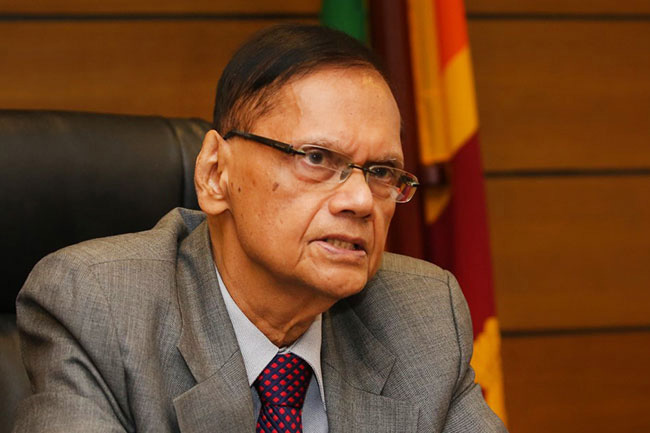
Former Foreign Minister Prof. G. L. Peiris yesterday warned that any move by the government to extend the retirement age of superior court judges could have serious repercussions for Sri Lanka’s international standing, particularly ahead of the next session of the UN Human Rights Council (UNHRC), in Geneva, in September.
Addressing a media briefing, organised by the People’s United Opposition, at its Flower Road, Colombo office, Prof. Peiris claimed that attempts to interfere with the judiciary, through extensions of judges’ terms, would undermine the credibility of Sri Lanka’s courts and weaken the country’s position before the international community.
Prof. Peiris said there was widespread opposition to the proposal to extend the superior court judges’ tenure by two years, with lawyers’ organisations, academics and civil society groups expressing concerns over the move.
“There is no clarity whatsoever from the government’s side,” Prof. Peiris said, claiming that unlike in other countries where such proposals were subjected to lengthy public consultations, there had been no transparency regarding the government’s intentions.
He argued that if such extensions were granted to judges, similar privileges would have to be considered for other sectors, including the public service, university academics and medical specialists.
Prof. Peiris said the issue had gained greater significance due to Sri Lanka’s engagement with the UNHRC, which he described as having established a special investigative mechanism relating to the country.
He alleged that the politicisation of the judiciary would provide further grounds for international criticism against Sri Lanka, which was already facing scrutiny over alleged human rights issues.
“The next session of the UN Human Rights Council will be held in Geneva, in September,” Prof. Peiris said. “This issue will not only affect our country internally, but will also cause serious damage to Sri Lanka internationally.”
He claimed that Sri Lanka had previously defended itself against international interventions by highlighting the independence and reputation of its judicial system.
Referring to the country’s legal history, Prof. Peiris said Sri Lanka had possessed a judiciary respected globally, citing former Supreme Court Judge Dr. Christopher Weeramantry’s tenure as Vice-President of the International Court of Justice in The Hague as an example of international recognition of Sri Lankan judicial expertise.
He said that during his tenure as Foreign Minister, he had maintained that Sri Lanka’s own courts were capable of addressing domestic issues and that foreign intervention was unnecessary.
Prof. Peiris also referred to discussions he had held with Russian Foreign Minister Sergei Lavrov and Chinese Foreign Minister Wang Yi, claiming that both had supported Sri Lanka’s position that external interference in domestic matters should not be permitted.
However, he alleged that the current situation was different, claiming that the judiciary was being politicised through selective extensions of service while vacancies remained in the Supreme Court and Court of Appeal.
He questioned why judicial vacancies had not been filled if the government’s stated objective was to reduce delays in the administration of justice.
“The responsibility of filling these vacancies lies with the executive,” he said, adding that the failure to do so could affect the international reputation of Sri Lanka’s judiciary.
Prof. Peiris also claimed that the Bar Association of Sri Lanka had repeatedly called for the vacancies to be filled, warning that the present developments could have an adverse impact on the country’s standing internationally.
He questioned whether it was justified to place Sri Lanka in a difficult international position to serve, what he described as, “a narrow and partisan political objective.”
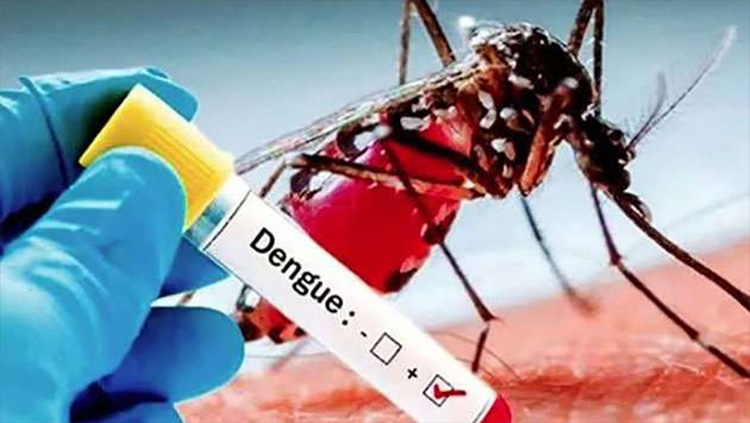
The total number of dengue cases reported in Sri Lanka so far this year has risen to 76,044, with health authorities warning the public to remain vigilant amid a continued surge in infections.
The National Dengue Control Unit (NDCU) said 2,652 dengue cases had been reported on Sunday (19) alone, while 162 Medical Officer of Health (MOH) divisions across the country continue to be classified as high-risk dengue zones.
The latest figures indicate a sharp rise in dengue infections during the past few months, with 8,590 cases recorded in May, followed by 21,537 cases in June. A further 20,666 cases have been reported during the first 19 days of July.
The dengue outbreak has claimed 53 lives so far this year, with the case fatality rate standing at 0.07%, according to the NDCU.
The Western Province remains the worst affected region, accounting for 40,009 cases, or 52.61% of the country’s total infections. The Southern Province has recorded 11,707 cases (15.40%), while the Central Province has reported 6,431 cases (8.46%).
At district level, Gampaha has recorded the highest number of dengue infections with 15,910 cases, followed closely by Colombo with 15,110 cases. Of the Colombo District cases, 3,073 were reported within the Colombo Municipal Council area.
Matara has recorded 5,330 cases, Kandy 5,111 cases and Kalutara 5,010 cases.
Health authorities have urged the public to take preventive measures by keeping their surroundings clean and eliminating mosquito breeding grounds, particularly amid prevailing rainy conditions.The public has also been advised to seek immediate medical attention if symptoms such as fever develop, as early medical intervention is essential in preventing severe complications from dengue.
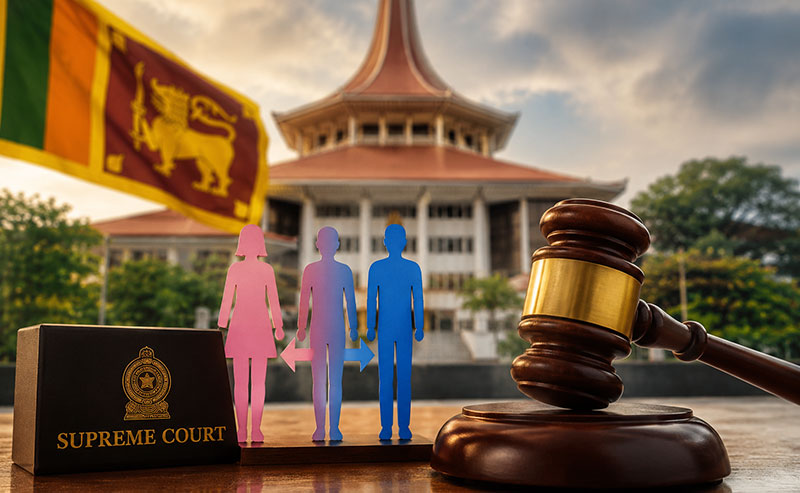
The Supreme Court yesterday dismissed, without taking up for consideration, a Fundamental Rights petition seeking to invalidate a circular that permits individuals in Sri Lanka to change their gender legally .
The petition had been filed by retired Sri Lanka Air Force (SLAF) Warrant Officer Shantha Jayathilake, who challenged the legality of procedures allowing individuals to alter their gender designation following medical and psychiatric assessments.
Former Presidents Maithripala Sirisena and Ranil Wickremesinghe, as well as incumbent President Anura Kumara Dissanayake, were among those named as respondents in the petition.
The petitioner alleged that successive governments, including the present administration, had facilitated gender changes through medical procedures in a manner contrary to Sri Lankan law.
Jayathilake contended that the law did not permit a person to change their sex from male to female or female to male through medical intervention in the absence of a biological basis. He further argued that individuals had been allowed to alter their gender identity on the recommendation of a psychiatrist, under guidelines issued in 2016 by the then Director General of Health Services.
The petitioner also claimed that authorities had been issuing revised birth certificates and National Identity Cards to persons who had undergone gender-transition procedures, maintaining that such actions were unlawful.
However, the Supreme Court declined to entertain the application and dismissed the petition without granting leave to proceed.

Trump slaps 50% tariffs on Canada and Carney vows to ‘intensify’ trade talks

Showers will occur in the Western, Sabaragamuwa and North-western provinces and in Kandy, Nuwara-Eliya, Galle and Matara districts

Move to extend judges’ retirement ages could damage Sri Lanka’s global image, warns Prof. Peiris

Dengue surge infects 76,000, claims about 53 lives

SC dismisses challenge to gender change procedures

BASL urges Justice Minister not to amend Constitution to increase retirement ages of superior court judges

‘Dates have the highest sugar content to fight Coronavirus’

Sunday Island 27 December – Headlines

#SundayIsland 17th December – Headlines

Sunday Island – 28th March

Sunday Island Headlines – 21 March

Sunday Island – 21st February – Headlines
-
 Business2 days ago
‘Giving up was never an option’: The fisherman who fought back after losing millions in SL
-
 Features2 days ago
Two memorable excerpts from a former SLAF commander’s memoir
-
 Latest News3 days ago
Davis cup Asia/Oceania Group IV 2026 to be held in Colombo from 20th to 25th July
-
 Features2 days ago
Erdoğan’s New Republic
-
 Life style2 days ago
Taste of the Swiss Alps comes to Colombo
-
 Features6 days ago
Dirty Money
-
 News3 days ago
Dengue outbreak gallops ahead: Infections surpasses 73,455, leaving 50 dead
-
 News3 days ago
Evidence recorded in money laundering case against Yoshitha Rajapaksa