
Latest News
Sri Lanka unveils Climate Prosperity Plan and Climate Justice Forum to tackle climate challenges globally

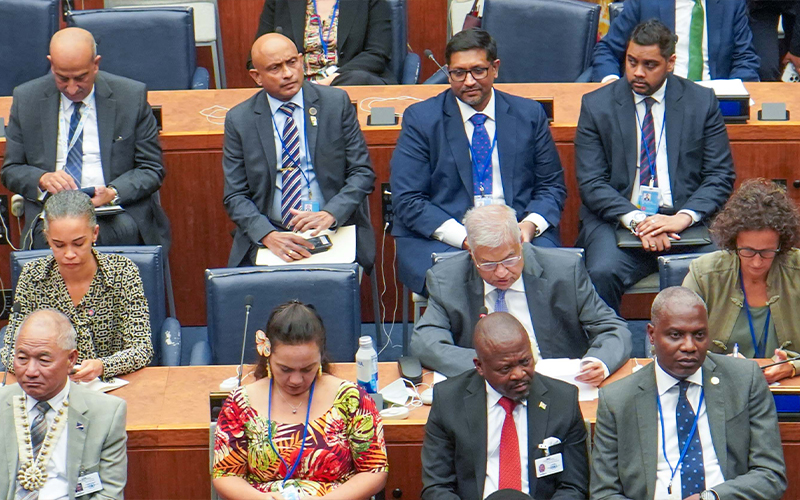
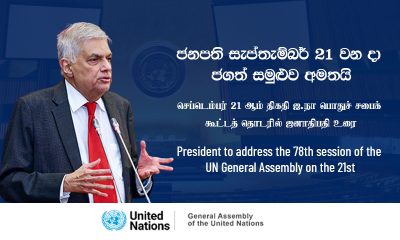
President Ranil Wickremesinghe, speaking at the Climate Ambition Summit on the sidelines of the UN General Assembly on Wednesday (20), affirmed Sri Lanka’s commitment to the Secretary General’s accelerated climate agenda. He highlighted the importance of tangible climate actions and commended the delegates for their valuable suggestions.
President Wickremesinghe drew attention to the significant economic consequences of climate-related issues, with experts predicting a 1.5% GDP loss for Sri Lanka by 2050. In response, Sri Lanka has adopted a dual approach to climate ambition. At COP 27, the President launched the Climate Prosperity Plan, a strategy for green growth centered on renewable energy generation, leveraging the nation’s natural advantages in wind and solar power. This initiative aligns with Sri Lanka’s economic restructuring following the 2022 financial crisis, as the country aims to transition towards a green economy.
The second facet of Sri Lanka’s climate ambition involves supporting the establishment of a climate justice forum. This forum aims to foster international collaboration to address various climate challenges, including loss and damage adaptation and mitigation.
In addition to these efforts, Sri Lanka is proposing two critical measures on the global stage. First, the President suggested the creation of an international climate change university, designed as a global platform for research and development focused on climate mitigation actions.
Second, recognizing the need for responsible resource management, Sri Lanka is concentrating on areas where maximum impact can be achieved. The President introduced the Tropical Belt Climate Ambition Project, targeting the highly bio diverse tropical belt region.
Vulnerable communities in this area are disproportionately affected by climate change. “The tropical belt is the most tropically diverse region on earth. Typically, biodiversity increases as the latitude decreases. The biodiversity increases as we get closer to the equator. Vulnerable communities in the tropical belt are the worst impacted by climate change,” he added.
Investments in renewable energy, nature-based solutions and pollution control within the tropical belt have the potential to yield transformative results, benefiting not only the region but also temperate areas worldwide. Furthermore, the project aligns with the goals of climate change mitigation and adaptation, offering an opportunity for debt relief to low-income countries within the belt. “Not only in the tropical belt, but will also impact on the temperate areas outside. The nature based solutions could contribute substantially to climate change mitigation and adaptation. There are also a number of low-income countries within the belt who will be able to benefit from the debt relief that is being proposed.”
These initiatives, the Tropical Belt Climate Ambition Plan and the proposed debt relief for low-income economies within the belt, are poised to make a substantial contribution to advancing the Secretary General’s accelerated climate agenda. President Ranil Wickremesinghe’s statement underscores Sri Lanka’s dedication to addressing the pressing challenges of climate change on both the national and global fronts.
(PMD)


by Reemus Fernando
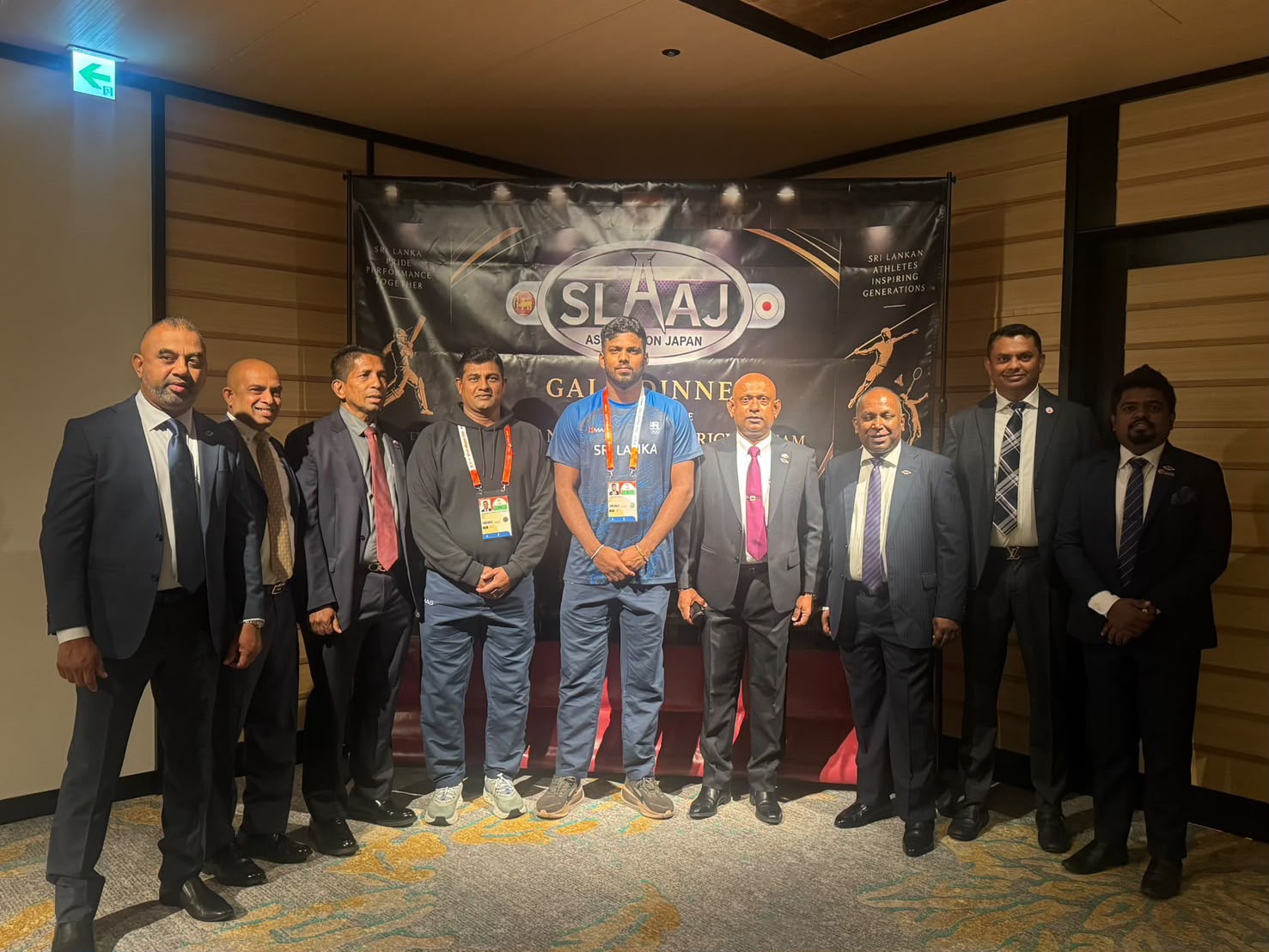
The Sri Lanka Automobile Association in Japan (SLAAJ) has awarded a brand-new Honda Vezel to gold medallist Rumesh Tharanga at a felicitation ceremony for the Sri Lankan team that competed at the Asian Games in Nagoya, Japan.
The gift was announced at the ceremony, held on the eve of the team’s departure from Nagoya.
”We decided to reward every Sri Lankan athlete who wins a gold medal with a brand-new vehicle. We invited all the Sri Lankan athletes taking part in the Games to the felicitation, and at the time of the event, only Tharanga had won gold,”
Nishantha Meegalla, Vice President of the Nagoya Prefecture of the Sri Lanka Business Council of Japan, told ‘The Island’.
Tharanga, the world’s top-ranked javelin thrower this season, won Sri Lanka’s first-ever javelin medal at the Asian Games on Monday, sealing the historic victory with a throw of 88.55 metres.
Approval has been granted at the cabinet meeting held on 01-03-2023 for the National Curriculum Framework and the methodology for implementing the aforementioned framework, which was initiated by the National Institute of Education in 2019 under the education reform process.
However, considering the modules relevant to Grades 1, 6, and 10 that have been prepared by the National Institute of Education for the implementation of the new education reforms by the time the new government comes into power in 2024, it was planned to implement the new National Curriculum Framework only for Grades 1 and 6 in 2026, ensuring appropriate adjustments to the new government’s policies.
Further, it has also been planned to introduce vocational subjects from grade 10 onwards.
Accordingly, the concept paper required for ‘Transformational Change in Sri Lanka’s General Education’, which has been prepared to inform and make relevant parties aware of the proposed adjustments, has also been submitted to the Parliamentary Subcommittee on Education Reforms on 22-10-2025.
Subsequently, as decided at the Cabinet Meeting held on 13-01-2026, steps have been taken to postpone the implementation of education reforms for grade 6, which had been planned under the first phase of the comprehensive reform agenda for general
education, up to the year 2027, and only to implement new curriculum reforms for grade 1 in the year 2026.
Subsequently, the Ministry of Education, Higher Education, and Vocational Education has followed these steps.
• preparing a new concept paper with policy recommendations after reviewing the concept paper prepared related to bringing about transformational change in Sri Lanka’s general education
by the National Education Commission.
• Having reviewed the revised concept paper by the National Steering Committee established as per the cabinet decision dated 23-03-2026 and subcommittees established under 5 pillars
relevant to the education reforms-namely Curriculum Reform, Human Resource Development, Education Administrative Reforms & Infrastructure Development, Evaluation & Assessment, and Public Awareness & Promotion-and obtaining further observations and recommendations.
• Based on those observations and recommendations, further revising the National Curriculum Framework prepared by the National Institute of Education in 2023 and obtaining approval
from the Academic Affairs Board of the National Institute of Education.
• Obtaining approval from the Council of the National Institute of Education for the National Curriculum Framework approved by its Academic Affairs Board.
• Obtaining concurrence from the National Steering Committee for New Education Reforms on 2026-08-13 for the National Curriculum Framework approved by the Council of the National Institute of Education.
• Printing and preparing activity books and teacher guides for all 3 terms of Grade 1 and Grade 2 for the year 2027, so as to continue carrying forward the primary education reforms
commenced in the year 2026.
• Preparing Grade 6 modules for Terms I, II, and III, as well as teacher guides for all 3 terms.
• Master trainers have been trained by the National Institute of Education for all primary and secondary subjects, and all plans related to teacher training at the provincial level have been
prepared.
• Formulating the policy guidelines on school-based evaluation and assessment—prepared for practical implementation while managing available resources within the school system by the
Evaluation and Assessment Sub-Committee and obtaining the approval of the National Steering Committee.
Accordingly, the Cabinet of Ministers has approved the resolution furnished by the Hon. Prime Minister in her capacity as the Minister of Education, Higher Education, and Vocational Education to further implement the education reform process for grade 1, which has been initiated in the year 2026,
and to further initiate the education reform process for grade 2 and grade 6 in the year 2027, based on the concept paper prepared by the National Education Commission, the National Curriculum Framework approved by the National Steering Committee for New Education Reforms, and the School-Based
Evaluation and Assessment Guideline.
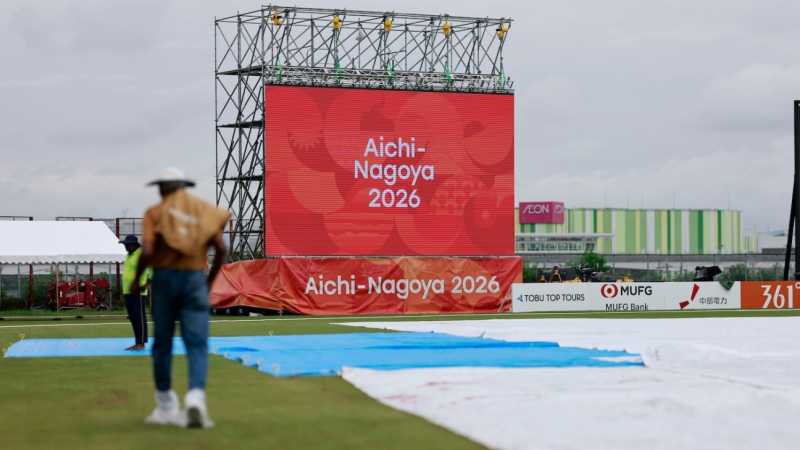
Sri Lanka will face India in the semi-finals of Asian Games men’s tournament after their quarter-final clash against Nepal was abandoned without a ball being bowled in Nisshin, Japan. The game was called off prior to the toss, with rain having begun hours prior to the scheduled 9am local start and not looking like abating.
Sri Lanka’s progression was assured by virtue of their higher seeding in terms of the ICC T20I rankings – Sri Lanka, alongside India, Pakistan and Bangladesh are the four seeded teams in the tournament. On Monday, India had qualified over Afghanistan after another washout, again by virtue of their higher. Similarly, Pakistan’s qualification was assured following a rain abandonment in their quarter-final against Hong Kong.
In the 2022 Asian Games, Sri Lanka had been eliminated at the quarter fial stages by Afghanistan. Another washout in the semis against, India though, will see the latter qualify for the final.
A few hours later, the fourth quarter-final between Bangladesh and Malaysia was also washed out. Bangladesh will now face Pakistan in the first semi-final on October 1, followed by India vs Sri Lanka later on the same day
(Cricinfo)

Gold winner Tharanga gets brand-new Honda Vezel from SLAAJ

Showers above 50 mm are likely at some places inthe Uva, Eastern and Central provinces and in Polonnaruwa and Mullaittivu districts after 1.00 p.m.

Civil society activist accuses govt. of favouring Ven. Gnanasara

More cops than cones

Sajith accuses govt. of using data selectively in crucial report

75 new inmates sent to Bogambara re-establishing it as a correctional facility

‘Dates have the highest sugar content to fight Coronavirus’

Sunday Island 27 December – Headlines

#SundayIsland 17th December – Headlines

Sunday Island – 28th March

Sunday Island Headlines – 21 March

Sunday Island – 21st February – Headlines
-
 Latest News6 days ago
Showers above 100 mm are likely at some places in the Western, Sabaragamuwa, Central and North-western provinces and in Galle and Matara Districts
-

 Editorial6 days ago
Crimes punished and unpunished
-

 Features5 days ago
Beyond traditional jobs: Why Sri Lanka needs to facilitate the gig economy
-

 Editorial4 days ago
Birth of a bad law
-

 Latest News5 days ago
Kusal, Wellalage star as Sri Lanka defend 322 in Headingley thriller
-

 News2 days ago
Police remove Thileepan statue in Jaffna
-

 News6 days ago
IMF: Sri Lanka on course for 2027 market return
-

 News4 days ago
TIN mandatory for key transactions from Nov. 1