
Business
Sri Lanka Tourism urged to advance ESG goals with the help of multilateral banks

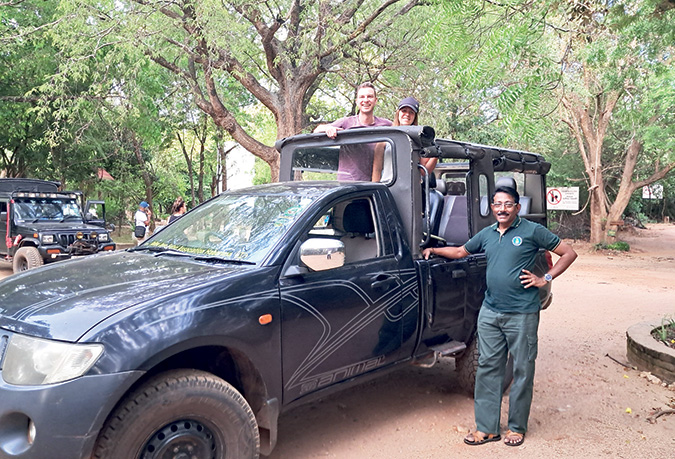
‘Tourists are keen on reducing their carbon footprint when they travel’, say tourist chauffeur guides
by Sanath Nanayakkare
It is high time Sri Lanka Tourism Development Authority (SLTDA) showcased the seriousness of the government’s commitment to reducing greenhouse gas emissions by deploying electric vehicles (EVs) for tourist transportation, says Ranjith Sudasingha, Vice President of the Chauffeur Tourist Guide Lecturers’ Association.
“One notable way SLTDA can showcase its true commitment to the above cause is by helping our members to get EVs best suited for road trips taken by foreign visitors during their holiday in the country. By actively participating in the Environmental and Social Governance (ESG) goals, SLTDA can demonstrate its leadership in addressing environmental challenges and meeting the expectations of eco-conscious foreign visitors who want to travel in environmentally-friendly vehicles because of the positive impact it has on the environment.”
When asked whether he thought the government had the capacity to allocate foreign exchange for the importation of EVs for tourist transportation, he says,” We understand that the government can’t ask the local banks or the Treasury to provide financing to import EVs for the purpose because of its fiscal consolidation programme and tight foreign reserves management programme. However, if SLTDA is truly interested in boosting tourism revenue and thereby increase foreign inflows to the country, it needs to take the green tourist transportation initiative seriously and find a smart way to mobilize the funds.”
He points out that climate finance provided by Multilateral Development Banks (MDBs) is a key source that SLTDA can tap into. He cites MDBs such as the World Bank, ADB, European Investment Bank (EIB) and the Asian Infrastructure Investment Bank (AIIB) whose global climate finance exceeded $98 billion in 2022 for low-income and middle-income economies.
“These MDBs allocate funds for the purpose every year in line with the UN Climate Change conference (COP21) which Sri Lanka is also a signatory to. Therefore, SLTDA should be able to tap those funds and help us get EVs through soft loans at a concessional duty rate in order to facilitate emission-free tourist transportation.”
“As chauffeur guides we connect with the visiting tourists like no one else does. So we know how keen they are in reducing their carbon footprint when they travel. They come to Sri Lanka because travelling in this country is an exciting and memorable experience for them. But in the midst of all the fun, they are not ready to forget how their holiday may impact the climate.”
“Today’s discerning tourists want to see us treat Mother Nature with the respect she deserves. Nevertheless a large portion of tourist transportation comes from quite old fossil-fuel-powered vehicles and EV charging points are few and far between. This is concerning to the tourists due to its contribution to pollution and global warming. Tourists not only want to stay in green hotels but also want to see green travel integrated into the key elements of sustainable tourism. So the challenge before us is; how can Sri Lanka better meet the needs of informed travellers who demand green transportation and provide them with modern EVs for travel across the country.”
“On the other hand, with fossil fuel prices high in Sri Lanka, EVs can make a better offer for tourists to reduce their travel spending during their stay. It will help attract more and more budget tourists to Sri Lanka. You see, deploying an EV fleet for tourism transportation is not just an obligation towards Climate Change and Global Warming. It would be a smart tourism business strategy because it would appeal to a significant niche in the global tourism marketplace.”
“Currently, our Association members are paid lower than what three-wheelers charge per kilometer. This is a pathetic situation given our running costs. The Destination Management Companies (DMCs) give attractive rental rates to tourists to stay competitive in the business. We have to suffer that loss in silence. We were battered by the pandemic, the economic crisis and the long lean periods of tourism and now we have reached the end of our tether as our requests to this effect have fallen on deaf ears at the SLTDA and the Ministry of Finance.”
“Let me just sum up the whole message”, the veteran chauffeur tourist guide says,” If the authorities can help us get duty-free EVs through soft loans arranged with the MDBs, it will derive four direct benefits. No.1. It will help contribute to Sri Lanka’s emission goals for our planet. No 2. Tourists will identify Sri Lanka Tourism as a truly environmentally-conscious brand and tourist arrivals will grow significantly. No.3. Our Association will be able to sustainably provide cozy rides to tourists while delivering our service at a reasonable profit. No.4. Once such a project is in effect, Sri Lanka Tourism Promotion Bureau (SLTPB) could use a powerful marketing tagline that cuts right to the point in just 7 words; “Sri Lanka Tourism Transportation Turns to Green”.









Sri Lanka’s national economic discourse takes center stage today as the country’s premier private-sector body, The Ceylon Chamber of Commerce, hosts the Sri Lanka Economic & Investment Summit 2026 at the Shangri-La Colombo.
Convening on October 12 and 13, the two-day summit brings together an influential gathering of senior policymakers, international financiers, multilateral development partners, and private-sector captains to chart the island’s next phase of macroeconomic growth.
Held under the theme “Positioning Sri Lanka in a Changing Global Economy: Resilience, Reform, and the Future of Economic Policy,” this year’s forum marks a critical inflection point in the nation’s post-crisis trajectory.
As Sri Lanka shifts its emphasis from immediate financial stabilization toward sustainable, long-term expansion, the summit aims to address the structural imperatives necessary to secure high-impact foreign direct investment (FDI), deepen regional trade integration, and unlock emerging sectors of economic activity.
The core agenda over the two days focuses on building resilience across volatile global market cycles while executing targeted policy reforms. Key working sessions will examine:
Regional Value Chains & Trade Integration: Leveraging Sri Lanka’s strategic Indian Ocean geography to capture higher-value export flows and commercial linkages.
Energy & Infrastructure Transformation: Accelerating renewable energy integration and modernizing national utility policy.
Digital Economy & Public Modernization: Deploying digital technologies across public administration and financial services to enhance operational efficiency and transparency.
Sectoral Priorities: Modernizing healthcare infrastructure and agricultural value-addition to build a robust domestic economic base.
A defining feature of this year’s summit is the strong convergence between state policy and global commercial expertise. Keynote addresses and panel discussions will feature prominent leaders, including Prime Minister Dr. Harini Amarasuriya and T. Krishnakumar, Chief Executive Officer of Reliance Consumer Products Ltd.
They will be joined by senior delegations and policy experts from major global institutions, including:
= The Asian Development Bank (ADB)
= The International Finance Corporation (IFC)
= Standard Chartered Bank
= Zydus Lifesciences
The active participation of the country’s highest executive and legislative leadership across both days underscores a clear policy commitment to private-sector-led growth. By establishing a direct, high-level platform for dialogue between investors and policymakers, the Ceylon Chamber’s summit seeks to refine regulatory frameworks, improve the ease of doing business, and establish a clear, predictable environment for capital formation in the years ahead.
Microsoft and several other technology firms have been barred by the White House from hiring skilled international workers on a permanent basis through a widely used visa programme.
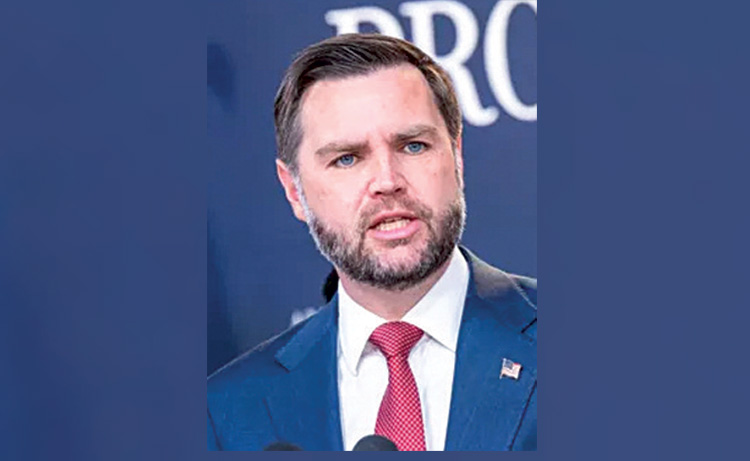
US Vice-President JD Vance on Thursday accused Microsoft alongside other firms of committing fraud through the use of the H-1B visa programme and a related process for workers from abroad to become permanent US residents.
Vance claimed that Microsoft, one of the most valuable companies in the US, has been effectively replacing American workers with “foreign indentured servants.”
Microsoft said most of the H-1B visas filed over the last financial year were for existing workers, who are paid the same as local staff.
“No company in the US has abused this system more than Microsoft,” Vance said.
He also made similar accusations about Adobe, Cognizant, Infosys, Tata, Wipro, HCL and Capgemini.
The US government will not process any new or pending Permanent Labor Certification Program (PERM) applications from Microsoft or the seven other companies, Secretary of Labor Keith Sonderling said during the same conference.
Sonderling said companies like Microsoft, as well as US universities, have turned into “visa mills” that were “flooding” the US with foreign workers.
The BBC has contacted all of the companies for comment.
The total number of H-1B visas, a precursor to anyone seeking to go through the PERM process, is capped at 85,000 per year.
A spokeswoman for Microsoft noted to the BBC that “the vast majority of Microsoft employees in the United States are Americans.” The company employs more than 200,000 people worldwide.
In response to emerging climate risks, the Commercial Bank of Ceylon has launched a proactive initiative through its Development Credit Department, to equip Sri Lanka’s agricultural sector against the potential impacts of the 2026 El Niño climate pattern.
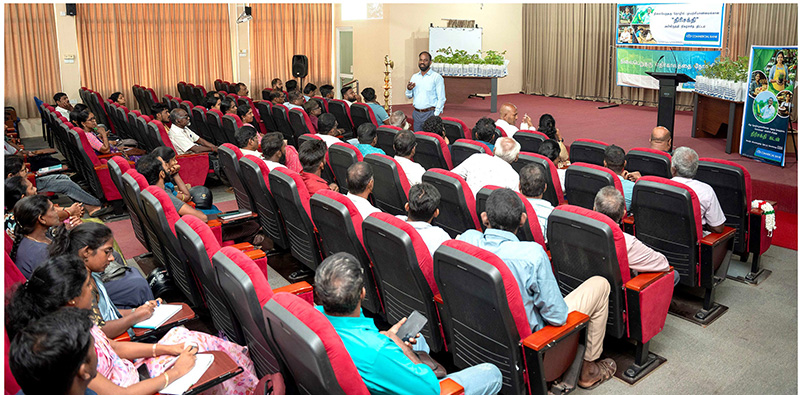
Seeking to move the industry from reactive loss management to early climate preparedness, the Bank partnered with leading state universities to execute a two-part educational and technological intervention in September 2026.
The initiative comes at a critical juncture. Sri Lanka’s Department of Meteorology reported an 80% probability of El Niño conditions emerging between June and August 2026, with effects expected to persist through November and beyond. As highlighted by the Food and Agriculture Organization (FAO), El Niño acts as a risk multiplier for rural livelihoods, food production, and water supply.
To mitigate these threats, the Bank’s initiative creates a collaborative network uniting academic institutions, agricultural extension services, technology providers, farming communities, and the financial sector. The awareness programme on El-Niño and its impact on agriculture was supported by 12 Commercial Bank branches, and engaged with more than 1,100 farmers at 15 diverse locations, including Vattapalai, Muththajankaddu, Palampas, Oddusuddan, Siyambalanduwa, Lindula, Neluwa, Kalawana, Pannala, Madampe, Mannar, Vavuniya and Kumalamunai.

New prison regulations for monks serving jail terms soon: President’s Office

CP alleges NPP has taken the blame for illegal US sanctions on Iranian vessels

Ex-Tiger witness claims Ekneligoda proposed to fire missile at MR’s plane

Chandrasekaran welcomes Indian stand of Katchatheevu

Alleged killer of couple apprehended

19 ex-ministers convicted in CIABOC cases under NPP rule

‘Dates have the highest sugar content to fight Coronavirus’

Sunday Island 27 December – Headlines

#SundayIsland 17th December – Headlines

Sunday Island – 28th March

Sunday Island Headlines – 21 March

Sunday Island – 21st February – Headlines
-

 Features6 days ago
Preventing grievances from becoming communal
-

 Features4 days ago
The Sri Lankan who made Scottish history
-

 Sports4 days ago
Nissanka absence opens door for Sri Lanka’s young guns
-

 News5 days ago
Gnansara Thera to be assigned to prison printing section: Officials
-

 News3 days ago
NDB fraud Rs 60mn more than reported
-

 News3 days ago
Removing monk’s robes matter for Sangha to decide: Mahanayake Theras
-

 Features4 days ago
Future of Sri Lanka’s state university system: Should it be shut down and reopened?
-
 News5 days ago
OIC of FCID summoned before Maligakanda Magistrate