
Sports
Sri Lanka still rich with the legacy that Simpkin left behind


By a Special Sports Correspondent
Sri Lanka cannot help but recall the name of George Simpkin when it prepares players for international rugby assignments. The islanders are now preparing for the upcoming Division 1 tournament of the Asian Men’s Rugby Championships. There is still only speculation about who would be the likely coach. But already, three names are being floated in conversations within the rugby fraternity and even in some sections of the media; these names are Sanath Martis, Nilfer Ibrahim and Dushanth Lewke.
From what we hear as ‘news’ doing the rounds is that Sri Lanka Rugby (SLR) is yet to make that announcement. From what we’ve heard as unofficial news it seems that SLR is, this time around, banking on home grown coaches over foreigners in the build up to this international rugby event. We remember the days when the SLR always overlooked home coaches and signed contracts with foreign coaches in the wake of international tournaments. There was a time in this island when most of the local clubs had foreign coaches and also foreign players. Then what the SLR did was get one of these foreign coaches to handle the national side. This is understandable because when an expatriate rugby coach works with a club side and follows domestic rugby for an entire season he starts understanding the strengths and weaknesses of all the players featuring in the league tournament. Our protagonist in today’s article is Simpkin who initially visited Sri Lanka thanks to a coaching stint with the Chinese national side. He then ended up taking over the reins and preparing the Kandy SC side. Eventually he was roped into take over the Sri Lanka national rugby team.
Simpkin was enterprising where ever he went to coach rugby. His first bit of work or assignment with SLR was to be the rugby consultant of the national side preparing for the 2002 Rugby Asiad. At the time he arrived in Sri Lanka the national team was having mixed fortunes; during the worst of the times Sri Lanka even losing to Asian giants Japan by a thumping score of 129-6 at the year 2002 Asian Games in Busan, South Korea. That same year, the results in rugby were disastrous at the Rugby Asiad; Sri Lanka losing to Thailand with a score of 70 points to nothing. That year, at the Dubai Sevens, Sri Lanka lost all its matches. That was the background in rugby when Simpkin began work here with Sri Lanka Rugby. Simpkins, a New Zealander, loved to set foot in volatile environments and turn things around. He did just that with the Sri Lanka rugby team and its players.
After a few months of working with the national side he was able to lift Sri Lanka’s game. In 2003 (The following year) Simpkin’s chargers gave fancied Hong Kong a tough time in a ‘Test’ match played at Nittawela. Sri Lanka went down fighting 36-22 in this match which was billed as an IRB/ARFU international rugby fixture. Simpkin was breathing in professionalism and commitment into the side and the players and the management were happily getting infected with this ‘positive’ virus. The New Zealander’s presence here sent out a signal to the rest of the Asian countries that Sri Lanka had put its rugby in order. Before coming to Sri Lanka, Simpkin had coaching stints with the national sides of Hong Kong, Fiji and China. He was also credited in introducing new rules to the seven-a-side version of rugby to speed up the game and was a recognized international figure in the sport of rugby union.
He always made Sri Lankan players believe that their legitimate place in the Asian rankings was either third or fourth. That meant Sri Lanka would always play in the Asian Rugby Championship; unlike now where the islanders have been relegated to the Division 1 tournament and are playing against unrecognized rugby playing nations.
At the time Simpkin was here in Sri Lanka as head coach, the island’s rugby players could even draw inspiration from their big brother Japan. The Japanese rugby team took credit for producing the highest point scorer of all time at the rugby world cup. That accolade went to Toru Kurihara who accumulated a mammoth 60 points in world cup rugby and the year was 2003. Just to underscore the strength of the Japanese team in the Asian circuit that year, the ‘Cherry Blossoms’ smashed the daylights out of Chinese Taipei; notching up a score of 155 points to 3 against their hapless opponents.
Despite Simpkin’s presence here in the island, SLR didn’t stop experimenting with local coaches. These coaches were mostly put in charge of preparing the national team for overseas seven-a-side rugby tournaments. Though Sri Lanka managed to produce sparks of brilliance here and there (In rugby sevens) the overall result was depressing and it demanded that the SLR started seriously thinking about having a permanent ‘head’ coach for rugby. Simpkin slotted in perfectly in this role. He was appointed as SLR’s technical consultant in 2004. The New Zealander accompanied the junior national side for the Asian Championships in 2004 as Technical Consultant. That side was coached by C.P.P Abeygunawardene and had the services of Martis (Mentioned above) as Assistant Coach.
Martis once told this writer, “When Simpkin is in the coaching team there is nothing much the others can do except follow his plan; which is always flawless”. The high point in Simpkin’s coaching stint here came during the qualifiers for the 2007 rugby world cup. In these matches held in 2005-6 Sri Lanka beat teams like Thailand, Singapore and Kazakhstan before going down fighting to Hong Kong.
There was another reason for Simpkin to visit Sri Lanka often; even if he wasn’t involved in rugby coaching. He was suffering from acute arthritis and benefited immensely through ayurvedic treatment which he received in Sri Lanka.
After his exit as the national coach, Sri Lanka rugby took a dip. The islanders were in the news for all the wrong reasons; Sri Lanka gained a black mark in the sport for producing a player guilty of taking a banned substance, some players were guilty of indiscipline for making rugby tours abroad as spectators when their presence was needed here to prepare for the Asian tournament. Several players made themselves unavailable for national duty and chose to play club rugby instead. SLR then experimented with a horde of foreigners as national coach after Simpkin and there was at least one who vanished without a trace during a national assignment.
Several years later, when rugby was lifting its head after the Covid pandemic, we head the sad news of Simpkin breathing his last. This rugby legend who was born on May 22, 1943 died in 2020; just a few days short of his 77th birthday. Sri Lanka still has fond memories of this New Zealander and the seeds that he sowed in this island have the potential to produce ‘a rich harvest’ in the field of rugby.


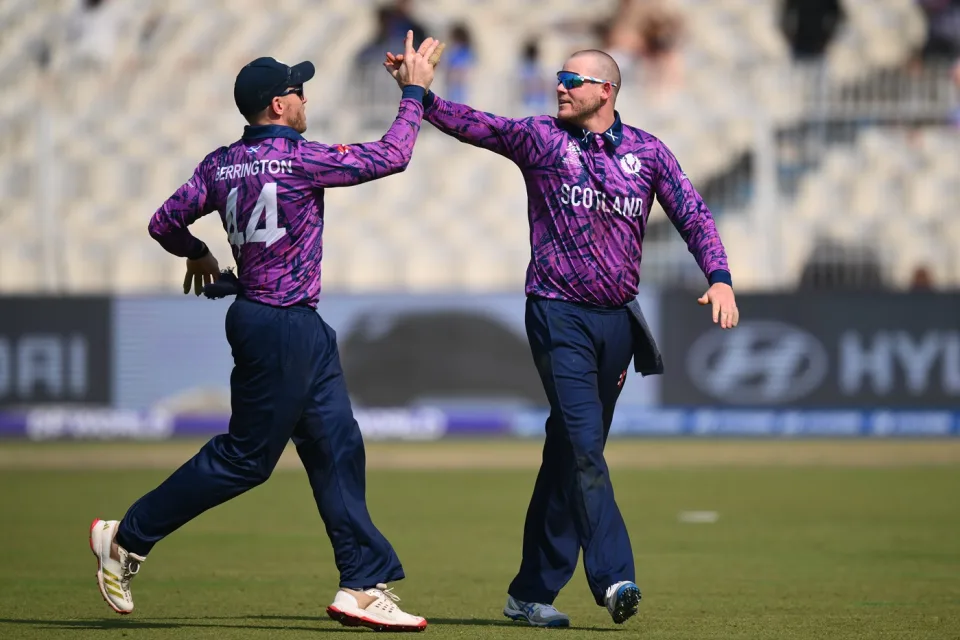
Scotland vs England. The sense of occasion isn’t lost on Scotland captain Richie Berrington. Earlier this week, Berrington dared to dream of the headlines should his side beat England in Kolkata a matter of hours before the Scotland rugby team face England in the Six Nations with the Calcutta Cup on the line.
Both Scotland teams are underdogs but, unlike their rugby counterparts who are licking their wounds after a poor showing against Italy last weekend, Berrington’s men are coming off the back of a resounding 73 run win over an Italian team making their debut at this tournament and ruffling some feathers along the way.
“That rivalry has always been there between Scotland and England, obviously a long history there between the two nations, it’s there in every sport,” Berrington said. “But yeah, next Saturday’s going to be exciting. We’ve also got the Scotland rugby team taking on England the same day, so it would make quite a nice headline if Scotland has two wins on the Saturday.”
As banana skins go, this should be one England back themselves to avoid. But it will be no easy stroll, especially with another unexpected obstacle down the road in Italy, surprise 10 wicket winners against Nepal, who had themselves pushed England to the max in their opening match of this T20 World Cup.
Both of England’s remaining group-stage opponents pose an element of the unknown, a point noted at the start of the tournament by Mark Watt, Scotland’s veteran left-arm spinner making his fifth World Cup appearance. “Quite funny thinking about the England analysis team trying to find club cricket games of some of our youngsters,” Watt said. “We’ve all had a laugh about that.” England have never played Italy and, in their only previous T20I meeting with Scotland – at the last World Cup in Barbados – George Munsey and Michael Jones staged an unbroken opening partnership worth 90 before the match was washed out.
Only Jofra Archer and Adil Rashid remain from the bowling line-up which took the field that day, the latter going at 13 runs an over from his two overs. And while those figures are reminiscent of Rashid’s three wicketless overs at 14.00 against Nepal, he turned that around against West Indies, where he was easily the pick of England’s bowlers in a losing cause on a turning Wankhede pitch.
If they trip up in their first outing in Kolkata, where Scotland have already played their first two matches of this World Cup, England’s last group encounter with Italy becomes crucial. So too does Scotland’s final clash with Nepal. On paper, England’s progression to the Super 8s should be assured, but they absolutely cannot take their Associate opponents lightly.
So far, this campaign has shown England need more consistency from their enviably deep batting line-up. Half-centuries to Jacob Bethell and Harry Brook still required the back-up of Will Jacks’ 18-ball 39 against Nepal and, even then, it took Sam Curran’s sublime death bowling to let them escape with victory. Against West Indies, it was Curran who ran out of partners and captain Brook believed his charges were too careful chasing. For Scotland, they need more than just the few plucky moments they produced in a 35-run loss to West Indies. They need everything to fire, as it did against Italy, and then some, to be in with a shot.
Three consecutive single-figure scores across this tournament and the Sri Lanka series that preceded it leave Tom Banton searching for runs, particularly amid calls for Harry Brook to leapfrog him into the No. 4 spot. An unbeaten 54 in a Player-of-the-Match performance against Sri Lanka in the second of their three games in the lead-up suggests the touch is there. Now he must rediscover it at a time when his side needs it most.
Having managed just one run against West Indies as Munsey too departed cheaply after a promising start, Michael Jones further highlighted the importance of Scotland’s opening duo with a 30-ball 37 in a 126-run stand – Munsey struck 84 off 54 – that set up victory over Italy. With the quality of the opposition now magnified, it is imperative that he supports his partner with an even bigger contribution to a union that could prove critical in getting enough runs on the board against England.
England confirmed an unchanged XI on the eve of the match, with Jamie Overton preferred to Luke Wood in the attack.
England: Phil Salt, Jos Buttler (wk), Jacob Bethell, Tom Banton, Harry Brook (capt), Sam Curran, Will Jacks, Liam Dawson, Jamie Overton, Jofra Archer, Adil Rashid
Brad Wheal, who replaced Safyaan Sharif for the win over Italy, said Scotland had not made any decisions on their side.
Scotland: (possible) George Munsey, Michael Jones, Brandon McMullen, Richie Berrington (capt), Tom Bruce, Michael Leask, Matthew Cross (wk), Mark Watt, Oliver Davidson, Brad Wheal, Brad Currie
[Cricinfo]

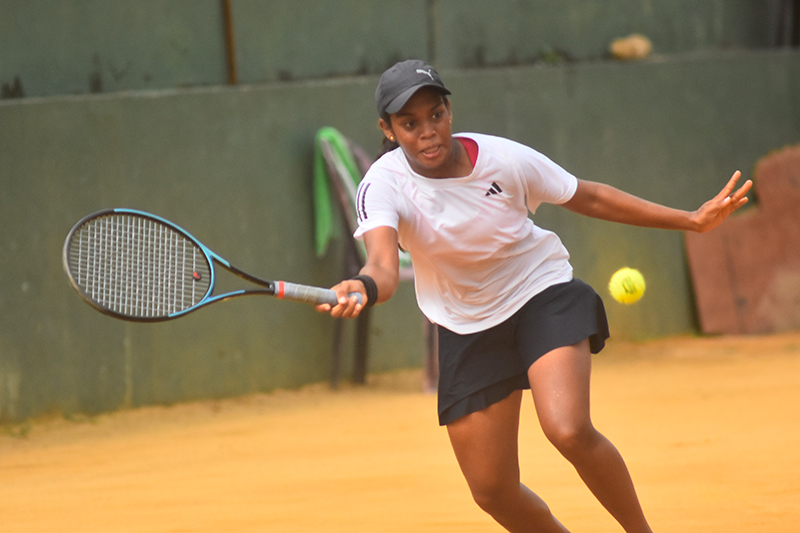
J30 ITF Junior Week 3 Tennis
Dinara de Silva is set to meet Shiwali Gurung of Nepal in the girls’ singles final of the J30 ITF Junior Week 3 Tennis tournament after emerging victorious in the semi-finals in Colombo on Friday.
Dinara beat Haritha Venkatesh of India 6-2, 6-2 in her semi final
Nepal’s Shiwali Gurung beat Kirika Fuku of Japan 7-5, 4-6, 6-2.
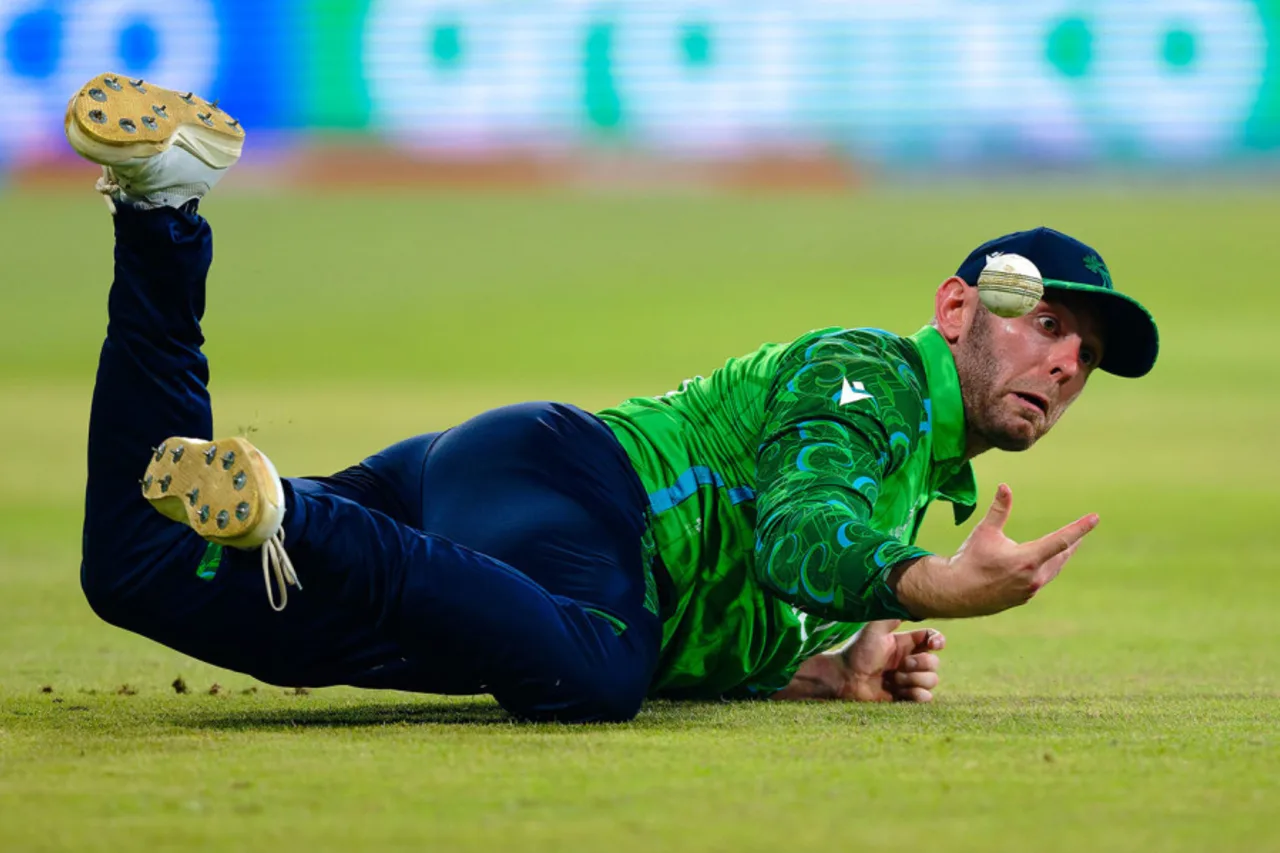
Two games, two defeats, virtually out of the tournament. A blanket sentence that covers both Ireland’s and Oman’s fortunes at this 2026 T20 World Cup, as their ambitions of Super Eight qualification give way to insistence that they have been better than their results.
“We should have won at least one match, because as I said, we are not as bad a team as we played,” Mohammad Nadeem said after Oman’s 105-run loss to Sri Lanka.
“The other day was so disappointing because actually for 65-70% of that game I thought we were the better side,” was Gary Wilson’s assessment of Ireland’s opening-game defeat to the same opponents.
Whatever the reason, neither Oman nor Ireland have put their best foot forward so far in this tournament. Their net run rates (NRR) tell the tale, with Ireland’s at -2.175, and Oman’s even worse at -4.306.
So, as they say, it’s mainly pride at stake at the SSC on today [Saturday]. Recent form skews in favour of the Irish, who boast a 4-2 win – loss record over Oman in T20Is, and have won each of their last three encounters. But Oman won the last World Cup meeting between the two sides in 2016.
Both teams come with severe problems to address. Oman’s bowlers have been ragged, particularly against Sri Lanka who scored 225 against them, and their batters have managed totals of 103 all out and 120 for 9.
Ireland have shown more promise in both departments but have been badly let down in the field, dropping nine catches across their two games. They will also be without their captain Paul Stirling, who has been ruled out of the rest of the tournament with a knee injury.
But while problems abound, Saturday will give these sides the chance to chase a significant target: points on the board.
Harry Tector is widely regarded as the cornerstone of Ireland’s middle order and a potential future captain. Against Oman, his importance will lie in his ability to navigate the conditions in Colombo – particularly against Oman’s spate of spin options. With Stirling out, even more will depend on Tector. He began the tournament promisingly with a 40 against Sri Lanka, and he will want to get back among the runs after falling for a duck against Australia.
Forty-three-year-old Mohammad Nadeem became the oldest half-centurion at a World Cup with his unbeaten 53 against Sri Lanka, which will no doubt have cemented his place in Oman’s middle order after missing out on their first game. With Oman’s top order showing fragility across their opening two games, his ability to anchor an innings could prove vital.
Sam Topping has been approved as Stirling’s replacement in Ireland’s squad, and could be in line for an international debut, though Tim Tector is also in consideration. Josh Little could potentially come back into the XI as well, in light of Oman’s struggles against pace.
Ireland (probable): Tim Tector, Ross Adair, Harry Tector, Lorcan Tucker (capt & wk), Curtis Campher, Ben Calitz, George Dockrell, Gareth Delany, Mark Adair, Barry McCarthy/Josh Little, Matthew Humphreys.
Offspinner Jay Odedra didn’t bowl against Zimbabwe, then bowled the second over against Sri Lanka, went for 14, and didn’t bowl again. Oman, though, don’t have an in-form bowler to pick in his place: left-arm spinner Shakeel Ahmed, who was left out against Sri Lanka, went for 27 in his two overs against Zimbabwe.
Oman (probable): Jatinder Singh (capt), Aamir Kaleem, Hammad Mirza, Wasim Ali, Mohammad Nadeem, Jiten Ramanandi, Vinayak Shukla (wk), Sufyan Mehmood, Nadeem Khan, Shah Faisal, Jay Odedra/Shakeel Ahmed.
[Cricinfo]

Kolkata the stage as England, Scotland resume auld rivalry

Showers will occur at times in the Central, Uva, Eastern, Northern and North-central provinces and in Hambantota district

Sajith points to irregularities in coal procurement deals

Lankan Embassy in Washington welcomes ‘Walk for Peace’ Buddhist monks

Committee on High Posts clears four diplomatic appointments

Keheliya’s bribery case fixed for trial

‘Dates have the highest sugar content to fight Coronavirus’

Sunday Island 27 December – Headlines

#SundayIsland 17th December – Headlines

Sunday Island – 28th March

Sunday Island Headlines – 21 March

Sunday Island – 21st February – Headlines
-

 Features6 days ago
My experience in turning around the Merchant Bank of Sri Lanka (MBSL) – Episode 3
-

 Business6 days ago
Remotely conducted Business Forum in Paris attracts reputed French companies
-
 Business6 days ago
Four runs, a thousand dreams: How a small-town school bowled its way into the record books
-

 Business6 days ago
ComBank and Hayleys Mobility redefine sustainable mobility with flexible leasing solutions
-

 Business3 days ago
Autodoc 360 relocates to reinforce commitment to premium auto care
-

 Midweek Review3 days ago
A question of national pride
-
 Opinion2 days ago
Will computers ever be intelligent?
-

 Midweek Review3 days ago
Theatre and Anthropocentrism in the age of Climate Emergency