
Business
Sri Lanka speedster Matheesha Pathirana to bowl for ComBank


Matheesha Pathirana, one of Sri Lanka’s most talented young cricket stars, has been appointed Brand Ambassador for Commercial Bank, the largest private sector bank in the country.
Matheesha will specifically represent the ComBank Debit Card brand, the biggest debit card base in the country, reflecting the speed and agility of the brand, qualities that he is famous for. At Just 22, the right-arm fast bowler is already a household name in Sri Lanka as well as India. The Bank said the young cricketer embodies excellence, dedication, and resilience—qualities that align perfectly with the values of Commercial Bank, Sri Lanka’s most awarded financial institution.
“We are excited to welcome Matheesha Pathirana as a brand ambassador for Commercial Bank,” the Bank’s Managing Director/CEO Sanath Manatunge said. “He is an internationally renowned fast bowler and a game changer. Together, we aim to inspire confidence and commitment to excellence, not only within Sri Lanka but also on the global stage.”
Born in Kandy and educated at Trinity College, Matheesha had, prior to the ongoing series against New Zealand, represented Sri Lanka in 12 one-day internationals and captured 17 wickets at a strike rate of 29.8. His record at T20 internationals is even more impressive, with 28 wickets in 17 matches at an amazing strike rate of 10.5. In the Indian Premier League (IPL) where the legendary M. S. Dhoni was his mentor, Matheesha has captured 34 wickets for Chennai Super Kings at a strike rate of 13.2.


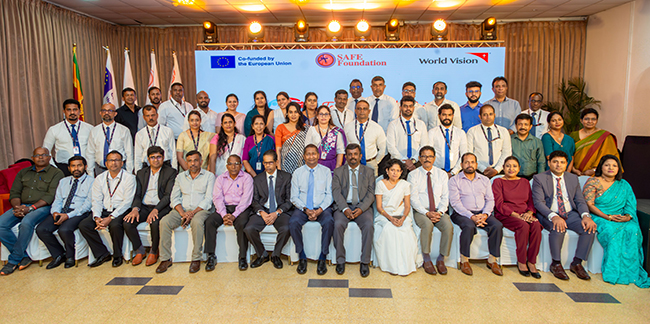
The European Union (EU)-funded “Together We Rise” initiative, implemented by World Vision and SAFE Foundation in Sri Lanka, is a €2.6 million project designed to strengthen civil society and promote human rights, inclusion and accountable governance. Over three years, the project will support 50 civil society organisations (CSOs) by providing targeted training and resources, while also engaging government institutions, policymakers and 250 social activists to enhance transparency, accountability and civic participation.
The initiative is expected to reach 701,100 people across nine districts, with a focus on underserved and conflict-affected areas. Participating organisations will include women-led, youth-led and those representing persons with disabilities. In addition, more than 350 CSO staff will benefit from tailored capacity-building and technical support to strengthen their effectiveness and long-term sustainability.
To achieve this, the project will begin by conducting a Capacity Development Needs Assessment (CDNA) to better understand the strengths and gaps of selected CSOs. Based on these findings, tailored Capacity Development Plans will be developed for each organisation, ensuring support is relevant, targeted, and impactful. Furthermore, through a capacity-building approach, CSOs will be strengthened in key areas including governance and leadership, financial management and compliance, inclusion, safeguarding, and gender equity, civic engagement and advocacy, digital capacity and innovation, as well as resilience and long-term sustainability.
Dr. Johann Hesse, Head of Cooperation at the European Union in Sri Lanka, noted, “With this EUR 2.6 million programme, the EU is investing in a stronger partnership with civil society for inclusive and sustainable development. Civil society organisations work alongside public institutions, helping to reach communities, mobilise citizens, and support the implementation of activities that are both national and EU priorities”.
In addition, selected CSOs will receive small grants to implement their development plans and respond to community needs, ensuring that learning is translated into action. The project will also create platforms for dialogue and engagement between communities, civil society, and government stakeholders, supporting advocacy efforts and influencing policy change.
Highlighting the importance of addressing structural inequalities, Nirosha Hapuarachchi, Project Manager for Together We Rise at SAFE Foundation, noted, “Youth unemployment (ages 15–29) stands at 34.5% in 2025, according to the Department of Census and Statistics. This highlights a critical gap between the skills possessed by young people and the demands of the labour market. Similarly, women and persons with disabilities continue to face social, economic, and structural challenges that limit their ability to access their rights and opportunities. In response to these challenges, the ‘Together We Rise’ project aims to promote inclusive development by addressing the needs and rights of youth, women, and persons with disabilities, enabling them to achieve sustainable, improved well-being”.
The initiative was introduced through a stakeholder engagement platform that brought together representatives from the EU, government institutions, civil society organisations, and community leaders, highlighting the importance of partnerships in driving sustainable development.
Chandrarathna D. Vithanage, Director General of the National Secretariat for Non-Governmental Organisations, emphasised the role of partnerships, stating, “A country can only truly develop when the government, business sector, and civil society work together. Together We Rise is a timely initiative with clear goals to strengthen the NGO sector, and I look forward to being part of this journey, building knowledge, fostering trust, and empowering village-level communities to take charge of the challenges they face.”
Underscoring the importance of inclusive, community-driven approaches, Glattes Rosairo, Project Manager for Together We Rise at World Vision Lanka, remarked, “Together We Rise is not just a phrase – it is a commitment to building strong, collaborative relationships that empower CSOs. This initiative prioritises listening to communities, amplifying the voices of persons with disabilities, youth, and women, and strengthening grassroots leadership to ensure sustainable and meaningful impact across Sri Lanka.”
Grounded in a rights-based, inclusive, and locally led approach, the project prioritises listening to communities, amplifying marginalised voices, and strengthening grassroots leadership – ensuring sustainable and meaningful impact across Sri Lanka.
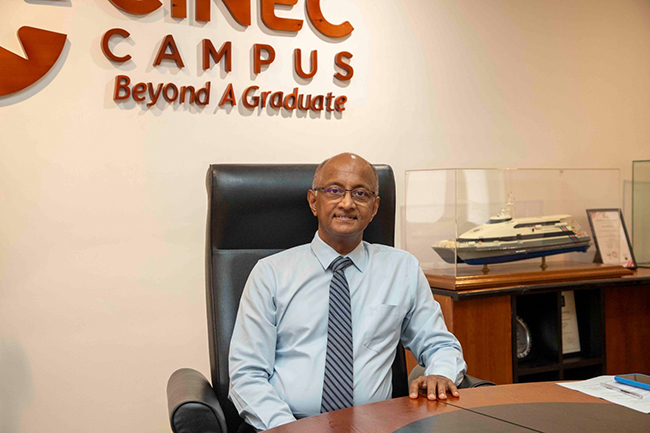
Students interested in understanding society, education, communication and human behaviour now have an opportunity to pursue that path through CINEC Campus, which is promoting its Faculty of Humanities and Education as a gateway to becoming tomorrow’s “social scientists.”
As economies and workplaces rapidly change through technology and automation, demand is rising for graduates who can analyse human needs, improve communication, strengthen communities and guide institutions through social change. CINEC says its programmes are designed to develop these skills through a combination of academic learning and practical training.
The institution offers a range of diploma and degree programmes including Early Childhood Education, English, Information Technology, and Sports and Physical Education. While diverse in subject matter, these courses share a common focus on producing graduates equipped to work with people, solve real-world challenges and contribute to national development.
CINEC places particular emphasis on careers linked to teaching, research, language development, communication and community leadership. Graduates may find opportunities as educators, trainers, social researchers, communication specialists, administrators and development professionals in both the public and private sectors.
According to the institution, its programmes are approved by the University Grants Commission and the Ministry of Higher Education. Prospective students should independently verify current recognition and course details before enrolment.
The campus also highlights a supportive learning environment with experienced lecturers and flexible study options for selected programmes, helping students balance education with work or other commitments.
At a time when technical skills alone may not be enough, fields connected to the humanities and social sciences are gaining renewed importance. Employers increasingly value communication ability, leadership, empathy, critical thinking and cultural understanding—qualities often developed through these disciplines.
For school leavers and working adults seeking meaningful careers that influence society and improve lives, CINEC says it is positioning its programmes as a pathway to becoming a new generation of social scientists.
By Sanath Nanayakkare
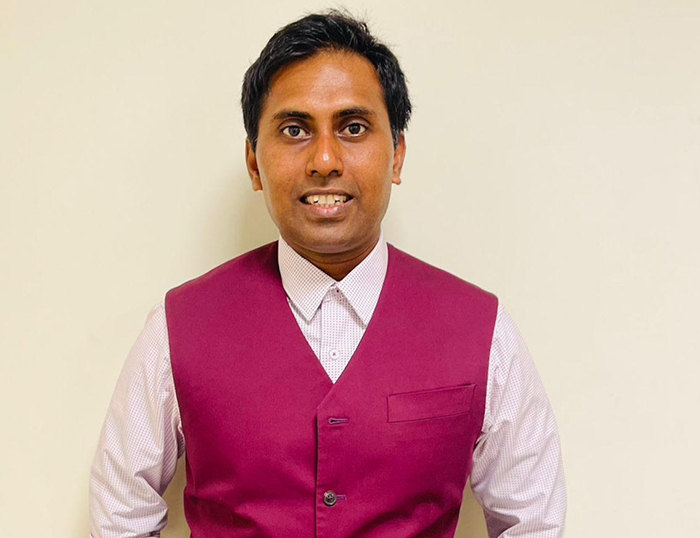
Ranil Asanka, who hails from Matugama, is a dedicated team leader at Quizine Restaurant in City of Dreams Sri Lanka.
He speaks with pride and passion about his long journey in the hospitality industry. He spent 15 years at Cinnamon Lakeside and later joined Cinnamon Life from its inception, becoming part of one of Sri Lanka’s most exciting hospitality developments from the very beginning.
“Our restaurant is the biggest in the city,” Ranil says proudly. “At one time, more than 600 guests can dine here.”
Quizine Restaurant is famous for its impressive buffet experience, offering breakfast, lunch, and dinner buffets every day, along with à la carte options. However, Ranil explains that buffet dining remains their main focus.
“What makes us special is the largest variety of buffet dishes,” he says. “We serve Indian, Western, Chinese, Sri Lankan, and Japanese cuisine.”
Among all the options, Ranil notes that guests especially love Indian and Sri Lankan food.
“Mostly Indian and Sri Lankan guests come here, and they enjoy those cuisines the most,” he explains. “Sri Lankan food is a little spicy, and some Indian dishes are spicy too.”
Ranil’s career path is also a story of growth and smart decisions. He first pursued his highest studies in the science field, but later chose to switch to AAT and CIMA qualifications to build better prospects in the hospitality sector.
This move helped him combine academic knowledge with practical business and management skills.
Ranil feels honored to be part of such a prestigious hotel.
“This is the heart of the Cinnamon Hotels,” he says. “It is the biggest one, and I am proud to work here.”
The restaurant remains busy every day, welcoming a constant flow of guests from many countries, especially India, Sri Lanka, and China.
When asked what advice he would give to young people hoping to join the hotel industry, Ranil shares a simple but powerful message:
“When you work in any hotel, work with your heart. Always gain knowledge. That is how you come to the next level.”
From Matugama to one of Sri Lanka’s premier hospitality destinations, Ranil Asanka’s story reflects dedication, adaptability, and pride in serving others—qualities that make hospitality truly special at City of Dreams Sri Lanka.
By Ifham Nizam

US said to be withdrawing 5,000 troops from Germany over Iran war spat

Bangladesh eye rare double-series win over New Zealand in rainy Dhaka

Rahul, Nissanka fifties lead 226 chase as Delhi Capitals return to winning ways

Pakistan High Commissioner pays courtsey call on PM

Ambassador of Nepal to Sri Lanka pays farewll call on PM

Heat Index at Caution Level in the Northern, North-central, Eastern, Sabaragamuwa, North-western provinces and in Monaragala district during the day time

‘Dates have the highest sugar content to fight Coronavirus’

Sunday Island 27 December – Headlines

#SundayIsland 17th December – Headlines

Sunday Island – 28th March

Sunday Island Headlines – 21 March

Sunday Island – 21st February – Headlines
-
 News3 days ago
Treasury chief’s citizenship details sought from Australia
-

 News5 days ago
BIA drug bust: 25 monks including three masterminds arrested
-

 Business6 days ago
Nestlé Lanka Announces Change in Leadership
-
 News6 days ago
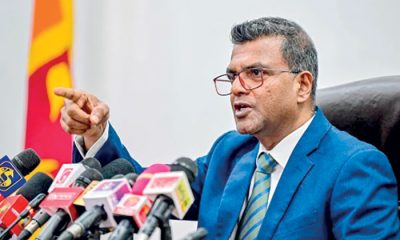
Hackers steal $3.2 Mn from Finance Ministry
-

 News5 days ago
Banks alert customers to phishing attacks
-

 News2 days ago
Rooftop Solar at Crossroads as Sri Lanka Shifts to Distributed Energy Future
-
 News4 days ago
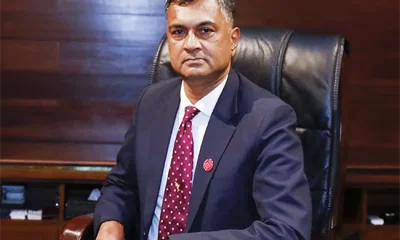
Govt. assures UN of readiness to introduce ‘vetting process’ for troops on overseas missions
-

 Business4 days ago
ADB-backed grid upgrade tender signals next phase of Sri Lanka’s energy transition