
Sports
Sri Lanka set aside their worst fears


by Rex Clementine
at Pallekele
There’s a fair bit to be done for Sri Lanka to get back to their glory days in cricket, but you can safely say that the team has a taken huge strides to achieve that target. Yes, the drubbing by Pakistan at SSC and in Galle are still fresh in memories but Test cricket is one format where they have done reasonably well.
It is the white ball formats the team has struggled, playing multiple qualifying tournaments in the last three years across T-20s and ODIs. T-20 cricket has reached a safety zone, no doubt about it and the automatic qualification for next year’s tournament in the US and West Indies is proof for that.
ODI format is still a work in progress, but there are impressive signs. The team’s bowling is pretty formidable with both the quicks and spin departments bowling sides out with some impressive performances. If they make a genuine effort to fix the injury woes, that will be a massive relief. This Asia Cup, they are literally depending on their seconds string attack.
There were doubts how Matheesha Pathirana will go. He has pace sure, but accuracy was a question mark and there were doubts whether he will be as good as in the 50 over format as he was in the 20 overs game.
Was it the right decision to pick him over Pramod Madushan and Binura Fernando, some of us wondered? What an inspired decision it proved to be.
In his first spell, Matheesha accounted for the big wicket of Shakib-al-Hasan and then in the second spell claimed the wicket of Mushfiqur Rahim, the other experienced batter in the opposition line-up. Then the tail couldn’t handle his pace and his four-wicket haul gave Sri Lanka a much-needed win and fears of the team might not being able to make it to the second round were set aside.
Maheesh Theekshana was sensational as well making early inroads bowling with the new ball. His variations are confusing, and batters aren’t able to play him with confidence. Of course, there will be bigger challenges when they play India and Pakistan.
Then there’s Dhananjaya de Silva, a very underrated cricketer. You can always be assured of his ten overs for not many and he gives you the much-needed cover at number six. Why the selectors picked Kusal Mendis ahead of Dhananjaya as vice-captain is confusing indeed.
Mendis of course is on borrowed time. He’s been on borrowed time for quite some time now, but they seem to create roles for him to fit into the side. How much we can go on saying that he has got talent and that he is the future of the team needs to rest and other deserving players need to be looked at.
If Sadeera Samarawickrama had got half the chances that Mendis had got, he would have won us many more games. It remains to be seen if Kusal Perera is fit, whether the selectors will have the courage to axe Mendis. Of course, that will make the selectors look dumb. Not often do you drop your vice-captain from the side. However, they have done dumber things than this.
Sadeera first came into the scene in 2017 and should have gone onto become a permanent fixture. But once Graham Labrooy, who picked him finished his term, he was thrown in the cold store and successive selection panels didn’t even bother to try him out.
If a player’s work ethic and attitude doesn’t impress selectors or the team management, there is certainly something wrong in the system. That’s one reason why we have struggled so much.
How well Sadeera batted against Bangladesh after the top order had collapsed. His only blemish is that he plays too many attacking shots too early in the innings. Even on Thursday, he had an opportunity to prove his mettle by finishing off the game, but he threw away his wicket. He will learn.
However, Mendis, whether he will learn is a big question mark. So is Niroshan Dickwella. The opportunities these two have got, had we invested on some others, we would have made rapid progress. Better later than never.
Young batters putting up their hands and making it count has helped Sri Lanka to move forward in the right direction. Pathum Nissanka has already established himself and then there’s Charith Asalanka, who has played some match winning knocks under pressure. He didn’t carry a lot of form into the Asia Cup but the unbeaten 62 at Pallekele would have given him lot of confidence.
The unsung hero of Sri Lanka’s recent success is Kasun Rajitha. It’s a pity that even in these pages, we discuss him last. Often Rajitha ends up without taking a wicket but what the scorecard doesn’t say is that how many catches were dropped off him. Captain Dasun Shanaka put down one against Bangladesh and poor Rajitha continues to suffer.







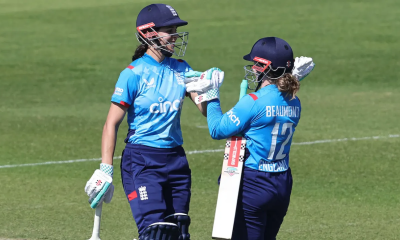


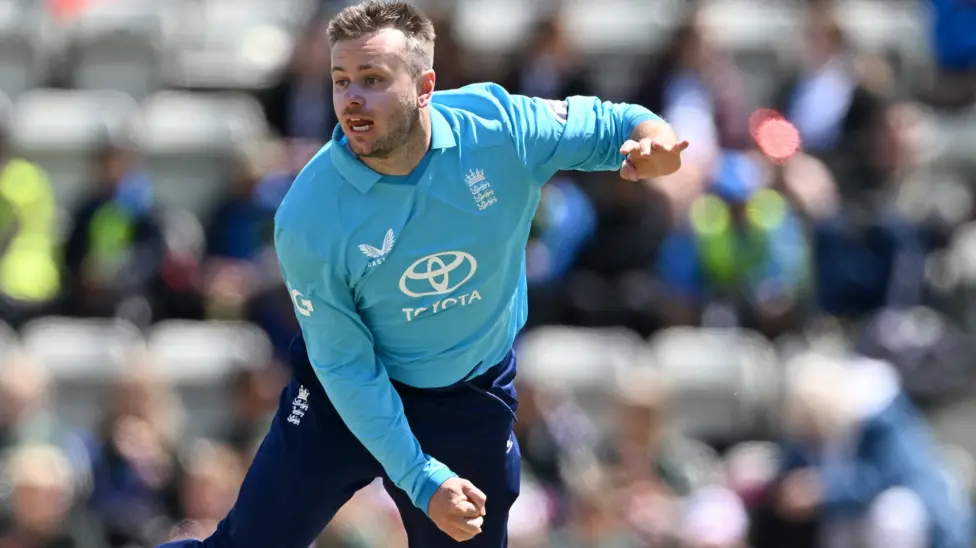
Leg-spinner Mason Crane could play for England for the first time in eight years after being recalled for the one-day international tri-series in Pakistan.
The 29-year-old won his only Test cap against Australia in Sydney in 2018 and is now given an opportunity in the series which also involves Sri Lanka next month.
Crane, who also played two T20 internationals in 2017, could also push his case in the fight to be England’s number one spinner in Test cricket.
Sam Curran and Adil Rashid both return after injuries, and uncapped pair James Coles and Henry Crocombe are included.
Jos Buttler is out with the hamstring injury he sustained last week, while Jacob Bethell is continuing his recovery from knee surgery.
Brydon Carse, who is under an investigation from the Cricket Regulator following an incident outside a nightclub in Derby in August, remains absent.
England are on a diet of white-ball cricket until three Tests in South Africa in December as they build up to the 50-over World Cup in southern Africa next year.
The tri-series in Pakistan involves the three teams taking part playing each other twice, with the top two advancing to the final. Following the trip to Pakistan, England play three one-day internationals and five T20s in Australia in November.
As England continue to shape their backroom staff following the arrival of Stephen Fleming as Test coach, Jeetan Patel, Mike Yardy, David Saker and Carl Hopkinson will assist white-ball head coach Brendon McCullum in Pakistan.
That means Marcus Trescothick, who took temporary charge of the Test team for the series against Pakistan in the home summer, misses the trip.
It is understood the make-up of the coaching staff is part of a plan to rotate the coaches – fielding coach Sarah Taylor and fast-bowling coach Tim Southee are also not going to Pakistan.
All of Trescothick, Taylor and Southee are likely to be part of England’s coaching team for other tours this winter.
England squad for tri-series in Pakistan:
Harry Brook (Yorkshire – captain), Gus Atkinson (Surrey), Sonny Baker (Hampshire), Tom Banton (Somerset), James Coles (Sussex), Jordan Cox (Essex), Mason Crane (Glamorgan), Henry Crocombe (Sussex), Sam Curran (Surrey), Liam Dawson (Hampshire), Ben Duckett (Nottinghamshire), Will Jacks (Surrey), Jamie Overton (Surrey), Adil Rashid (Yorkshire), Joe Root (Yorkshire), Josh Tongue (Nottinghamshire).
(BBC)


Sri Lanka won the toss and elected to bowl first in the Asian games semifinal clash against India.
Sri Lanka XI: Lasith Croospulle, Sineth Jayawardene, Sohan de Livera (wk), Ashen Bandara, Sahan Arachchige (c), Nuwanidu Fernando, Chamika Karunaratne, Wanuja Sahan, Tharindu Rathnayake, Binura Fernando, Vijayakanth Viyaskanth

England call up Crane and rest Archer for Pakistan series

ICC introduces pink-ball daytime Test trial, new time-wasting penalties

Discussion on Anuradhapura Sacred City Development Plan

India enter Asian Games final after Kishan and Bumrah ride roughshod over Sri Lanka

I extend my heartfelt wishes to all the sons and daughters of our country for a Happy World Children’s Day – President

Sri Lanka bowl first in semi final clash against India

‘Dates have the highest sugar content to fight Coronavirus’

Sunday Island 27 December – Headlines

#SundayIsland 17th December – Headlines

Sunday Island – 28th March

Sunday Island Headlines – 21 March

Sunday Island – 21st February – Headlines
-

 News4 days ago
Police remove Thileepan statue in Jaffna
-

 Editorial6 days ago
Birth of a bad law
-

 Features7 days ago
Beyond traditional jobs: Why Sri Lanka needs to facilitate the gig economy
-

 News6 days ago
TIN mandatory for key transactions from Nov. 1
-

 Features4 days ago
The 22nd Amendment, constitutional recovery and illiberal slippage
-

 Features4 days ago
Of foreigners as CEOs of Lankan ventures
-

 News4 days ago
Sajith rejects Jt. Opp. protest sabotage claim; SJB TU chief demands remedial action
-

 Editorial7 days ago
PST: Old devil in new costume?