
News
Sri Lanka rejects UNHRC Resolution 51/1


Sri Lanka, on Wednesday (09), rejected the draft resolution which was tabled before the United Nations Human Rights Council (UNHRC) seeking to extend the mandate of Resolution 51/1 on promoting reconciliation, accountability and human rights in Sri Lanka moved by the US, the UK, Canada, Malawi and Montenegro.
Earlier on the day the draft resolution A/HRC/57/L.1 on promoting reconciliation, accountability and human rights in Sri Lanka was adopted without a vote during the ongoing 57th Regular Session of the UNHRC in Geneva.
Sri Lanka’s Permanent Representative to the UN Himalee Arunatilaka, delivering the government’s statement prior to the adoption of the draft proposal, said Sri Lanka opposed HRC resolution 51/1 and the preceding HRC resolution 46/1 under which an external evidence gathering mechanism has been established within the OHCHR.
“We also disassociated ourselves from the Report of the High Commissioner, for the reasons outlined in our detailed response to this Council contained in document A/HRC/57/G/1. Resolution 51/1 was tabled without Sri Lanka’s consent as the country concerned, and was adopted by a divided vote.
As such, any subsequent decision extending mandates established by this resolution lack consensus in the Council,” she said.Arunatilaka added that a sovereign state couldn’t accept the superimposition of an external mechanism that runs contrary to its Constitution and which pre-judges the commitment of its domestic legal processes. Furthermore, many countries have already raised serious concerns on the budgetary implications of this mechanism given its ever-expanding mandate, she said.
“As we have repeatedly reminded this Council, setting up of this external evidence gathering mechanism within the OHCHR is an unprecedented and ad hoc expansion of the Council’s mandate, and contradicts its founding principles of impartiality, objectivity and non-selectivity… At a time of intense cynicism and polarisation within the multilateral arena on human rights and humanitarian situations in the context of the on-going travesties of these norms, we urge the co- sponsors of this politicized draft resolution which we oppose, to support and encourage the Government’s clear intention to address human rights and reconciliation through domestic processes and in line with our international obligations,” she said.
Below is Sri Lanka’s statement: “As the country concerned in respect of draft resolution 57/ L.1, as authorised by the newly elected Government in Sri Lanka, let me brief the Council on the latest developments in the country.
“Following the model conduct for a free, fair and peaceful election followed by a dignified transition in keeping with our decades of democratic practice, the President Anura Kumara Dissanayake was sworn in as the 9th Executive President of Sri Lanka on 23 September.
“Next month, the people of Sri Lanka will exercise their franchise once again to elect a new Parliament, enabling the Government to move forward with a strengthened mandate to deliver on the people’s expectations for a new political culture in the country. The rule of law, transparency, accountability and reconciliation will prevail in order to ensure sustained economic growth and social well-being of all our citizens.
“In line with the aspirations of the people, the Government will prioritise integrity, and ethical governance including addressing issues of mismanagement and corruption that were at the root of the economic collapse.
“The Government will protect democracy and human rights of all citizens including addressing past issues. Domestic mechanisms and processes that deal with reconciliation, accountability and justice will be credible and independent within the Constitutional framework, and a truth and reconciliation process that has the people’s trust will be operationalised. As stated by the President ‘Our aim is to make domestic mechanisms credible and sound…’
“As directed by the President, investigative authorities have already announced redoubling of investigation into a number of clearly identified accountability cases that were pending from the past.
“Justice will be delivered to the victims of the senseless Easter Sunday attacks. The Government is committed to a Sri Lankan nation that respects diversity and equal citizenship for all without discrimination consistent with our Constitution and our Treaty commitments. Administrative, political and electoral processes will be activated towards this end.
“The Government has received the mandate from the people and the encouragement of the international community as we move forward on these fronts.
“Now with regard to the draft resolution before us:
“Draft resolution 57/L.1 extends the mandates contained in Human Rights Council resolution 51/1.
“Sri Lanka has opposed HRC resolution 51/1 and the preceding HRC resolution 46/1 under which an external evidence gathering mechanism has been established within the OHCHR.
“We also disassociated from the Report of the High Commissioner, for the reasons outlined in our detailed response to this Council contained in document A/HRC/57/G/1.
“Resolution 51/1 was tabled without Sri Lanka’s consent as the country concerned, and was adopted by a divided vote. As such, any subsequent decision extending mandates established by this resolution lack consensus in the Council.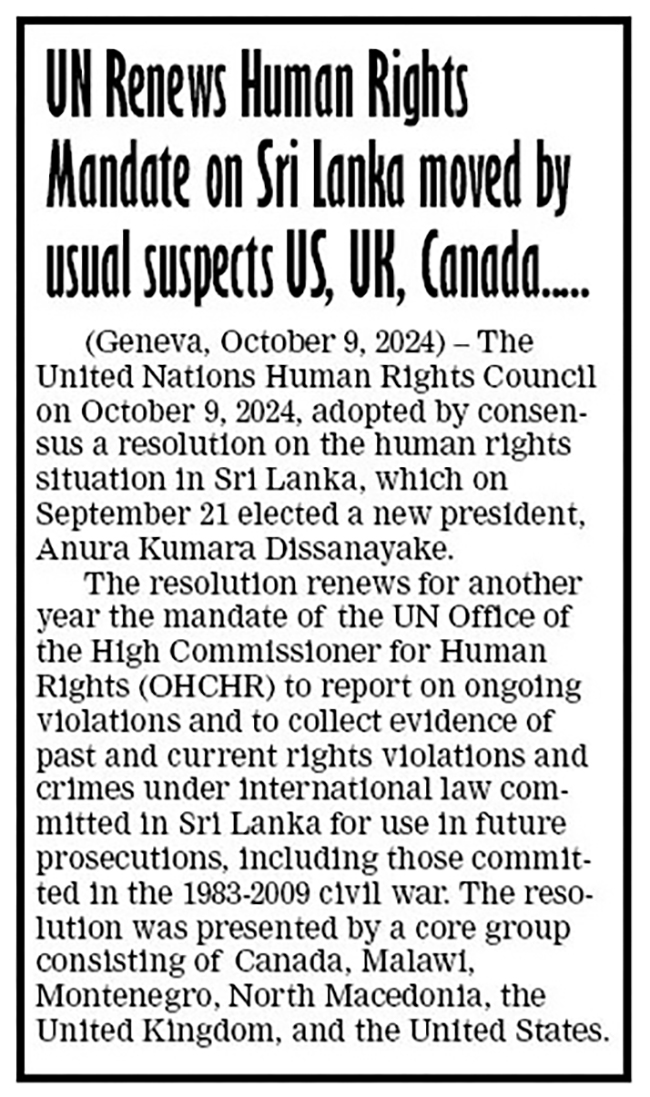
“As we have repeatedly reminded this Council, setting up of this external evidence gathering mechanism within the OHCHR is an unprecedented and ad hoc expansion of the Council’s mandate, and contradicts its founding principles of impartiality, objectivity and non-selectivity.
“No sovereign state can accept the superimposition of an external mechanism that runs contrary to its Constitution and which pre-judges the commitment of its domestic legal processes. Furthermore, many countries have already raised serious concerns on the budgetary implications of this mechanism given its ever-expanding mandate.
“For the above reasons, we are obliged to reject the draft resolution which is tabled before this Council today seeking to extend the mandate of Resolution 51/1.
“Notwithstanding our rejection of the Resolution, Sri Lanka will continue its longstanding constructive engagement with this Council including with regular human rights bodies, and all core Human Rights treaties to which we are party, as well as our commitments under the UPR process. We will keep the Council updated on the progress we make.
“I would also like to express appreciation for the principled positions taken by many countries in this Council in support of Sri Lanka as we enter a new chapter in our country.
At a time of intense cynicism and polarization within the multilateral arena on human rights and humanitarian situations in the context of the on-going travesties of these norms, we urge the co- sponsors of this politicized draft resolution which we oppose, to support and encourage the Government’s clear intention to address human rights and reconciliation through domestic processes and in line with our international obligations.”




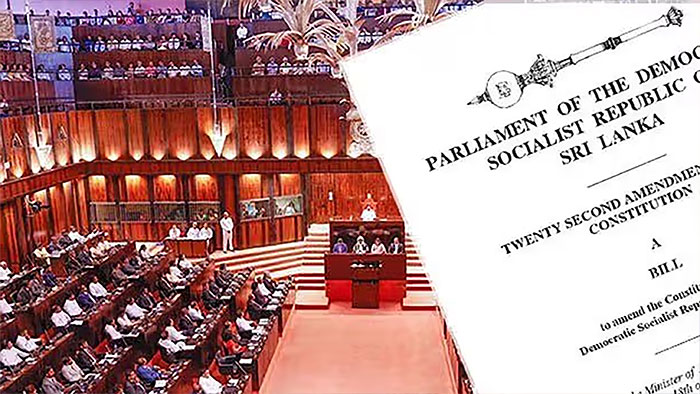
Parliament yesterday passed the Twenty-Second Amendment to the Constitution Bill and the Judicature (Amendment) Bill with two-thirds majorities, with 158 MPs voting in favour and 63 against each Bill.
The Illankai Tamil Arasu Kadchi (ITAK) and Sri Lanka Muslim Congress (SLMC) voted with the SJB against the Bills.
NDF MPs Ravi Karunanayake and Faizer Musthapha and SJB Badulla District MP Nayana Wasalathilaka were not present when the votes were taken.
The final vote on the Judicature (Amendment) Bill was announced at around 8.08 p.m. after Opposition MPs called for divisions on its clauses during the Committee Stage.
The votes followed a two-day debate which commenced on Thursday (24), after Justice and National Integration Minister Harshana Nanayakkara presented the Bills for their Second Reading.
The Supreme Court’s determination on the Bills was presented to Parliament on Tuesday (22) by Speaker Dr Jagath Wickramaratne. The Court determined that the 22nd Amendment Bill did not require approval at a referendum and could be passed by a special two-thirds majority in Parliament.
The amendment provides for raising the mandatory retirement age of Supreme Court judges from 65 to 67 and that of Court of Appeal judges from 63 to 65. It also provides for the Chief Justice to retire at 67 or after completing six years in office, whichever comes earlier.
The Speaker informed Parliament that the Judicature (Amendment) Bill could be passed by a simple majority.
The SJB opposed the legislation and its MPs attended Parliament dressed in black yesterday. The party also staged a protest at Polduwa Junction, Battaramulla, under the theme “No to 22, which destroys democracy”, with Opposition Leader Sajith Premadasa and several SJB politicians participating.
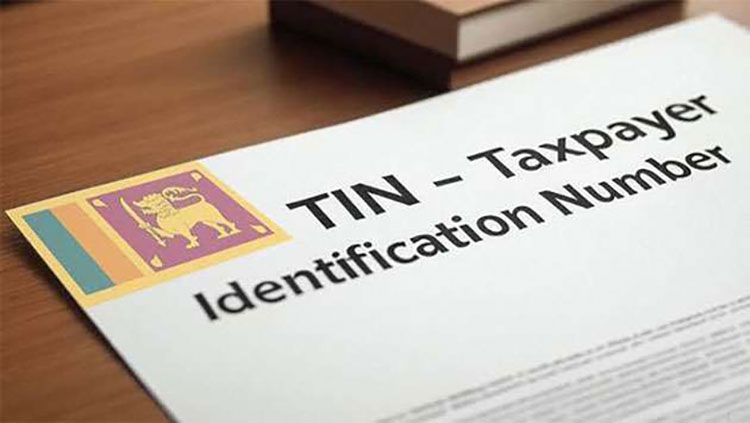
A valid Taxpayer Identification Number (TIN) Certificate will be required for a range of key transactions in Sri Lanka from November 1, 2026, the Inland Revenue Department (IRD) has announced.
The requirement, introduced under the Inland Revenue (Amendment) Act, No. 11 of 2026, applies to transactions specified under Section 102(3) of the Inland Revenue Act.
Accordingly, individuals will be required to produce a valid TIN Certificate when opening an account at a bank or financial institution, obtaining approval for a building plan, registering or renewing the licence of a motor vehicle, registering land or title to land, registering a business, transferring shares in a company incorporated in Sri Lanka or obtaining a credit card.
In the case of share transfers, both the transferor and transferee will be required to provide TIN certificates.
The IRD said officials handling such transactions had been instructed to ensure that a valid TIN Certificate was submitted before processing or completing the relevant transaction.
The Department advised those who do not already have a TIN to obtain one in advance through its e-Services platform.
It said a printout of the TIN verification result showing the applicant’s National Identity Card number and TIN could also be accepted instead of the certificate.The IRD also reiterated that obtaining a TIN is mandatory for resident individuals aged 18 and above under the applicable provisions.
By Norman Palihawadane
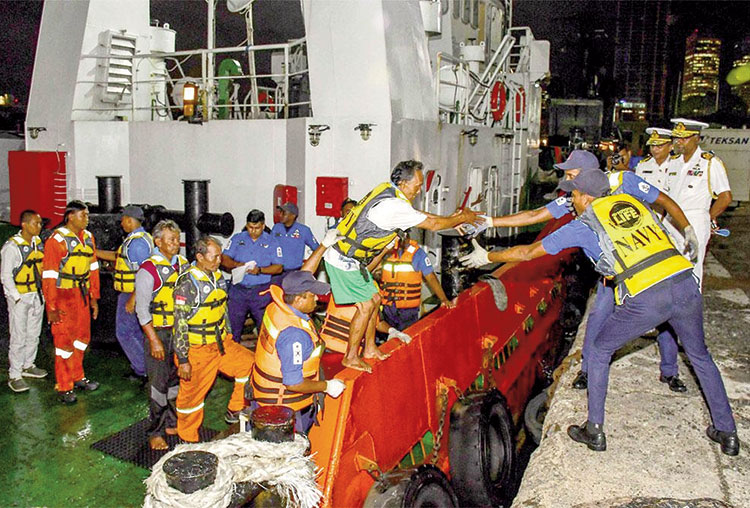
The Sri Lanka Navy brought 25 Indonesian fishermen safely ashore at the Colombo Port on Thursday (24), following a multi-agency rescue operation after their fishing trawler capsized south of Sri Lanka.
The fishermen were aboard the Indonesian-flagged fishing trawler KM Garuda Jaya VI, which capsized on September 22 while in the Australian Search and Rescue Region, leaving the crew in distress at sea.
The merchant vessel MV Moonstone responded to the distress situation and rescued all 25 fishermen from the sea. The vessel subsequently alerted the Maritime Rescue Coordination Centre (MRCC) Colombo about the incident and the rescued crew.
Following the distress alert, the Navy coordinated with MRCC Colombo and deployed two naval craft to bring the survivors safely to shore, with the assistance of relevant authorities.
The 25 fishermen were transferred to the Colombo Port, where they were provided with humanitarian assistance by the Navy.They were subsequently handed over to the Indonesian Embassy in Sri Lanka for further arrangements and onward action.

22A, Judicature Amendment Bills passed with 2/3 majority

TIN mandatory for key transactions from Nov. 1

Navy brings 25 Indonesian fishermen ashore after trawler capsizes

Former Mineral Sands Chairman arrested over recruitment irregularities

Sarana Gunawardena’s wife remanded over alleged bribe

High Posts Committee approves envoy, High Commissioner and SLIC Chairman

‘Dates have the highest sugar content to fight Coronavirus’

Sunday Island 27 December – Headlines

#SundayIsland 17th December – Headlines

Sunday Island – 28th March

Sunday Island Headlines – 21 March

Sunday Island – 21st February – Headlines
-

 News6 days ago
Namal Rajapaksa Buddhist gambit fails, bail denied
-
 Features6 days ago
Why the spelling Sri Lankan names in English vary
-

 Features6 days ago
Three bands, a new identity: Sri Lankan wolf snake recognised as distinct species
-

 Business6 days ago
SLIIT holds largest-ever convocation
-

 News6 days ago
Vehicle prices drop by up to Rs. 1 mn, says importers’ body
-

 News6 days ago
Govt monitors reported Saudi death sentence – Foreign Ministry
-

 Business6 days ago
All-new Bolero MaXX Pik-Up unveiled in Lanka
-

 Business6 days ago
Lanka’s famed beach shack battles demolition