
News
Sri Lanka no longer a functioning state – Karu

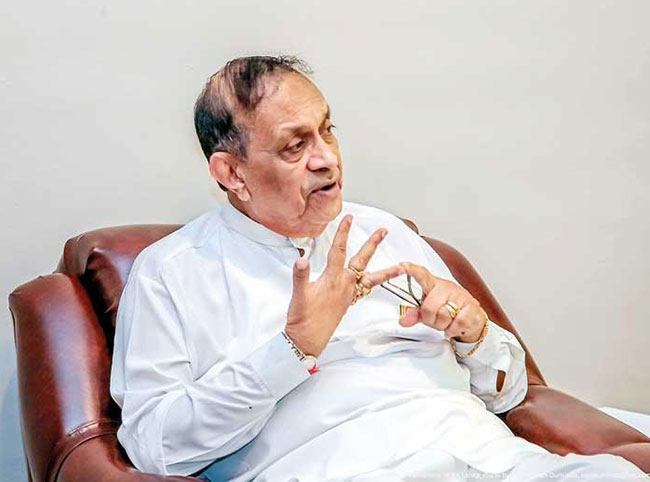
Sri Lanka is no longer a functioning state because of the shortcomings in the administration and the continuous changes in policy decisions, former Speaker and the President of the National Movement for a Just Society, Karu Jayasuriya said yesterday addressing a press conference.
Jayasuriya said that the only thing that the country had got right in the last year was the vaccination drive that has put Sri Lanka in a better position than other countries in Asia to tackle COVID-19.
“We are pleased that the President has taken immediate steps to look into the accidents related to LP gas by appointing an expert committee. This is a timely intervention. If the advice of intellectuals were similarly sought to resolve other issues faced by the country, the problems that have cropped up in the agriculture and other sectors would have not arisen,” he said.
Jayasuriya said that experts in the agriculture sector are of the opinion that there will be a large-scale (about 30%) drop in production as many farmers have given up farming due to lack of fertilizer. However, importation of rice is not a solution to this problem, he said.
“Can a country not able to import medicines, milk powder, sugar and other essentials due to the lack of foreign exchange, afford to waste foreign reserves on the importation of rice? In addition, about 1000 containers of food items at the port are stuck due to lack of dollars. We must make our management systems stronger to face the looming forex crisis,” he said.
The people are facing severe food shortages and the cost of living has skyrocketed. There are a large number of people in the country who cannot afford to have three meals a day, he said.
The former Speaker insisted that had the President taken necessary advice from intellectuals before introducing the fertilizer ban, the chaos the country is currently facing today would not have arisen. The government needs to understand that listening to experts is a very important factor in governance. The farming families today are in a very helpless state and that they are deeply frustrated and angry at the current regime, he said.
“It is with regret that one must point out that our country was not invited to the Summit for Democracy to be held in the United States. This can be considered as a great dishonour to Sri Lanka. As we have repeated many times before, it is an honour for our country to be recognised in the democratic world. This is an essential element in attracting investors and boosting trade. However, it will be difficult to earn that recognition and respect once again until the democratic mechanism functions in a proper manner,” he said.
Jayasuriya added that one of the reasons why the country was not invited to the summit is that at present the Human Rights Commission of Sri Lanka is not functioning as new members had not been appointed. In the recent past, the Human Rights Commission in our country has been highly recognized internationally.
“In the past the members were independent from political parties. At that time they were selected by the members of the Constitutional Council. Therefore, we should not be surprised that Sri Lanka was not invited to the Democratic Summit. We request that these errors be rectified without delay. Meanwhile the killing of prisoners in Police custody has also brought our country into disrepute. Therefore it must be noted with great regret that the ‘One country, One Law’ policy has still not been implemented in Sri Lanka. In a country where this concept is correctly implemented, veteran artists like Ranjan Ramanayake would not be in prison. We hope the above matters will be brought to the notice of the relevant authorities,” he said.

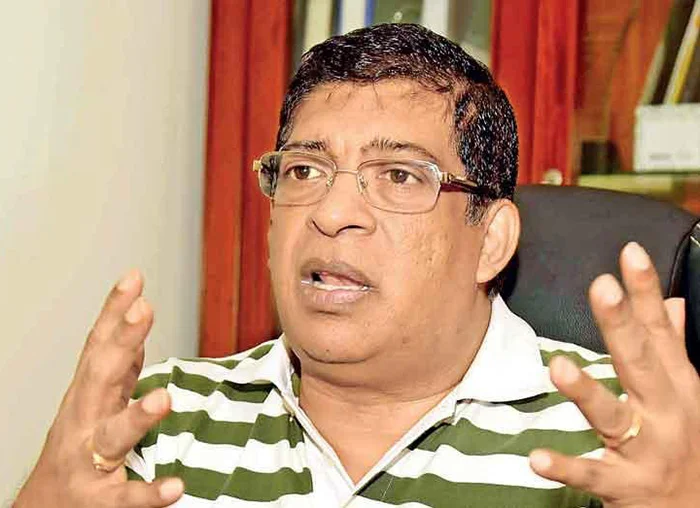
NDF MP Ravi Karunanayake, on Tuesday, raised concerns over, what he described as, a widening disconnect between record tourist arrivals and a weak foreign exchange inflow, warning that headline arrival figures were masking deep structural failures in Sri Lanka’s tourism sector.
Raising the issue under Standing Order 27(2) (20), Karunanayake noted that Sri Lanka recorded more than 2.36 million tourist arrivals in 2025, yet total tourism earnings had increased only marginally to about USD 3.22 billion. He said average spending per tourist had declined by nearly 12 percent year-on-year, while tourism-related foreign exchange inflows, reflected in the Central Bank’s reserves, had not grown in proportion to arrivals.
“This raises serious concerns about revenue quality, offshore settlements, informality and weak enforcement,” the MP said, pointing out that an estimated 40,000 hotel and accommodation entities were operating without registration.
Karunanayake sought clarification from the government on the structural reasons behind declining per capita tourism earnings, including changes in source markets, length of stay and pricing practices. He also asked for details of the actual volume of tourism-related foreign exchange converted through licensed commercial banks in 2025 and reflected in Central Bank reserves, and how this compared with earnings figures reported by the Sri Lanka Tourism Development Authority.
MP Karunanayake further asked whether the government had assessed foreign exchange leakages arising from offshore settlement by online booking platforms and the extent of tourism activity conducted by unregistered accommodation providers and informal operators outside the banking system. “Does the Government accept that a material share of tourism-generated foreign exchange is bypassing the domestic financial system and, therefore, not strengthening official reserves?” he asked.
The NDF MP also criticised weak enforcement of mandatory registration, banking channel settlements and foreign exchange repatriation requirements, despite existing legal powers. He urged the Government to present a tourism policy explicitly linked to earnings, foreign exchange inflows and reserve accumulation, rather than relying on headline arrival numbers.
Karunanayake additionally warned that overseas credit cards were widely used for tourism payments in Sri Lanka, with invoicing and settlement taking place outside the country, thereby avoiding domestic taxation. He said international booking platforms similarly processed payments offshore, depriving Sri Lanka of full taxable revenue, and asked what corrective action was being taken to address the issue.
The government requested time to respond to the queries raised by the Opposition MP.
By Saman Indrajith
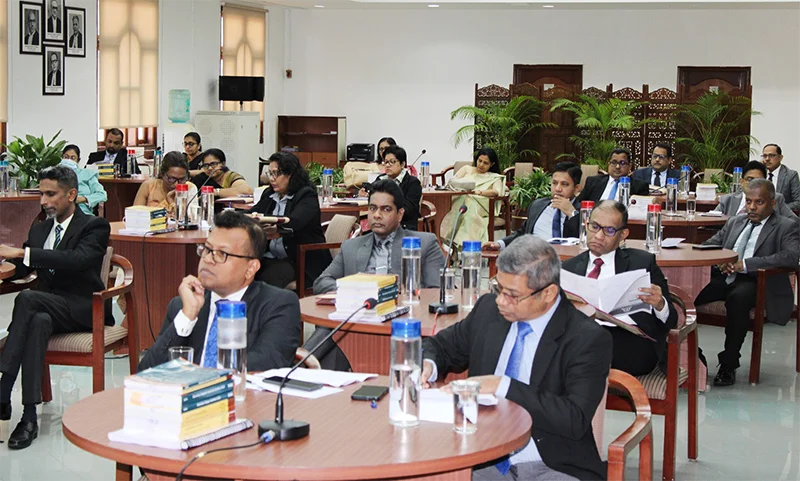
At the request of the Supreme Court of Sri Lanka and Sri Lanka Judges’ Institute, a special capacity-building programme for 30 District Court Judges from Sri Lanka was organised at the Indian National Judicial Academy, Bhopal, from 12 to 16 January 2026, the Indian HC said.
IHC statement: “The week-long programme encompassed eleven sessions covering key themes such as court and case management for efficient judicial systems; juvenile justice; judicial interventions to combat money laundering; sentencing procedures and related challenges; environmental law jurisprudence; electronic evidence and cybercrime; the use of forensic evidence in civil and criminal trials; judicial stress management and wellness; among others. In addition, the programme featured educational visits, including a field visit to Sanchi, aimed at providing cultural exposure.
The programme was organised under the enhanced capacity building framework announced by Indian Prime Minister Narendra Modi during his State Visit to Sri Lanka in April 2025, whereby 700 customised slots annually for Sri Lankan professionals were added over and above all existing schemes such as ITEC. With around 300 Sri Lanka civil service officers being trained annually under a MoU between the National Centre for Good Governance of India and the Sri Lanka Institute of Development Administration, the enhanced capacity-building endeavour of India thus now benefits 1000 Sri Lankans annually.”
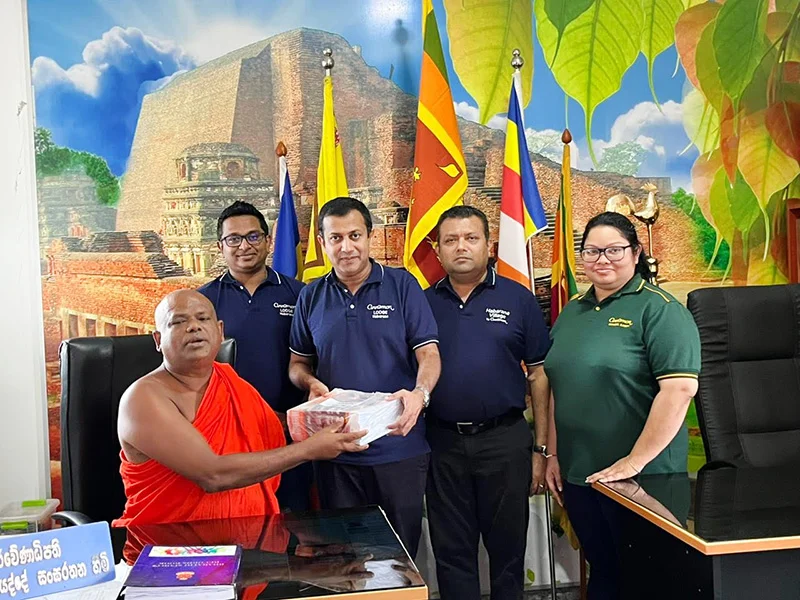
Cinnamon Lodge Habarana and Habarana Village by Cinnamon distributed essential school supplies to students affected by the recent floods following Cyclone Ditwah. The distribution was focussed on schools in the Peradeniya and Gampola areas that suffered significant damage.
The project was a collective effort supported by the staff and welfare associations of several properties, including Trinco Blu by Cinnamon (represented by Lahiru Rathnayake), Cinnamon Citadel Kandy, and Kandy Mist (represented by HR Manager Chandran Solkar).
The primary recipient was Sri Bharathi Buddhist College in Peradeniya, where books and other educational equipment were handed over. Additionally, relief items were distributed on the same day to students at Peradeniya Junior School, Atabage Rajananda Vidyalaya, and Atabage Udugama Maha Vidyalaya.
By S.K. Samaranayake

Dry weather will prevail in the most parts of the island

Ravi: foreign exchange inflow does not reflect increased tourist arrivals

India arranges capacity building programme for District Court judges on SC’s request

Cinnamon Hotels extend support to flood-affected students in Peradeniya and Gampola

Govt. will introduce mechanism to tackle issues arising from education reforms: President

Opposition moves motion seeking PSC to probe lack of disaster preparedness

‘Dates have the highest sugar content to fight Coronavirus’

Sunday Island 27 December – Headlines

#SundayIsland 17th December – Headlines

Sunday Island – 28th March

Sunday Island Headlines – 21 March

Sunday Island – 21st February – Headlines
-

 Editorial4 days ago
Illusory rule of law
-
 News5 days ago
UNDP’s assessment confirms widespread economic fallout from Cyclone Ditwah
-
 Editorial5 days ago
Crime and cops
-
 Features4 days ago
Daydreams on a winter’s day
-

 Editorial6 days ago
The Chakka Clash
-
 Features4 days ago
Surprise move of both the Minister and myself from Agriculture to Education
-

 Features3 days ago
Extended mind thesis:A Buddhist perspective
-
 Features4 days ago
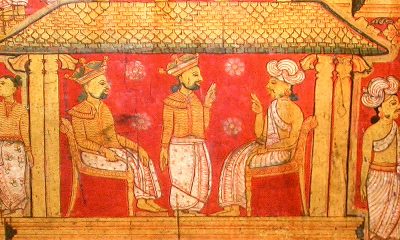
The Story of Furniture in Sri Lanka