
News
Sri Lanka looks to join global charter on children’s care reform

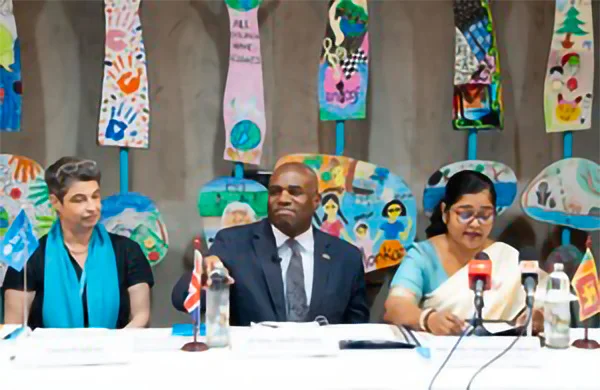
Sri Lanka on Tuesday (17) signed a letter of intent to join a growing global initiative of 35 countries that are part of the Global Charter for Children’s Care Reform, marking a significant step forward in protecting vulnerable children, the British High Commision (BHC), in Colombo, said.
Saroja Paulraj, Minister for Women and Child Affairs, signed the letter during a visit to Colombo by Deputy Prime Minister David Lammy, who launched the Global Charter in early 2025. The Charter seeks to strengthen families, prevent unnecessary separation, ensure safe family-based care, and end the use of institutions for children’s care worldwide.
Deputy Prime Minister Lammy met President Anura Kumara Dissanayake to discuss economic cooperation, reconciliation, and humanitarian priorities, including the UK’s ongoing support to communities affected by Cyclone Ditwah. He also met with Tamil political leaders and civil society. The UK remains committed to supporting meaningful reconciliation, transitional justice and a peaceful future for all Sri Lankans.
The UK provided £1 million in urgent humanitarian assistance to Sri Lanka, delivered through trusted partners on the ground. This funding supported life-saving interventions and early recovery, including emergency shelter, clean water, sanitation and essential relief items for affected families.
The BHC statement quoted the Deputy Prime Minister as having said: The UK is working with countries across the world to spearhead the urgent and united action that is needed to fundamentally improve children’s care and transform the lives of vulnerable children.
Today Sri Lanka has taken meaningful steps towards that shared goal – joining us on our mission to ensure every child has the chance to grow up in a safe and supportive family environment. This is a cause I care deeply about and I was proud to be here in Colombo today to progress this vital agenda with Minister Paulraj.
Preventing the unnecessary separation of children from their families, ensuring the provision of safe, family-based care and ending the use of institutions the world over have the power to change lives, restore hope and give our next generations the opportunity to thrive.”



Latest News
Advisory for low pressure area in the Southwest Bay of Bengal to the south-east of Sri Lanka

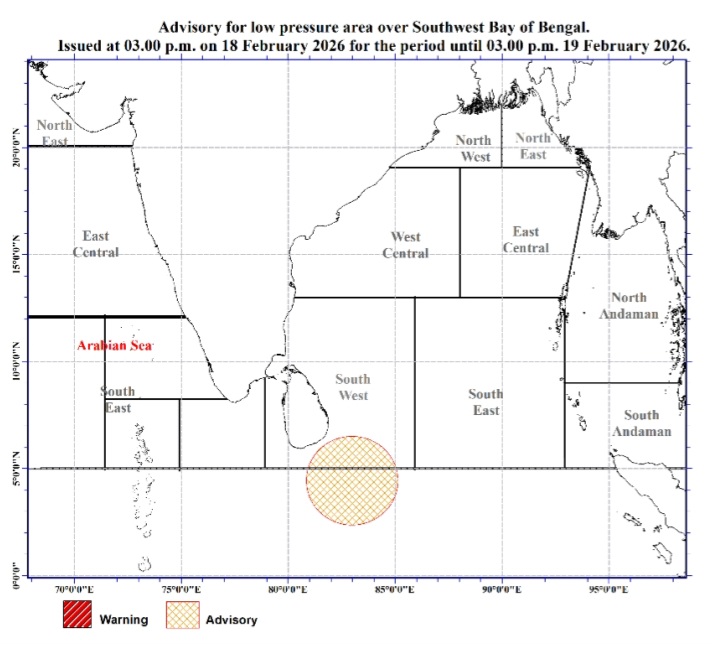
Advisory for low pressure area in the Southwest Bay of Bengal to the south-east of Sri Lanka.
Issued by the Natural Hazards Early Warning Centre of the Department of Meteorology at 03.00 pm on 18 February 2026
Multiday boats fishermen and naval community are warned that the low-pressure area still persists over the Southwest Bay of Bengal to the south-east of Sri Lanka. Under the influence of this system, heavy showers or thundershowers, Strong winds about (50-60) kmph, and rough or very rough seas can be expected in these sea areas.
The Meteorological Department is constantly monitoring the behavior of the system.
The naval and fishing communities are requested to be attentive to the future forecasts and bulletins issued by the Department of Meteorology in this regard.
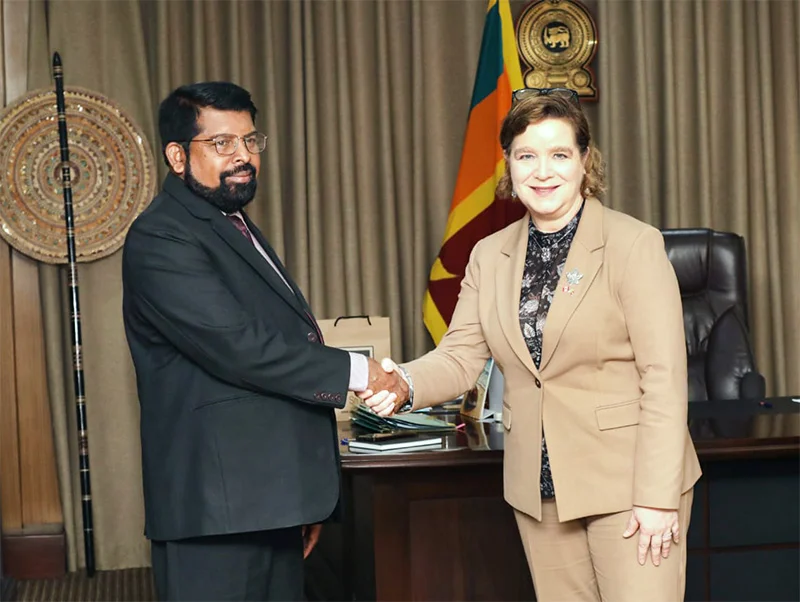
Canada, said to be the home to the largest Tamil Diaspora community, has expressed concern over the delay in holding Provincial Council (PC) elections. Canadian High Commissioner Isabelle Martin, on Monday (16), took up the issue with Public Administration, Provincial Councils and Local Government Minister Professor Chandana Abayaratne.
Sources quoted Prof. Abayaratne as having told the Canadian HC that the delay was not deliberate on the part of the government. The Minister blamed, what the sources called, certain legal, technical and delimitation issues for the delay.
India compelled Sri Lanka to enact the 13th Amendment to the country’s Constitution to enable the setting up of the Provincial Council system, in line with the Indo-Lanka Peace Accord, which Sri Lanka signed under duress in July 1987.
Prof. Abayaratne has assured the Canadian HC that President Anura Kumara Dissanayake, too, recognised the importance of strengthening the Provincial Council system as a solution to ethnic issues and that urgent steps would be taken in that regard.
During the discussion, matters relating to strengthening political, economic and social relations between the two countries were discussed.
In May 2020, Canada declared that Sri Lanka had perpetrated genocide during the war against the LTTE. Canada also sanctioned former Presidents Mahinda Rajapaksa and Gotabaya Rajapaksa in January 2023 over alleged war crimes.
The Canadian HC also explained her country’s ‘Indo-Pacific’ strategy and how Sri Lanka could benefit from it.
In particular, Canada’s “Pathways to Peace” project will support reconciliation between nations, and to improve communication by encouraging the learning of mutual languages as a second language, and it was also agreed to provide more opportunities for Sri Lankan students to pursue higher studies in Canada.
The Canadian delegation also expressed its willingness to provide the necessary technical assistance to solve the drinking water problems in Puttalam, Mannar and the North-Eastern provinces under technical cooperation, and to implement the relevant projects after a preliminary study.
by Shamindra Ferdinando
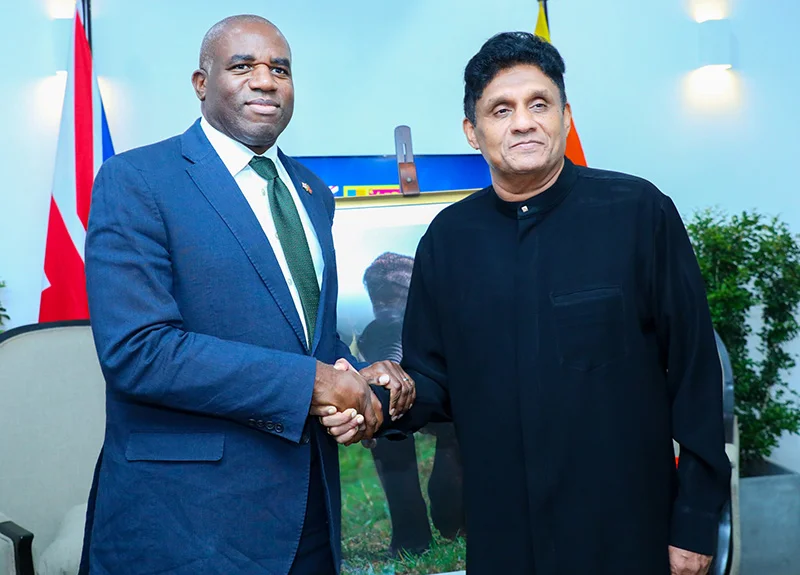
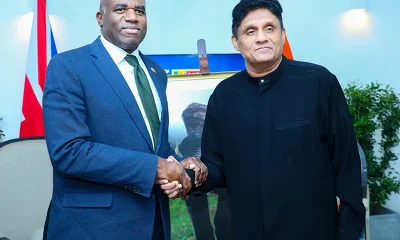
SJB and Opposition Leader Sajith Premadasa has briefed Deputy PM of the UK, David Lammy, on the dangers posed by the proposed Protection of the State from Terrorism Act (PSTA) and the Online Safety Act.
They met at the Office of the Leader of the Opposition, in Colombo, on Tuesday (17). Discussions focused on democratic governance, trade expansion, and bilateral humanitarian cooperation.
The British delegation included High Commissioner for Sri Lanka Andrew Patrick.
Head of the Deputy Prime Minister’s International Unit David Meyer, Special Advisor Ms. Fiona Meagher, and First Secretary (Political) Tom Soper,
According to a statement issued by the Opposition Leader’s Office, Premadasa has cautioned against what he called draconian applications of the law, specifically warning against broad definitions of terrorism that could criminalize political dissent and trade union activities. Premadasa reiterated that the judiciary, not the executive, must drive legal interpretations. Regarding online safety, while acknowledging the need to protect children, he stressed that regulations must align with UK standards and international norms without infringing on civil liberties.
The Opposition Leader welcomed the UK’s leadership as the President of the Group of States against Corruption (GRECO) and its global Anti-Kleptocracy Campaign. The SJBer highlighted the critical need for transparent institutions, noting that strengthening accountability mechanisms is central to rebuilding public trust and ensuring sustainable economic recovery in Sri Lanka.
Premadasa conveyed sincere appreciation for the UK’s “Sovereign Solidarity” following the devastation caused by Cyclone Ditwah in late 2025. He thanked the UK government for increasing its humanitarian aid package to £1 million (approx. $1.32 million) in December 2025. This funding, channelled through the Red Cross, UNOPS, and local partners, has provided: Emergency shelter and repairs for damaged homes; Clean water and sanitation facilities to prevent disease; and essential medicines and food supplies for the 1.8 million people affected.
Premadasa also proposed enhanced cooperation in protecting Sri Lanka’s wild elephant population and addressing the growing human–elephant conflict. He emphasised the need for sustainable conservation strategies, scientific land-use planning, community protection measures, and international technical support to safeguard biodiversity while ensuring the safety and livelihoods of rural communities affected by human–elephant interactions.

Advisory for low pressure area in the Southwest Bay of Bengal to the south-east of Sri Lanka

Showers will occur at times in the Northern , North-central, Central, Uva and Eastern provinces and in Hambantota district

Canada concerned about delay in holding PC polls

Sajith briefs visiting UK Deputy PM on constitutional issues

Pathfinder houses Read Japan Project

Sri Lanka looks to join global charter on children’s care reform

‘Dates have the highest sugar content to fight Coronavirus’

Sunday Island 27 December – Headlines

#SundayIsland 17th December – Headlines

Sunday Island – 28th March

Sunday Island Headlines – 21 March

Sunday Island – 21st February – Headlines
-
 Life style4 days ago
Marriot new GM Suranga
-

 Business3 days ago
Ministry of Brands to launch Sri Lanka’s first off-price retail destination
-
 Features4 days ago
Monks’ march, in America and Sri Lanka
-
 Features4 days ago
The Rise of Takaichi
-

 Features4 days ago
Wetlands of Sri Lanka:
-
 News4 days ago
Thailand to recruit 10,000 Lankans under new labour pact
-
 News4 days ago
Massive Sangha confab to address alleged injustices against monks
-
 News2 days ago
IMF MD here