
Features
Sri Lanka in Geneva

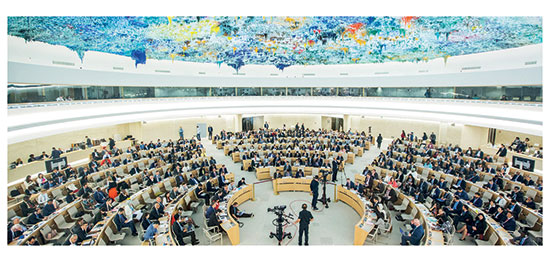
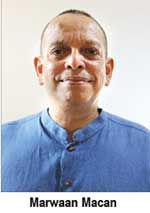
Below is the text of the talk by journalist Marwaan Macan-Markar during a recent webinar on the “Rule of Law, Justice and Democratic Rights in Sri Lanka”, organized by the Sydney-based LAWASIA.
It should be clear to anyone who followed the headlines from Sri Lanka in March that the country has continued its downward spiral on the stage of global affairs. The yardstick that reveals this trend is the number of votes the government was able to muster over a resolution during the human rights sessions in Geneva. Only 11 of the 47 members of the United Nations Human Rights Council were convinced by Sri Lanka’s case and voted for it this year.
This is quite a diplomatic fall from grace, and it raises questions if the country can sink even lower at the HRC. To understand Sri Lanka’s predicament, one has to look back over a decade, to 2009, the year the nearly 30-year ethnic conflict came to a bloody end. That year, against heavy diplomatic odds, Sri Lanka convinced 29 countries to back its case.
 But that high watermark, as we now know, was to be short-lived, as resolutions in the subsequent years revealed. In 2012, the international support fell by half, to 15 votes. By 2013 only 13 countries stood by Sri Lanka — suggesting that there was a drift away from other nations backing the Sri Lankan cause. By 2014, as the then President Mahinda Rajapaksa was rounding off his second term, international support at the HRC dropped to 12.
This scorecard of Sri Lanka in Geneva is open to many interpretations. For me, as a journalist, it has been helpful to gauge the trajectory of Sri Lanka’s post-war history and how that is perceived internationally. It has also served as an entry point to understand what the national mood is on the human rights front, and where the political class sits on issues such as justice and reconciliation. This has been reflected with ample fervor in the debates across the Lankan media in the periods surrounding human rights session. At this moment, given ideology of the government of the day, the ultra-nationalist sentiments prevail.
But if you were to step back from the noise, you will be able to detect elements of a political ritual taking shape. One can even break it down to the pre-Geneva season and the post-Geneva season. Colorful expressions have surfaced over time to give the Geneva discussions a unique vocabulary. Some of them have been drawn from local situations and some from the world of literature. One well-known Sri Lankan media personality kept referring to the recent Geneva sessions in months leading to it as “the Ides of March.” There was an obvious sense of foreboding with each of his deliveries.
The sentiments among the ordinary people are, at times, equal to the task. They have enriched the discussion with their colorful takes. That is how I picked up this particular expression about the HRC: “It is like the Sword of Damocles hanging over the Sri Lankan state.”
Some of these thoughts were shared during conversations I had had in Colombo ahead of a story I wrote late last year about Geneva 2021. And the impression I came away with after one such meeting was that the annual human rights sessions have evolved to become a new constant in Sri Lanka’s contemporary political life, and it may easily qualify in second place, after the national elections, as a useful barometer to measure the Lankan political winds.
But let me expand on that point, because the Geneva sessions have another dimension that is as relevant for those of us who follow Sri Lanka’s political twists. They provide guidance to track where the country stands in its commitments to deliver on the rule of law, justice and democratic rights, which is the theme of today’s webinar.
For observers of Lankan affairs, the text that emerged out of Geneva has opened up new story lines to consider. One that should keep journalists busy is the language for an accountability process to achieving post-war justice. The relevant section says that this new international effort will be mobilized to “collect, analyze, and preserve evidence” of gross human rights violations and international crimes committed in Sri Lanka to be used for future prosecutions.
That should make uncomfortable reading for those who were involved in war crimes or human rights atrocities. Some of the names implicated in such abuses are already in the public domain. It is very likely that now, with an evidence-gathering mechanism taking shape, more names will be added. So bit by bit, what had appeared not possible in Sri Lanka, because governments have been unwilling to, or the country’s justice process has been unable to, as human rights experts say, is taking shape in foreign climes.
But the more headline-grabbing accounts are likely to emerge from other passages of the Geneva text. It is the section that encourages countries to consider hearing cases against Sri Lanka’s alleged war criminals in their respective courts. These provisions have pushed Sri Lanka to join the ranks of nations with brutal legacies of political oppression and ethnic conflicts in Latin America, Africa and Asia.
And it may be worth recalling that some of the governments from those countries have had to muster their diplomatic capital to deal with their own citizens, who were accused of war crimes, being targeted by human rights activists and lawyers. The latter wanted the former to be tried in foreign courts under the principle of universal jurisdiction. In light of Sri Lanka’s dismal voting record in March, this is surely going to be another test of the country’s diplomatic reach.
Such a turn in Sri Lanka’s human rights narrative comes down to this for those who committed war crimes: henceforth, they may have to give serious thought to which foreign country they plan to travel to next time. It will not be business as usual anymore. There is a growing list of examples that help to illustrate cases of serial human rights violators who were in foreign countries as a free man — yes, the perpetrators are all men – being arrested for war crimes or grave human rights violations.
The ruthless and manipulative Indonesian dictator Suharto’s name comes to mind among the early examples in this context. He was on such a wanted list for his oppressive record during his autocratic rule of 32 years. The terror he unleashed resulted in massacres of up to 500,000 citizens, yes, half-a-million people, according to conservative estimates. But after he lost power in 1998, and his health weakened, the former strongman of Southeast Asia feared travelling to European countries for medical care. The reason, according to human rights groups, was that he dreaded being arrested in a foreign city. So, yes, he stayed home and avoided becoming an international story.
But the one who did create a media storm, and someone who is worth recalling in light of the theme I have chosen to focus on today, is the imperious and arrogant Augusto Pinochet. For those unfamiliar with the name, he was the former dictator of Chile. He was arrested in London after a British court accepted a case against him by a Spanish jurist. The moment was celebrated by human rights campaigners for the precedent that the British courts had set: ending the concept of sovereign immunity that had given war criminals and tyrants the freedom to travel without fear of arrest. It marked the arrival of universal jurisdiction as another means by which to go after the world’s worst rights violators. And the world got the “Pinochet Precedent” as a result.
In fact, it was only a few years later that I first came across the name of Ricardo Miguel Cavallo. I was working in Mexico at the time and had been assigned to cover human rights. The beat included stories of the men who had been involved in the former oppressive regimes of Latin America. Some of them had fled to Mexico, like Cavallo, and others had got to other “safe” countries.
Cavallo had been a military officer in Argentina before that, when it was ruled by a junta, during the years of its “Dirty War.” He had arrived in Mexico later and had remained under the radar for years as a free man, working in Mexico’s national registry of motor vehicles. But then his cover-up ended. He was arrested in the Caribbean coastal resort of Cancun. The “Pinochet Precedent” had finally caught up to him. Yes, he was indicted under that principle, affirming that the idea of universal jurisdiction was spreading across countries.
The previous speaker just reminded us where the quest for universal justice has progressed since then. The Magnitsky Act that is evolving into a Magnitstky movement now has 31 countries that have signed on and changed their laws, he said. This enables those countries to target the bank accounts and financial dealings – even credit cards – of human rights offenders.
Stories about such offenders make for compelling reading. They will continue to be told because they help to advance the cause of justice and accountability. The likelihood of Sri Lankan names joining that list has increased after the government’s diplomatic debacle in Geneva. And if that was to happen, those of us who are observers and reporters of the country’s political life will have new areas of inquiry to pursue.
Marwaan Macan-Markar is an Asia regional correspondent for Nikkei Asia, a Tokyo-based publication. He covers mainland Southeast Asia and lower South Asia and divides his time between Thailand and Sri Lanka. He was the former features editor of The Sunday Leader, a Sri Lankan weekly that has ceased publication.

by Prof. Ranjith Bandara,
Emeritus Professor, University of Colombo
This article examines why community exclusion, excessive bureaucratic control, unequal distribution of conservation benefits, weak institutional accountability, and short-sighted political leadership continue to undermine wildlife conservation in Sri Lanka.
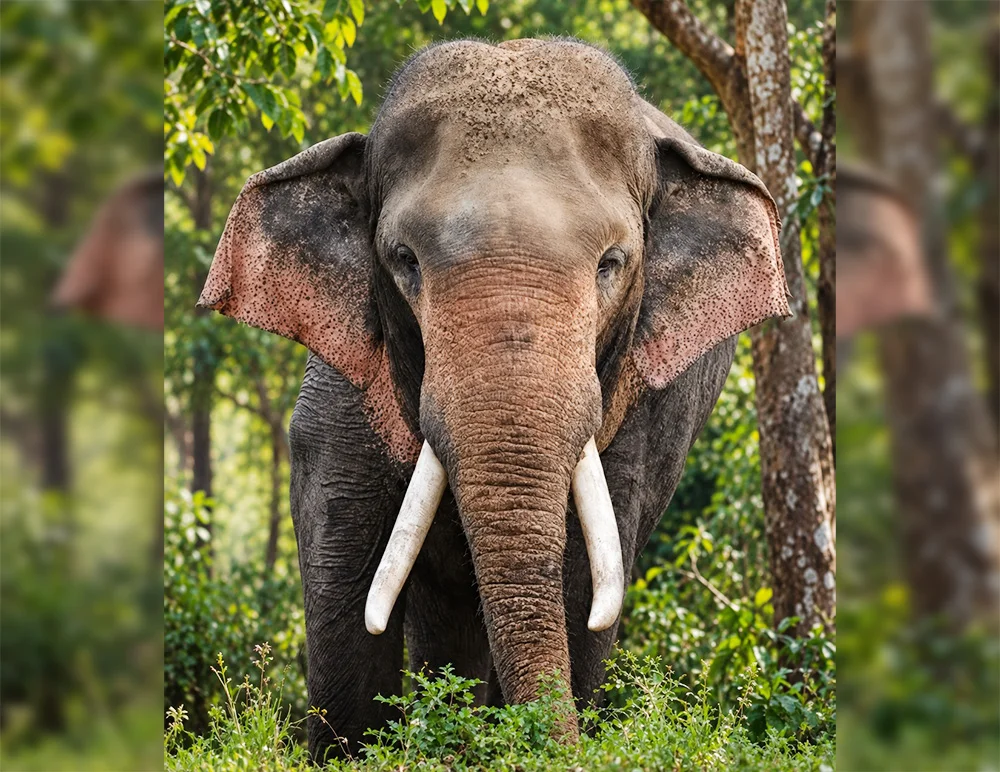
The death of Tusker Kavantissa is more than the loss of one of Sri Lanka’s most remarkable wild elephants. It exposes uncomfortable questions about how we protect our natural heritage, how conservation decisions are made, and why repeated warnings have failed to produce meaningful reforms. His death should compel us to examine not only what happened to one extraordinary animal, but also the deeper weaknesses in our wildlife conservation system.
Tusker Kavantissa, one of Sri Lanka’s most prominent wild tuskers, died on 16 October, 2026, after receiving veterinary treatment for an injury, reportedly caused by gunfire. Although the wound had shown some improvement, his health subsequently deteriorated. The precise cause of death requires confirmation through a proper post-mortem examination. Nevertheless, the circumstances raise serious questions about preventive protection, wildlife management, and institutional preparedness.
The wider picture is equally disturbing. According to recently reported figures, Sri Lanka has lost an average of approximately 402 elephants and 138 people annually, since 2019, due to human–elephant conflict. These figures reflect a continuing national tragedy affecting both wildlife and rural communities.
What Sri Lanka faces today is not merely a wildlife conservation problem. It is also a crisis of environmental governance, shaped by institutional weaknesses, political decisions, and the failure to recognise the economic and social realities of conservation.
Conservation without communities
One of the fundamental weaknesses of our conservation approach is that local communities are often treated as subjects of regulation rather than partners in conservation. They are expected to bear the risks, respect restrictions, and cooperate with government programmes, yet their influence over decisions affecting their lives remains limited.
For rural families living alongside wild elephants, conservation is not an abstract environmental objective. It directly affects their safety, agricultural income, property, and everyday lives.
Farmers frequently possess valuable knowledge about elephant movements, vulnerable locations, seasonal changes, and practical protection measures. Yet conservation interventions are sometimes designed without adequately considering this experience.
When decisions are imposed from above, communities may feel excluded from programmes they are expected to support. This weakens trust, reduces cooperation, and ultimately undermines conservation outcomes.
We must recognise that protecting elephants and protecting farmers are not conflicting objectives. Both are essential. A conservation policy that safeguards wildlife while neglecting human security cannot be considered successful.
The real challenge is to replace conservation imposed on communities with conservation undertaken alongside them. Meaningful participation requires more than consultation meetings. Communities must have a genuine role in planning, implementing, monitoring, and evaluating conservation activities.
Bureaucratic authority versus public accountability
Wildlife conservation requires strong institutions, professional expertise, and effective regulations. However, excessive bureaucratic control can become an obstacle when administrative authority takes precedence over practical outcomes.
Decision-making in Sri Lanka’s conservation system remains heavily dependent on central institutions. Administrative procedures, overlapping responsibilities, and limited coordination can delay responses to urgent problems.
More importantly, excessive centralisation can discourage local innovation and prevent communities from contributing practical solutions.
When administrative authority becomes more important than results, conservation risks becoming an exercise in controlling people rather than protecting nature.
This criticism should not be confused with questioning the dedication of frontline wildlife officers and veterinarians. Many work under difficult conditions with limited resources. The efforts undertaken to save Tusker Kavantissa deserve recognition.
However, individual commitment cannot compensate indefinitely for institutional weaknesses.
We must ask whether our conservation institutions have the capacity to identify risks early, protect vulnerable animals, coordinate emergency responses, and evaluate the effectiveness of their interventions.
Public accountability should, therefore, extend beyond compliance with administrative procedures to measurable conservation outcomes.
Who bears costs, and who receives benefits?
Perhaps the most neglected dimension of wildlife conservation in Sri Lanka is the unequal distribution of its economic costs and benefits.
Wild elephants contribute substantially to tourism, biodiversity, cultural heritage, and the country’s international image. Their conservation generates benefits enjoyed by society as a whole.
Yet the financial and personal costs are concentrated among rural communities living within elephant habitats.
A study published in 2023, involving 300 farming households in southern Sri Lanka, revealed a striking imbalance. Although these households lived near two national parks, none received economic benefits from tourism. Meanwhile, 57 percent had experienced elephant-related crop damage.
The findings raise a fundamental economic question: if the entire country benefits from elephant conservation, why should a relatively small and vulnerable section of society bear a disproportionate share of its costs?
Conservation cannot remain economically sustainable when its benefits are widely enjoyed but its costs are concentrated among those least able to bear them.
A separate study, published in 2024, involving 439 affected farming households, examined the possibility of financing compensation through tourism revenue. It demonstrated the potential for tourism-based financial mechanisms to support human–elephant coexistence.
The policy implications are significant
A proportion of wildlife tourism revenue could be directed towards affected communities through transparent benefit-sharing arrangements. Such measures could support compensation, village protection, local employment, community enterprises, and agricultural improvements.
However, financial compensation alone is insufficient. The 2023 study also indicated that fear of elephants and concerns about crop damage strongly influenced community attitudes. People must feel safe in their homes and farms, not merely receive payment after suffering losses.
Equitable benefit-sharing is, therefore, more than an act of generosity. It is an economic and social requirement for sustainable conservation.
Political decisions and absence of long-term vision
The weaknesses in wildlife conservation cannot be attributed solely to public officials. Political leadership must accept its share of responsibility.
Poor land-use planning, habitat fragmentation, obstruction of elephant movement corridors, and development decisions that inadequately consider environmental consequences have contributed to human–elephant conflict.
Political decisions made for immediate gains can create environmental and economic costs lasting for decades.
Another weakness is the preference for visible, short-term interventions.
Constructing electric fences, relocating elephants, and launching emergency operations can attract considerable publicity. However, such interventions should be evaluated according to their effectiveness, not their visibility.
Political leadership should be judged not by the number of conservation programmes announced, but by the lives protected, conflicts prevented, and long-term improvements achieved.
There is also a serious problem of policy continuity. Conservation cannot be governed according to electoral cycles or changing political priorities.
Elephant habitats, migration patterns, and ecological processes do not change with governments. Successful conservation, therefore, requires consistent national commitments extending beyond individual political administrations.
Without such continuity, public investment may be wasted while the underlying problems remain unresolved.
Problem is not always a lack of policy
Sri Lanka’s conservation crisis cannot be explained simply by a shortage of scientific knowledge or policy recommendations.
In many instances, the greater challenge lies in translating available knowledge into coordinated, adequately funded, and politically supported action.
The National Action Plan for the Mitigation of Human–Elephant Conflict, prepared in 2020, proposed a science-based approach that emphasised community participation, protection of villages and agricultural land, and more effective conflict-management strategies.
Yet an important question remains: how much of this plan has been implemented successfully?
Have implementation difficulties arisen from inadequate resources, weak institutional coordination, administrative resistance, or insufficient political commitment?
An independent assessment of the plan’s implementation would help identify these obstacles and establish clear responsibilities.
We must also recognise that a substantial proportion of Sri Lanka’s wild elephants live outside protected areas. Attempting to confine all elephants within national parks and forest reserves is, therefore, neither realistic nor sustainable.
Effective conservation requires land-use policies informed by elephant ecology, settlement patterns, agricultural needs, and the practical realities of human–wildlife coexistence.
A sound policy that remains largely unimplemented offers little protection to either elephants or people.
Towards more responsible conservation system
Sri Lanka needs a fundamental change in how wildlife conservation is governed.
Four priorities deserve immediate attention.
First, local communities must become genuine partners in conservation management, with meaningful responsibilities and decision-making opportunities.
Second, conservation benefits must be distributed more fairly. Wildlife tourism should contribute directly to protecting the livelihoods and safety of communities that bear conservation costs.
Third, existing national conservation plans should be independently reviewed to identify implementation gaps and establish a realistic timetable for corrective action.
Fourth, conservation institutions must become more accountable for measurable outcomes, including reductions in human deaths, elephant mortality, crop losses, and property damage.
These reforms require cooperation among wildlife, forestry, agriculture, land, irrigation, and local government institutions.
They also demand political leadership willing to prioritise long-term results over short-term publicity.
For exceptional animals, such as Tusker Kavantissa, improved risk monitoring, preventive protection, and timely veterinary responses are particularly important. However, conservation should not be limited to protecting a few well-known animals.
Every wild elephant has ecological value, just as every person living alongside elephants has an equal right to safety.
The objective must be a system that protects both.
Lesson tusker Kavantissa leaves behind
The death of Tusker Kavantissa should not become another moment of national sorrow that gradually fades from public memory. It should mark a turning point in how Sri Lanka approaches wildlife conservation.
A proper investigation into his death is essential. Equally important is an honest examination of the conservation system within which such tragedies continue to occur.
The real challenge is not choosing between people and elephants. It is creating a system in which both can coexist safely, and where the responsibilities, costs, and benefits of conservation are shared fairly.
This requires more than scientific expertise and stronger regulations. It demands accountable institutions, meaningful community participation, economic fairness, and political leadership guided by a clear long-term vision.
Our greatest failure would not be the loss of Tusker Kavantissa alone. It would be allowing the same weaknesses in our conservation system to claim more lives while we continue to avoid the reforms that could prevent them.

by Jehan Perera
The government appears set to overcome the first major challenge to one of its foundational principles. It has faced down demands from sections of the Buddhist clergy and opposition parties to release Ven. Galagodaatte Gnanasara from his prison sentence for contempt of court.
Ven Gnanasara is best known as the general secretary of the Bodu Bala Sena, a nationalist Sinhala grouping. The government seemed unfazed by a protest march organised by Buddhist monks and the opposition parties and its supporters organised an even bigger march to support the government’s position. It is notable that the general population did not get involved in either march in any substantial number. The issue has now become a test of whether the government will uphold its commitment to apply the law equally, irrespective of a person’s position or status, even when doing so brings it into conflict with a powerful constituency.
The case has a specific legal history. Ven. Gnanasara was sentenced to six years’ imprisonment by the Court of Appeal in 2018 for contempt of court in a case involving former military personnel where he disrupted the proceedings. The Supreme Court rejected his appeal in 2018. Former President Maithripala Sirisena subsequently granted him a presidential pardon in 2019. Last month, the Supreme Court invalidated that pardon. The initial demand by Buddhist monks and their lay supporters was that Ven. Gnanasara should be permitted to wear his Buddhist robes when appearing in public before the courts. The government has indicated its willingness to examine the procedures governing the treatment of Buddhist monks in prison, in consultation with the relevant religious authorities. However, the initial demand has now been escalated into a demand for a presidential pardon.
One of the central promises of the National People’s Power (NPP) during its election campaign two years ago was to apply the law equally to all. This commitment has shaped the government’s approach to allegations of corruption and criminality involving individuals who previously wielded political power. The NPP government was swept into power on a wave of antipathy towards those in previous governments who were perceived to have abused their positions for private gain. The economic collapse Sri Lanka experienced in 2022, and the hardships endured across society, remain vivid in the public memory. The past two years have seen the government pursuing those accused of corruption and other offences. Several high-ranking members of previous governments have faced arrest and legal proceedings and been sentenced to jail.
Religious Concerns
The ability of opposition parties to mobilise widespread resistance against proceedings involving their leaders has been limited, as much of the general population continues to favour accountability for past financial crimes. However, the case of Ven. Gnanasara is different. It does not concern allegations of financial corruption, but the relationship between religious authority, the courts and the law of the land. This is where the distinction between respecting religious traditions and upholding the law becomes crucial. There is a sense among sections of the general population that Buddhist monks should not be treated on a par with others and that requiring Ven. Gnanasara to appear in court without his robes was unjust and contrary to the national ethos. Such sentiments reflect the special place Buddhism occupies in Sri Lanka’s history and society. Sinhala Buddhist nationalism has been a potent political force throughout the country’s history, drawing on a heritage that extends back more than two millennia. The question is whether respect for Buddhism needs to also entail the exemption of individual monks from the ordinary requirements of the law and thereby treat them differently.
The challenge would be to accommodate legitimate religious concerns through rational and lawful procedures without allowing religious status to become a source of legal privilege. The government has been amenable to addressing the issue of monastic robes, but has so far resisted the demand to release Ven. Gnanasara through a new pardon. President Anura Kumara Dissanayake and government members have made it clear that the government would not bend the law to accommodate any individual. They have taken the position that any shortcomings in existing rules should be addressed by changing the rules through proper procedures, rather than by making an exception for a particular individual. If the government holds its position, it will demonstrate that its commitment to the rule of law extends even to constituencies that have historically enjoyed considerable political influence.
This is important not only for the country’s democratic institutions but also for its economic future. Sri Lanka is seeking to recover from its economic collapse and establish the foundations for sustained growth. The International Monetary Fund’s analysis of Sri Lanka’s governance weaknesses has repeatedly emphasised the economic costs of corruption and institutional deficiencies. Its 2024 analysis of governance and growth concluded that comprehensive and coherent reforms could bring significant macroeconomic benefits. The IMF’s 2025 assessment also highlighted the importance of sustained governance reforms in unlocking the country’s growth potential. Investors, both domestic and foreign, need confidence that public institutions function according to predictable rules, that contracts and property rights are protected, and that political connections or social status will not determine how the law is applied.
Sensitive Issue
Sri Lanka has long sought the leap towards prosperity that has proved elusive under successive governments. Economic reform alone will not achieve it. The connection between the rule of law and economic prosperity is direct. Businesses are more likely to invest when they can expect disputes to be resolved fairly, public resources to be managed transparently and regulatory decisions to be made on rational grounds. No country can achieve a durable economic take-off if its institutions are perceived to operate according to political favour, inherited privilege or communal pressure. Sri Lanka cannot afford to return to a political culture in which powerful interests are shielded from accountability while ordinary citizens bear the costs.
Changing a political culture that has evolved over the decades if not centuries is a difficult undertaking, particularly in a country where political leaders have long relied on religious and communal identities to consolidate their support. It requires not only firmness but also sensitivity, dialogue and a willingness to reform laws and institutions where genuine deficiencies exist. The present controversy offers an opportunity to demonstrate that these objectives need not be in conflict. The government can respect the Buddhist clergy’s concerns about the treatment of monks in prison while refusing to grant an individual an exemption from a judicial sentence. It can recognise the importance of Buddhism to the country while maintaining that no religious or political authority stands above the law.
The question is whether national traditions and ethos are interpreted in ways that strengthen justice, responsibility and social harmony, or invoked to defend privileges that undermine them. The country needs a transformation in public expectations from privilege to accountability, from communal claims to equal citizenship, and from personal discretion to institutions governed by law.
The government’s handling of the case involving Ven. Gnanasara is therefore about more than one monk or one sentence. This particular case will determine whether the government can build a system in which no government, religious authority or politically influential individuals can place themselves beyond the law. A just society must be able to honour both its traditions and its commitment to equality before the law.

 Lanka was his homeland, and now it’s Australia, based in Sydney. But for legendary performer Roger Menezes, the lure of his old hometown is just too hard to resist — and he keeps coming this way, ever so often!
Roger is in town at the moment — his fourth trip for this year alone! In fact, for the last few years, he has been checking out Sri Lanka on a very frequent basis.
This time, he says, he will be here for just two weeks, as he has heavy commitments, Down Under, as a performer.
On the 24th of this month, he will be seen in action at Broadway Dehiwela, celebrating their second anniversary. It’s a homecoming of sorts, as he was the very first artiste to perform live at this venue, on their opening night!
He goes back to Sydney in November for an early Christmas party, and will be back, in Colombo, in December, for more performances, with a pre-New Year’s Eve party at the Broadway, on 30th December.
Roger says he also takes the opportunity, whenever he visits Sri Lanka, to soak in the beauty of our country, especially the serene scenes away from the hustle and bustle of Colombo!

Roger Menezes: Fourth trip for this year
Roger Menezes is truly a remarkable talent, and it is always a sheer pleasure to look into the careers of musicians who have left such a lasting, indelible mark on Sri Lanka’s rich musical heritage.
Known for his signature “hits and memories” performance style — a nostalgic, heart-warming blend of jazz, pop, and classic rock — he remains a foundational figure of Sri Lanka’s golden era of music.
He was deeply integrated into Colombo’s swinging 1960s and 70s music scene.
He played drums for iconic groups like The Savages, Thunderbirds, and Fireflies, played guitar for Sam the Man, and joined the legendary band The Jetliners as their keyboardist, saxophonist, and guitarist (additionally recording bass guitar tracks). He also fronted his own much-loved ensemble, Roger and the Webs.
He migrated to Sydney, Australia, in the early ’70s and the legend only grew.
In Australia, he founded the highly successful corporate and event bands Eastern Spice and Stay Tuned (alongside his wife Cheryl and family). Under his leadership, Stay Tuned was heavily involved in providing entertainment for corporate functions, organised by the Sydney 2000 Olympic Committee. The group also headlined the New Year’s Eve festivities at Sydney’s iconic Centrepoint Tower for five consecutive years!
Today, he is widely celebrated as a highly adaptive one-man band, simultaneously navigating vocals, keyboards, guitar, saxophone, and drums — a one-man orchestra who truly does it all!

Heavy showers about 100 mm are likely at some places in the Northern, North-central, Central, Eastern, North-western and Uva provinces

Molineux, Dunkley enter WPL 2027 auction with top base price of INR 50 lakh

Ranawaka accuses govt. of using JVP cadres and police to suppress political opponents

Six killed as speeding bulker crashes into vehicles, shop in Akurana

Prof. Peiris, summoned by CIABOC, appeals for Ven. Gnanasara’s release

Tusker Agbo found safe and in good health

‘Dates have the highest sugar content to fight Coronavirus’

Sunday Island 27 December – Headlines

#SundayIsland 17th December – Headlines

Sunday Island – 28th March

Sunday Island Headlines – 21 March

Sunday Island – 21st February – Headlines
-

 Latest News7 days ago
Nissanka’s return headlines Sri Lanka’s Test squad against Pakistan
-

 News6 days ago
Sri Lanka, India caught in US-Iran ship crisis
-

 Features2 days ago
Kotahena:A Small Enclave, An Extraordinary Legacy
-

 News3 days ago
Asgiri Mahanayake calls for immediate release of Gnanasara Thera
-
 Latest News7 days ago
Imran Khan’s PTI braces to fight federal takeover of Khyber Pakhtunkhwa
-

 Latest News6 days ago
Missiles intercepted near Riyadh after Saudi coalition hits Yemen fuel depot
-

 Latest News6 days ago
Kusal Mendis’ unbeaten 87 hands Sri Lanka consolation win
-

 Latest News7 days ago
Former Zimbabwe player and umpire Sarah Dambanevana dies aged 36