
Sports
Sri Lanka clinch Asia Cup for the 6th time after stunning win

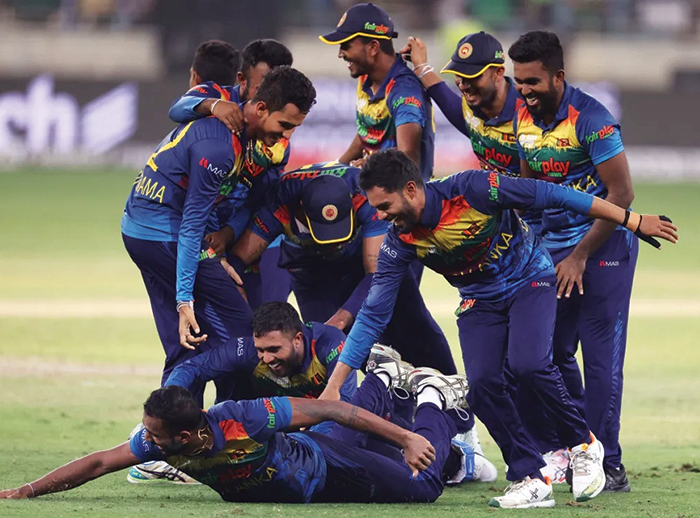
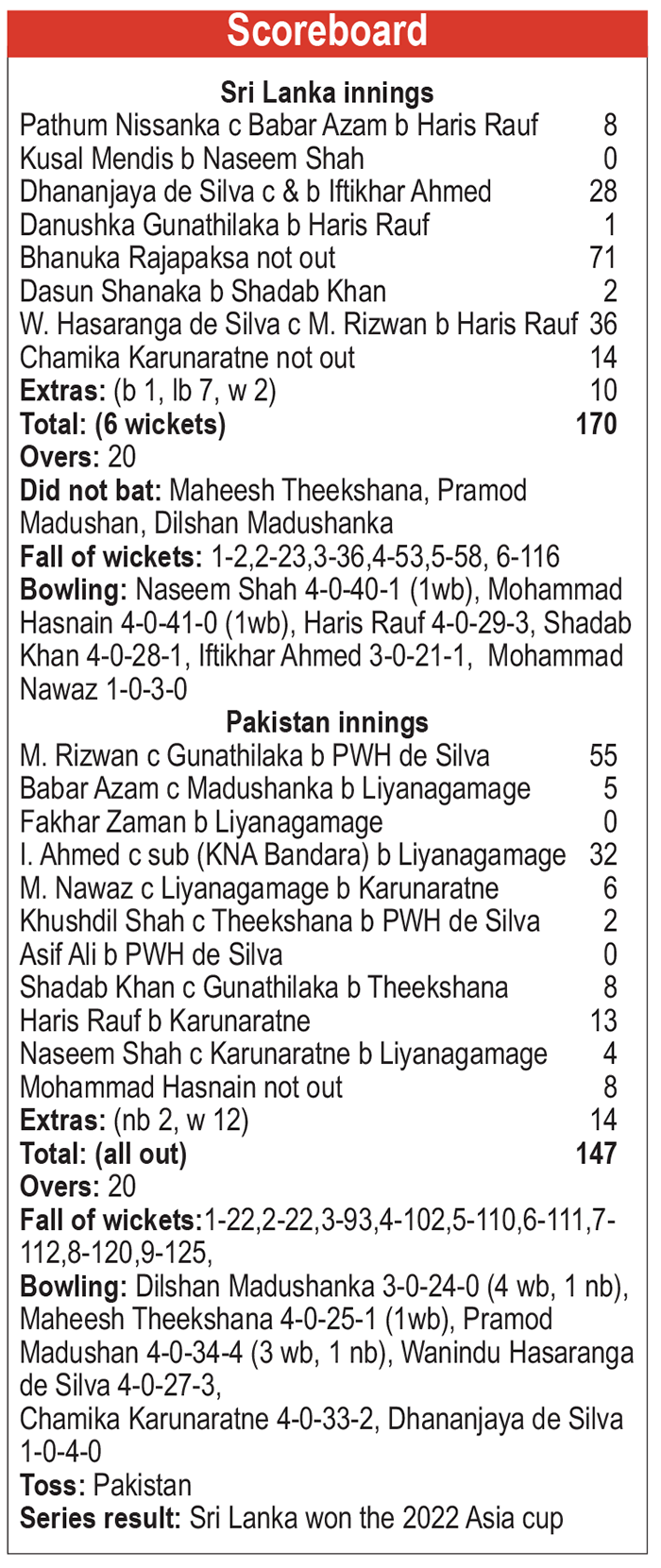
Sri Lanka emerged Asia Cup champions for the sixth time with a 23-run win over the more-fancied Pakistan in Dubai. Central to the title win was a counter-attacking batting effort from Bhanuka Rajapaksa (71* off 45) and Wanindu Hasaranga (36 off 21), who lifted Sri Lanka from 58/5 and set 171 for Pakistan, a target that proved too tall for Babar Azam and Co on the night. They were bowled out for 147 in 20 overs as Sri Lanka brought up five consecutive T20Is wins for the first time since April 2014.
How the toss spiced things up
Coming into this final, Sri Lanka’s only loss in the tournament came when they batted first. To be fair, it wasn’t a one-off instance of them failing to put a total on the board; since the 2021 T20 World Cup, Sri Lanka had lost all the seven matches they batted first in. Furthermore, the venue only multiplied the challenge on offer – teams chasing in Dubai had won 26 of the last 30 games leading into this final. So when the coin fell Pakistan’s way, it pitted Sri Lanka’s bat-first limitations against Pakistan’s grey chasing record, making for a fascinating contest.
Just how did SL get to 58/5?
Pakistan were just too good with their pace upfront. Naseem Shah, steaming in, rattled Kusal Mendis’s stumps in the opening over but more pace awaited them in the form of Harif Rauf, who notched up pace in excess of 150 and picked the wickets of Pathum Nissanka (caught at mid-off) and Danushka Gunathilaka (bowled). Things went from bad to worse when Iftikhar Ahmed got rid of Dhananjaya de Silva, who had hitherto looked Sri Lanka’s best batter.
Now let’s talk about that partnership
Looking back, Pakistan were taken aback by that counterattacking partnership between Wanindu Hasaranga and Bhanuka Rajapaksa. The duo added 58 runs off 36 balls for the sixth wicket. Hasaranga, in particular, was aggressive against pace and spin alike, and even hit Rauf for two consecutive boundaries before edging one to the keeper. Rajapaksa then took control, finishing with 6 fours and 3 sixes and helping his side add 53/0 in the last five overs. It was only the second time in eight T20Is in 2022 Sri Lanka managed 150+ batting first.
Pakistan could have restricted them for fewer?
Yes.. The pitch had good bounce for shot-making but also had enough in it for the bowlers. But Babar Azam instead of attacking Sri Lanka at five-down, allowed Rajapaksa-Hasaranga to get their eyes in against three overs of spin.
Pakistan’s fielding in the last five overs didn’t help either. Rajapaksa was dropped twice, first by Shadab Khan on 49 at long-on before he collided with Asif Ali at deep mid-wicket and made for another drop. In contrast, Sri Lanka took all the catches that came their way, which at Dubai’s ‘Ring of Fire’ stadium isn’t always easy.
Pakistan and chase: what went wrong today?
Babar Azam’s form and Mohammad Rizwan’s slow-cooked fifty that lacked impetus to chase something like 171 in a high-pressure final. Looking back, Pakistan weren’t able to counterattack when they lost Babar (caught at short fine leg) and Fakhar Zaman (chopped on) off consecutive balls to Pramod Madushan (who finished with 4 for 34). Both Iftikhar Ahmed and Rizwan were slow to get off the blocks and it meant that Pakistan were only 68/2 at the halfway mark. To be fair to the duo, they had done well against Hasaranga, picking 25 runs off his first three overs but his fourth, it can be said, all but decided the match. Three wickets fell in that over; that of a well-set Rizwan (55 off 49), Asif Ali and Khushdil Shah, and it all led to Pakistan being bowled out for 147 in 20 overs. (cricbuzz)






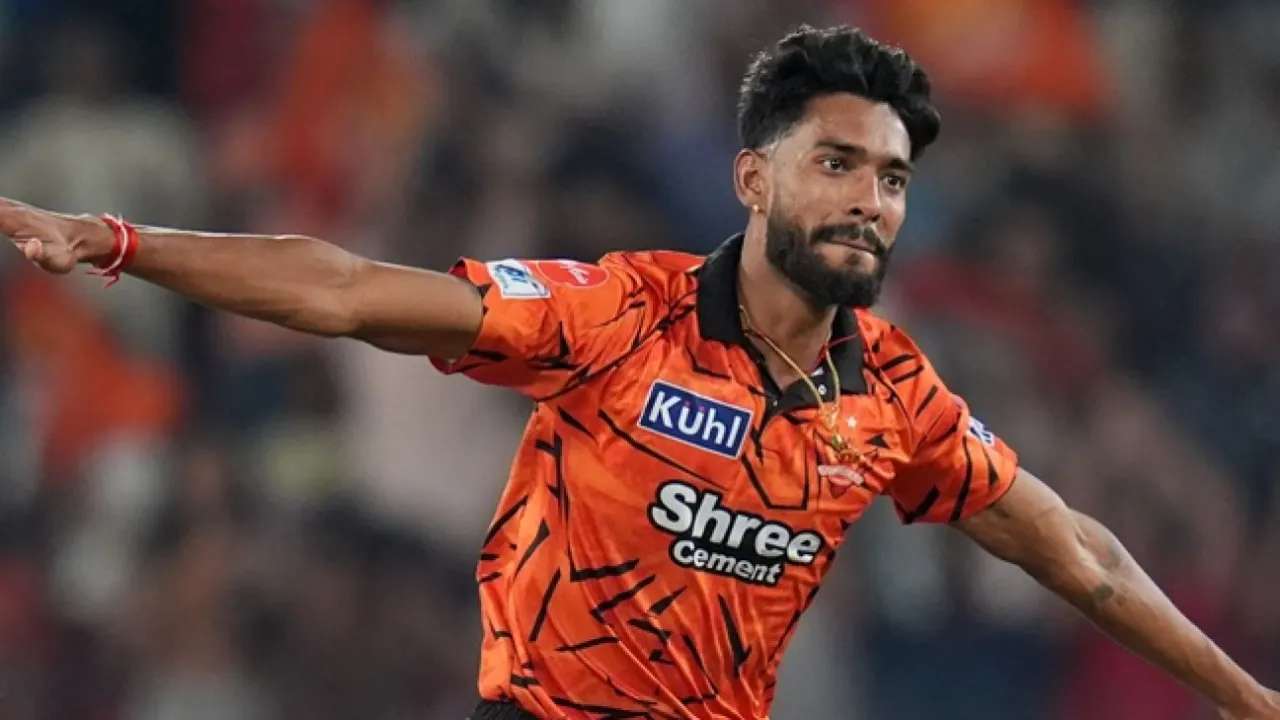
Vidarbha’s Praful Hinge, 24, etched his name into the IPL record books on debut, striking three times in his very first over – the only instance of a bowler achieving this in the league’s 18-year history – as Sunrisers Hyderabad [SRH] stunned table-toppers Rajasthan Royals [RR] at home to snap a two-match losing streak.
SRH had piled up 216 on the back of Ishan Kishan’s 91, an effort that would’ve headlined most nights if not for Hinge’s sensational opening over, which included the wicket of Vaibhav Sooryavanshi for a golden duck.
But Hinge wasn’t the only one to mark his arrival onto the big stage with a grandstand beginning. Another debutant, Bihar’s Sakib Hussain, struck at the other end as well, causing RR to crash to 5 for 4, and then 9 for 5. The game was effectively sealed right there. The two debutants finished with combined figures of 8 for 58.
In some ways, it felt destined. Hinge was set to debut in SRH’s previous game, against Punjab Kings, after being named at the toss, only for the team management to have a late change of heart and sub in Jaydev Unadkat instead. A game later, Hinge had a moment he would cherish forever.
Jasprit Bumrah and Josh Hazlewood weren’t spared, but Hinge didn’t carry any baggage. A hard-length delivery into the pitch had Vaibhav Sooryavanshi top-edge a pull to wicketkeeper Salil Arora for a golden duck. One ball later, Hinge had the in-form Dhruv Jurel chop on, and then capped off the first over by having Lhuan-dre Pretorius, who replaced Shimron Hetmyer, flick one straight to long leg.
At the other end was Sakib, who also celebrated a special moment when he sent Yashasvi Jaiswal back by having him ramp a short ball straight to deep third, leaving the score at an eye-popping 2 for 4. That soon became 9 for 5 when Hinge had Riyan Parag caught at slip after he had been whipped through midwicket for four. Sakib added three more wickets to his kitty, all off slower variations, to finish with 4 for 24. That included strikes off consecutive deliveries to dismiss Jofra Archer and Ravi Bishnoi late in the innings.
Just before Sakib capped off a dream night, RR’s sixth-wicket pair brought up their fifty-run partnership off 35 deliveries, ensuring they didn’t lose any further wickets until the half-way mark. There was a visible shift in their approach from that point on, with the next four overs going for 50 runs. Even so, the ask was a steep one, with RR needing 97 off the last six overs. That pressure finally told, as both Donovan Ferreira and Ravindra Jadeja fell in consecutive overs before SRH sealed victory.
But while he was at the crease, Ferreira gave a good account of himself, particularly in his handling of spinners. Quick to get to the pitch or rock back to pull, he was severe on both Shivang Kumar and Harsh Dubey as he raised a maiden IPL fifty off 31 balls. But his dismissal, followed by Jadeja’s, opened the floodgates for Sakib.
Sunrisers Hyderabad 216 for 6 in 20 overs (Travis Head 18, Ishan Kishan 91, Heinrich Klaasen 40, Nitish Kumar Reddy 28, Salil Arora 24*; Jofra Archer 2-37, Sandeep Sharma 1-52, Tushar Deshpande 1-55, Riyan Parag 1-05) beat Rajasthan Royals 159 in 19 overs (Donovan Ferreira 69, Ravindra Jadeja 45, Tushar Deshpande 25; Sakib Hussain 4-24, Praful Hinge 4-34, Eshan Malinga 2-31) by 57 runs
[Cricinfo]

The toss is crucial in night matches at Wankhede Stadium with a true flat pitch and dew giving the chasing side a significant advantage. Defending champions Royal Challengers Bengaluru lost that toss. Then went ahead and did what you need to do: score the highest IPL score at the ground, 240, and defended it with considerable ease.
Phil Salt and Rajat Patidar set RCB up with knocks of 78 off 36 and 53 off 20, Patidar’s fastest fifty. The duo hit a hat-trick of sixes once each with Salt also taking three fours in a row. A total of 11 sixes and 10 fours flew off their bats, resulting in RCB chants at Mumbai Indians’ home ground. Between them they compensated for Virat Kohli, who himself didn’t seem too pleased with his 50 off 38 even as the other end kept producing big runs.
Off the field during the second half of the match, Kohli didn’t need to fret much from the sidelines as the spinners Suyash Sharma and KrunalPandya expertly shut the chase down. Suyash did so with the wickets of the rampaging Ryan Rickelton and Tilak Varma in his first over while Krunal bowled four overs for just 26 runs, signing off with just reward in form of Suryakumar Yadav’s scalp. The RCB spinners bowled eight overs for 73 runs and three big wickets as against MI’s two spinners conceding 83 in six overs.
Kohli registered the first boundary of the innings with a six in the first over, but it was Salt who kept on the assault, scoring 47 off 22 in the powerplay. This involved welcoming Mitchell Santner, a reluctant powerplay bowler, with three sixes and a four. MI were forced to bowl Jasprit Bumrah for two overs inside the powerplay; still RCB got to 71.
The next key moment for RCB was the introduction of legspin with a right-hand heavy batting line-up, but that didn’t matter at all with Mayank Markande extracting little turn in either direction. Salt stayed back to hit three consecutive fours off his flatter lengths, and was waiting to hit a six the moment he gave it a hint of air.
When all else failed for MI, Shardul Thakur, bowling for the first time as late as the 11th over, executed wide yorkers to tie Kohli down and take the wicket of Salt caught at extra cover.
With 25 and a wicket off the last 17 balls, MI were hoping for a way back into the contest when RCB captain Patidar walked out. For some reason, Thakur gave up his death bowling and went searching, letting Patidar get off with a chipped four over mid-off first ball.
The return of Markande proved disastrous for MI as Patidar toyed around with him, hitting three back-to-back sixes, including one reverse-sweep. From 22 off 4, the likely direction Patidar’s strike rate could travel was down, but he made sure it wasn’t a long way down.
In his second over, Thakur completely went to pieces with his wide yorkers not landing and slower short balls travelling over the head on a red-soil bouncy surface. The 10-ball over went for 23 as RCB moved to 167 for 1 in 13 overs.
RCB had a big opportunity to put matters past any plausible chase, but Kohli couldn’t get the boundaries despite trying to hit hard. Missing the reverse-sweep in his arsenal, he couldn’t take the clever Santner down, who eventually ended up with the wicket of Patidar.
Even though Bumrah’s two overs at the death were excellent, keeping him at just 35 in four overs, he has now gone five straight IPL matches without a wicket if you count the Qualifier that MI lost last year. With his 34 off 16, Tim David did enough to keep them at an even two a ball.
Rickelton got the chase off to a flying start, MI racing away to 39 for 0 in three overs and 48 for 0 in four, which promised a close match. However, Krunal’s introduction began to raise the asking rate. Only eight came off his first over with Impact Player Rasikh Dar conceding just 15 in his two overs inside the powerplay.
Rohit Sharma went off with what seemed like a hamstring injury, and at 72 for 0 in seven overs, MI were already looking at 13 an over to win. Rickelton had no time to get a sighter at Suyash, who started off with a wide wrong’un and a top edge on the slog sweep. Later in the over, he went outside leg with a wrong’un to Tilak, getting him caught at short fine leg.
Hardik walked in and hit a six first ball, but the asking rate went higher than it was at the start of the over.
MI needed 120 off 46 balls when Suryakumar got out. The asking rate soon went past three a ball, and Sherfane Rutherford’s 71 off 31 only serving to control the net-run-rate damage to MI.
Brief scores:
Royal Challengers Bengaluru 240 for 4 in 20 overs (Phil Salt 78, Patidar 53, Virat Kohli 50, Rajat Patidar 53, Tim David 34*, Jitesh Shqrma 10; Trent Boult 1-50, Hardik Pandya 1-39, Mitchell Santner 1-43, Shardul Thakur 1-32) beat Mumbai Indians 222 for 5 in 20 overs (Ryan Rickelton 37, Rohit Sharma 19, Suryakumar Yadav 33, Sherfane Rutherford 71*, Hardik Pandya 40; Jacob Duffy 1-38, Krunal Pandya 1-26, Rasikh Salam 1-23, Suyash Sharma 2-47) by 18 runs
[Cricinfo]
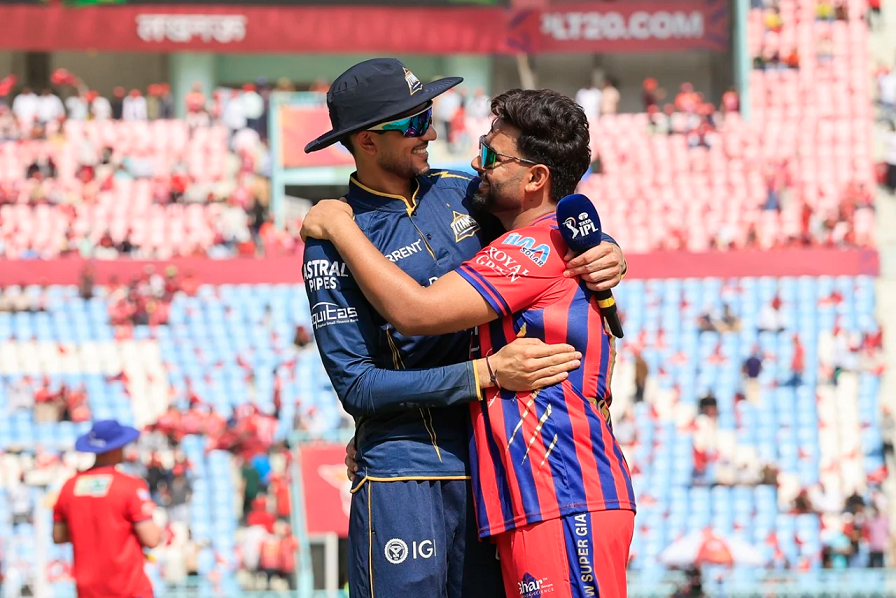
Prasidh Krishna is beginning to make a mark at IPL 2026. Three nights after his clever slower bouncer to David Miller sealed a tense last-ball win over Delhi Capitals, he followed it up with 4 for 28 – blending typical Test-match lengths with sharp pace-off variations – as Gujarat Titans made it two in two, this time edging out Lucknow Super Giants in their own backyard on Sunday.
Mohammed Siraj and Ashok Sharma were just as vital at the two ends of LSG’s innings, striking early and closing things out respectively. They played the perfect supporting acts to Prasidh’s headline-grabbing performance to restrict LSG to 164. GT captain Shubman Gill then calmly anchored the chase, scoring a half-century off 34 balls. His second-wicket stand of 84 with Jos Buttler helped them scale the target in 18.4 overs with seven wickets in hand.
The mini-battle to watch was Mohammed Shami vs Gill: India’s bowling veteran looking to force his way back into the international reckoning, up against the country’s current Test and ODI captain. Shami had set it up nicely, conceding just 10 runs off his first two overs, with enough movement to keep Gill honest.
It had all the makings of a proper contest. Until Gill consigned it to one-way traffic in the third, as he peeled off three fours and a six. That six was no ordinary hit, but a lofted hit on the up, straight over Shami’s head, eliciting an extra second’s pose to the cameras. The boundaries were pleasing too: a delectable leg glance, a stab through the covers, and a wristy flick over midwicket. This helped Gill gallop towards a half-century.
Buttler gave more than an inkling of form in the previous game when he made 52 off 27 against DC. Having come in at the fall of Sai Sudharsan’s wicket – he helped a half-tracker straight to short fine off Digvesh Rathi in the sixth- Buttler punched one through the covers off the third ball to raise GT’s fifty.
Rathi was unlucky not to have Buttler in his second over when he nicked behind, for Rishabh Pant to put down a regulation chance on 12. LSG would rue that missed opportunity as Buttler quickly took charge to dismantle the spinners, forcing Pant to turn to his faster men quickly.
In came Avesh Khan with a plan of trying to hit hard lengths but Buttler responded by hitting him for three back-to-back fours off the 12th over, and soon brought up his half-century, his 100th in T20s, off just 29 balls. By now, the chase was down to being a mere formality. He celebrated the fifty by reverse-sweeping Linde over point.
Gill fell with the target in sight, gloving a short ball behind off Prince Yadav, but Buttler stayed on to seal victory.
Kagiso Rabada began by being hit for 10 off his first two deliveries, but had Mitchell Marsh pick out mid-on to complete a fine comeback as GT struck early. This brought Rishabh Pant to the middle, and he seemed keen on taking the attack to the bowlers, but was snaffled by Siraj’s hard lengths as the ball caught the splice and lobbed to mid-off to leave LSG 45 for 2 in the fifth.
One second, Prasidh had hands on his head when Aiden Markram’s imperious flick just eluded a diving Glenn Phillips running across from deep square leg. Three balls later, he celebrated his first when Markram picked out deep midwicket perfectly. In his second over, Ayush Badoni fell in almost identical fashion as LSG slumped to 74 for 4 in the ninth.
That brought Nicholas Pooran to the middle, but this wasn’t the white-ball destroyer, but an avatar searching for form and confidence; his stroke play lacked any kind of fluency as the faster men kept tucking him up. Pooran seemed to have found a release when he hit Rashid Khan for back-to-back sixes, but that surge was all too brief with the end almost tame as he flat-batted Prasidh’s into-the-pitch delivery to Gill at mid-off. Pooran made 19 off 21.
He should’ve been run out off his third delivery when he tried to pinch a single to cover, but Ashok Sharma missed the stumps at the striker’s end despite having all three stumps to aim at from short cover. Then Mukul was hit on the helmet by a 150.2kph bouncer from Ashok.
But not long after, the trademark whip behind square that he unleashed to astonishment in Kolkata three nights ago, made an appearance, eliciting hopes of a grandstand finish. But that wasn’t to be as he got a big nick behind attempting to pull Prasidh’s slower bouncer. His 18 off 14 helped LSG nudge past 150, before Shami and Linde’s mini-cameo set up a 165-target.
Six overs in, it became increasingly evident those were at least 30-40 runs too little.
Brief scores:
Gujarat Titans 165 for 3 in 18.4 overs (Sai Sudarsan 15, Jos Buttler 60, Shubman Gill 56, Washington Sundar 21*, Rahul Tewatia 10*; Mohammed Shami 1-36, Prince Yadav 1-31, Digvesh Rathi 1-31) beat Lucknow Super Giants 164 for 8 in 20 overs (Aiden Markram 30, Mitchell Marsh 11, Rishabh Pant 18, Nicholas Pooran 19, Abdul Samad 18, Mukul Choudhary 18, George Linde 16, Mohammed Shami 12*; Mohammed Siraj 1-19, Kagiso Rabada 1-54, Ashok Sharma 2-32, Prasidh Krishna 4-28) by seven wickets
[Cricinfo]

“I extend my heartfelt wishes to all Sri Lankans for a peaceful and joyous Sinhala and Tamil New Year!” – President

US blockade of Iran would worsen global energy crisis, analysts say

Praful Hinge’s stunning debut ends Rajasthan Royal’s four-match winning streak

“Let us resolve, with renewed determination to overcome obstacles and build a better and more prosperous nation” -PM

Sun directly overhead Nawaladi, Paranthan, Murasumodai, Vellikkandal, Udapattukkandal, Puliyampokkanei about 12:10 noon today [14]

Heat Index at Caution Level in the Northern, North-central, North-western, Western and Southern provinces and in Trincomalee district.

‘Dates have the highest sugar content to fight Coronavirus’

Sunday Island 27 December – Headlines

#SundayIsland 17th December – Headlines

Sunday Island – 28th March

Sunday Island Headlines – 21 March

Sunday Island – 21st February – Headlines
-

 News2 days ago
CEB orders temporary shutdown of large rooftop solar systems
-

 News5 days ago
AG: Coal procurement full of irregularities
-

 Business4 days ago
Israeli attack on Lebanon triggers local stock market volatility
-

 Business5 days ago
Hayleys Mobility introduces Premium OMODA C9 PHEV
-
 Features2 days ago
From Royal College Platoon to National Cadet Corps: 145 years of discipline, leadership, and modern challenges
-

 Business4 days ago
HNB Assurance marks 25 years with strategic transformation to ‘HNB Life’
-

 Sports5 days ago
DS to face St. Anthony’s in ‘Bridges of Brotherhood’ cricket encounter
-

 News6 days ago
AKD admits import of substandard coal, blames technicalities and supplier