
News
Sri Lanka Ambassador-Designate to Japan assume duties


Sri Lanka’s Ambassador-designate to Japan Sanjiv Gunasekara assumed duties on January 6 in Tokyo. He is the 17th Sri Lankan Ambassador to Japan during the past 69 years of bilateral relations of the two countries.
The event of the assumption of duties of the Ambassador-designate included the invoking of blessings by Buddhist, Hindu, Islamic and Christian dignitaries.
The chief incumbents and other Buddhists monks of Sawara Lankaji Temple, International Buddhist Centre – Hachioji, Fuji Sugatha Senasuna and Tsukuba Sri Sambuddhaloka Temple attended the event. Sri Sarujan Sathyamoorthy, Abdulla Lathif and Dr. Nimfa Jayamanna conducted the blessings of Hindu, Islamic and Christian faiths respectively. Senior office bearers of the all Associations connected to Sri Lanka in Japan also participated in the event followed by an alms-giving to the Maha Sangha and other religious dignitaries organized by the staff of the Embassy.
The Ambassador-Designate Gunasekara explained his objectives during his period which were assigned to him by President Gotabaya Rajapaksa. Further increasing and expanding bilateral relations of two countries and especially exploring strong economic relations are key priorities of his work. Ambassador-designate explained his strong intentions to find more Japanese investments in Sri Lanka, increase employment opportunities in Japan, Japanese tourists to visit Sri Lanka and increase exports to Japan.
Mr. Gunasekara is a businessman by profession and runs several businesses in the Los Angeles in the US. He also had been a team leader of many charitable engagements in both in the US and Sri Lanka.
He has a Bachelor of Arts in Economics & Management and Bachelor of International Relations from Beloit College Wisconsin and a Master’s Degree in Business Administration from California State University.

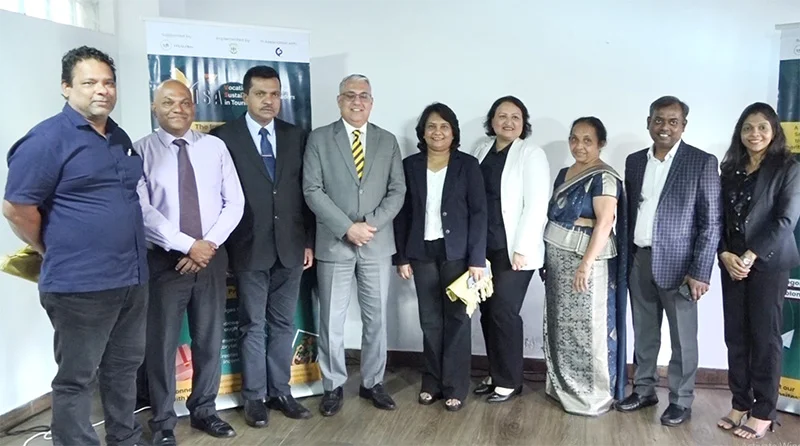
The government is in the process of drafting a new Tourism Act to address legal loopholes that currently prevent the prosecution of foreign nationals who engage in unauthorised activities while on tourist visas. Speaking at a certificate awarding ceremony for the Vocational Initiative for Sustainable Ambassadors in Tourism (VISA) project at the Royal Kandyan Hotel, Suranjith Wavita, a member of the Presidential Task Force for Tourism Development, stated that the current Tourism Act No. 38 of 2005 was flawed as it does not prescribe specific punishments, beyond deportation, for such offenders.
Wavita highlighted that a significant number of foreigners, including Chinese nationals, had been deported over the past three months for working as illegal tour guides and engaging in various trading activities. He explained that due to a shortage of Chinese-speaking local guides, travel agents often brought in “Tour Leaders” from abroad on tourist visas, which was a serious violation. The proposed new legislation aimed to empower the Tourist Police Division to arrest and produce such violators, ensuring stricter enforcement than mere deportation.
The new Act is being formulated by a committee of experts, based on various proposals and ideas to make it mandatory for anyone involved in the tourism industry to be registered and properly trained. To facilitate this, the government has already lowered the basic qualifications required for registration, allowing more locals to enter the profession legally and prevent the negative impact of unauthorised operators on the industry’s future.
Discussing the industry’s growth, Wavita noted that Sri Lanka was now aiming for an annual target of three million foreign tourists. He specifically mentioned the success of the 311-km “Pekoe Trail” in the central highlands, which attracts around 500 tourists daily and helps channel tourism income into plantation-based communities.
He also emphasised the importance of environmental protection, noting that since 25% of Sri Lanka’s flora is endemic, some foreigners enter the country with the intention of “biopiracy,” making the role of trained local guides crucial in safeguarding natural resources.
The VISA training project was implemented by the National Cleaner Production Centre (NCPC) and ASSIST, with the support of VFS Global. The event saw the participation of high-ranking officials, including Manpreet Singh Aurora (Senior General Manager, VFS Global), H.C.P. Jayaweera (Director General of National Botanical Gardens), and Samantha Kumarasena (CEO, NCPC).
Wavita concluded by praising the increasing participation of women in the tourism sector, describing it as a vital contribution to both the industry’s progress and the national economy.
By S.K. Samaranayake

The Court of Appeal bench, comprising Justice Dhammika Ganepola and Justice Adithya Patabendige, has granted interim relief to Tuk Tuk Rental (Pvt.) Ltd., to continue to operate in terms of the existing legal framework, regardless of the declaration that foreigners could not drive three-wheelers on the basis of having international driving permits.
The petitioner moved court recently in the wake of Police Headquarters declaration that international driving permit holders wouldn’t be allowed to drive three-wheelers. The respondents were Transport, Highways and Urban Development Minister Bimal Rathnayake, Ministry Secretary Prof. Kapila C.K. Perera, Commissioner General of Motor Traffic Kamal Amarasinghe, IGP Priyantha Weerasooriya, Automobile Association of Ceylon and Attroney General.
The petitioner challenged the bid made to prevent foreigners, who obtained permission from the Automobile Association of Ceylon, to drive three-wheelers. The petitioner also wanted the Commissioner General of Motor Traffic Kamal Amarasinghe to recognise the covering permits issued by the Automobile Association of Ceylon and the IGP to issue necessary instructions to countrywide police stations not to take action against foreigners driving three-wheelers.
The Court of Appeal said that upon consideration of the submissions of all Counsel, the principal issue that arises for the determination is whether the applicable legal framework governing the present matter is the Motor Traffic Act or the Motor Car (Convention) Ordinance, together with the Regulations made thereunder.
The learned Presidents’ Counsel appearing for the Petitioner and the 5th Respondent contended that Regulation 22(2) made under the Motor Car (Convention) Ordinance expressly authorises bona fide tourists to drive motor vehicles in Sri Lanka upon compliance with the prescribed requirements, and that the impugned document marked P10 by which foreigners who have obtained permisison from the Automobile Association of Ceylon are prohibited from driving three-wheelers is inconsistent with that statutory regime. It was further contended that the Respondents, by issuing and seeking to implement P10, have acted in excess of jurisdiction and in a manner that is ultra vires the governing legal framework.
In contrast, the learned State Counsel submitted that the matter falls within the scope of the Motor Traffic Act and that foreign tourists holding International Driving Permits are not eligible to operate three-wheelers in Sri Lanka.
This Court is of the view that the rival contentions raise a serious and substantial question of public law, namely, whether the impugned decision embodied in P10 constitutes an unlawful restriction imposed without statutory authority or whether it represents a permissible exercise of regulatory power under the applicable legislation.
At this stage, it is sufficient for this Court to be satisfied that a serious question of law exists for determination.
Further, this Court is satisfied that if P10 is permitted to operate pending the final determination, the Petitioner’s business operations and the permits already issued by the 5th Respondent would be adversely affected. On the other hand, the granting of interim relief merely preserves the status quo ante existing prior to the issuance of impugned document P10 until the legality of that decision is conclusively determined.
In these circumstances, this Court finds that the threshold requirements for granting interim relief have been satisfied.”

Opposition and SJB leader Sajith Premadasa yesterday urged the government to condemn the recent attacks on Iran, describing them as a violation of international law and the United Nations Charter.
Addressing Parliament, the SJB Leader said the administration of President Anura Kumara Dissanayake should not hesitate to denounce, what he termed, an act of aggression against a sovereign State.
“I propose that the entire House condemn this as it was an attack on a sovereign nation. It would be appropriate for the government to issue a statement condemning this. We should not be afraid to do so,” Premadasa said, pointing out that the alleged action contravened Articles 2(4) and 2(7) of the United Nations Charter, which prohibit the use of force against the territorial integrity or political independence of any State and restrict intervention in matters within domestic jurisdiction.
Premadasa further called on Sri Lanka to condemn retaliatory strikes reportedly targeting the United Arab Emirates, Saudi Arabia, Kuwait, Qatar and Bahrain, stressing that the country must consistently oppose violations of sovereignty and uphold the principles of international law.
By Saman Indrajith

New Tourism Act to strengthen legal action against visa violators

Court of Appeal grants interim relief, allows foreigners to drive three-wheelers

War in Middle East sends shockwaves through Sri Lanka’s export sector

Semi-final showdowns set stage for Gujarat coronation

Crisis and opportunity

The invisible crisis: How tour guide failures bleed value from every tourist

‘Dates have the highest sugar content to fight Coronavirus’

Sunday Island 27 December – Headlines

#SundayIsland 17th December – Headlines

Sunday Island – 28th March

Sunday Island Headlines – 21 March

Sunday Island – 21st February – Headlines
-

 Opinion5 days ago
Jamming and re-setting the world: What is the role of Donald Trump?
-
 Features5 days ago
An innocent bystander or a passive onlooker?
-
 Features2 days ago
Brilliant Navy officer no more
-
 Features6 days ago
Ratmalana Airport: The Truth, The Whole Truth, And Nothing But The Truth
-

 Opinion2 days ago
Sri Lanka – world’s worst facilities for cricket fans
-
 Business6 days ago
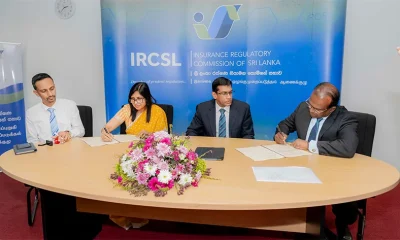
IRCSL transforms Sri Lanka’s insurance industry with first-ever Centralized Insurance Data Repository
-

 Business5 days ago
An efficacious strategy to boost exports of Sri Lanka in medium term
-

 Features3 days ago
Overseas visits to drum up foreign assistance for Sri Lanka