
News
Speaker says foreign powers asked him to take over Presidency during Aragalaya

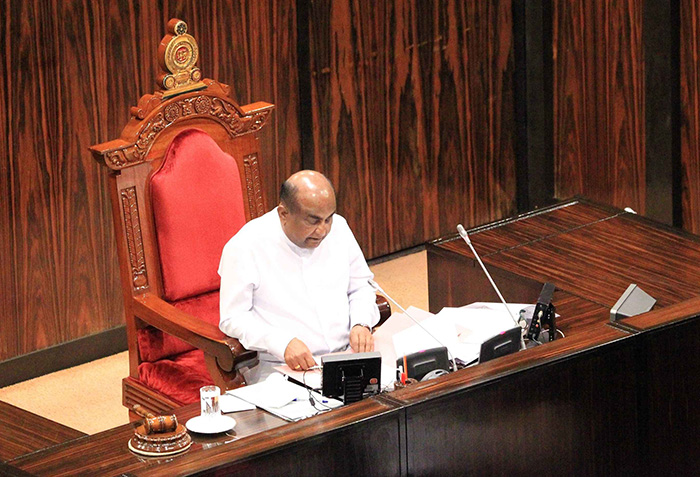
By Saman Indrajith
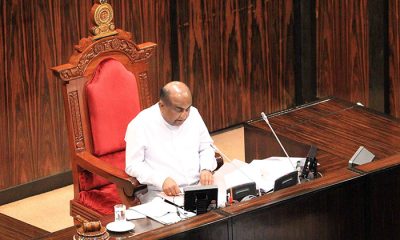
Speaker Mahinda Yapa Abeywardena yesterday revealed in Parliament that he had been asked by some foreign powers to take over the executive presidency while the country was in crisis owing to the Aragalaya protests.
“The objective of those who made that request was to create another Libya or Afghanistan here. They did not want to resolve the crisis or restore law and order to protect this country,” the Speaker said.
Making a speech soon after the defeat of a no-faith motion against him, Abeywardena said during the uprising many parties had pressured him to accept the post of Executive President. He said that there were both local and foreign forces. “I was asked to name a Prime Minister and Cabinet of ministers and rule the country.
“However, I was determined to uphold democracy,” the Speaker said, adding that he was surprised to see some of those who asked him to become the President of the country had signed the no-faith motion against him.
“When I rejected that call, they resorted to intimidation. There were threats too. Among those who exerted pressure on me were leading Bhikkhus and leaders of other religions. The then President Gotabaya Rajapaksa called me and sought my opinion on transferring power to me. However, I knew that if I accepted that position without powers vested in me by the Constitution to do so, this country would end up in anarchy,” he said.
Speaker Abeywardena said that about Rs 45 million had been spent on the debate on the no-confidence motion against him and it was a waste of money.
“This is not the first time a no confidence motion has been brought against a Speaker in our parliament. There were four previous instances. Among the charges against the Speakers in those motions were violating Standing orders and other statutory provisions. But for the first time, there has been an allegation of violating the Constitutional provisions, in the motion against me.
That charge has been levelled on the basis of my conduct at the CC voting to approve the appointment of the IGP.” The Speaker said on that occasion he had acted to safeguard national security as the country needed a permanent IGP.








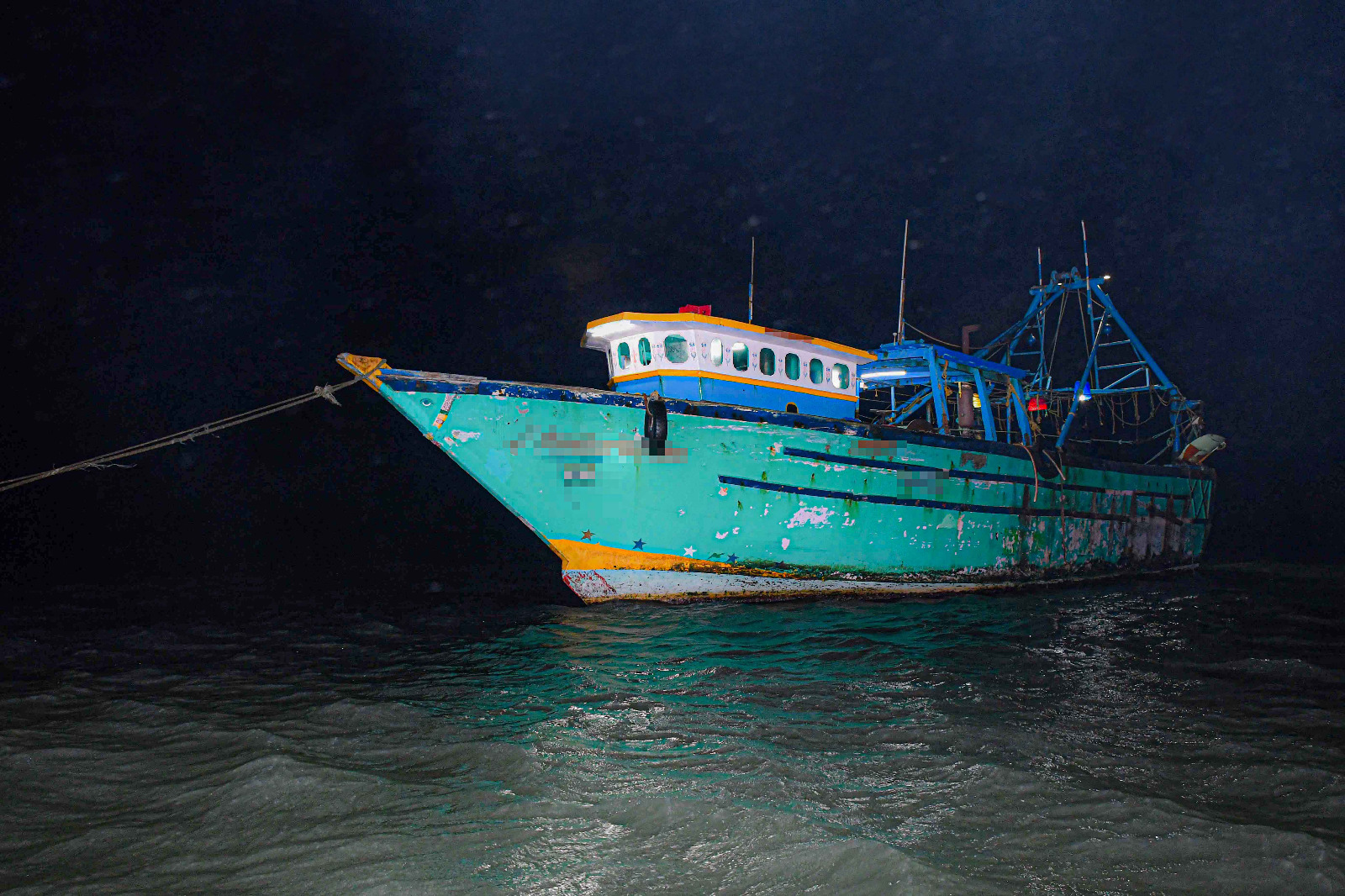
The Sri Lanka Navy seized an Indian fishing trawler and apprehended nine Indian fishermen whilst engaged in illegal fishing having crossed the International Maritime Boundary Line (IMBL) in Sri Lankan waters North of Talaimannar on Wednesday (22 July 2026). evening.
Over 50 Indian fishing trawlers had trespassed into the Sri Lankan waters South of Iranativu engaging in illegal fishing. During the operation, one Indian fishing trawler was seized, while nine Indian fishermen on board were taken into custody
The apprehended fishermen and the seized trawler were handed over to the Fisheries Inspector of Mannar for onward legal proceedings.

By Saman Indrajith
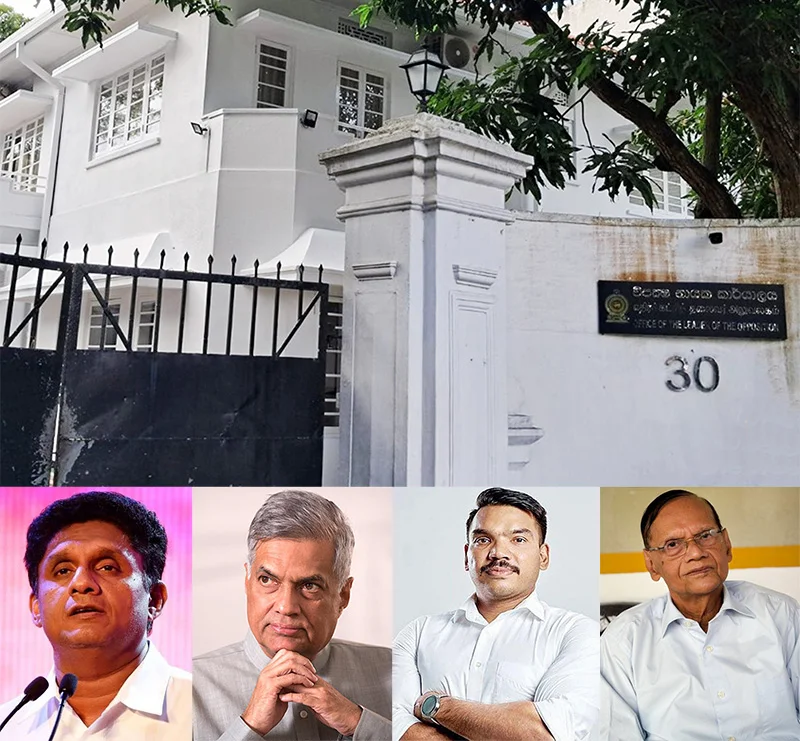
Leaders of all Opposition parties are scheduled to meet today (23) at the Opposition Leader’s Office, on Sir Marcus Fernando Mawatha, Colombo, to discuss future action against the proposed extension of the retirement age of superior court judges, which, they describe, as growing threats to judicial independence.
The special meeting has been convened by Opposition and SJB Leader Sajith Premadasa amid escalating tensions between the government and the Opposition over issues relating to the judiciary.
According to the Opposition Leader’s Office, the meeting is intended to formulate a collective response to, what it termed, a crisis facing the judicial system, alleging that arbitrary actions by the government have posed a serious challenge to the proper functioning and independence of the judiciary.
Former President Ranil Wickremesinghe, former President Maithripala Sirisena, former Prime Minister Dinesh Gunawardena, Sri Lanka Podujana Peramuna National Organiser and MP Namal Rajapaksa, Joint Opposition Convener Prof. G.L. Peiris, and leaders and representatives of all Opposition parties, are expected to attend.
The Opposition Leader’s Office noted that the meeting will mark the first occasion on which Wickremesinghe will visit the Opposition Leader’s Office, since Premadasa assumed office as the Opposition Leader.
The development follows an urgent meeting of Opposition MPs, chaired by Premadasa, at the Opposition Leader’s Office in Parliament yesterday after the government declined to permit a parliamentary debate on matters relating to the judiciary.
Opposition sources said that at the previous Party Leaders’ Meeting, Opposition parties had requested a debate, based on democratic principles, the tripartite system of government, comprising the Legislature, Executive and Judiciary, the separation of powers, and the system of checks and balances. However, the government had not agreed to allocate time for such a discussion.
Opposition MPs argued that issues affecting judicial independence should be openly debated in Parliament and warned that preventing such discussion could undermine democratic governance and accountability.
Addressing the meeting, Premadasa said the refusal to allow a debate on judicial matters was a setback to democratic principles and discussed with MPs the parliamentary and political measures to be pursued in response.
Among those present at yesterday’s meeting were MPs Rohini Wijeratna, Chithral Fernando, V. Radhakrishnan, Chaminda Wijesiri, Gayantha Karunathilaka, J.C. Alawathuwala, Sujith Sanjaya Perera, Kavinda Jayawardana, Chathura Galappaththi, Kabir Hashim, Ravi Karunanayake, M.S.A. Wazeed, Rohana Bandara, W.H.M. Dharmasena, B. Ariyawansa, Dayasiri Jayasekara, Anuradha Jayaratne, Harsha de Silva, Rishad Bathiudeen, Rauff Hakeem, Archchuna Ramanathan, Nizam Kariapper, M.S. Uthumalebbe, Chanaka Madugoda, Suranga Ratnayake and Selvam Adaikkalanathan.
The Opposition meeting today is expected to decide on a coordinated strategy, both inside and outside Parliament, regarding the proposed extension of judges’ retirement age and broader concerns over the independence of the judiciary.
By Saman Indrajith
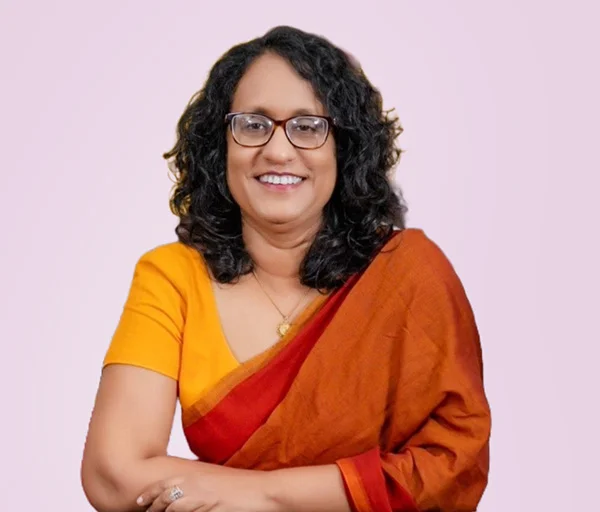
Prime Minister Dr. Harini Amarasuriya yesterday told Parliament that the government was considering commercially viable uses for seven Presidential Houses across the country, while continuing to bear the cost of maintaining the properties until such plans are implemented.
Responding to a question raised by Badulla District SJB MP Chaminda Wijesiri, the Prime Minister said Sri Lanka currently has seven Presidential Houses located in Colombo, Kandy, Nuwara Eliya, Kataragama, Anuradhapura, Mahiyangana and Bentota.
She identified the properties as the President’s House on Janadhipathi Mawatha, Colombo 1 and the ones located at Hill Street, Kandy; on Kandy Road, Nuwara Eliya; Kirivehera Road, Kataragama; in Old Town, Anuradhapura; in Mahiyanganaya; and in Bentota.
Providing details of maintenance and repair expenditure incurred on the properties from 2018 to date, Dr. Amarasuriya said the Government had spent Rs. 125 million in 2018, Rs. 77.2 million in 2019, Rs. 34.7 million in 2020, Rs. 28.8 million in 2021, Rs. 25.6 million in 2022, Rs. 37.4 million in 2023, Rs. 24.4 million in 2024 and Rs. 10.5 million in 2025.
Expenditure for the first six months of 2026 amounted to Rs. 3.04 million, she said.
The Prime Minister said a committee had been appointed in terms of a Cabinet paper submitted by the Ministry of Public Administration, Provincial Councils and Local Government and a subsequent Cabinet decision to examine options for the future use of the properties.
She said the committee had already submitted its recommendations, which include converting the premises into commercially viable ventures.
According to the Prime Minister, some former Presidential residences have already been converted into courthouses, while others are expected to be used for economically productive purposes.
“The government has to spend funds to maintain Presidential palaces until they are put to economically viable use,” Dr. Amarasuriya told Parliament.

Navy seize Indian fishing trawler, nine fishermen poaching in Sri Lankan waters

Sri Lanka edge Qatar in Davis Cup opener

Dambulla Sixers hand Galle Gallants first defeat in LPL 2026

Jaffna Kings beat Colombo Kaps by five runs

Showers will occur in the Western and North-western provinces and Galle, Batticaloa, Ampara and Monaragala districts

United Opposition moves to halt interference with judicial independence

‘Dates have the highest sugar content to fight Coronavirus’

Sunday Island 27 December – Headlines

#SundayIsland 17th December – Headlines

Sunday Island – 28th March

Sunday Island Headlines – 21 March

Sunday Island – 21st February – Headlines
-
 Features4 days ago
Two memorable excerpts from a former SLAF commander’s memoir
-
 Business4 days ago
‘Giving up was never an option’: The fisherman who fought back after losing millions in SL
-
 Latest News5 days ago
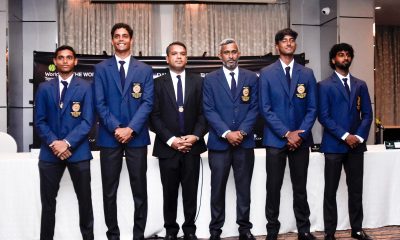
Davis cup Asia/Oceania Group IV 2026 to be held in Colombo from 20th to 25th July
-
 Features4 days ago
Erdoğan’s New Republic
-
 Life style4 days ago
Taste of the Swiss Alps comes to Colombo
-
 News5 days ago
Evidence recorded in money laundering case against Yoshitha Rajapaksa
-
 News5 days ago
Dengue outbreak gallops ahead: Infections surpasses 73,455, leaving 50 dead
-
 Midweek Review1 day ago
Three high-profile alleged suicides shaping key investigations