
Business
S&P Global Ratings upgrade boosts bourse but debt burden blights recovery prospects


The CSE received a boost yesterday when S&P Global Ratings upgraded Sri Lanka’s sovereign rating to CCC+ from Selective Default (SD) on a stable outlook.
The ratings agency highlighted that Sri Lanka’s economy has recovered steadily from its 2022 economic crisis, but its debt burden remains high even after the restructuring of most of its external debt. It has been the first rating improvement by the S&P since the unprecedented crisis three years ago.
Amid those developments both indices moved upwards. The All Share Price Index went up by 170.65 points while S and P SL20 rose by 63.75 points.
Turnover stood at Rs 8.1 billion with 16 crossings. Top seven crossings were reported in Commercial Bank where 2.5 million shares crossed to the tune of Rs 489 million; its shares traded at Rs 193.25, JKH 10.2 million shares crossed for Rs 237 million; its shares traded at Rs 23.30, CT Holdings 228,000 shares crossed for Rs 148 million; its shares traded at Rs 650, Sierra Cables four million shares crossed for Rs 138 million; its shares traded at 34.50.
Central Industries 500,000 shares crossed to the tune of Rs 100 million; its shares traded at Rs 200, HNB (Non-Voting) 300,000 shares crossed for Rs 88.8 million; its shares traded at Rs 98.50 and VallibelOne 840,000 shares crossed for Rs 79.3 million; its shares sold at Rs 93.50.
In the retail market top seven companies that mainly contributed to the turnover were; Sierra Cables Rs 1.6 billion (53.1 million shares traded), Access Engineering Rs 281 million (4.5 million shares traded), JKH Rs 267 million (11.5 million shares traded), VallibelOne Rs 236 million (2.5 million shares traded), Brown’s Investments Rs 197 million (25.8 million shares traded), HNB Rs 174 million (580,000 shares traded) and NTB Rs 139 million (456,000 shares traded). During the day 236 million share volumes changed hands in 42000 transactions.
It is said that the banking sector was very active, especially Commercial Bank, while the manufacturing sector, especially Sierra Cables, traded heavily. Manufacturing sector companies, such as JKH, also played an important role at the floor.
Yesterday, the rupee opened at Rs 302.10/20 to the US dollar, stronger from Rs 302.45/50 last Friday, while bond yields were down following the credit rating upgrade, dealers said.
Market activity was seen around 2029-33 bonds, they said.
A bond maturing on 15.12.2029 was quoted at 9.48/52 percent, down from 9.50/54 percent.
A bond maturing on 01.07.2030 was quoted at 9.66/70 percent, down from 9.70/75 percent.
A bond maturing on 15.03.2031 was quoted flat at 10.00/05 percent.
A bond maturing on 15.12.2032 was quoted at 10.35/45 percent.
A bond maturing on 01.11.2033 was quoted at 10.65/70 percent, from 10.65/75 percent.
A bond maturing on 15.09.2034 was quoted at 10.75/80 percent.
The telegraphic transfer rates for the American dollar was 298.7500 buying, 305.7500 selling; the British pound was 401.2340 buying and 412.5958 selling and the euro was 348.2418 buying, 359.6050 selling.
By Hiran H Senewiratne


The government has initiated what could become one of the most significant reforms of Sri Lanka’s social security system in decades by appointing a Senior Officials’ Committee to examine the feasibility of bringing the Employees’ Provident Fund (EPF) and the Employees’ Trust Fund (ETF) under a unified tripartite governance framework representing the government, employers and employees.
Cabinet approval was granted following a proposal submitted by the Minister of Labour. According to Cabinet Spokesman and Minister Dr. Nalinda Jayatissa, the committee has been mandated to study whether the two institutions could operate under a common governance structure based on internationally recognised principles promoted by the International Labour Organization (ILO).
He stressed that the committee has been appointed only to examine the feasibility of the proposal, and no final decision has been taken to merge the two funds.
The official Cabinet statement notes that the EPF, established under the Employees’ Provident Fund Act No. 15 of 1958, has more than 2.5 million members and assets exceeding Rs. 4.9 trillion, making it Sri Lanka’s largest social security fund.
Custody of the fund, investment management, financial administration and payment of benefits are currently handled by the Central Bank of Sri Lanka, while the Department of Labour is responsible for member registration, employer compliance, recovery of arrears and safeguarding employee rights.
The ETF, created under Act No. 46 of 1980, is administered by a tripartite board comprising representatives of the government, employers and employees. It manages assets of approximately Rs. 637 billion and provides coverage to more than 2.5 million active members.
The Cabinet paper highlights that tripartite governance of social security institutions is an internationally recognised best practice and a fundamental principle promoted by the ILO, which forms the basis for examining a common governance model for both funds.
The proposal is expected to attract close scrutiny from the business community, trade unions and financial market participants, given that the combined assets of the EPF and ETF exceed Rs. 5.5 trillion, making them among the country’s largest institutional investors.
Economists note that any governance reforms should strengthen transparency, accountability, professional investment management and public confidence while safeguarding workers’ retirement savings.
By Ifham Nizam
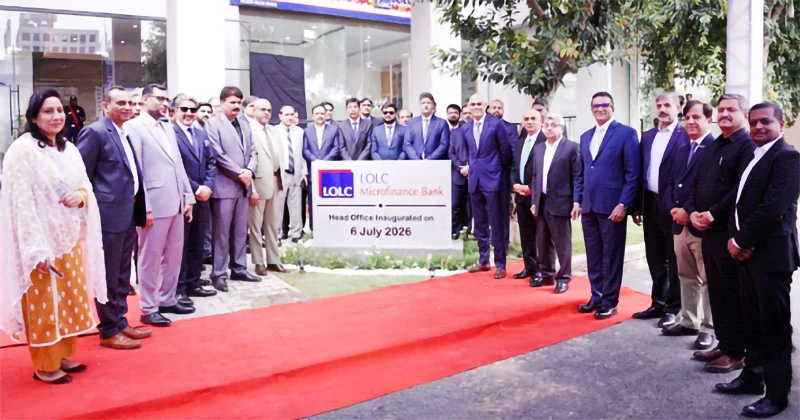
LOLC Microfinance Bank Pakistan, a fully owned subsidiary of the LOLC Group, has strategically relocated its Head Office to Gulberg Greens, Islamabad, marking a significant milestone in its growth journey. As one of the LOLC Group’s largest overseas operations in Asia, the Bank continues to advance financial inclusion and sustainable economic development across Pakistan.
The new Head Office was formally inaugurated in the presence of Chief Guests H.E. Admiral Fred Seneviratne (Retd.), High Commissioner of Sri Lanka to Pakistan, and Mr. Krishan Thilakaratne, Chairman of LOLC Microfinance Bank Pakistan. The ceremony was attended by the Bank’s Board of Directors, senior management and employees, commemorating another important chapter in the Bank’s continued expansion.
LOLC Microfinance Bank Pakistan is a fully-fledged Microfinance Bank regulated by the State Bank of Pakistan, operating through a network of 88 branches and employing over 1,200 staff members across the key cities of Karachi, Lahore, Hyderabad, Faisalabad, Sialkot, Islamabad, Peshawar and Gilgit. The Bank offers a comprehensive range of financial solutions, including business loans, microfinance, vehicle financing, gold loans and other financial products. It currently manages a loan portfolio exceeding USD 70 million and a deposit portfolio exceeding USD 90 million, comprising savings deposits, term deposits and current accounts.
The relocation to the new Head Office reflects the Bank’s expanding operations and its commitment to widening access to responsible financial services for individuals, micro-entrepreneurs and small businesses across Pakistan. In 2026, LOLC Microfinance Bank Pakistan was recognised as Pakistan’s fastest growing Microfinance Bank, highlighting its strong business momentum and growing market presence.
Addressing the gathering, H.E. Admiral Fred Seneviratne (Retd.), High Commissioner of Sri Lanka to Pakistan, stated, “The relationship between Sri Lanka and Pakistan continues to grow through meaningful partnerships such as this. LOLC Microfinance Bank Pakistan is making an important contribution by supporting entrepreneurs, strengthening the SME sector, and expanding financial access where it is needed the most. Institutions like these play a vital role in empowering communities and supporting sustainable economic growth.”(LOLC)
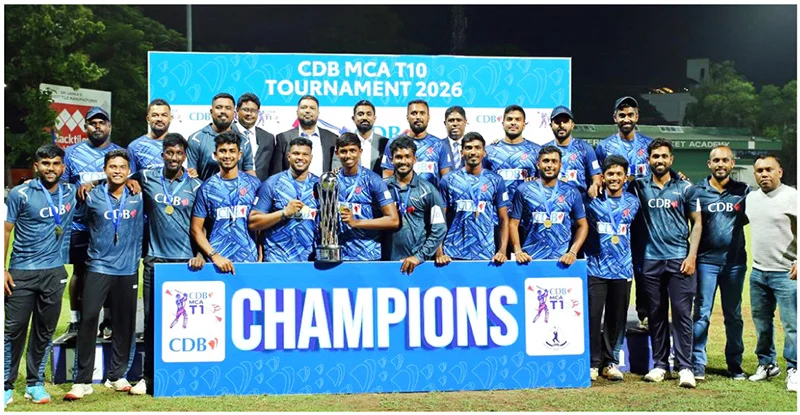
Citizens Development Business Finance PLC (CDB) lit up the CCC Grounds on June 28th, retaining the championship of the MCA T10 Cricket Tournament, further etching its record of being unbeaten and showcasing its signature persona of being determined and unstoppable.
Sealing the title without a single loss in the tournament from the first ball to the final cheer, Team CDB skippered by Tharindu Rathnayaka with Vice Captain Dunith Wellalage, both national players, showcased the calibre of a champion side.
Coached by national player Oshadha Fernando, CDB combined star power with relentless team spirit – the perfect combination of experience and youthful energy. CDB’s performance was not just about individual brilliance but about a collective drive that mirrors CDB’s corporate ethos of perseverance, leadership, and excellence.
The final match against the Abans Group was a fitting climax. Chasing 116, CDB powered to 120/4 in just 8.4 overs, sealing victory by six wickets. Vishad Randika rose to the occasion as Player of the Final. Nuwan Thushara’s consistent bowling prowess, including a hat trick — 2 overs, 11 runs, 4 wickets during the semi-finals — earned him the Best Bowler accolade.
This unbeaten run was more than a cricketing triumph. It was a statement by CDB of its dedication to excellence, which extends beyond financial services into fostering a high-performance culture through sports. The championship reinforced the company’s reputation as a leader in the financial sector while celebrating employee engagement, wellness, and community spirit.

President chairs discussion on 2027 Budget Proposals for the Ministry of Industry and Entrepreneurship Development

Prime Minister meets the Amir of the State of Qatar and conveys condolences on the passing of the Father Emir

Current El Niño Status in Sri Lanka

A few showers may occur in the Western, Sabaragamuwa and North-western provinces and in Kandy, Nuwara-Eliya, Galle and Matara districts.

Argentina face fine for Falklands banner in semi-final win

US launches fresh strikes on Iran as Trump warns Tehran it ‘better behave’

‘Dates have the highest sugar content to fight Coronavirus’

Sunday Island 27 December – Headlines

#SundayIsland 17th December – Headlines

Sunday Island – 28th March

Sunday Island Headlines – 21 March

Sunday Island – 21st February – Headlines
-
 News7 days ago
Herath warns prospective migrant workers not to get fleeced by racketeers
-

 Features5 days ago
Prison riots and politics: NPP’s biggest challenge and Sri Lanka’s biggest opportunity
-

 Editorial6 days ago
What’s the world coming to?
-

 Foreign News7 days ago
Tensions erupt in Indian state after 11-year-old raped and murdered
-

 Features7 days ago
Devanesan Annan – in Memoriam
-
Editorial7 days ago
Punishment in hellholes
-
 Features2 days ago
Dirty Money
-

 Editorial5 days ago
Much ado about crime: Fish or cut bait