
Latest News
Southee’s stunner gets Nissanka after Phillips’ counterattack puts New Zealand 35 ahead

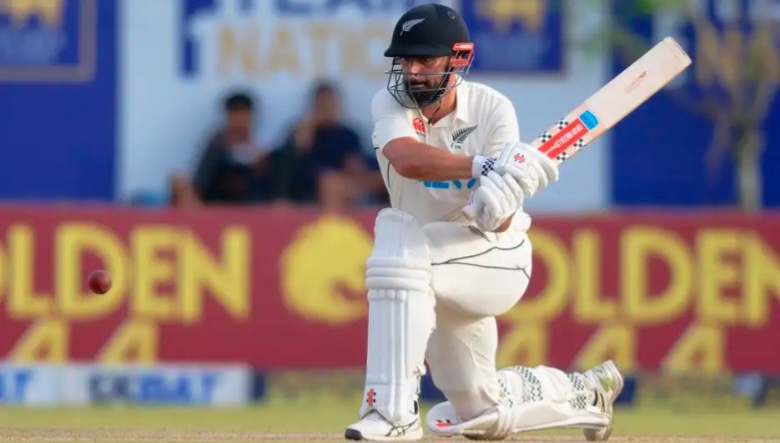
William O’Rourke once again proved to be the most threatening of New Zealand’s bowlers, finding sharp bounce and movement off a hard length. He was duly rewarded for his efforts when Tim Southee soared to his right from second slip to complete an outrageous one-handed grab, and send Nissanka back for 2.
O’Rourke troubled Karunaratne as well, finding an edge that failed to carry to second slip, while he also had a close lbw shout on the stroke of lunch as Karunaratne was reprieved by an inside edge.
Much of the action in the session, though, had taken place inside the first hour as a Test of ebbs and flows turned over yet another fascinating chapter. It saw Sri Lanka storm back into the game with a flurry of wickets, before Glenn Phillips led a stunning counter-charge.
When it was all settled, New Zealand’s first-innings lead stood at 35 after they were bowled out for 340, with Prabath Jayasuriya rediscovering his best form to end with figures of 4 for 136, while Ramesh Mendis too offered a much improved showing and finishing with 3 for 101.
It’s an outcome Sri Lanka would have snapped up if it were offered to them at the start of the day, one which New Zealand had begun 50 runs behind with six wickets in hand. But by the innings’ close, you wouldn’t have begrudged them a feeling of mild disappointment at having given the visitors so many.
New Zealand, by contrast, would be grateful for each of those 35 runs, having lost five wickets for 50 runs inside the first hour of play.
Tom Blundell was the first to go, as replays confirmed a glove through to first slip off an attempted reverse sweep. That came in just the fourth over of a morning in which Sri Lanka had started brightly, sticking to consistent lines and lengths, and forcing the New Zealand batters to make things happen.
For the most part, New Zealand were up to the task – particularly Daryl Mitchell , who seemed in imperious form as highlighted by a disdainful loft down the ground off Lahiru Kumara. Mitchell’s footwork was also positive, very much in line with the approach New Zealand had utilised to such devastating effect on day two.
But the lifeline Sri Lanka were seeking arrived courtesy an ill-advised single to cover. Phillips called for the single, but Mitchell, by then on 57, was marginally slow off the mark, and that was all it took to find him inches short at the striker’s end. With Mitchell at the crease, Sri Lanka were staring at a deficit potentially beyond 100, but suddenly they scented blood.
With a second new ball in tow, Mitchell Santner didn’t last much longer, edging behind one off Jayasuriya, as the delivery skid through second ball. Tim Southee didn’t fare much better, going back to a good-length ball and having his off stump pegged back – also by Jayasuriya. An arm-ball from Ramesh Mendis trapped Ajaz Patel lbw, and just like that, New Zealand were nine down while still being one run behind Sri Lanka’s total.
When Phillips was given out lbw off Jayasuriya just one ball later, Sri Lanka thought they had completely turned the game on its head. But a review showed the ball to be missing leg stump. Phillips took this lifeline and ran with it, as over the next five-and-a-bit overs, he took the majority of the strike and plundered 35 runs, including some monster hits down the ground off Jayasuriya.
Sri Lanka were relegated to waiting for the last two deliveries of each over to bowl to No. 11 Will O’Rourke, and it was indeed one of those deliveries that did the trick, as he ended up being the last man to fall, beaten on the outside edge and finding his off stump rocked. Phillips was left stranded unbeaten on 49 off 48 balls.
Brief scores: (Day 3 lunch)
Sri Lanka 32 for 1 (Dimuth Karunaratne 23*, Dinesh Chandimal 2*, William O’Rourke 1-11) and 305 trail New Zealand 340 (Tom Latham 70, Daryl Mitchell 57, Prabath Jayasuriya 4-136) by three runs

Approval has been granted at the cabinet meeting held on 01-03-2023 for the National Curriculum Framework and the methodology for implementing the aforementioned framework, which was initiated by the National Institute of Education in 2019 under the education reform process.
However, considering the modules relevant to Grades 1, 6, and 10 that have been prepared by the National Institute of Education for the implementation of the new education reforms by the time the new government comes into power in 2024, it was planned to implement the new National Curriculum Framework only for Grades 1 and 6 in 2026, ensuring appropriate adjustments to the new government’s policies.
Further, it has also been planned to introduce vocational subjects from grade 10 onwards.
Accordingly, the concept paper required for ‘Transformational Change in Sri Lanka’s General Education’, which has been prepared to inform and make relevant parties aware of the proposed adjustments, has also been submitted to the Parliamentary Subcommittee on Education Reforms on 22-10-2025.
Subsequently, as decided at the Cabinet Meeting held on 13-01-2026, steps have been taken to postpone the implementation of education reforms for grade 6, which had been planned under the first phase of the comprehensive reform agenda for general
education, up to the year 2027, and only to implement new curriculum reforms for grade 1 in the year 2026.
Subsequently, the Ministry of Education, Higher Education, and Vocational Education has followed these steps.
• preparing a new concept paper with policy recommendations after reviewing the concept paper prepared related to bringing about transformational change in Sri Lanka’s general education
by the National Education Commission.
• Having reviewed the revised concept paper by the National Steering Committee established as per the cabinet decision dated 23-03-2026 and subcommittees established under 5 pillars
relevant to the education reforms-namely Curriculum Reform, Human Resource Development, Education Administrative Reforms & Infrastructure Development, Evaluation & Assessment, and Public Awareness & Promotion-and obtaining further observations and recommendations.
• Based on those observations and recommendations, further revising the National Curriculum Framework prepared by the National Institute of Education in 2023 and obtaining approval
from the Academic Affairs Board of the National Institute of Education.
• Obtaining approval from the Council of the National Institute of Education for the National Curriculum Framework approved by its Academic Affairs Board.
• Obtaining concurrence from the National Steering Committee for New Education Reforms on 2026-08-13 for the National Curriculum Framework approved by the Council of the National Institute of Education.
• Printing and preparing activity books and teacher guides for all 3 terms of Grade 1 and Grade 2 for the year 2027, so as to continue carrying forward the primary education reforms
commenced in the year 2026.
• Preparing Grade 6 modules for Terms I, II, and III, as well as teacher guides for all 3 terms.
• Master trainers have been trained by the National Institute of Education for all primary and secondary subjects, and all plans related to teacher training at the provincial level have been
prepared.
• Formulating the policy guidelines on school-based evaluation and assessment—prepared for practical implementation while managing available resources within the school system by the
Evaluation and Assessment Sub-Committee and obtaining the approval of the National Steering Committee.
Accordingly, the Cabinet of Ministers has approved the resolution furnished by the Hon. Prime Minister in her capacity as the Minister of Education, Higher Education, and Vocational Education to further implement the education reform process for grade 1, which has been initiated in the year 2026,
and to further initiate the education reform process for grade 2 and grade 6 in the year 2027, based on the concept paper prepared by the National Education Commission, the National Curriculum Framework approved by the National Steering Committee for New Education Reforms, and the School-Based
Evaluation and Assessment Guideline.
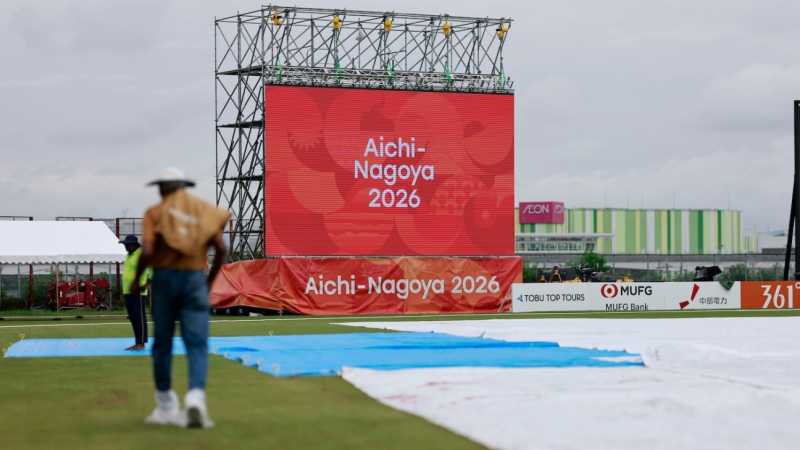
Sri Lanka will face India in the semi-finals of Asian Games men’s tournament after their quarter-final clash against Nepal was abandoned without a ball being bowled in Nisshin, Japan. The game was called off prior to the toss, with rain having begun hours prior to the scheduled 9am local start and not looking like abating.
Sri Lanka’s progression was assured by virtue of their higher seeding in terms of the ICC T20I rankings – Sri Lanka, alongside India, Pakistan and Bangladesh are the four seeded teams in the tournament. On Monday, India had qualified over Afghanistan after another washout, again by virtue of their higher. Similarly, Pakistan’s qualification was assured following a rain abandonment in their quarter-final against Hong Kong.
In the 2022 Asian Games, Sri Lanka had been eliminated at the quarter fial stages by Afghanistan. Another washout in the semis against, India though, will see the latter qualify for the final.
A few hours later, the fourth quarter-final between Bangladesh and Malaysia was also washed out. Bangladesh will now face Pakistan in the first semi-final on October 1, followed by India vs Sri Lanka later on the same day
(Cricinfo)
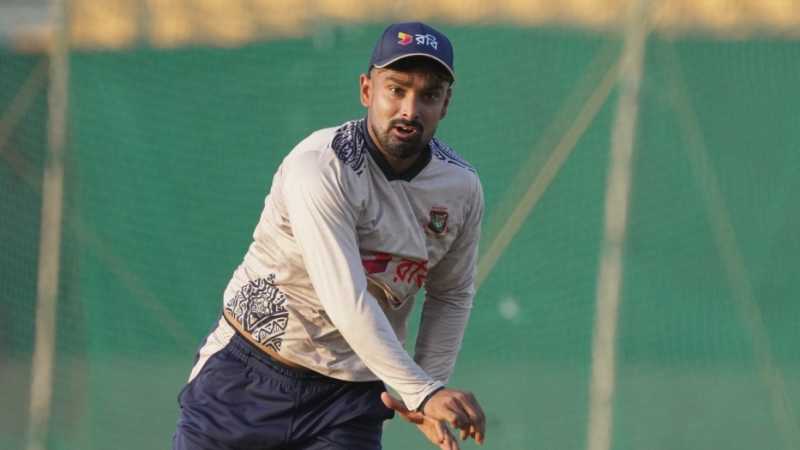
The Bangladesh vs Malaysia abandonment on Tuesday completed a quartet of rained off matches in the Asian Games men’s tournament. The match was called off two hours before the toss, with the teams told not to even turn up at the venue.
Bangladesh, by virtue of higher seeding, go through to the semi-finals where they will now face Pakistan on October 1. Earlier in the morning, the Sri Lanka vs Nepal fixture was also called off due to rain, with Sri Lanka advancing into the semi-finals where they will meet India.
There is, however, some good news, as the weather forecast in Nisshin is better for the semi-final and the medal match day, on October 1 and 3, respectively.
In the last edition (2023), Bangladesh had lost to India in the semi-final but won the third-place playoff against Pakistan to take home the bronze medal. They had won the bronze in 2014 as well and Bangladesh’s best finish was winning the gold medal in 2010, when they beat Afghanistan in the final.
(Cricinfo)

Implementing further relief programme to Public sffected by the Middle East conflict situation
Establishment of a Spectrum Management and Monitoring System and a Quality of Service and Quality of Experience System for the Telecommunications Regulatory Commission of Sri Lanka
Appointment of a Committee for the Restitution of Sri Lankan Cultural Heritage Held Abroad
Ten-Year National Action Plan on the Social Protection Sector (2026–2035)
Implementation of Revised National Curriculum Framework under the Education Reforms

Sri Lanka to face India in semi-finals after washout

‘Dates have the highest sugar content to fight Coronavirus’

Sunday Island 27 December – Headlines

#SundayIsland 17th December – Headlines

Sunday Island – 28th March

Sunday Island Headlines – 21 March

Sunday Island – 21st February – Headlines
-

 News6 days ago
Mastermind Naufer Moulavi among 15 found guilty
-

 Midweek Review6 days ago
Thileepan’s fast unto death: An authentic narrative that many missed
-

 Latest News5 days ago
Showers above 100 mm are likely at some places in the Western, Sabaragamuwa, Central and North-western provinces and in Galle and Matara Districts
-

 Editorial6 days ago
Big Bad Bills
-
Editorial5 days ago
Crimes punished and unpunished
-

 Features4 days ago
Beyond traditional jobs: Why Sri Lanka needs to facilitate the gig economy
-

 News6 days ago
One clause in Anti-Corruption (Amendment) Bill requires referendu: SC
-

 News6 days ago
No referendum needed for passage of 22 A: SC