
News
South Asia’s excess Nitrogen heavily contribute to climate crisis: More coordination needed on N2 management

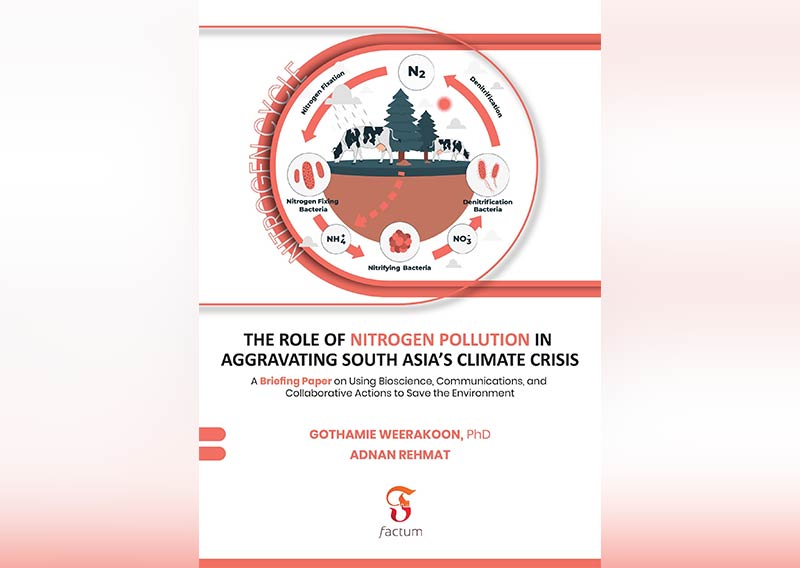
Says Sri Lanka – Pakistan joint paper on nitrogen pollution
The prevalence of excess nitrogen in the soil, water and air in South Asia arising from dominant fertilizer related agriculture practices and unchecked use of fossil fuel to drive farming and economies is hurting the region and contributing to an exacerbation of climate crisis, highlights a report published by a Sri Lankan think-tank.
It further stresses that the issue is serious in South Asia and stakeholders need to combat nitrogen pollution better when national and regional strategies are fleshed out and prioritized at both national and regional levels.
The briefing paper titled “The role of Nitrogen Pollution in Aggravating South Asia’s Climate Crisis” had a soft launch on Saturday, January 25, in Colombo. Authored by Dr Gothamie Weerakoon and Adnan Remat, under the aegis of Factum, an Asia-Pacific focused foreign policy think-tank based in Colombo, the paper provides a critical insight into the issue, its root causes and recommendations for mitigation.
According to the UN Environmental Program, nitrogen pollution is one of five distinct causes of climate change. In South Asia, there is currently no framework that regulates nitrogen management. While there has been much talk of economic integration, no effort has been taken at a regional level to combat the effects of nitrogen pollution, even though there is some consensus as to priorities and actions, as outlined by the Colombo Declaration, Delhi Declaration, and UN Environment Assembly Resolution. Yet there needs to be a clear effort towards greater youth and scientific mobilization in these areas.
Dr Gothamie Weerakoon, Senior Curator at the Department of Science of the Natural History Museum in London, UK and also Climate Advisor to Factum, and Adnan Remat, a veteran media and communications strategist and science advocate based in Islamabad, Pakistan, are the co-authors of the briefing paper, which provides insights on using bioscience, communications, and collaborative actions to address issues of nitrogen pollution and climate crisis in South Asia.
South Asia’s dilemma, as one of the leading contributors to but also one of the biggest victims of climate change, is no longer up for debate. Changing climate conditions may diminish living conditions for close to 800 million people, a number that is set to grow as temperatures rise. While the Global South is set to suffer the most from climate change, research suggests that South Asia will be one of the hardest hit regions.
Against this backdrop, a multi-directional initiative is needed to address nitrogen pollution. The report traces the growing nitrogen footprint in South Asia from the time of the Green Revolution, which released excess nitrogen into soils, water, and air.
The key question that the report tries to address is what needs to be done to prevent further deterioration and human suffering from nitrogen pollution in the region. Laying bare its economic and ecological cost, the report advocates a stronger scientific approach to the problem, mobilizing regional cooperation to resolve what it calls a “functional link” between nitrogen pollution and tropical lichen bioindicators.
Conducting monitoring across four countries – Pakistan, Nepal, Bhutan, and Sri Lanka – it measures the response of lichens to atmospheric quality to monitor the impact of nitrogen pollution on the region.
The report suggests that while different countries sustain different levels of nitrogen and pollution, the situation is dire across the region and needs immediate responses. To this end, it outlines six recommendations, including encouraging youth and tech diplomacy and promoting much more academic collaboration on nitrogen research and advocacy.
The briefing paper is available on Factum (www.factum.lk). For more details, contact Uditha Devapriya, Chief International Relations Analyst at Factum, at uditha@factum.lk.

Latest News
“I extend my heartfelt wishes to all Sri Lankans for a peaceful and joyous Sinhala and Tamil New Year!” – President


President Anura Kumara Dissanayake, issuing a New Year message, extend his heartfelt wishes to all Sri Lankans for a peaceful and joyous Sinhala and Tamil New Year!
The Sinhala and Tamil New Year, which symbolises the aspiration for renewal both physically and spiritually, is the foremost cultural festival of the people of this country.
During the Sinhala and Tamil New Year, traditional customs are upheld, with priority accorded to rituals and religious observances, and activities undertaken collectively at a common auspicious time. This shared cultural practice vividly reflects our nation’s identity before the world, as well as the strong socio-cultural bonds that exist among our communities.
We firmly believe that the future path of national development can only be shaped in harmony with this invaluable culture and our distinguished historical heritage. Accordingly, it must be recalled that all our future development plans have been formulated upon the firm foundation of these precious traditions and cultural values.
Moreover, the common aspiration embodied in the customs and rituals associated with the solar transition is the nurturing of a compassionate individual who values togetherness, respects others, and lives in harmony with nature. I believe that the virtues and values of unity reflected in these New Year traditions should not be confined to these few days alone, but should instead be demonstrated throughout the year in our daily conduct.
In the face of the most significant recent natural disaster challenge encountered in the past year, we demonstrated to the world our resilience and capacity to withstand internal shocks. At the same time, in responding to the external challenges arising from the conflict in the Middle East, the Government has already set in motion a well-planned and effectively managed programme to overcome these difficulties.
As a nation, in overcoming these challenges together, I call upon all of you to further dedicate yourselves to enriching your lives through the values of togetherness, sharing, and solidarity exemplified during the Sinhala and Tamil New Year season.
As we strengthen the achievements we have secured and move forward with unwavering resolve in the face of emerging challenges, I invite everyone to join hands in unity to realise the vision of “A Thriving Nation – A Beautiful Life” for all.
I extend my heartfelt wishes to all Sri Lankans for a peaceful and joyous Sinhala and Tamil New Year!
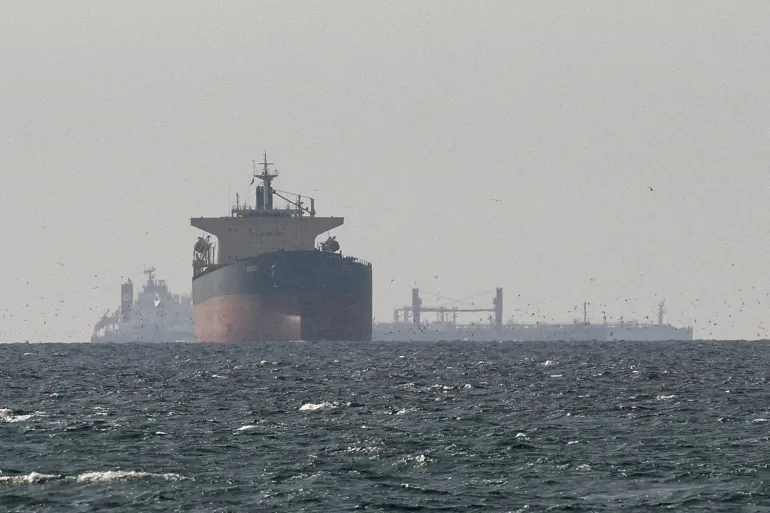
United States President Donald Trump’s planned naval blockade of Iran would further cripple international shipping, exacerbating the energy crisis roiling the global economy, analysts warn.
Oil prices surged above $100 a barrel on Monday after Trump announced that the US Navy would blockade the Strait of Hormuz and “interdict every vessel in international waters that has paid a toll to Iran”
“Iran will not be allowed to profit off this Illegal Act of EXTORTION,” Trump said on Truth Social.
Central Command, the US military’s command responsible for operations in the Middle East, said in a statement the blockade would affect only ships entering and exiting Iranian ports, an apparent scaling-back of Trump’s threat to fully block the strait.
Trita Parsi, cofounder of the US-based Quincy Institute for Responsible Statecraft, said a US blockade would have a cascading impact across the global economy.
“Anything that currently takes more oil off the market will push prices up, which in turn will push gas prices further,” Parsi told Al Jazeera.
Oil could rise above $150 a barrel if the blockade were to trigger retaliation from the Iran-aligned Houthis in Yemen, who could shut down Bab al-Mandeb, a strait that connects the Red Sea to the Gulf of Aden and Indian Ocean, Parsi said.
The strait is an alternative export route for Gulf oil and gas.
A blockade aimed at depriving Iran of revenues would mark a sudden reversal in policy by Washington.
The Trump administration last month announced it would waive some sanctions on Iranian oil exports as a way to help ease the global energy crunch.
Iran has essentially closed the strait since the start of the US-Israeli war on February 28, allowing only a small number of ships to transit after vetting and authorisation.
About 3,200 vessels were stranded west of the strait due to the blockage as of Saturday, according to the maritime intelligence company Windward.
Anas Alhajji, former chief economist at NGP Energy Capital Management, said expected non-Iranian ships would likely keep avoiding the strait despite the US military’s assurances that they will not be impeded because of elevated insurance premiums.
Ships may also fear retaliation from Iran, Alhajji said.
“Therefore, the Trump blockade of the Iranian ports is an actual blockade of the Hormuz Strait,” Alhajji told Al Jazeera.
The resulting rise in oil and gas prices would also cause the cost of chemicals, fertilisers and raw materials used to make plastics to increase, according to analysts.
Cameron Johnson, a senior partner at the Shanghai-based supply chain consultancy Tidalwave Solutions, said he expects prices of many raw materials to rise within several weeks if Trump makes good on his blockade threat.
“The wild card really is the timeframe on this,” Johnson told Al Jazeera.
“If this is a negotiating tactic – remember we still have eight or nine days left of the ceasefire – then it may not really matter. But if this prolongs itself into the end of the month and into the first week of May, you will see prices all over the world spike for raw materials.”
Deborah Elms, head of trade policy at the Hinrich Foundation in Singapore, said the situation for global supply chains could get “much worse” under the blockade.
“Some of the problems are obvious, but many are not. As an example, fabrics will get more expensive,” Elms told Al Jazeera.
“Packaging is already a challenge for firms. Many can’t get blister packs for pills or lids for consumer goods. We can expect consequences for food production later this year and into next year with fertiliser disruptions and lack of supply,” Elms said.
Chad Norville, president of the oil and gas industry news site Rigzone, said Trump’s threat is a further blow to confidence in the situation in the strait ever returning to normal.
The threat alone is likely to drive up insurance premiums for shipping and logistics companies and reduce the volume of trade passing the strait each day, he said.
“Disruptions to shipping and elevated risk in the region were already well established due to the conflict,” Norville told Al Jazeera.
“This threat doesn’t create that baseline. It amplifies it by reinforcing uncertainty around one of the world’s most critical chokepoints.”
[Aljazeera]
Latest News
“Let us resolve, with renewed determination to overcome obstacles and build a better and more prosperous nation” -PM
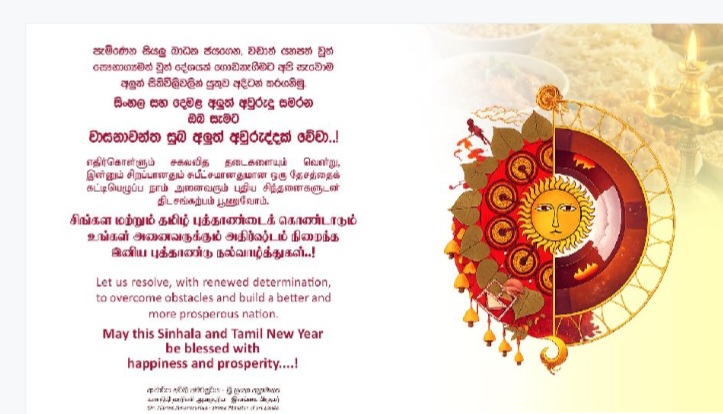
Prime Minister Dr Harini Amarasooriya in her New Year message requested every Sri Lankan to resolve, with renewed determination to overcome obstacles and build a better and more prosperous nation.
The full text of the PM’s message:
“Marking the auspicious transition of the sun from one planet to another, and the arrival of the spring season following the harvest, the Sinhala and Tamil New Year celebrated by the people of Sri Lanka since ancient times, has dawned once again.
The New Year is not merely a festive occasion; it symbolizes a renewal of prosperity, unity, coexistence, and the strengthening of mutual relationships embedded within our cultural values.
On this occasion, I extend my wishes for a peaceful and prosperous Sinhala and Tamil New Year to all Sri Lankans who celebrate this occasion with their families and loved ones, observing customs at the auspicious time.
A unique feature of Sinhala and Tamil New Year is the way an entire nation comes together through a shared set of customs. Despite the demands and challenges of daily life, this season offers a valuable opportunity to move forward with renewed hope as families, communities and a nation.
The true blessing of the New Year lies in setting aside differences and grievances, and embracing a fresh beginning in a spirit of solidarity and goodwill. Especially in the face of ongoing global challenges, the courage, compassion and resilience shown by our people in facing various natural and economic hardships in recent times stand as an example to the world. It is our responsibility to carry forward that collective strength.
At this auspicious moment, I extend my greetings to our fellow Sri Lankans working overseas, who dedicate themselves to securing a better future for their families and for the country. In particular, I extend my thoughts for the safety and well-being of those living in the Middle East during these tumultuous times.
Let us resolve, with renewed determination to overcome obstacles and build a better and more prosperous nation. As we undertake in a significant social and political transformations, we remain committed to striving tirelessly towards a better future.
May this Sinhala and Tamil New Year be blessed with happiness and prosperity!”

“I extend my heartfelt wishes to all Sri Lankans for a peaceful and joyous Sinhala and Tamil New Year!” – President

US blockade of Iran would worsen global energy crisis, analysts say

Praful Hinge’s stunning debut ends Rajasthan Royal’s four-match winning streak

“Let us resolve, with renewed determination to overcome obstacles and build a better and more prosperous nation” -PM

Sun directly overhead Nawaladi, Paranthan, Murasumodai, Vellikkandal, Udapattukkandal, Puliyampokkanei about 12:10 noon today [14]

Heat Index at Caution Level in the Northern, North-central, North-western, Western and Southern provinces and in Trincomalee district.

‘Dates have the highest sugar content to fight Coronavirus’

Sunday Island 27 December – Headlines

#SundayIsland 17th December – Headlines

Sunday Island – 28th March

Sunday Island Headlines – 21 March

Sunday Island – 21st February – Headlines
-

 News2 days ago
CEB orders temporary shutdown of large rooftop solar systems
-

 News5 days ago
AG: Coal procurement full of irregularities
-

 Business4 days ago
Israeli attack on Lebanon triggers local stock market volatility
-

 Business5 days ago
Hayleys Mobility introduces Premium OMODA C9 PHEV
-
 Features2 days ago
From Royal College Platoon to National Cadet Corps: 145 years of discipline, leadership, and modern challenges
-

 Business4 days ago
HNB Assurance marks 25 years with strategic transformation to ‘HNB Life’
-

 Sports5 days ago
DS to face St. Anthony’s in ‘Bridges of Brotherhood’ cricket encounter
-

 News6 days ago
AKD admits import of substandard coal, blames technicalities and supplier