
News
South Asian black carbon aerosols increase glacial mass loss over Tibetan plateau: Study

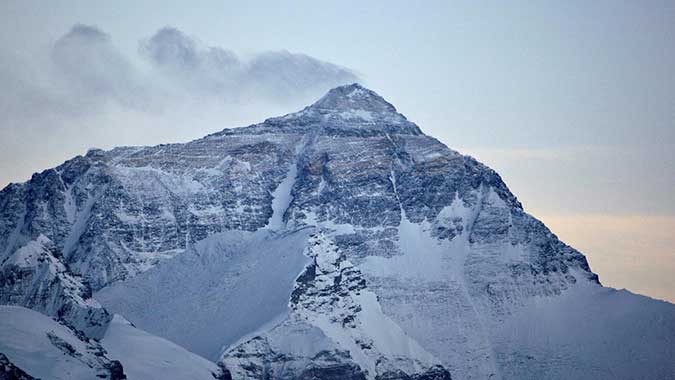
=The South Asia region adjacent to the Tibetan Plateau has among the highest levels of black carbon emission in the world.
January 02, 2023 (pti): Black carbon aerosols have indirectly affected the mass gain of the Tibetan Plateau glaciers by changing long-range water vapour transport from the South Asian monsoon region, a study has found.
The South Asia region adjacent to the Tibetan Plateau has among the highest levels of black carbon emission in the world, the researchers said.Black carbon aerosols are produced by the incomplete combustion of fossil fuels and biomass, and are characterised by strong light absorption.
Many studies have emphasised black carbon aerosols from South Asia can be transported across the Himalayas to the inland region of the Tibetan Plateau.Researchers noted that black carbon deposition in snow reduces the albedo of surfaces — a measure of how much of Sun's radiations are reflected — which may accelerate the melting of glaciers and snow cover, thus changing the hydrological process and water resources in the region.
The study, published in Nature Communications, found that since the 21st century, South Asian black carbon aerosols have indirectly affected the mass gain of the Tibetan Plateau glaciers by changing long-range water vapour transport from the South Asian monsoon region.
Black carbon aerosols in South Asia heat up the middle and upper atmosphere, thus increasing the North–South temperature gradient," said Professor KANG Shichang from Chinese Academy of Sciences (CAS).
Accordingly, the convective activity in South Asia is enhanced, which causes convergence of water vapour in South Asia. Meanwhile, black carbon also increases the number of cloud condensation nuclei in the atmosphere," Shichang said.
These changes in meteorological conditions caused by black carbon aerosols make more water vapour form precipitation in South Asia, and the northward transport to the Tibetan Plateau was weakened, the researchers said.As a result, precipitation in the central and the southern Tibetan Plateau decreases during the monsoon, especially in the southern Tibetan Plateau, they said.
The decrease in precipitation further leads to a decrease of mass gain of glaciers.From 2007 to 2016, the reduced mass gain by precipitation decrease accounted for 11% of the average glacier mass loss on the Tibetan Plateau and 22.1% in the Himalayas.The transboundary transport and deposition of black carbon aerosols from South Asia accelerate glacier ablation over the Tibetan Plateau.Meanwhile, the reduction of summer precipitation over the Tibetan Plateau will reduce the mass gain of plateau glaciers, which will increase the amount of glacier mass deficit, Shichang added.

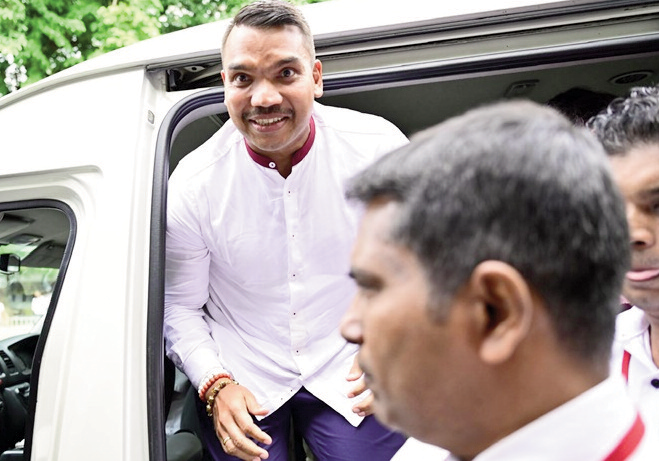
Sri Lanka Podujana Peramuna (SLPP) National Organiser and Parliamentarian Namal Rajapaksa was yesterday remanded until September 18 by the Colombo Chief Magistrate’s Court following his arrest by the Commission to Investigate Allegations of Bribery or Corruption (CIABOC) in connection with an investigation into the controversial SriLankan Airlines Airbus aircraft transaction.
Rajapaksa appeared before the CIABOC at around 9.15 am yesterday to record a statement after being summoned over the transaction. He was taken into custody following several hours of questioning and subsequently produced before the Colombo Chief Magistrate.
The investigation centres on allegations surrounding the acquisition of six Airbus A330 and eight A350 aircraft by SriLankan Airlines in 2013, in connection with an alleged USD 2 million bribe.
Former SriLankan Airlines Chief Executive Officer Kapila Chandrasena and his wife, Priyanka Niyomali Wijenayake, had previously been named in connection with the alleged bribery.
Chandrasena was arrested on March 12 as part of an investigation launched by the CIABOC under the Anti-Corruption Act and was subsequently released on bail. He was later found dead on May 8 while on bail, with police suspecting that his death was a suicide.
Open warrants have been issued for the arrest of Wijenayake, who is named as the second suspect, and Shamindra Rajapaksa, named as the third suspect, in the case pending before the Fort Magistrate’s Court in connection with the Airbus transaction.
The investigation has also received assistance from Airbus, with a delegation from the company’s parent group in France visiting Sri Lanka during the first week of August. The delegation provided statements and other assistance to the CIABOC as part of the ongoing inquiry.
Rajapaksa’s arrest and remand yesterday mark a further development in the widening investigation into the controversial aircraft deal.

The number of dengue cases reported in Sri Lanka this year has risen to 96,040, with 72 deaths recorded so far, according to the National Dengue Control Unit.
The Unit said 10,155 cases were reported in August alone, highlighting the continuing spread of the disease across several parts of the country.
The Western Province has recorded the highest number of cases at 50,760, followed by the Southern Province with 13,931, the Central Province with 8,788 and the Sabaragamuwa Province with 7,910.
At district level, Gampaha has reported the highest number of cases at 20,444, followed by Colombo with 19,008.
Kandy has recorded 7,043 cases, while Kalutara and Matara have reported 6,181 and 6,154 cases,a respectively.
The National Dengue Control Unit said 50 Medical Officer of Health (MOH) areas across the country have been identified as high-risk areas for dengue.
Health authorities have continued to urge the public to take measures to prevent mosquito breeding, particularly in areas where a high incidence of dengue has been reported.
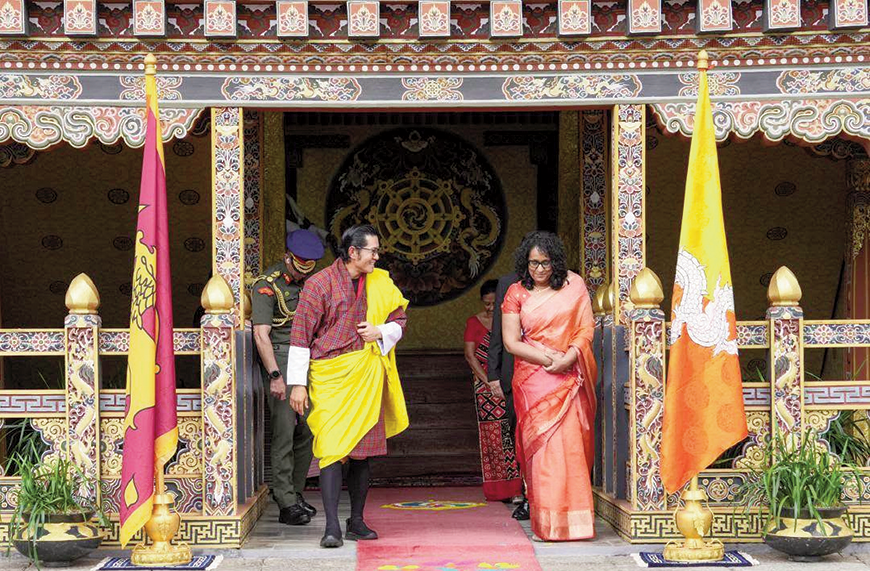
Prime Minister Dr. Harini Amarasuriya met King Jigme Khesar Namgyel Wangchuck of Bhutan at the historic Tashichhodzong, in Thimphu, last Wednesday (02), with discussions focusing on Bhutan’s development priorities and ways to strengthen bilateral relations with Sri Lanka.
The meeting took place during Dr. Amarasuriya’s official visit to Bhutan.
The Bhutanese King expressed interest in drawing on Sri Lanka’s experience and expertise in areas relevant to the country’s long-term development plans, according to a statement issued, following the meeting.
The two sides also discussed opportunities to expand investment cooperation, including a proposal to establish an investment zone in Bhutan.
The discussions further covered demographic challenges facing Bhutan, particularly the increasing migration of young people and its potential impact on the country’s future workforce and population.
Both sides underscored the importance of sustainable development and creating greater opportunities for young people to contribute to national economic growth and development.
The meeting formed part of efforts to broaden cooperation between Sri Lanka and Bhutan beyond traditional areas of bilateral engagement, with investment, development expertise and demographic concerns emerging as areas of common interest.

Namal remanded until Sept. 18 over Airbus deal investigation

Dengue cases surpass 96,000 this year

PM Harini, Bhutan King explore closer ties

Johnston granted bail following CIABOC arrest

SC concludes hearing of petitions against Anti-Corruption Bill

US Maritime Commission chiefs to visit Lanka to boost shipping ties

‘Dates have the highest sugar content to fight Coronavirus’

Sunday Island 27 December – Headlines

#SundayIsland 17th December – Headlines

Sunday Island – 28th March

Sunday Island Headlines – 21 March

Sunday Island – 21st February – Headlines
-

 Features6 days ago
“Wrap Me Up in My Blazer”— A Gentlemanly Bradby Reminiscence
-

 Features5 days ago
When Sri Lankan stories find their own voice
-

 Features6 days ago
JVP/NPP government as seen from outside by Lionel Bopage now domiciled in Australia
-

 News5 days ago
BASL takes exception to Justice Ganepola being denied a place in SC
-
 Features6 days ago
Prof. Savitri Goonesekere: What has she done?
-

 News2 days ago
Denied of promotion to SC despite vacancies, justice Gurusinghe retires
-

 Latest News3 days ago
Grade 5 scholarship exam results released
-

 Features6 days ago
World Trade Politics: Canada rebuffs Trump’s tariff blackmail