
News
South Asia: Deepening human rights crisis bolstered by impunity as authorities betray promises for fair recovery from pandemic – AI

Instead of delivering a fair recovery from the Covid-19 pandemic, states across South Asia waged a sustained assault on peaceful demonstrators, journalists, human rights defenders, judiciaries and civil society organizations in a bid to silence dissent, driving a deepening human rights crises aided by increasing impunity said Amnesty International on Monday as it launched its annual assessment of human rights around the world.
Amnesty International Report 2021/22: The State of the World’s Human Rights covers 154 countries and delivers a comprehensive analysis of human rights trends globally.
In 2021, human rights in South Asia were dealt a major setback as the Taliban took over Afghanistan and several states cracked down on human rights defenders, NGOs, media outlets and opposition leaders who became the targets of raids, unlawful detention and surveillance, torture, enforced disappearance, or arrests under terrorism laws or laws designed to ‘curb fake news’.
“The devastating human rights fallout following the Taliban takeover of Afghanistan sets a dismal tone for the wholesale roll back of human rights across the region. This was compounded by a failure to address deep-seated inequalities exacerbated by the pandemic as vaccine inequality and neglected health systems and social protection pushed many to the brink of their capacity to survive. 2021 should have been a year of healing but sadly it brought greater instability and inequality. Far too often without any sense of accountability,” said Yamini Mishra, Amnesty International’s South Asia Regional Director.
Instead of providing meaningful space for debate and dissent on how best to meet the challenges of 2021, the continuing trend was for governments to suppress independent and critical voices, with some even using the pandemic as a pretext to shrink further the civic space.
“Across the South Asia region, governments are becoming increasingly intolerant of criticism, discrimination against women and girls and marginalized groups are pervasive, and impunity is rife giving rise to widespread human rights violations that go unchecked, unaccounted for and unfettered,” said Yamini Mishra
In the immediate aftermath of its takeover of Afghanistan in August last year, the Taliban curtailed media freedoms and used force to break up protests. Journalists were detained, beaten and harassed; by October more than 200 media outlets had closed down.
In Bangladesh, criticism of the government’s response to the Covid-19 pandemic and other issues led to a crackdown on dissent, targeting human rights defenders, journalists, lawyers, members of the opposition, criminal investigators, university students, academics, trade unionists and social media commentators. Sri Lankan authorities issued threats of disciplinary action against health sector employees who spoke to the media about their concerns on the Covid-19 response. In Maldives, media personnel reporting on protests were also attacked or harassed by police, protesters were dispersed, citing the Freedom of Peaceful Assembly Act 2016 and health guidelines because of the Covid-19 pandemic.
In India, police and security forces used excessive force against those protesting peacefully against the controversial agricultural reforms. Outspoken journalists, media outlets, actors and human rights activists were threatened and intimidated through the misuse of over-broad financial laws including the FCRA (Foreign Contribution Regulation Act) or use of draconian anti-terrorism laws like the UAPA (Unlawful Activities Prevention Act).
Many governments sought to further control access to and sharing of online information. In Pakistan, the draconian Removal and Blocking of Unlawful Online Content Rules to censor online content was also enacted. In Bangladesh, human rights defenders, journalists and activists were among hundreds of people imprisoned under the Digital Security Act. Nepal authorities used the Electronic Transactions Act to arbitrarily detain individuals including journalists, particularly those who criticized the government and ruling party leaders. Residents of Jammu and Kashmir suffered the longest internet shutdown on record from 4 August 2019 to 5 February 2021.
The Pegasus Project, an international investigative journalism initiative, exposed the unlawful and arbitrary surveillance of Indian citizens including journalists and HRDs through the government’s alleged use of Pegasus spyware.
The pandemic tore through South Asia, having a devastating impact on human rights. Governments’ efforts in countries such as Nepal were hindered by the global vaccine inequality created by collusion between pharmaceutical companies and wealthy nations. Many states stockpiled more doses than needed, whilst turning a blind eye as Big Pharma put profits ahead of people, refusing to share their technology to enable wider distribution of vaccines. Despite enough production to fully vaccinate the world in 2021, by year’s end less than 4% of those living in low-income countries had been fully vaccinated.
To compound the suffering, under-investment and corruption contributed to the continuing inability of public health sectors across the South Asia region to respond adequately to the Covid-19 pandemic. This resulted in thousands of preventable deaths, including in India and Nepal, both of which experienced steep surges in infections during the year. The suspension of aid to Afghanistan’s health sector by international donors resulted in the closure of at least 3,000 healthcare facilities, including Covid-19 hospitals. Access to Covid-19 vaccines was problematic in some countries.
“Despite promises and pledges to the contrary, at almost every turn, leaders and corporations opted for a non-transformative path, choosing to entrench rather than overturn the systemic inequalities behind the pandemic. Yet, people the world over have made it abundantly clear that a more just world, grounded in human rights, is what they want,” said Yamini Mishra
Minority communities faced increased marginalization and discrimination in South Asia. In Afghanistan, ethnic Hazaras were frequently targeted, including during the Taliban offensive and takeover. More than 100 former members of security forces were forcibly disappeared or extrajudicially executed by the Taliban and nine surrendered Hazara soldiers were executed in Daykundi alone. Several massacres by the Taliban of Hazara civilians also took place, including in Ghazni and Daykundi provinces.
In Sri Lanka, authorities finally moved to change the policy of forced cremations of Muslim victims of Covid-19, which began in March 2020. The guidelines had affected the final burial rites of the Muslim community, violating the right to freedom of religion and belief. The Public Security Minister proposed to ban more than 1,000 madrasas (Islamic education institutions) and the wearing of face veils. The authorities continued to arrest and detain Muslims allegedly in connection with bombings in April 2019, under the Prevention of Terrorism Act. The Act continued to be used against government critics, including members of the Tamil community.
In India, despite legislation in various states criminalizing acts of lynching, Dalit and Muslim men were assaulted or beaten to death by vigilante cow protection groups in more than seven Indian states. Many states amended or enacted ‘anti-conversion laws’. The death in custody of Father Stan Swamy was a direct reprisal for his extensive work supporting tribal people’s rights.
In Bangladesh, at least 40 pandals (temporary structures made for the Hindu religious ceremony) and 25 homes and properties belonging to members of the Hindu community were damaged or set on fire during and after the Durga Puja, the country’s biggest Hindu festival. A lack of proper investigations into previous incidents of communal violence created an environment of impunity.
In Pakistan, blasphemy cases continued to be registered against minority communities and Muslims, putting them at risk of danger or even the death penalty. At least 10 places of worship for Ahmadi Muslims were desecrated – often by the police or with their acquiescence. An eight-year-old Hindu boy was detained under blasphemy charges for a week before charges against him were dropped.
Events in Afghanistan led to new waves of displacement in the region and globally. Following the chaotic evacuation from Kabul airport in August, many fled over land towards Pakistan and Iran, but the Taliban-imposed restrictions on departures and border closures compromised their right to seek asylum in third countries. By year end, over one million undocumented Afghans had been returned from Iran and Pakistan, most of them involuntarily.
The human rights situation in Myanmar also made voluntary repatriations of Rohingya refugees in Bangladesh impossible. However, their rights continued to be restricted in Bangladesh where they were also vulnerable to violence. More than 19,000 were transferred to a remote island, Bhasan Char, where they were denied their right to freedom of movement.
In Afghanistan, 20 years of progress towards enhanced protection and promotion of women’s rights was rolled back overnight. Women were excluded from the de-facto administration of the Taliban and prevented from working in many sectors. Girls’ access to education was severely restricted, only girls’ grade six and below were allowed to attend school by the Taliban de facto government, and women human rights defenders, journalists, judges and prosecutors faced threats and intimidation. Protests in support of women’s rights were met with violence and arbitrary detentions by the Taliban. The ending of institutional and legal support for women left them at risk of further violence, and they feared the consequences of reporting incidents. The Taliban also made it clear that they would not respect LGBTI rights. In Pakistan, a series of highly publicized cases of sexual and gender-based violence including murders of Quratul Ain and Noor Mukkadam highlighted the lack of protection for women and ignited renewed calls for redress, accountability and reform.
Impunity for serious human rights violations and crimes under international law remained a serious concern in a significant number of countries. Justice continued to be denied to victims of human rights violations committed during past armed conflicts in Nepal and Sri Lanka. The office of the Prosecutor at the ICC also announced it would continue investigations in Afghanistan but only addressing crimes committed by the Taliban and Islamic State –Khorasan Province, while ignoring war crimes committed by the former Afghan government security forces and by US military and intelligence personnel.
“In the face of protests, the year saw an increased trend for governments to securitize civic space, criminalizing peaceful assemblies and using regulations to crack down on demonstrations, under the pretext of often in the name of ‘national security’. Yet people’s movements have grown and risen to the challenge. The legitimate work of human rights defenders, civil society and people’s right to protest must be respected, protected, and supported. We will continue to work towards that end,” said Yamini Mishra.


… calls for modernising Inland Revenue Dept.
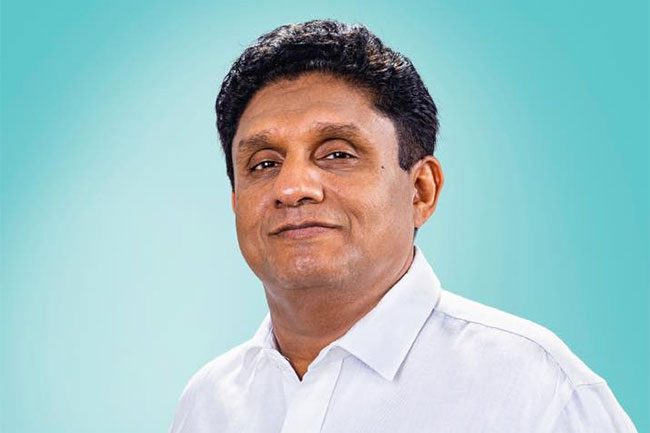
Opposition and SJB Leader Sajith Premadasa yesterday criticised the government’s proposed amendments to the Inland Revenue Act, claiming that a new provision in the draft legislation could unfairly lead to criminal action against ordinary citizens and small business owners over administrative tax-related matters.
In a statement, Premadasa said the public was “not angry about paying taxes” but was frustrated by what he described as unfair treatment under the proposed law.
He alleged that Section 185A of the proposed bill could make delays in filing tax returns or registration-related issues criminal offences, warning that struggling small-scale entrepreneurs could be treated in the same manner as individuals deliberately evading millions of rupees in taxes.
“That is wrong,” the Opposition Leader said.
Premadasa further accused the government of resorting to criminal action against people instead of reforming and modernising the Inland Revenue Department and simplifying tax compliance procedures.
He also questioned the government’s commitment to tackling corruption and financial crimes, asking why stronger measures had not been taken against money laundering, financial fraud and those accused of misappropriating public funds.
“Go after the corrupt. Punish real fraudsters. But do not weaponise the law against the common man,” he said.
Premadasa added that the Opposition would continue to resist legislation that undermined “fairness, proportionality, and the constitutional rights of the people.”
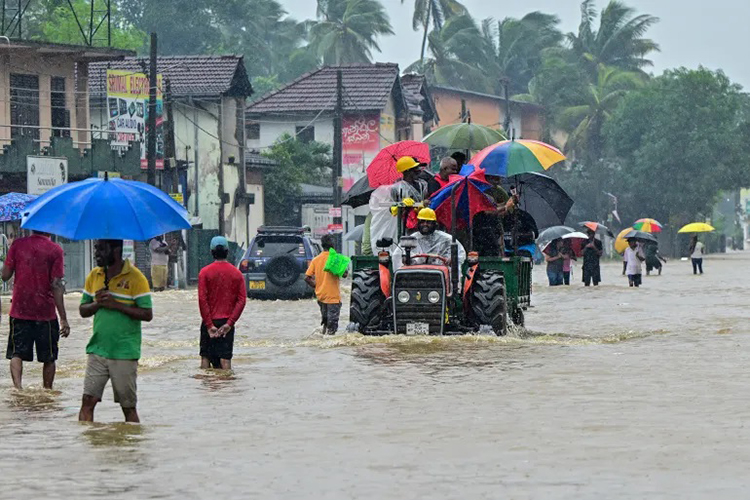
Adverse weather conditions prevailing across the country have severely affected 3,475 persons belonging to 1,113 families in seven districts, according to the Disaster Management Centre (DMC).The DMC said 1,310 individuals from 489 families had been relocated to eight temporary safety shelters due to the deteriorating weather situation.
The DMC also confirmed one death from the Koralepatthu South area in the Batticaloa District.
As of 10 am yesterday (14), a total of 88 houses and one business establishment had sustained partial damage as a result of the adverse weather conditions.
Authorities have urged the public in vulnerable areas to remain vigilant and follow safety instructions issued by disaster management and local officials as heavy rains continue to affect several parts of the country.
Meanwhile, the National Building Research Organisation (NBRO) yesterday extended landslide warnings for several districts across the country due to the prevailing adverse weather conditions.
According to the NBRO, Level 2 landslide warnings have been issued for Neluwa in the Galle District; Agalawatte, Baduraliya, Matugama, Horana and Walallawita in the Kalutara District; and Ratnapura and Pelmadulla in the Ratnapura District.
Level 1 landslide warnings remain in effect for several areas in the Badulla, Galle, Kalutara, Kandy, Kegalle, Kurunegala, Matale, Monaragala, Nuwara Eliya and Ratnapura districts.
The warned areas include Bandarawela, Passara and Hali Ela in Badulla; Thawalama, Elpitiya and
Niyagama in Galle; Ingiriya and Bulathsinhala in Kalutara; and multiple Divisional Secretariat areas in the Kandy District, including Poojapitiya, Deltota, Udunuwara and Pathahewaheta.
Warnings have also been issued for Bulathkohupitiya, Mawanella, Kegalle, Aranayake, Yatiyanthota, Warakapola and Rambukkana in the Kegalle District; Ridigama in Kurunegala; Rattota, Naula and Ambanganga Korale in Matale; and Wellawaya, Badalkumbura and Bibile in Monaragala.
In the Nuwara Eliya District, the warning covers Norwood, Ambagamuwa Korale and Kotmale, while Eheliyagoda, Kalawana, Kuruwita, Godakawela, Kiriella and Ayagama in the Ratnapura District have also been placed under alert.
The NBRO said the warnings were extended in view of further rainfall forecast by the Department of Meteorology and urged residents in vulnerable areas to remain vigilant and follow instructions issued by authorities for their safety.
Meanwhile, the water levels in several major river basins that had risen due to recent heavy rainfall are now receding following a decline in rainfall over the past 24 hours, the Department of Irrigation said.
Director of Irrigation (Hydrology and Disaster Management) L.S. Sooriyabandara said water levels in the Nilwala River, Gin Ganga, Kalu Ganga and Attanagalu Oya basins were showing a downward trend as rainfall eased.
He noted that water levels were declining in most areas, with the exception of the Millakanda area in the Kalu Ganga basin.
However, Sooriyabandara warned that the current improvement could be temporary, as the Department of Meteorology has forecast further rain in the coming days.
According to the Department, 18 of the country’s 73 major reservoirs are currently spilling over, while another 18 medium-sized reservoirs are also discharging water.
He stressed that the release of water does not indicate a major flood situation at present, but urged the public to remain vigilant and follow future advisories issued by authorities.
By Norman Paliahwadane and Chaminda Silva
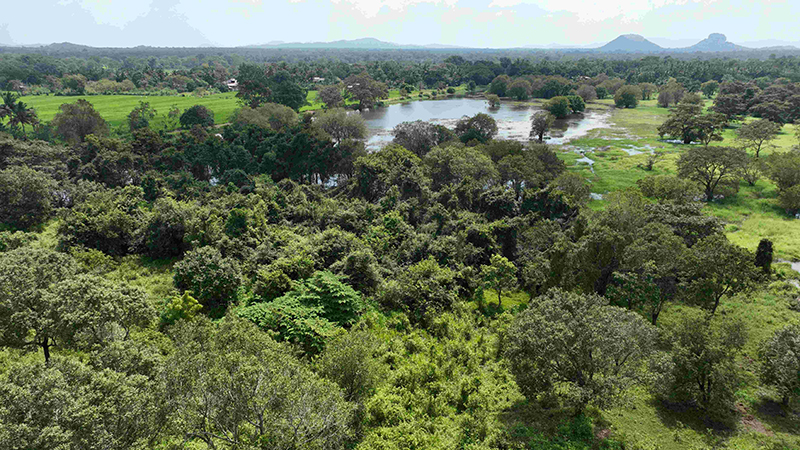
A controversial move to release sections of the protected Thumbikulam Forest Reserve in the North Central Province for private commercial interests has triggered strong protests from environmentalists, who warn that the decision could devastate a critical elephant habitat and deepen Sri Lanka’s worsening human-elephant conflict.
Concerned activist Sajeewa Chamikara described the alleged attempt to alienate forest lands as “an environmentally reckless and legally questionable exercise” that could inflict irreversible ecological damage on one of the region’s most sensitive forest ecosystems.
Speaking to The Island, Chamikara said the Thumbikulam Forest Reserve was not merely an isolated forest patch, but a vital ecological corridor sustaining elephant movement, watershed protection, biodiversity conservation and rural agriculture.
“The destruction or fragmentation of this reserve will inevitably intensify human-elephant conflict, threaten nearby farming communities and undermine the very purpose for which this forest was declared protected,” he warned.
Environmental documents reviewed by conservation groups indicate that approximately 50 acres within the reserve, located in the Palugaswewa Divisional Secretariat Division, are reportedly being considered for release from protected status, with a portion allegedly intended for tourism-related commercial activities.
The Thumbikulam Forest Reserve, gazetted as a protected forest in 2013, covers nearly 2,744 hectares and functions as a crucial ecological
buffer linking several wildlife habitats in the North Central Province.
Chamikara said the area also protects vital water catchments and supports the livelihoods of farming communities dependent on irrigation and cultivation systems in the surrounding villages.
“This is not barren land available for exploitation. It is a legally protected forest with enormous ecological significance,” he stressed.
He alleged that attempts were being made to remove sections of the reserve from protected status without proper scientific evaluation, environmental safeguards or meaningful public consultation.
According to the environmental assessment, the forest area serves as an important elephant movement corridor connecting larger forest ecosystems, enabling elephants to move naturally between habitats.
Conservationists fear that disrupting this corridor would force elephants into villages and farmlands, escalating already deadly encounters between humans and wildlife.
Sri Lanka continues to record one of the highest levels of human-elephant conflict in the world, with hundreds of elephants and dozens of humans killed annually.
Chamikara accused certain officials of ignoring both environmental law and scientific evidence in favour of short-term commercial interests.
“The law does not permit protected forests to be arbitrarily carved up for private ventures. Any such action would violate the very objectives of forest conservation legislation and national environmental policy,” he said.
He noted that under Sri Lanka’s environmental regulations, any project affecting protected forest ecosystems requires a rigorous Environmental Impact Assessment (EIA), public scrutiny and legal compliance before any land release can even be contemplated.
“Protected forests are not political gifts to be distributed at will. They are national ecological assets that safeguard biodiversity, climate resilience, water security and the survival of wildlife,” he asserted.
Environmental groups also warned that the proposed land release could create a dangerous precedent for future encroachment into other protected forests across the country.
Chamikara called on the government, the Forest Department and environmental authorities to immediately abandon any attempt to degazette lands within the Thumbikulam Forest Reserve and instead strengthen conservation measures to protect elephant corridors and fragile ecosystems.
“If the authorities proceed with this destruction in the name of development, they will be directly responsible for escalating environmental degradation and human-elephant conflict in the region,” he cautioned.
By Ifham Nizam

Opposition accuses govt. of weaponising tax laws

Floods, landslides affect 3,475 people

Bid to release forest lands sparks outrage

Money laundering case against Yoshitha: Preliminary objections overruled

IUSF occupies ‘ownerless’ Malwana estate, demands land for universities

Gampaha Osmond arrested over alleged involvement in Sanjeewa killing

‘Dates have the highest sugar content to fight Coronavirus’

Sunday Island 27 December – Headlines

#SundayIsland 17th December – Headlines

Sunday Island – 28th March

Sunday Island Headlines – 21 March

Sunday Island – 21st February – Headlines
-

 News5 days ago
Lanka Port City officials to meet investors in Dubai
-
 News2 days ago
Ex-SriLankan CEO’s death: Controversy surrounds execution of bail bond
-

 News6 days ago
SLPP expresses concern over death of former SriLankan CEO
-
 News6 days ago
Police inform Fort Magistrate’s Court of finding ex-CEO of SriLankan dead under suspicious circumstances
-
 Features3 days ago
When University systems fail:Supreme Court’s landmark intervention in sexual harassment case
-
Features3 days ago
High Stakes in Pursuing corruption cases
-
 Midweek Review2 days ago
A victory that can never be forgotten
-

 News6 days ago
President of Vietnam and delegation departs Sri Lanka