
Latest News
Social media platforms swamped with fake news on the Israel-Hamas war

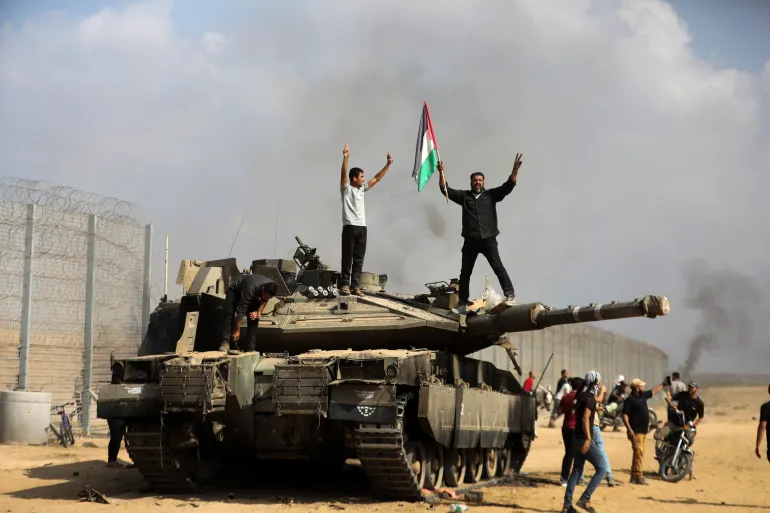
Hours after Hamas, the armed Palestinian group, attacked Israel on Saturday, X, the social network owned by the world’s richest man Elon Musk was awash with fake videos, photos and misleading information about the conflict.
“Imagine if this was happening in our neighbourhood, to your family,” posted Ian Miles Cheong, a far-right commentator whom Musk interacts with often, along with a video that he claimed showed Palestinian fighters killing Israeli citizens.
A Community Note, an X feature that lets users add context to posts, stated that the people in the clip were members of Israeli law enforcement, not Hamas.
But the video is still up and has racked up millions of impressions. And hundreds of other X accounts have shared the clip on the platform, some of them with verified check marks, an Al Jazeera search showed.
Disinformation – fake news that is spread deliberately – about the war and the Israel-Palestine conflict in general spread across other social networks like Facebook, Instagram and TikTok too, but thanks to Musk’s revamped policies that let anyone pay to be verified as well as large scale layoffs in X’s Trust and Safety teams, the platform appears to have seen the worst of it.
X, Meta, which owns Facebook, Instagram and Threads, TikTok, and BlueSky, did not respond to Al Jazeera’s request for comment.
On Monday, X declared there were more than 50 million posts on the platform over the weekend about the conflict.
In response, the company said it had removed newly-created accounts affiliated with Hamas, escalated “tens of thousands of posts” for sharing graphic media and hate speech, and updated its policies that define what the platform considers “newsworthy”.
“These massive companies are still stumped by the proliferation of disinformation, even as no one is still surprised by it,” said Irina Raicu, the director of the Internet Ethics Program at Santa Clara University.
“They put out numbers – how many posts they’ve taken down, how many accounts they’ve blocked, what settings you might want to change if you don’t want to see carnage. What they don’t put out are their metrics of their failures: how many distortions were not accompanied by ‘Community Notes’ or otherwise labelled, and for how long. It’s left to the journalists and researchers to document their failures after they happen.”
‘Old and recycled footage’
Over the last few years, bad actors have repeatedly used social media platforms to spread disinformation in response to real-world conflicts. In 2019, for instance, Twitter and Facebook were flooded with rumours and hoaxes after India and Pakistan, two nuclear powers, came to the brink of war following Pakistan’s shooting down of two Indian warplanes and its capture of an Indian pilot.
This week, on X, a user called The Indian Muslim shared a video with the caption “More power to you #Hamas” and claimed that the clip showed a Hamas armed fighter firing a large, shoulder-mounted rocket cannon and taking down an Israeli helicopter.
Multiple disinformation researchers, both on social media and in interviews with Al Jazeera, pointed out that the footage was from a video game called Arma 3. The post, which has Community Notes on it, is still up and has more than half a million views.
Another post by Jim Ferguson, a British social media influencer, claims to show Hamas soldiers using US weapons “left behind in Afghanistan used to attack Israel”.
But according to Community Notes, the photo shows Taliban soldiers from 2021, not Hamas. Fergusson’s post, which is still available on the platform, has more than 10 million views.
Dina Sadek, a Middle East research fellow at the Atlantic Council’s DFRLab, told Al Jazeera that another false narrative her team had seen spreading on platforms was that Hamas had received help from inside Israel to plan the attack.
“There’s old and recycled footage circulating online that is overwhelming and makes it difficult for users to discern what is real and what is not,” Sadek said.
Disinformation around the attack is also travelling between platforms, Sadek added. “Some TikTok videos find their way to X, and some footage that appeared on Telegram first is then seen on X,” she said.
“The flood of grifters spreading lies and hate about the Israel-Gaza crisis in recent days, combined with algorithms that aggressively promote extreme and disturbing content, is exactly why social media has become such a bad place to access reliable information,” Imran Ahmed, CEO of the Center for Countering Digital Hate, told Al Jazeera.
“Tech companies have proven themselves uninterested, if not utterly complicit, in the spread of dangerous propaganda.”
(Aljazeera)













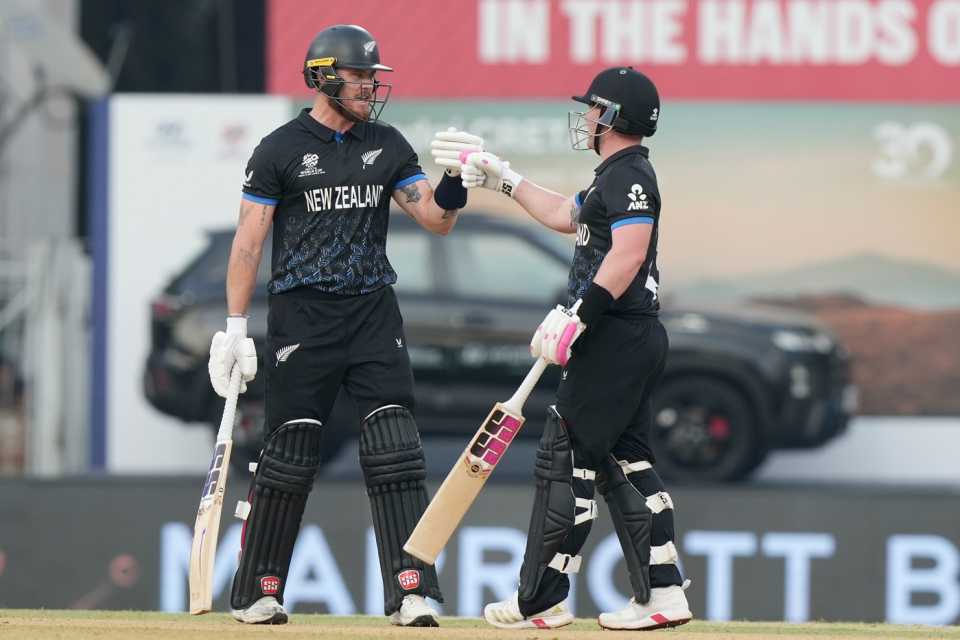
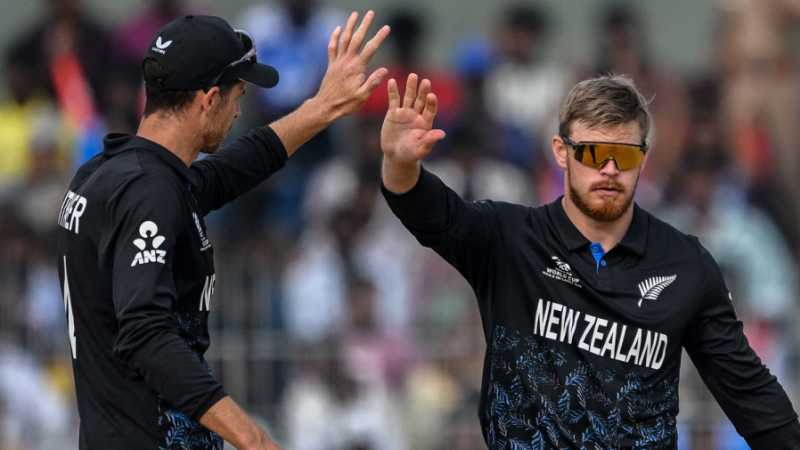
There was the odd hiccup or two. Glenn Phillips bowling the 18th over and giving up 27 runs. James Neesham turning a leg bye into an all-run four with an overthrow. But in the end, New Zealand wrapped up the win that was expected of them against UAE – with all ten wickets and 27 balls to spare – and look in good shape to make the Super Eights.
Finn Allen and Tim Seifert knocked off the entire target of 174 by themselves. In the course of doing that, they recorded the highest partnership for any wicket, by any side, in the T20 World Cup.
An even-paced pitch and its location on the square – making one side of the ground smaller than the other – resulted in the batters really enjoying themselves.
Muhammad Waseem and Alishan Sharafu are the most accomplished players in the UAE line-up and they stepped up – together – to put on a 107-run partnership. It is their second highest for the second wicket in T20Is.
The logic behind their strokeplay really stood out. Sharafu (55 off 47) backed away against Mitchell Santner and carved him over cover point for four. That shot was about getting the odds in his favour – hitting with the turn and to the short boundary. Waseem (66 off 45) backed his upper cut off Matt Henry’s slower bouncer because short third was inside the circle. It was high-percentage cricket in a high-pressure situation.ll
New Zealand’s bowlers had a really tough time against India in the bilateral series leading up to this World Cup. Huffing and puffing against UAE, who had crumbled to 81 all out in a warm-up game in Chennai against Italy, isn’t the kind of confidence boost they’re in need of
Phillips bowling in the death was odd. The four overs leading up to it had brought only 17 runs and two wickets. This one over alone yielded 27, including a wide, a no-ball four and a free-hit six. All while frontline quick Jacob Duffy had two overs left.
Alle and Seifert knocked off almost half the target in the powerplay itself. The 78 runs they put on together included nine fours and four sixes, which amount to a balls per boundary ratio of 2.77. This is a strength Santner had alluded to in the pre-match press conference ahead of the Afghanistan game, and it came good to take New Zealand to a 2-0 record in the group of death.
Allen showed game awareness when he played out UAE’s pinpoint accurate spin bowler, Haider Ali, and took down their quicks with ease instead. He had tried to do too much against Mujeeb Ur Rahman and lost his stumps during their previous match against Afghanistan. Here, even when Haider tempted him with mid-off up, he held back his big shots.
Seifert backed up his 39-ball fifty on Sunday with a 23-ball fifty today, continuing his path to becoming a high-volume batter instead of his previous version, where he was a high-variance batter. He didn’t have any trouble taking on Haider as the game neared its conclusion, reverse-hitting him for a six and then a four. New Zealand’s bash brothers were in full flow so the chase didn’t last beyond the 16th over.
Brief scores:
New Zealand 175 for 0 in 15.2 overs (Tim Seifert 89*, Finn Allen 84*) beat United Arab Emirates 173 for 6 in 20 overs (Mohamed Waseem 66, Alishan Sharafu 55, Mayanak Kumar 21; Matt Henry 2-37, Jacob Duffy 1-16, Lockie Ferguson 1-35, Mitchell Santner 1-23, Glenn Phillips 1-30) by ten wickets
(Cricinfo)

Sri Lanka allrounder Wanidu Hasaranga has been ruled out of the 2026 T20 World Cup with a hamstring injury he suffered during their opening game aga8nst Ireland in Colombo on Sunday.
Although he completed his spell, taking 3 for 25 in four overs to derail Ireland’s spirited chase of 164, Hasaranga had an MRI scan on Monday that revealed a serious tear in his left hamstring. The report was seen by a specialist in the UK before he was ruled out on Tuesday.
The tear is understood to be related to a previous hamstring injury, though it is not a recurrence exactly. Hasaranga has battled injury for several years now, including a foot complaint
The ICC is yet to approve a replacement but Hasaranga is likely to be replaced in the squad by fellow legspin-bowling allrounder Dushan Hemantha. Although Hemantha, 31, brings roughly the same skillset, he has had only sporadic opportunities at the top level. He has played three T20Is, and has taken four wickets in those matches, with an economy rate of 7.85. Sri Lanka may also drop him straight into the XI – aside from the spinners who played on Sunday, there are no spinners in reserve in the squad.
Hasaranga’s loss is a substantial blow to Sri Lanka’s campaign nevertheless. He is the team’s most accomplished bowler in this format, and has been outstanding with the ball at T20 World Cups, taking 40 wickets and maintaining an economy rate of 6.01 across 20 innings.
Sri Lanka’s second group game is against Oman on February 12 in Pallekele, followed by Australia on February 16 in Pallekele, and finally Zimbabwe in Colombo (RPS) on February 19.
(Cricinfo)

The Royal Navy of Oman Vessel “SADH” arrived at the Port of Colombo on a logistics replenishment visit on Tuesday (10 Feb 26). The Sri Lanka Navy welcomed the visiting ship in
compliance with naval traditions.
The 75m – long ship is commanded by Lieutenant Commander Shaheen Saud Abdul Rahman AI Balushi.
The port call will facilitate professional interaction and goodwill exchanges between the two navies.
During the stay in Colombo, crew members of the ship are expected to visit some tourist attractions in the city of Colombo.

Seifert, Allen fifties help New Zealand gallop to record-breaking win against UAE
All-round de Leede leads Netherlands to thumping win over Namibia

Wanindu Hasaranga ruled out of T20 World Cup with injury

Royal Navy of Oman Vessel “SADH” arrives at Port of Colombo

Spirited USA seek Pakistan scalp after opening day heartbreak

New Zealand brace for unfamiliar opponents UAE

‘Dates have the highest sugar content to fight Coronavirus’

Sunday Island 27 December – Headlines

#SundayIsland 17th December – Headlines

Sunday Island – 28th March

Sunday Island Headlines – 21 March

Sunday Island – 21st February – Headlines
-

 Features3 days ago
My experience in turning around the Merchant Bank of Sri Lanka (MBSL) – Episode 3
-

 Business4 days ago
Zone24x7 enters 2026 with strong momentum, reinforcing its role as an enterprise AI and automation partner
-

 Business3 days ago
Remotely conducted Business Forum in Paris attracts reputed French companies
-

 Business3 days ago
Four runs, a thousand dreams: How a small-town school bowled its way into the record books
-

 Business3 days ago
ComBank and Hayleys Mobility redefine sustainable mobility with flexible leasing solutions
-

 Business4 days ago
HNB recognized among Top 10 Best Employers of 2025 at the EFC National Best Employer Awards
-

 Business4 days ago
GREAT 2025–2030: Sri Lanka’s Green ambition meets a grid reality check
-

 Editorial6 days ago
All’s not well that ends well?