
Features
So What is Christmas ?


Remembered Yesterdays
by J. Godwin Perera
This year it was a quiet, subdued, Christmas. The restrictions imposed to control the Covid 19 pandemic made sure of that. We were confined, constrained and constricted. Such controls were absolutely necessary and no one but the pitifully ignorant or stubbornly indifferent would have protested. Even the Church endorsed such steps and rigidly enforced the Covid -19 Safety Protocols. But there was a time not so long ago when Christmas was more than just a date on the calendar. It was a season. It was one long season of celebrations, revelries, festivities. The season was ushered in during the very first week of December as the airwaves replayed the Golden Oldies of Christmas. ‘White Christmas’, ‘Rudolph the Red Nosed Reindeer,’ ‘ I saw Mummy kissing Santa Clause,’ ‘Jingle Bells.,’ ‘Little Drummer Boy’ etc…etc…. Then came the shops announcing a ‘Pre- Christmas Sale’ By mid – December the sign boards were changed to ‘Christmas Sale.’ Same merchandise. Bigger discounts. Worked out on higher basic prices. The shop keepers sure knew what works. Cotton wool would be liberally pasted all around the show case windows to signify snow. There would also be rigifoam cut- outs of Christmas trees, bells, and sleighs drawn by reindeer. A nondescript person from the neighborhood would be conscripted, given a Santa Clause cloak and cap and instructed to stand outside ringing a bell. Not to be outdone the Super- Market checkout girls would be given Santa Clause caps to wear. Some even had a shapely girl wearing a mini-skirted version of the Santa Clause cloak and a cap jauntily placed on her head to assist customers. It was a Christmassy version of Customer Care. Even the pavement hawkers raucously joined in the excitement of the season selling artificial Christmas trees and decorations at prices which the established shops could not match. TV added millions of rupees worth of creative commercials to the seasonal revelries, many depicted tubby Santa Clauses distributing the advertised brands to happy children. There then followed a frenzied shopping spree for Christmas cards (to be sent only to those from whom cards were received last year!) and gifts (to be given only to those from whom gifts were received last year!) Then came the Hotel advertisements. ‘Gala Christmas Lunch.’ ‘Gala Christmas Dinner Buffet.’ The more innovative offered ‘Christmas Brunch.’ This was something between Breakfast and Lunch. Yet more innovative was ‘Christmas High Tea.’ This was something between lunch and tea. In between these festivities there was held the Police Christmas Carols which was one of the highlights of the season. If truth be told, the singing and accompanying Police Band was better than the best of Church choirs. A memorable performance. It certainly evoked the spirit of Christmas. Next on the agenda were the newsletters from Clubs, which exclaimed, ‘Carols Night’ (strictly for members and guests only),with a Grand Dinner Buffet and a live band to keep the tempo going. The response was terrific. On ‘Carols Night’ the singing was loud and lusty. This increased in direct proportion to the quantity of 100 percent proof stimulants imbibed. It was the time to be jolly. And jolly they were. No matter what. The Christmas season also had in its enchanting, enticing embrace around many homes. Cypress trees in N’Eliya
were cut, chopped , packed and sent down by train to Colombo. Here they were further cut and sold on the pavements near Viharamaha Devi Park and near the Henry Pedris Park. Sales were brisk. In homes these Cypress branches were stuffed into large flower pots filled with sand and decorated. The Cypress branch was transformed into a Christmas tree. Right on top was a tinsel star, flowing down were multi colored fairy lights. And among the branches daintily tied with ribbons were Bon-bons.
Baubles of varied colors and tinsel frills were fixed on doorways. And yes, there were artificial holly and ivy and mistletoe hung up at the entrance to the home. Little children were tenderly advised to keep a stocking (given by Ammi) by the bedside on Christmas Eve – 24th night, so that Father Christmas aka Santa Clause, will come secretly and put toys into the stocking. There was a midnight Church service at which quite often the sermon would be interrupted by the sound of crackers announcing the dawn of Christmas. Here at the service, yawns would be discreetly stifled and there would be a pretense of rapt attention while the Bible readings and sermon were delivered. The Christmas morning service would be packed with lounge-suited gents and expensive, saree clad ladies. No – it was not the ladies that were expensive. It was the sarees. The main thing was ‘wear your very best.’ The main thing was ‘to be seen’. The Church itself had a large, Christmas tree draped with twinkling fairy lights. After service a spree of Merry Christmas’s sprouted, sprayed and spread, together with plenty of hugging and kissing and wishing. And of course the ‘Oohs!’ and ‘Myee Child!’ of admiration, as ladies’ eyes swept up and down each other’s sarees. That over it was back home for the festive Christmas breakfast – Breudher, Christmas cake with almond icing, and Kiribath. A late lunch together with vintage wine (to help digestion) consisting of yellow rice, chicken curry, pork curry – the lot. Dinner would be more lavish. Friends and relatives (of course of the same social class) would be invited. Served liberally was Scotch, preferably single malt, or catering to those whose Sri Lankan preference demanded it, there would be Pure Coconut Arrack. Roast turkey was part of delectable menu. After dinner it was time for the children and young adults to enjoy. There would be fireworks. Real fireworks – sky rockets, catherine wheels, squibs which when lit, zig-zagged on the ground, amidst the shrieks and squeals of young ladies, sparklers, Roman candles and the bursting of Chinese crackers. But hold on, here is something to think about. Amidst all the wining, dining and wishing. Amidst the festivities and feasting. Where was the main star (no pun intended) of Christmas ? In fact the very word Christmas is derived from Him because its His birth that is being celebrated. Then where or what is the relevance of Christmas trees and Santa Clauses and reindeer? Has not the Christmas of Christ been hijacked by the Christmas of commercialism? Maybe this is a very good time to reflect, reconsider, rectify, our entire attitude towards Christmas. Isn’t it time that we heeded the words of the Man from Galilee instead of just paying lip-service to His words? In the reality of the spreading squalor of poverty doesn’t selfish ostentatious life styles go quite contrary to His words. Isn’t it our duty to remember the victims of the Easter Sunday massacre. Some are incapacitated. Some have been orphaned. Some are still receiving medical care. There are others. Lonely. Destitute. Critically Ill – who may never see another Christmas. If we are unable to trace them and offer financial assistance or material goods most needed, there are groups and institutions doing just that. Well then, let us help them to help these others. One practical suggestion is to divert the money spent on unnecessary décor and decorations and ostentatious dining and wining, towards the worthy causes just stated. Isn’t that what Christmas is all about ? Caring and Giving ? This does not mean that Christmas must not be celebrated. It is certainly a time for joy. Those who have been blessed with the good things in life should be thankful for such blessings. Do have that special lunch and dinner with friends and relatives. But remember, we who are the followers of the Man from Galilee who was God Emmanuel, Christmas and every day thereafter must be dedicated to – Sowing love where there is hatred. Sowing hope where there is despair. Sowing light where there is darkness. Sowing joy where there is sadness.


(Part I of this article appeared in The Island yesterday.)
An examination of how some of the other countries have institutionalised mediation to address the problem of laws delays shows that an array of institutional devices have been adopted to provide for mediation not only as a voluntary option but also in some jurisdictions, as a mandatory requirement prior to litigation, to respond to serious issues of delays due to congestion in courts.
In the UK , in March 1994, the Lord Chancellor commissioned Lord Woolf to review the Rules of civil procedure with a view to improving access to Justice, reducing the cost of litigation and removing unnecessary complexity. The resulting Access to Justice Report (1996) triggered a series of reforms to improve the civil justice system primarily through the civil procedure rules (1999) which articulated that its overriding objective is to enable the court to deal with cases justly and at proportionate cost. In 2023, the Court of Appeal judgment in Churchill v. Merthyr Tydfil County Borough Council [2023] EWCA Civ 1416, decided that English courts do have the power to stay civil proceedings for, or order, parties to engage in mediation or another non-court- based dispute resolution process. The Rules were thereafter amended in 2024 to provide for the use of alternative dispute resolution (ADR) more proactively. These included rules that recognied that –
* promoting or using ADR is a means of achieving the overriding objective;
* the court has a duty to actively manage cases to further the overriding objective, including by ‘ordering or encouraging the parties to use, and facilitating the use of, alternative dispute resolution’ and ‘helping the parties to settle the whole or part of the case’
* in deciding a costs order, a court will have regard to all the circumstances of the case, including the conduct of the parties, including whether a party failed to comply with an order for ADR or unreasonably failed to engage in ADR.
An ADR pledge made by the UK Government in 2001 was renewed in 2011, by the Dispute Resolution Commitment (DRC) requiring departments to use mediation, arbitration and conciliation. At that time, the then Justice Minister Jonathan Djanogly said: ‘I believe that government should be leading by example by resolving issues away from court using alternatives which are usually quicker, cheaper and provide better outcomes. We want people to see court as a last resort rather than a first option, and cut down on the amount of unnecessary, expensive, painful and confrontational litigation in our society. In many cases methods like mediation are simply a common sense solution which benefits everyone involved. Although they will not be suitable in every case, they are already saving taxpayers millions every year and can save much more.’
The judicial dicta on the power of the courts to order mediation and the imposition of costs on even a successful party for unreasonable refusal to mediate, provides clear acceptance of a pro mediation approach by the UK courts.
In the USA , the discussion on the need for alternatives was raised in a speech made in 1906, by Roscoe Pound, a relatively unknown legal academic at the time, addressing the annual meeting of the American Bar Association (ABA). The title of his address was “The Causes of Popular Dissatisfaction with the Administration of Justice.” He critiqued the American legal system and charged that it was riddled with archaic technicalities, too slow, too expensive and adversarial and that there was injustice when procedure received emphasis above the substantive issues of a conflict. He spoke of the “sporting theory of justice” where litigation was considered as a game where the lawyers were gladiators battling in court to win. He charged that the contentious procedure compels ‘counsel to forget that they are officers of the court and to deal with the rules of law and procedure exactly as the professional football coach with the rules of the court.’ At the time, Pound’s criticisms were considered scandalous, blasphemous and the ABA refused to publish the speech. Things changed however.
Thirty years later, Roscoe Pound went on to become Dean of the Harvard Law School and became a celebrated legal luminary. As for the legal system – Roscoe Pounds sentiments were not dismissed. Seventy years later in 1976, the then Chief Justice Warren Burger convened the Pound Conference (called the second Pound Conference, with the first attributed to Pounds’ 1906 speech event), to consider whether Pounds’ criticisms had been adequately addressed and what more needed to be done. Professor Frank Sander of the Harvard Law School delivered the keynote address and spoke of his vision for a comprehensive Justice center (the “multi door court house”) where an alternative system would function parallel to the litigation system and disputes would be directed to the most appropriate process, such as arbitration and mediation.
The impact of these discussions resulted in significant changes to the dispute resolution landscape in the USA through statutes, inclusion of ADR in academic courses, and the professionalization of the practice of ADR processes, including mediation. Currently, arbitration and mediation are recognized within the mainstream legal system with resounding success. All the States have recognized ADR pathways including mediation, in statutes. Mediation is well entrenched in the USA and the success rate is reportedly very high.
Australia has institutionalized mediation through several statutory and other initiatives. Courts are empowered to refer disputes to mediation without the consent of the parties to enable better management of civil matters. The Civil Dispute Resolution Act, 2011 contains provisions to ensure that, other than in respect of certain excluded civil proceedings, parties must take “genuine steps” to resolve disputes prior to litigation. The Act obligates parties instituting proceedings in court to file a “genuine steps statement” setting out the steps taken to resolve issues or the reasons why no such steps were taken and further provides that a Lawyer acting for such a party must advise that party of the requirement and assist that party to comply with that requirement.
In Ireland, in the very recent case of Burke v O’Connell [2026] IEHC 314 (May 20, 2026), the High Court considered whether a court can order parties to mediate a dispute, against their will, or whether a court is restricted to simply inviting the parties to mediate. Among other issues, the court considered whether mandatory court ordered mediation is a breach of a constitutional right of access to courts, and decided that a court delaying court proceedings for court ordered Mediation, even against the will of the parties, would not constitute a breach of the right access to the courts under the Constitution or the European Convention on Human Rights, and that judges in Ireland regularly make clear that the right of access to the courts is not unconditional. Importantly the court observed that the court is not directing the parties to reach an agreement but simply to commence a mediation. The Court also observed that a court directed mediation order is a very limited order which does not compel settlement and only requires parties to commence a Mediation process and that while attendance at Mediation may not be voluntary, reaching a settlement is voluntary and made order that a court, in controlling its own process, did have the power to direct Mediation in appropriate cases, and that it was an inherent power of the court to ensure the effective and efficient operation of the courts.
The Indian Mediation Act, 2023 articulates a pro mediation policy and provides for mediation via a court annexed scheme for which detailed statutory provisions are included. The Act states that parties may voluntarily, and whether there is a mediation agreement or not, take steps to pursue court annexed pre litigation mediation and provides for the steps to be taken therefor (section 5). The Act provides further that, even if such pre litigation mediation is unsuccessful, a court or tribunal may, at any stage of the proceedings, refer parties to undertake mediation and that when a court so refers a dispute, there is no obligation on the parties to come to a settlement (section 7). In respect of high value commercial disputes however, a plaintiff is required to exhaust ‘the remedy of pre institution mediation’ prior to instituting action, unless urgent interim relief is sought – section 12A introduced by the Commercial Courts, Commercial Division, and Commercial Appellate Division of High Courts (Amendment) Act, No. 28 of 2018.
In South Africa, parties are mandated to consider mediation before initiating litigation in the High Court. Challenged by a serious issue of a severe backlog, with trial dates scheduled even up to 2031, a Directive was issued by the Judge President of the Gauteng Division of the High Court along with a detailed process Protocol, effective April 2025 to require mandatorily that prospective litigants in all civil matters within the Gauteng division must participate meaningfully in a court-annexed mediation process before they can be allocated a trial date. The protocol requires, among other documents, that a Report of the Mediator stating, among other matters, whether parties “participated in good faith” be filed, to obtain a trial date. This requirement has been included to avoid what the Judge President refers to as “sham mediations.” (https://www.youtube.com/watch?v=v5Gmkzfu8gA&t=425s) Non-compliance results in matters being struck off the roll and could lead to adverse or punitive cost orders. Currently, a challenge to this Directive by the Personal Injury Plaintiff Lawyers Association and the Law Society of South Africa is pending, without a stay of the Rule.
Singapore has emerged as a global leader in the practice of mediation. The Mediation Act 2017 provides for a framework for the use of mediation and for enforcement of a mediated settlement agreement as a decree of court. Mediation is well entrenched in the legal system of Singapore and enjoys the support of government as well as the judiciary. Singapore played a key role in UNCITRAL in the deliberations that led to the drafting of the text for the 1998 UN Mediation Convention and was host to the Convention signing ceremony in August 1999 where a historical number of 46 countries, including Sri Lanka, signed the Convention on the very first day. Many of the training programmes for Sri Lankans that have been arranged by the International ADR Center, have been conducted by the Singapore International Mediation Centre (SIMC) which is renowned for its programmes and for services to handle international commercial disputes.
The European Union Directive (EU Directive 2008/52/EC) provides that a court may, when appropriate and having regard to all the circumstances of the case, invite parties to use mediation (Article 5.1) and that the Directive is without prejudice to national legislation to making the use of mediation compulsory or subjective to incentives or sanctions … provided that such legislation does not prevent the parties from exercising their right of access to the judicial system (Article 5.2). Many European countries have integrated mediation into their dispute resolution systems through legislation or procedural laws in ways that range from recognizing voluntary reference to mediation to requiring mandatory mediation for specified categories of disputes. Countries such as Italy, Greece, Germany and Belgium are some that have robust systems.
It is clear therefore, that jurisdictions around the world, irrespective of the legal system, have sought to recognize mediation for its value not only for minor community dispute resolution but also for the resolution of high value commercial and other family and civil dispute resolution. UNCITRALs preparation of the text for the 1988 UN Mediation Convention was inspired by the significant increase in the use of mediation in international trade and the need for a uniform regime for enforcement, such as the UN NY Arbitration Convention provides in respect of arbitration awards.
Sri Lanka’s advancements have thus far been driven by the private sector. A holistic approach to find responses to the backlog in courts to relieve the pressure on courts, is desired. The promotion of ADR, including mediation, deserves support from the government as well, since, clearly, laws delays have an adverse impact on the economy of the country and should not be seen only as an access to justice issue. As articulated in the UN Mediation Convention, among the positive beneficial results of using mediation for dispute resolution, is that there are cost savings for the State. It is a means of resolving disputes without detracting from the quality of the resolution.
by Dhara Wijayatilake
Attorney at Law; Former Secretary to the Ministry of Justice; Director and Secretary General of the International ADR Center
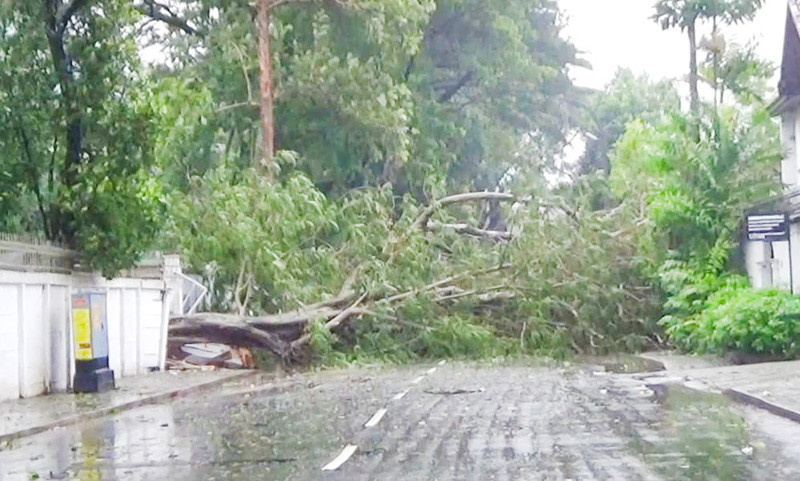
In recent years, falling trees have claimed lives, destroyed homes, and sparked an urgent debate: should Colombo’s ancient trees be cut down in the name of safety? But this is the wrong question. The real crisis is not that these trees are dangerous — it is that we have made them so. Through decades of road widening, root-smothering pavements, and indiscriminate branch cutting, we have steadily undermined the very trees we now fear. What we are witnessing is not nature failing us. It is us failing nature. As the world marks World Desertification Day on 17th June, Sri Lanka would do well to reflect that desertification does not begin only in distant, arid lands — it begins whenever a city turns its back on its own green heritage.
In recent years, falling trees have claimed lives, destroyed homes, and sparked an urgent debate: should Colombo’s ancient trees be cut down in the name of safety? But this is the wrong question. The real crisis is not that these trees are dangerous — it is that we have made them so. Through decades of road widening, root-smothering pavements, and indiscriminate branch cutting, we have steadily undermined the very trees we now fear. What we are witnessing is not nature failing us. It is us failing nature.
Colombo, our commercial capital, is considered one of the greenest cities in the world. This is highlighted by the award of the world’s first Wetland City designation to our administrative capital, Sri Jayewardenepura Kotte. Both cities and their green heritage should be treasured and protected — not only as assets of their citizens, but as a matter of national pride.
It is against this backdrop that one must view with deep concern the ongoing destruction of trees and greenery across Sri Lanka, particularly in urban settings such as Colombo and Kotte. The majestic trees lining our traditional tanks, rural areas, and urban areas are part of our heritage. The trees lining Colombo’s Ananda Coomaraswamy Mawatha (previously named the Green Path because of its large trees), Gregory’s Road, Thurstan Road, and Bauddhaloka Mawatha, are over a hundred years old. These are living monuments of our heritage. They provide shade, a natural canopy, and a habitat for a remarkable diversity of bird populations within the city. It is therefore vital that we make every effort to preserve these trees unless they pose a direct danger to human life.
Why Do These Trees Become Dangerous?
To address this question, we must first understand why large trees continue to fall during periods of strong winds. Old photographs indicate that it is we who have widened roads and built pavements to cover the roots of these majestic trees, a true heritage from the past.
A leading reason for trees to fall is age-related decay. Old trees tend to develop weak branches and trunks. Regular inspection of their structural integrity and timely treatment of disease would go a long way in preventing such failures.
The second reason is indiscriminate cutting of branches, which disrupts the natural balance of the tree. A principal offender in this regard is the Ceylon Electricity Board. When interviewing workers engaged in trimming city trees, one consistently hears the same justification: the branch must be cut because it is touching or close to a power line. There are no arborists, trained experts, or senior officials to guide these workers or determine whether a less destructive approach is possible.
The third reason is the destruction of root systems. Across the city, one can observe concrete and paving laid directly over the root zones of large trees. This prevents oxygenation and moisture from reaching the roots, causing them to deteriorate or die. The inevitable consequence is that the tree gradually loses its structural support at the base, making it vulnerable to falling.
What Should Municipalities and Town Councils Do?
To save our ancient trees, we must counter the flawed argument that we need to replace them—these trees are priceless “nature’s investments for hundreds of years” and, as a BBC article on ancient oaks suggests, their genetic heritage is vital for resilient future forests. See “1,000-year-old oaks used to create ‘super forest’ (See )
* A nationwide strategy is essential: we must start by strengthening the expertise of tree officers in the Colombo Municipal Council and other urban councils to ensure professional health assessments are available, while also linking with botanists, academics, and environmental groups at the University of Colombo.
* Use Google Maps and GIS for systematic mapping and reviving a citizen science platform, similar to one previously developed by University of Moratuwa, where students and the public can report environmental harm with photos and locations.
* Technology offers more powerful tools. There are Conventional Visual Tree Risk Assessment (VTRA) methods which fail to detect risks. More advanced methods were reported at the 30 th International Forestry and Environment Symposium 2026 e.g. Ground Penetrating Radar (GPR). These are able to find trunk decay and found examples in urban trees at Viharamahadevi park and Keppetipola road.
* We can raise public awareness through social media and community events like “tree walks,” a practice which could be further popularized by groups like Ruk Rakaganno (see ) and the Love A Tree Foundation (see )
* Finally, we must learn from international models like the UK’s Ancient Tree Forum (see ). The latter specialises in protecting trees as a heritage which must be preserved and protected for future generations.
by Saroj Jayasinghe
Emeritus Professor
Consultant Physician
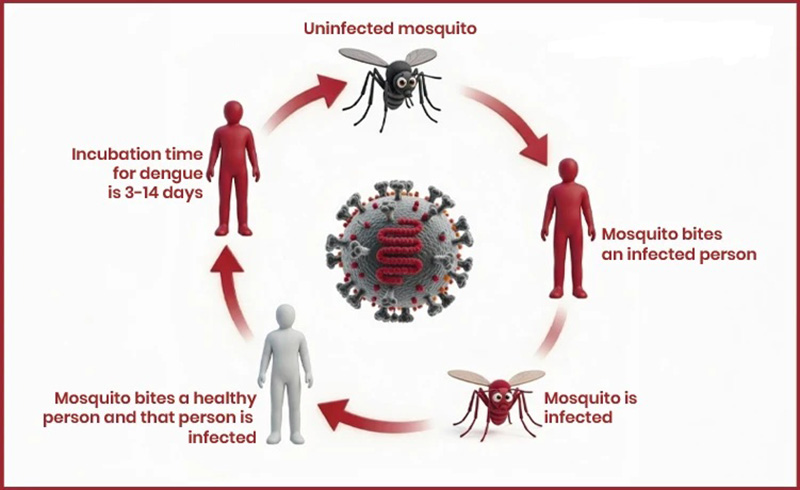
Dengue is one of the fastest spreading mosquito-borne viral diseases in the world today, posing a growing threat to nearly half of the global population. The World Health Organization describes dengue as a viral infection transmitted to humans through the bite of infected female mosquitoes, primarily Aedes aegypti and, to a lesser extent, Aedes albopictus. Once considered a disease limited to tropical regions, dengue has now expanded widely across continents, driven by urbanization, climate change, population movement, and weak vector control systems.
The global burden of dengue has increased dramatically over recent decades. According to WHO estimates, there are approximately 100 to 400 million infections annually, although a large proportion remain asymptomatic or undiagnosed. The disease is now endemic in over 100 countries, with Asia bearing the highest share of cases, followed by Latin America and Africa. As transmission intensifies and outbreaks become more frequent, dengue has emerged as a major public health concern requiring coordinated prevention and control strategies.
The nature of dengue infection
Dengue is caused by four closely related viruses known as serotypes: DENV-1, DENV-2, DENV-3, and DENV-4. Infection with one serotype provides lifelong immunity to that specific strain, but only partial and temporary protection against the others. This means a person can be infected up to four times in their lifetime.
Most dengue infections are asymptomatic or mild. When symptoms do occur, they typically appear 4 to 10 days after the bite of an infected mosquito. The clinical presentation includes high fever, severe headache, pain behind the eyes, muscle and joint pain, nausea, vomiting, rash, and fatigue. Because these symptoms resemble other viral infections, dengue is often underdiagnosed in early stages.
While most patients recover within one to two weeks, a small proportion develop severe dengue. This life-threatening condition is characterised by plasma leakage, severe bleeding, organ impairment, and shock. Without timely medical intervention, severe dengue can be fatal. WHO emphasises that early diagnosis and appropriate clinical management can reduce fatality rates to below 1 percent in well-managed settings.
Transmission and mosquito ecology
Dengue is transmitted primarily through the bite of infected female Aedes mosquitoes. These mosquitoes are highly adapted to urban environments and typically breed in artificial water containers found in and around homes. Unlike malaria-transmitting mosquitoes, Aedes mosquitoes bite during the daytime, with peak activity in the early morning and late afternoon.
The lifecycle of the mosquito plays a crucial role in transmission. Eggs can survive for months in dry conditions and hatch when they come into contact with water. Even small collections of water, such as flower pots, discarded containers, tyres, and water storage tanks, can serve as breeding sites.
Urbanisation has significantly contributed to the spread of dengue. Rapid population growth in cities often leads to overcrowding, poor waste management, and inadequate water storage practices, all of which create ideal breeding conditions for mosquitoes. Climate factors such as increased rainfall, humidity, and temperature further enhance mosquito survival and virus replication.
Risk factors and global expansion
Several factors increase the risk of dengue transmission. Population density is a key driver, as densely populated urban areas provide abundant human hosts for mosquitoes. Inadequate housing conditions and poor access to clean water force communities to store water in containers, which often become breeding grounds.
Human mobility also contributes to the spread of the disease, as infected individuals can introduce the virus into new regions where competent mosquito vectors are present. Climate change has expanded the geographical range of Aedes mosquitoes into previously unaffected areas, increasing the risk of outbreaks in both tropical and subtropical regions.
WHO has noted that dengue incidence has increased significantly over the past 50 years, with periodic outbreaks becoming more frequent and severe. The disease is now considered a major global health threat, comparable in burden to other high-impact infectious diseases in many regions.
Clinical management and absence of specific treatment
There is currently no specific antiviral treatment for dengue. Management is supportive and focuses on relieving symptoms and preventing complications. Paracetamol is recommended to reduce fever and pain, while non-steroidal anti-inflammatory drugs such as ibuprofen and aspirin are avoided due to their risk of increasing bleeding.
Patients with severe dengue require hospitalisation for close monitoring and supportive care, including intravenous fluid replacement and management of shock or bleeding. With proper medical care, mortality rates can be significantly reduced.
Early detection is critical. Warning signs such as persistent vomiting, severe abdominal pain, bleeding gums, rapid breathing, and sudden fatigue indicate progression to severe dengue and require immediate medical attention.
Prevention: the cornerstone of dengue control
Since there is no specific cure, prevention remains the most effective strategy against dengue. WHO strongly emphasises integrated vector management as the foundation of dengue control.
Personal protection measures are essential, especially during daytime hours when mosquitoes are most active. These include the use of mosquito repellents containing DEET, picaridin, or IR3535, wearing long-sleeved clothing, and using mosquito nets when resting during the day. Window and door screens also help reduce indoor mosquito exposure.
Environmental management is equally important. Communities are encouraged to eliminate breeding sites by removing stagnant water, disposing of waste properly, and cleaning water storage containers regularly. Even small water collections can sustain mosquito populations, making household-level participation crucial.
Public health programmes also rely on insecticide spraying during outbreaks to rapidly reduce mosquito populations. However, WHO emphasises that chemical control alone is insufficient without sustained community involvement and environmental management.
Community participation and public health response
Community engagement is a central pillar of dengue prevention. Effective control requires continuous participation from households, schools, workplaces, and local authorities. Public awareness campaigns play a vital role in educating populations about mosquito breeding habits and personal protection measures.
Surveillance systems are also essential for early outbreak detection and response. Health authorities monitor dengue cases and mosquito populations to identify high-risk areas and implement targeted interventions.
Integrated approaches that combine environmental management, biological control, chemical interventions, and public education have proven most effective in reducing transmission.
Vaccination and emerging tools
In recent years, dengue vaccines have been developed and introduced in some countries under specific conditions. WHO has recommended the use of certain vaccines in areas with high transmission, particularly for populations with prior exposure to dengue. However, vaccination strategies remain limited and must be carefully implemented due to the complexity of immune responses to dengue infection.
Research continues into new tools such as genetically modified mosquitoes, Wolbachia-infected mosquitoes that reduce virus transmission, and improved diagnostic technologies. These innovations offer promising additional tools but are not yet substitutes for established prevention measures.
Dengue remains a rapidly growing global health challenge with significant medical, social, and economic impacts. Its spread is driven by urbanisation, climate change, and the adaptability of mosquito vectors. While no specific cure exists, timely clinical care can prevent deaths, and effective prevention strategies can significantly reduce transmission.
The World Health Organization emphasises that dengue control depends on a combination of personal protection, environmental management, community participation, and strong public health systems. As the disease continues to expand geographically, sustained global commitment is essential to reduce its burden and protect vulnerable populations.

Iranian tankers exit US blockade zone before talks to end war

Hundreds of cats stolen for food in Vietnam rescued by police, welfare group says

Canada-Netherlands ODI abandoned due to dangerous pitch in Toronto

Da Silva and Jangoo earn recalls for West Indies’ Tests against Sri Lanka

Spinners make it two in two for England

Messi hat-trick fires holders Argentina to win over Algeria at World Cup

‘Dates have the highest sugar content to fight Coronavirus’

Sunday Island 27 December – Headlines

#SundayIsland 17th December – Headlines

Sunday Island – 28th March

Sunday Island Headlines – 21 March

Sunday Island – 21st February – Headlines
-
 News6 days ago
CIABOC summons Yoshitha over his participation in British Navy training programme
-

 News3 days ago
Release of 2025 O/L results likely to be delayed
-

 Sports3 days ago
Tharanga set for high-profile javelin clash in Ostrava
-

 News6 days ago
Justice Minister responds to social media claims he represented Easter Sunday ringleader
-

 Features4 days ago
Politics of protected species
-

 News5 days ago
Commonwealth lawyers urge Lanka to uphold rule of law
-

 News3 days ago
Theft of USD 2.5 mn from Treasury: CoPF accused of complicity in NPP cover-up
-

 News2 days ago
Beijing Capital Airlines to resume flights to Colombo signalling boost to tourism