
Foreign News
Smog causes travel chaos in Indian capital Delhi

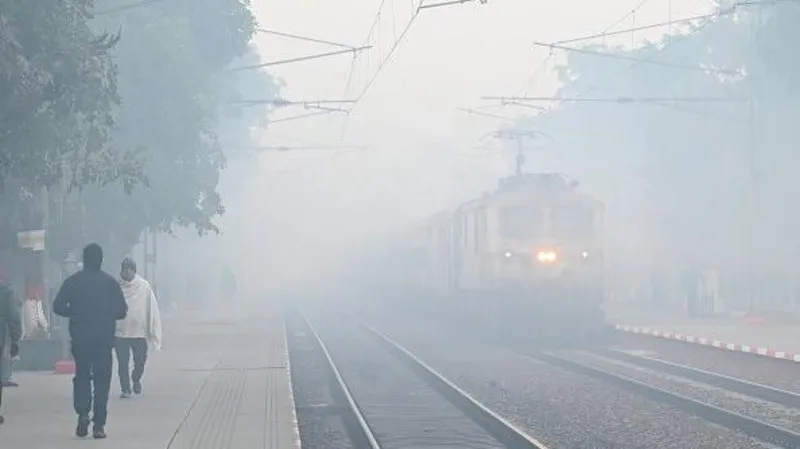
Dense fog and severe air quality levels have caused travel chaos in India’s capital Delhi.
Visibility in several areas was reported to be zero in the early hours of Friday, disrupting flights, trains and road transport.
More than 150 flights have been delayed and dozens of trains are running behind schedule due to bad weather conditions, reports say.
This is a recurring problem in northern India every winter, where low temperatures between December and January trap pollutants close to the ground – which affects visibility – making travel difficult and the air hazardous.
The air quality index in Delhi was above 400 in several areas, according to the state-run Safar website. This is more than 25 times the safe limit set by the World Health Organization (WHO).
Authorities in the capital have brought back pollution control measures, which include a ban on construction and demolition activities, and school classes going online.

Video and photos from Delhi and nearby cities showed a blanket of fog covering roads and farms and obscuring buildings.
The Delhi airport has issued an advisory warning passengers of possible disruptions due to low visibility. “While landings and take offs continue at Delhi airport, flights that are not CAT III compliant may get affected,” the advisory read. CAT III is a system which allows planes to land during conditions of poor visibility.
According to flight tracking website flightradar24, departures at Delhi airport were delayed by more than 30 minutes and arrivals by almost 20 minutes.
Several passengers took to social media to complain of chaos at the airport. “No display of boarding gate and it seems no one knows the exact status,” a user wrote on X (formerly twitter).
Meanwhile 26 trains to the city are running late due to fog, the Indian Railways said.
India’s weather department has predicted light showers over the weekend, which are expected to improve visibility conditions.
[BBC]


At least 33 miners have died in a suspected carbon-monoxide leak at a lead and zinc mine in central Nigeria’s Plateau state, witnesses have told the BBC.
The tragedy is believed to have happened just before sunrise at a site outside the town of Wase run by the mining company Solid Unity Nigeria Ltd.
Toxic gas is believed to have built up underground in poorly ventilated tunnels, causing the workers to collapse just before the end of their night shift.
They were discovered by those reporting to work in the morning – more than 20 other miners were rescued and rushed to hospital for treatment.
Security personnel have sealed off the mine, which is about 200km (124 miles) south-east of the state capital of Jos, as investigations get under way to find out the cause of the leak.
State officials are yet to visit the area and response efforts have reportedly been slow because of security concerns – armed criminal gangs, known locally as bandits, have been active there in recent years.
Safiyanu Haruna, one of the miners who found the bodies at the start of his shift, told the BBC that some of the miners who were underground survived and were taken to a hospital in Wase for treatment.
According to Haruna, the incident occurred at around 06:30 local time (05:30 GMT) killing 37 miners.
He said the miners had just finished performing their early morning Muslim prayers and had returned underground to finish their shift.
The Plateau state government has issued a statement saying that according to its preliminary investigation 33 miners were killed in a blast at the mine – but workers at the scene say this is not the case.
“It was carbon-monoxide gas that leaked and killed them,” Haruna said.
“There was no rescue for them at the time because those who were coming for the morning shift had yet to arrive,” he said.
“It is sad to lose 37 miners who were struggling to make ends meet. We’re disturbed by the incident.”
The victims, believed to be men aged between 20 and 40, were buried shortly afterwards in accordance with local tradition, another local resident told the BBC.
The news has devastated the mainly Muslim community.
Mining disasters occur relatively frequently in Nigeria.
Less than two years ago, dozens of gold miners died after being trapped underground when a pit collapsed in neighbouring Niger state.
Officials believe that incident was caused by torrential rains which had softened the soil.
The tragedy is likely to renew concerns over safety standards in Nigeria’s mining sector.
[BBC]
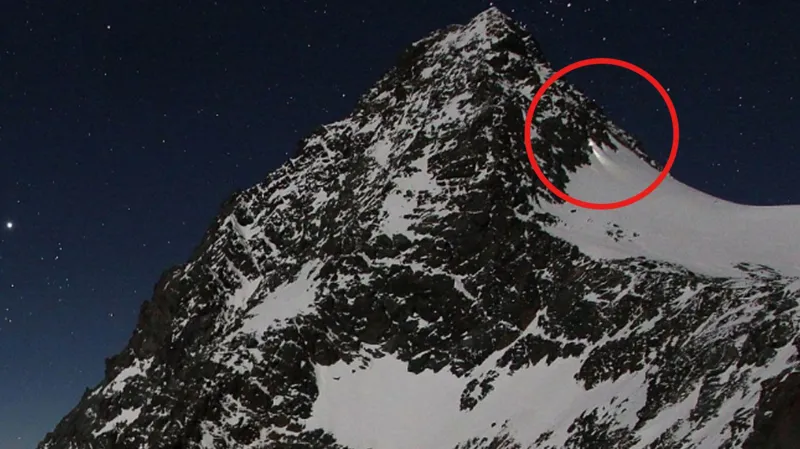
More than a year after a 33-year-old woman froze to death on Austria’s highest mountain, her boyfriend goes on trial on Thursday accused of gross negligent manslaughter.
Kerstin G died of hypothermia on a mountain climbing trip to the Grossglockner that went horribly wrong. Her boyfriend is accused of leaving her unprotected and exhausted close to the summit in stormy conditions in the early hours of 19 January 2025, while he went to get help.
The trial has sparked interest and debate, not just in Austria but in mountain climbing communities far beyond its borders.
Prosecutors say that, as the more experienced climber, the man on trial was “the responsible guide for the tour” and failed to turn back or call for support in time to help his girlfriend.
Identified by Austrian media as Thomas P, he denies the charges and his lawyer, Karl Jelinek, has described the woman’s death as “a tragic accident.”
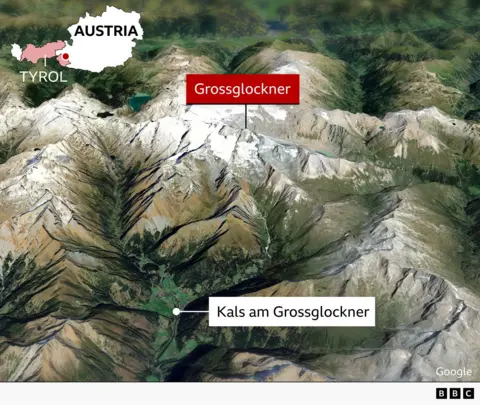
The tragedy unfolded after the couple began their climb of the 3,798m (12,460ft) Grossglockner.
Prosecutors accuse Thomas P of making mistakes from the outset and have published a list of 9 errors.
At stake is the question of when personal judgement and risk-taking become a matter of criminal liability. If the climber is found guilty it could mean “a paradigm shift for mountain sports”, says Austria’s Der Standard newspaper.
Key to the case is the charge by state prosecutors in Innsbruck that he was to be considered the “responsible guide for the tour”, as “unlike his girlfriend, he was already very experienced in high-altitude Alpine tours and had planned the tour”.
[BBC]

Six Russian and four Belarusian athletes will compete under their nations’ flags at the upcoming Winter Paralympics.
In September, the International Paralympic Committee lifted its ban on athletes from the two countries competing at the Games.
Both countries were suspended from Paralympic competition after Russia’s invasion of Ukraine in 2022, with Belarus a close ally of Russia. A partial ban – allowing athletes to compete as neutrals – was introduced in 2023.
However, the four individual governing bodies in charge of the six sports contested at the Paralympics decided to keep their bans in place.
In December, Russia and Belarus won an appeal against FIS – the governing body for skiing and snowboarding – at the Court of Arbitration for Sport (Cas), permitting them to compete and accumulate ranking points.
The IPC confirmed to BBC Sport that the 10 athletes have been awarded bipartite commission invitations to compete in Para-alpine skiing, Para-cross country skiing and Para-snowboarding at the Milan-Cortina Games.
“The IPC can confirm that NPC Russia has been awarded a total of six slots: two in Para-alpine skiing (one male, one female), two in Para-cross country skiing (one male, one female), and two in Para-snowboard (both male),” it said in a statement.
“NPC Belarus has been awarded four slots in total, all in cross-country skiing (one male and three female).”
Culture Secretary Lisa Nandy said it was “completely the wrong decision”.
“Allowing athletes from Russia and Belarus to compete under their own flags while the brutal invasion of Ukraine continues sends a terrible message,” Nandy wrote on X.
“The International Paralympic Committee should reconsider this decision urgently.”
Bipartite commission invites are granted to individual athletes, rather than their international federation, and allow the participation of top athletes “who may not have had the opportunity to qualify through other methods due to extraordinary circumstances”, among other factors.
Ukraine has also been awarded bipartite slots in three sports.
It will mark the first time a Russian flag has been flown at a Paralympic Games since the Sochi 2014 Games, firstly due to the country’s state-sponsored doping programme, before the 2022 invasion of Ukraine.
Russian news agency TASS reports that among the athletes set to compete are Aleksey Bugaev, a three-time Paralympic champion in alpine skiing, and cross-country skiers Ivan Golubkov and Anastasiia Bagiian – both are World Championship medallists.
All three returned to competition in January, and both Bugaev and Bagiian have since won World Cup titles.
The Milan-Cortina Winter Paralympics will take place from 6-15 March.
[BBC]

“Investments in Professional Education Are Investments in Institutional Strength and National Progress” – PM

Zimbabwe stun Sri Lanka to enter Super Eight unbeaten

Ex-UK Prince Andrew arrested on suspicion of misconduct in public office

Advisory for Severe Lightning issued to the Western and Sabaragamuwa provinces and Nuwara-Eliya, Galle and Matara districts

Navy and Coast Guard seize 04 Indian fishing vessels poaching in Sri Lankan waters

Hope’s 75, Forde and Joseph’s wickets help West Indies go into playoffs unconquered

‘Dates have the highest sugar content to fight Coronavirus’

Sunday Island 27 December – Headlines

#SundayIsland 17th December – Headlines

Sunday Island – 28th March

Sunday Island Headlines – 21 March

Sunday Island – 21st February – Headlines
-

 Life style5 days ago
Marriot new GM Suranga
-

 Business4 days ago
Ministry of Brands to launch Sri Lanka’s first off-price retail destination
-
 Features5 days ago
Monks’ march, in America and Sri Lanka
-

 Features5 days ago
The Rise of Takaichi
-
 Features5 days ago
Wetlands of Sri Lanka:
-

 News5 days ago
Thailand to recruit 10,000 Lankans under new labour pact
-
 News5 days ago
Massive Sangha confab to address alleged injustices against monks
-

 News3 days ago
IMF MD here