
News
SL’s unique biodiversity should be basis of its tourism: Prof. Kotagama


Text and pictures by PRIYAN DE SILVA
Vidyajothi Emeritus Prof. Sarath Kotagama, delivering the keynote address at the International Symposium on ‘Biodiversity and Sustainable Tourism’, recently, said Sri Lanka’s unique biodiversity should be the basis of the country’s tourism industry.
Prof. Kotagama regretted that it had not been recognized by the tourism industry yet.
“The development of tourism products can be truly different and unique, making Sri Lanka the destination,” he said.
“Sri Lanka remains an isolated island today connected loosely through the shallow sand islands of the ‘Adam’s Bridge’ that spans to connect the Mannar Island of Sri Lanka and Rameshwaran Point of India. It is believed that in the past Sri Lanka had land connections with the main Indian continent on at least four occasions. The last such connection is believed to have been 15,000 years ago. On the other hand, the island has undergone subsidence too, creating a smaller island and restricting the organisms to this isolated land. These upliftments have contributed to the ‘dilution’ of the flora and fauna through invasions from the continent, while the ‘subsidence’ has contributed to isolation and thus through evolution to ‘speciation’ (creation of new species). Combining these impacts with the land formation have made the biodiversity of Sri Lanka unique, especially in the Central highlands and the South Western sector.”
“The geological formation broadly recognizes a central highland with low rolling plains around it leading to the coastal zone which provides a diverse landform across the country with different characteristics. The low lands rise up to the highest levels in three steps or peneplains. Each peneplain rises sharply from the former level creating a distinct isolated land form. Each of these peneplains have a unique biological diversity It is further fractured by the ridge pattern of the mountain ranges and the 103 river systems that flow down to the sea from the central highlands. These river systems large and small create river basins that are geographically isolated from each other contributing to a diverse distribution pattern of the biodiversity and to the unique feature of ‘point endemism’ – which is a phenomenon where organisms are restricted to very small areas in the country.”


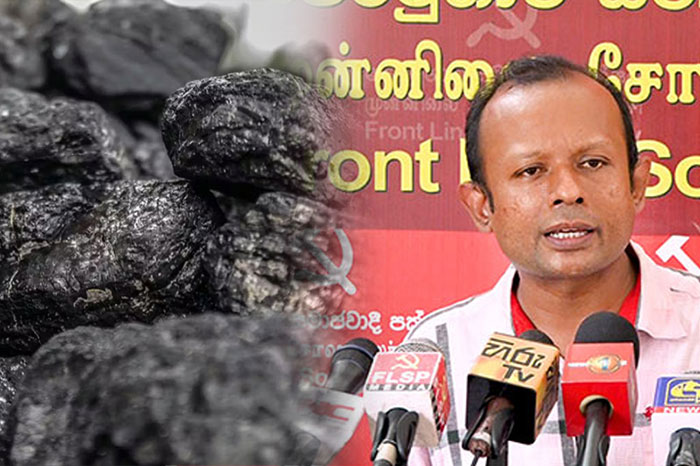
“No shipment for 10 days; seas off western coast will become rough by April end”
Education Secretary of the Frontline Socialist Party (FSP) Pubudu Jayagoda says the Indian company which secured a tender to supply coal for electricity generation this year has delivered only 13 of the 25 shipments required and no vessel has arrived in Sri Lanka for the last 10 days or so.
Jayagoda said so while addressing the media during a protest held in Colombo yesterday.
Jayagoda said the Indian company Trident Chemphar, which secured the tender to supply 25 coal shipments for 2026, had placed the country’s coal stocks at risk.
Although all 25 coal shipments are required to be unloaded before the end of April, only 13 vessels have arrived in Sri Lanka so far, according to Jayagoda. He also claimed that no shipment had arrived during the first week of March, adding that coal vessels had not arrived for about 10 days.
Jayagoda warned that the situation could endanger the country’s energy supply as the seas off the western coast usually turn rough by the end of April, disrupting unloading operations.
According to Jayagoda, a report submitted by the Public Utilities Commission of Sri Lanka to the Parliamentary Oversight Committee on infrastructure and strategic development, power cuts may become necessary from August even if the country falls short of five shipments unless electricity is generated using costly diesel-powered thermal plants.
Jayagoda also alleged irregularities in the tender process, claiming that the government had changed tender specifications and delayed the tender process by about four months, possibly to allow the Indian company time to register and secure performance guarantees.
He further alleged that the coal supplied by the Indian company was substandard.
Jayagoda questioned why the tender had not been cancelled despite several shipments allegedly failing to meet quality standards and why no investigation had been launched.He asked why legal action had not been taken against the company despite supply disruptions.
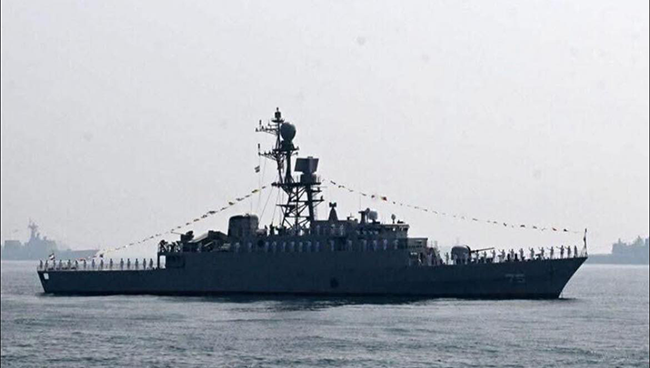
The US Department of State has said that Washington respects Sri Lanka’s sovereignty in handling matters relating to the Iranian warship IRIS Bushehr and its crew, according to agency reports, quoting a State Department Spokesperson. He has said the final decision regarding the vessel, its crew and the rescued Iranian sailors rests with Sri Lanka in accordance with its domestic laws and international legal obligations.
The statement follows comments by Foreign Minister Vijitha Herath that Sri Lanka was looking after 32 sailors rescued from the Iranian frigate IRIS Dena under Colombo’s international treaty obligations.
The frigate was sunk by a US submarine off Sri Lanka’s southern coast on Wednesday during escalating hostilities involving the United States and Iran.
Sri Lanka’s Navy conducted rescue operations, following the incident, recovering 84 bodies.
Asked whether Colombo was under US pressure not to repatriate the Iranian sailors, Herath said Sri Lanka had taken all actions in accordance with international law.
Sri Lanka also provided safe harbour to the second Iranian warship, IRIS Bushehr, and evacuated its 219 crew members a day after the Dena was torpedoed. The vessel was taken to the port of Trincomalee after reporting engine problems.
Citing an internal cable, Reuters reported that Washington had urged Sri Lanka not to repatriate the Iranian sailors. However, the State Department spokesperson reiterated that the disposition of the crew and survivors was a matter for Sri Lanka to decide, adding that the United States respects Sri Lanka’s sovereignty in managing the situation.
Meanwhile, India allowed a third Iranian warship, IRIS Lavan, to dock in a port on humanitarian grounds after it reported operational difficulties.
The ship docked at the port of Kochi, where many of the crew, including young cadets, were disembarked and transferred to a nearby facility.
President Anura Kumara Dissanayake said Colombo would follow the provisions of the Hague Convention, which requires neutral states to detain combatants of warring parties until the end of hostilities.
A senior administration official said Sri Lanka was in discussions with the International Committee of the Red Cross regarding the treatment of survivors from the torpedoed vessel. International humanitarian law would apply to the wounded, who could be repatriated if they requested it, the official added.
Iranian diplomats in Colombo have requested the return of the remains of sailors killed in the attack to Iran.
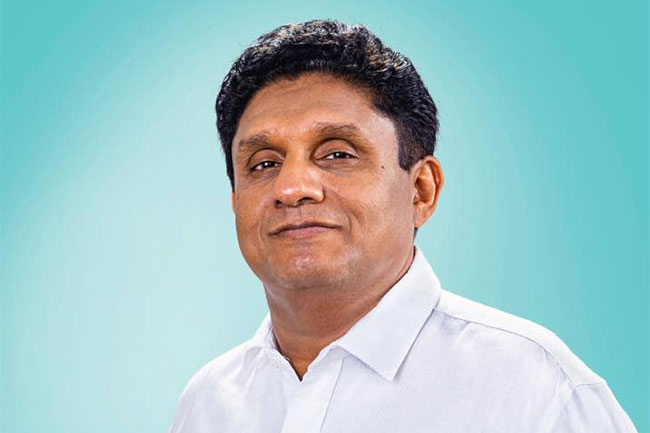
Opposition and SJB leader Sajith Premadasa, emphasised the critical need for the Indian Ocean region to remain peaceful and not become part of any conflict, said a news report published by NDTV yesterday.
It said: As the Iran-Israel war enters its second week, the theatre of the war has expanded dramatically, reaching the waters of Sri Lanka. With the sinking of Iranian warship IRIS Dena in international waters off Lanka’s coast and the docking of a second Iranian vessel, IRIS Busheher, Colombo has become embroiled in a conflict where it seeks to remain only a neutral bystander.
Speaking with NDTV, Sajith Premadasa, Leader of the Opposition in Sri Lanka emphasised the critical need for the Indian Ocean region to remain peaceful and not become part of any conflict.
“The Indian Ocean has on successive occasions been declared a peaceful area and should remain so,” said Premadasa.
The Sri Lankan government has said that it will attend to all survivors of the ill-fated IRIS Dena and IRIS Busheher as per international protocols and norms. Sri Lankan President Anura Kumara Dissanayake said his country had a “humanitarian responsibility” to take in the crew of the vessel, which was allowed to dock at Trincomalee in Northern Sri Lanka.
Premadasa, who is the leader of the opposition party SJB, called on all parties to cease the ‘asymmetric warfare’. He cautioned that the widening conflict would have devastating consequences for smaller countries like Sri Lanka, which is still reeling from its worst economic crisis in 2022.
“The Middle East conflict is already spreading to other countries, and this is having an impact on Sri Lanka and Sri Lankan people,” Mr Premadasa told NDTV.
A third Iranian vessel that was in the Indian Ocean, IRIS Lavan, has docked at Kochi in India. India has said it was a “humanitarian call” after the vessel sent out a distress call.

Iran names Khamenei’s son as new supreme leader after father’s killing

Oil prices jump above $100 for first time in four years

Dry weather will prevail over the island

FSP warns of possible coal shortage

Repatriation of Iranian naval personnel Sri Lanka’s call: Washington

Indian Ocean must remain peace zone: Sajith

‘Dates have the highest sugar content to fight Coronavirus’

Sunday Island 27 December – Headlines

#SundayIsland 17th December – Headlines

Sunday Island – 28th March

Sunday Island Headlines – 21 March

Sunday Island – 21st February – Headlines
-
 News3 days ago
University of Wolverhampton confirms Ranil was officially invited
-

 News4 days ago
Legal experts decry move to demolish STC dining hall
-

 News3 days ago
Female lawyer given 12 years RI for preparing forged deeds for Borella land
-

 News2 days ago
Peradeniya Uni issues alert over leopards in its premises
-

 Business5 days ago
Cabinet nod for the removal of Cess tax imposed on imported good
-
 News3 days ago
Library crisis hits Pera university
-

 News2 days ago
Wife raises alarm over Sallay’s detention under PTA
-
 Business5 days ago
War in Middle East sends shockwaves through Sri Lanka’s export sector