
Business
SL’s IT/BPM industry targets USD 5 bn. Exports by 2025

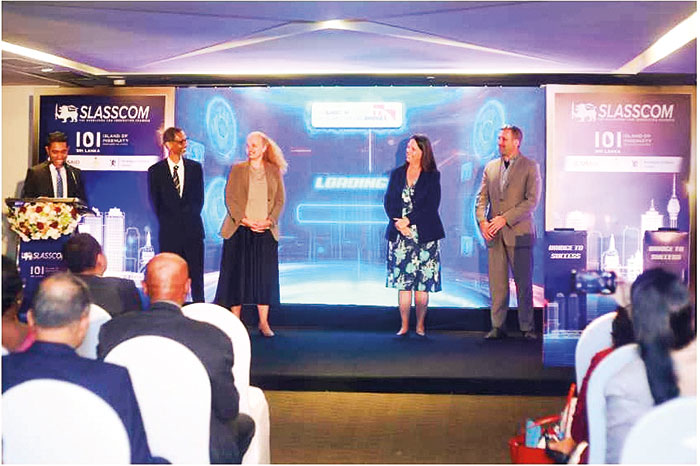
Careers bridge launched to create more opportunities for youth
The Sri Lanka Association for Software Services Companies (SLASSCOM), the apex body representing the IT/BPM Industry, officially relaunched its Future Careers Bridge (FCB) website recently. The 2.0 version of the FCB platform comes with a range of new features and an improved user experience as part of its plans to attract more Sri Lankan youth to join the ICT sector, a news release said.
The event, held at Cinnamon Grand Colombo, was attended by Trine Jøranli Eskedal – Norwegian Ambassador to Sri Lanka, Debra Mosel – Deputy Mission Director USAID Sri Lanka and Maldives and representatives from SLASSCOM, USAID, Royal Norwegian Embassy, YouLead and key industry sectors including ICT and higher education, it added. The releaded explained Sri Lanka’s IT/BPM industry is pushing to cross USD 5 billion in export revenue by 2025. The industry is, however, facing a skills shortage due to the limited number of IT graduates emerging out of the local education system.
“One of the primary objectives of SLASSCOM is to identify, enable and develop ready and employable talent in the industry. The revamped SLASSCOM FCB platform allows students to complete online challenges under diverse IT career paths, build a profile based on their performance and compete on the FCB Leader boards,” it said.
“Students can also find mentors and request assistance from industry experts through FCB. Top-performing students will be selected for interviews by partner companies and provided with internship opportunities.”
FCB was created in 2019 to channel school leavers who lacked graduate-level qualifications but were interested in joining the sector to find employment in the IT/BPM industry. The platform was developed with the support of USAID’s youth employment and entrepreneurship project YouLead, along with the Royal Norwegian Embassy as Project Partner, HCL Lanka and Dialog Axiata PLC as Corporate Sponsors, and through the voluntary contribution of ideas, support, and expertise from over 50 IT/BPM companies in Sri Lanka.
“Even with the IT/BPM industry on track to become Sri Lanka’s number one export revenue contributor, the sector grapples with recruiting skilled graduates into the ecosystem. This has become a primary reason for slowing our growth momentum. With FCB 2.0, SLASSCOM has built a pathway for Sri Lanka’s talented youth to hone their skills further and to be employed by best IT/BPM companies in the country to pursue their dream career in a sector that has a significant global presence,” said Ashique M. Ali, Chairman of SLASSCOM and Director at Talliance.
“On behalf of SLASSCOM, I thank all the sponsors and volunteers who have made this platform a reality.”
SLASSCOM FCB allows public and private educational institutions, including universities and tertiary educational institutes, to enable their students to manage and track their learning and career progress. This will add further value to the platform. The platform has also enlisted 15 of Sri Lanka’s leading IT/BPM companies as SLASSCOM FCB Partners. They will support training and employment opportunities for youth emerging through the program. The vision of SLASSCOM is to provide all companies in Sri Lanka access to FC Bridge for their youth talent recruitment.
“The technology industry is one of the fastest growing industries in the world. As many governments and companies move forward to digitize their businesses, there is an evident shortage of global talent which opens up many opportunities. In this context, the new Future Careers Bridge platform launched by SLASSCOM is significant as it will open new paths in ICT careers for many Sri Lankans, particularly for the youth,” said Trine Eskedal, Norwegian Ambassador to Sri Lanka.
Debra Mosel, Deputy Mission Director USAID Sri Lanka and Maldives, said, “It is a great milestone today to launch Future Careers Bridge 2.0, which opens up more training and learning opportunities for Sri Lankan youth in the ICT sector. I am also delighted that almost half of the users registered to the programme are women.
“Supporting young women who choose a career in ICT is not just good for them and their families. It is a major accelerator of the socio-economic development of Sri Lanka. As the world faces a major skill shortfall in the ICT sector, we should equip and inspire young women with the skills they need to become ICT professionals. Strong women leaders are critical in helping women access the ICT sector’s rich employment and leadership opportunities.”
Arjuna Nanayakkara, Director of SLASSCOM, CEO at GTN Technologies and Head of Shared Service at GTN Group, said, “A platform like Future Careers Bridge allows Sri Lankan youth to join the global ICT industry. It will infuse better-prepared graduates into the industry as FCB 2.0 enables them through well-curated coursework and soft skill training modules.
“Furthermore, the Capacity Forum at SLASSCOM provides additional complementary learning solutions to FCB 2.0 so that local ICT companies able to attract skilled talent. To make this a tremendous success, numerous stakeholders have helped. With their assistance, this has today become a national success story. This is the way forward. I also believe this is a great case study for all corporates in the country to make a paradigm shift in how they recruit talent and build competencies when giving career opportunities for graduates.”
SLASSCOM has been the catalyst of growth for the Sri Lankan IT and BPM industry by facilitating investments and market access, talent development and employment, encouraging research and innovation, promoting ESG best practices, and supporting the creation of a forward-thinking and progressive national policy. SLASSCOM’s membership comprises over 420 member companies, encompassing an employee base of 115,000+ people. It accounts for approximately 90% of the export revenue of Sri Lanka’s IT/BPM industry.



Business
Mercantile Investments strengthens foundation for growth with oversubscribed Rs. 1.1 Bn Rights Issue

Mercantile Investments & Finance PLC (MI Finance) has successfully concluded its Rights Issue, raising Rs. 1.1 billion in new capital. The Issue was oversubscribed, demonstrating a resounding confidence in the company’s strategy, performance, and long-term growth prospects, a company news release said.
As applications outpaced the initial share offering, the strong shareholder participation provided a firm endorsement of MI Finance’s direction and strengthened the foundation on which the company will build its next phase of growth.
The new fund infusion reinforces MI Finance’s capital base, enhances financial flexibility, and supports the company’s regulatory capital position. It also expands MI Finance’s capacity to serve customers and drives growth and expansion plans within Sri Lanka’s financial services sector.
With steadfast focus on long#term value creation, MI Finance is strongly positioned to seize new opportunities, continuing to deliver meaningful returns for customers, shareholders, and the economy.
Gerard Ondaatjie, Managing Director, MI Finance, expressed his appreciation for the continued trust and support placed in the organisation. He said “The strong response to our Rights Issue highlights confidence our shareholders place in MI Finance’s strategy and long-term vision. With a stronger financial foundation, we are well positioned to pursue new opportunities and deliver sustainable growth and lasting value for all stakeholders.”
The successful completion of the Rights Issue showcases MI Finance’s financial strength, the trust it commands and the commitment to sustainable, long-term growth as a stable and progressive financial institution.
First Capital Advisory Services (Pvt) Ltd acted as Advisor and Manager to the Issue, while SSP Corporate Services (Pvt) Ltd served as Registrar to the Issue.
“Maximise value of existing assets rather than build new infrastructure”
By Saman Indrajith ✍️
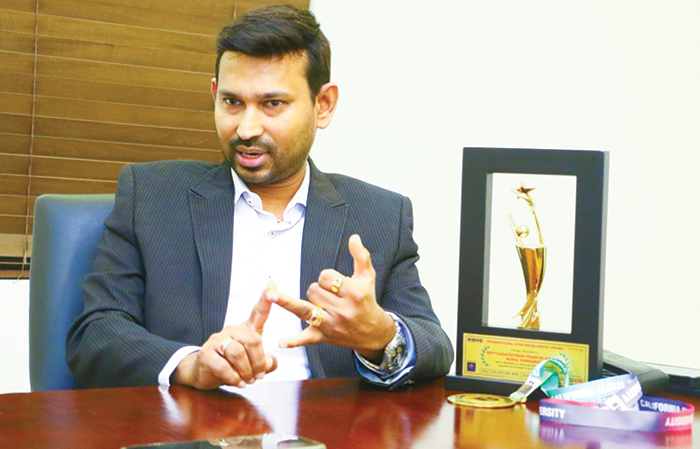
Hettiarachchige Francis Adhista Sonal Fernando, who recently received an Honorary Professorship in Aviation Management from the University of California, Berkeley (Global), becoming the first Asian and reportedly one of only five recipients worldwide, says Sri Lanka should prioritise aviation technology, airline development and tourism over costly airport expansion projects.
In an interview with the Sunday Island, Prof. Fernando, a former Director of Airport and Aviation Services (Sri Lanka) and an aviation professional with more than two decades of experience, outlined what he described as a more strategic approach to developing the country’s aviation sector.
Having worked across a broad spectrum of aviation disciplines including passenger services, cargo operations, flight Operations, Training, airline management and airport administration, Prof. Fernando said Sri Lanka’s future success depended less on constructing new infrastructure and more on maximising the value of existing assets.
Prof. Fernando said the honorary professorship was awarded in recognition of his contributions to the aviation industry and initiatives undertaken during his tenure at Airport and Aviation Services (Sri Lanka).
“My career has taken me through almost every department of the aviation industry, from checking in passengers and handling cargo to serving as a Pilot captain, flight instructor, chief executive officer and Director of Airport and Aviation Services (AASL). That breadth of experience is relatively uncommon in the industry,” he said.
According to Prof. Fernando, Sri Lanka’s aviation sector recovered rapidly following the COVID-19 pandemic because of efforts to develop specialised aviation services rather than relying solely on passenger traffic.
He said one of the key proposals negotiated during his tenure was the establishment of an air cargo hub at Mattala International Airport, which had the potential to transform the facility into a regional logistics centre.
Another initiative involved plans to establish an international aviation training centre at Jaffna’s Palaly Airport.
Prof. Fernando said discussions had been held with the Royal Jordanian Air Academy, which he described as one of the world’s leading aviation training institutions, to establish operations in Jaffna with several aircraft and a multi-million-dollar investment.
“The project had the potential to attract students from South India, Singapore and other countries while generating valuable foreign exchange earnings for Sri Lanka,” he said.
Prof. Fernando expressed reservations about current proposals for extensive airport expansion projects, arguing that existing airport infrastructure was adequate to meet the country’s needs for the foreseeable future.
“Based on current trends, our airport capacity is sufficient for the next 20 to 25 years. Before spending billions on additional infrastructure, we need to focus on developing the airline industry itself,” he said.
Drawing comparisons with global aviation success stories, he pointed to Qatar’s strategy of first building a strong national carrier before undertaking major airport expansion.
“Resources would be better invested in strengthening SriLankan Airlines, improving tourism infrastructure and enhancing security and discipline across the country,” he said.
Prof. Fernando also criticised what he described as the increasing “militarisation” of civil aviation administration, arguing that airports should provide a welcoming and passenger-friendly environment.
“Civil aviation should be open and stress-free. Airports are the first impression visitors receive of a country, and the experience should reflect that,” he said.
He said efforts had previously been made to create a more accessible and less intimidating atmosphere at the country’s main international airport.
The aviation expert also raised concerns about the Harassment and Humiliation treatment to some outbound travellers, particularly passengers who are travelling on a visit and holiday,
According to Prof. Fernando, passengers who possess valid travel documents should not be prevented from travelling based on assumptions regarding their intentions.
“If a traveller has a valid passport, visa and ticket, the authority to stop that person lies with airline staff and Immigration. Decisions should not be based on appearance or social background,” he said.
On tourism, Prof. Fernando said Sri Lanka should avoid attempting to replicate the models adopted by destinations such as Dubai and instead develop an identity rooted in its own strengths as an island nation.
“We cannot simply copy Dubai. The Maldives has succeeded not only because of its airport infrastructure but because of its discipline, security and the importance it places on visitors,” he said.
He argued that tourism promotion campaigns should focus more heavily on attracting high-spending travellers by showcasing the country’s premium tourism offerings.
“We should be promoting our luxury hospitality sector, gems, business-class travel and other high-value experiences. That is how we attract visitors who contribute significantly to the economy,” he said.
Looking ahead, Prof. Fernando said investment priorities should centre on advanced aviation technologies rather than additional buildings.
He cited Category III-C (CAT III-C) landing systems as an example of technology capable of significantly enhancing operational efficiency by enabling aircraft to land safely even in extremely poor visibility conditions.
“Such technology can improve airport performance and international competitiveness far more effectively than constructing another terminal building,” he said.
Prof. Fernando said the long-term success of Sri Lanka’s aviation industry would depend on informed leadership and strategic planning.
“What the industry needs are leaders who understand aviation and are committed to its development, rather than viewing it solely through the lens of construction and infrastructure projects,” he said.
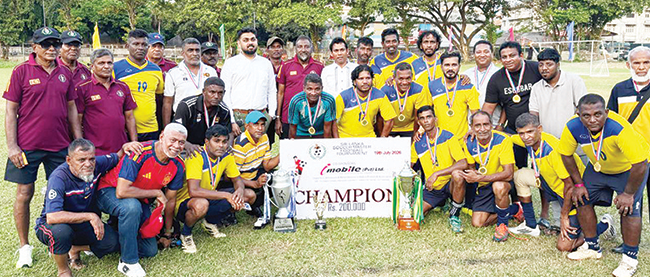
Super Stars VFC emerged champions of the 21st consecutive nine-a-side football tournament organised by the Sri Lanka Soccer Masters’ Association, while Galle Legends FC finished as runners-up in the veteran football competition held recently at the Shalika Grounds, Narahenpita, and Campbell Park, Borella.
Association President Irshad Haq said the annual tournament attracted 34 teams from across the country and featured a total of 71 matches, underscoring the continued popularity of veteran football in Sri Lanka.
He noted that the tournament provided a competitive platform for former footballers to remain actively involved in the sport while fostering camaraderie among veteran players. Haq added that many former national-level footballers and recently retired players participated in the event, enhancing the quality of competition and offering spectators an opportunity to witness traditional football skills displayed at a high standard.
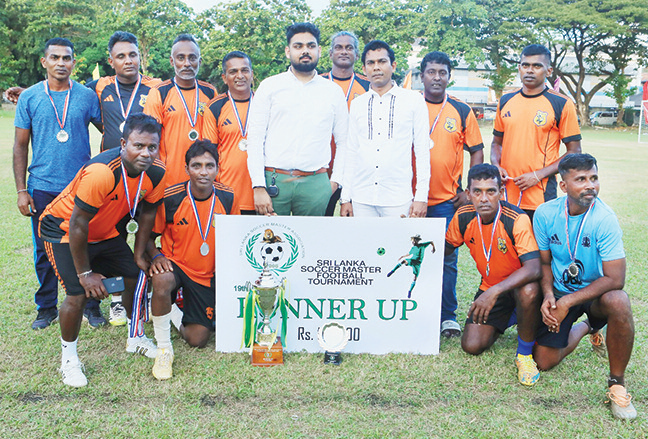
Runners up team with the Chief Guest
General Secretary Yoga Cruze said the tournament has become a landmark event on the local football calendar and continues to celebrate the contributions of former players to the sport. He said the Association remains committed to promoting veteran football and preserving the legacy of past football greats.
Tournament Committee Chairman P.G.P. Pieris said prize distribution and several special events were held during the tournament finale. The champions received cash awards together with a permanent trophy and the coveted challenge trophy, while the runners-up were also presented with cash prizes.
A special attraction at the event was an exhibition match involving veteran footballers over the age of 60. The match ended in a draw and the winner was decided by a coin toss.
Pieris said the tournament was organised not only to maintain competitive football among veterans but also to honour past legends of the game while providing fans with an entertaining and high-quality sporting spectacle.
Champions – Super Stars VFC: YML Jayathunga, Mohamed Iqbal, LAP Lakshitha, JR Pradeep Perera, M Mohamed Asmeer, SR Susil Pradeep, Mohamed Rikas, PR Sanjeewa Perera, MKJ Priyantha Perera, K Aruna Sampath, HMVR Perera (goalkeeper), RT Imtiyaz Raheem and WE Sarath de Alwis. Team Manager: Nazar Mohideen.
Runners-up – Galle Legends FC: PHN Pushpakumara, WA Nishantha, MS Fargan, BG Shiwanka, BPD Sudesh, MP Pradeep, HLR Jayalath, K Sirantha Kumara, ADD de Silva, AKR Priyanga and GAMA Indrajith.

Typhoon Noul makes landfall in China, with hundreds of thousands evacuated

Colombo Kaps down Dambulla Sixers by 21 runs

Kandy Royals win by 11 runs
Showers will occur in the Western, Sabaragamuwa and North-western provinces and in Galle, Matara, Kandy and Nuwara-Eliya districts

Govt. launches EPF, ETF shake-up

SLPI concerned over the proposed Chartered Institute of Media Professionals of Sri Lanka

‘Dates have the highest sugar content to fight Coronavirus’

Sunday Island 27 December – Headlines

#SundayIsland 17th December – Headlines

Sunday Island – 28th March

Sunday Island Headlines – 21 March

Sunday Island – 21st February – Headlines
-
 Midweek Review5 days ago
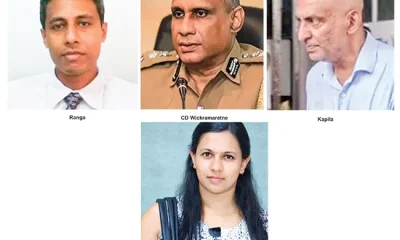
Three high-profile alleged suicides shaping key investigations
-

 News2 days ago
Fort Magistrate orders arrest of MP Archchuna
-

 Editorial2 days ago
An indictment of all parties
-

 News5 days ago
Customs asked to resume probe or face legal action
-
Editorial6 days ago
Welcome bid to tackle rolling death traps
-

 Opinion3 days ago
Ukraine’s power struggle spills on to the streets
-

 News2 days ago
National-level cybersecurity facility Lab established
-

 News7 days ago
Merchant Shipping Secretariat probes bribery scandal