
Features
SLPP drops election threat. How will rival parties respond?

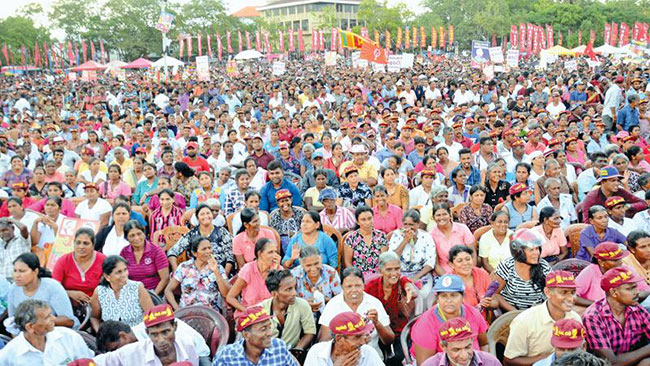
by Rajan Philips
The first off the blocks was the JVP. It declared its readiness to lead and presented a basic program as its “Rapid Response to Overcome Current Challenges.” It pulled no punches in its opening salvo: “We do not need a sophisticated grasp of statistics or politics to understand the socioeconomic catastrophe that has befallen our country due to the misguided economic and social policies pursued by various governments since independence.”
This is a sweeping denunciation of any and all governments that almost sounds like Donald Trump’s inaugural rant on the “American carnage.” But the point here is about the current “socio economic catastrophe,” which is the handiwork of the present government and no one else. Of that there is no doubt or disagreement. There is nothing either, for anyone to understand. The people are hurting and feeling it in their bellies and in their bones.
The JVP’s splash put the onus on the government and the main SJB opposition to take notice and respond. The government’s response has been mixed. The first response was to throw rotten eggs targeting the JVP leader in his car. After rotten eggs came street thugs, all low-level and quite remote from even O-level or A-level, who invaded university hostels to earn their degrees in bully violence. The Independence Day speech came and went, but left nothing to write home about. There was no mention of foreign exchange, debt, IMF, or food shortages. Only preachy, presidential, hectoring.
In elections they excel
Five days later, on February 9, in Anuradhapura, the family, the Party and the government gathered their wits and delivered their Plan: the government will have an election. Come for an election fight if you want! The Prime Minister has challenged the Opposition. The President harangued about internal and external threats who are apparently trying to undermine his government and sabotage his Vistas of Prosperity and Splendour. Again, not a word about any of the current crises and what the people can expect the government to do immediately.
Election campaigns and manipulations are the only thing that Rajapaksas feel they are good at. None more so than Basil Rajapaksa. With elections he can hit two birds with one stone. First, an election campaign will give him the opportunity to do something he likes, and something he believes he is good at. And he can turn the Finance Ministry into an SLPP election office. Second, elections would be a godsend excuse to stop pretending that he is serious about his responsibilities as Minister of Finance. He has no clue about the ministry or the economy and the only reason he would have wanted the job is to make deals with American companies. He is not at all the example of a dedicated Minister of Finance who would be pre-occupied and worried about rescuing the economy from its current morass.
Basil Rajapaksa has already made it clear that the upcoming election would be a local government election and not a parliamentary or presidential election. Both are more than three years away while the local elections are now overdue. No one cares about provincial council elections, and no one cares to write to New Delhi about them. But the point about having local elections is that they are not going to make any difference to what could or should be done to deal with the country’s current predicaments. In normal times, local elections serve as a barometer for the national political mood in addition to replenishing local bodies to attend to local matters. Sri Lanka is not in normal times. Whoever wins or loses the local elections is not going to help Sri Lanka find more foreign exchange, pay back its debt, grow more food without fertilizer, and bring in imports to turn into exports. Local elections will not help with any of them.
They will only serve as diversionary route for the government. And if Basil Rajapaksa could pull half as much as his magic in February 2018, the President (who safely chose to abscond from the 2018 election by visiting his step-country) will be emboldened to brag twice as much as the SLPP did in 2018. And the hole the country is in will go twice as deep. I am not suggesting that the local elections or any other election should not be held. Only that they will not make any difference to the catastrophic situation that the country is in. One safe aspect of Rajapaksas focusing on elections, any election, is that they are diverted from looking at some military option as quite a few observers fear.
In Anuradhapura, the family and the SLPP put on a bold front. But that did not cover the cracks behind. None of the minor constituent partners – the SLFP and an assortment of old school leftists and new school nationalists – were not in attendance in Anuradhapura. The frontline ministers who took to backbench tactics were also conspicuous by their absence. Whether it is bluff and bluster or calculated confidence, the signs from Anuradhapura are that the SLPP is prepared to fight back, not by providing a better and improved governance, but by contesting and winning elections. There have also been suggestions that the SLPP is looking ahead to 2024 and a different presidential candidate instead of the incumbent. There is a reason why the family and the SLPP could feel confident about their electoral chances and political salvation. The reason is the disunity, if not disarray, in the opposition.
Unlikely Allies
Whether smart or not, the SJB’s talkative MP Mujibur Rahuman has already accepted the election challenge dangled by the Prime Minister in Anuradhapura. But to his credit, Mr. Rahuman has pointed out the government’s flipflop now in insisting on local elections after gazetting them out from their due date in March 2022. In any event, opposition parties have no say in the timing of any election (except to prevent premature dissolution, one of the legacies of the short-lived 19th Amendment). And they have no political option of boycotting an election after the government calls one. The question is what effect there will be on the political dynamic if the government were to act on its Anuradhapura challenge and call the local government elections.
The JVP and the SJB have both been calling for a parliamentary election, hoping for a change at least in the parliamentary branch of the government while the executive branch stays with the incumbent. The JVP at least would certainly have been hoping to use a parliamentary election campaign to take its “Rapid Response” message far and wide into every electorate. A local government election will not give the same platform and amplitude as a parliamentary election for a national policy campaign. However, the JVP could and invariably will turn the local election into a referendum on the government. It certainly has the political ammunition for it. The JVP’s focus on and exposures of government corruption and abuse of power will be powerful ammunition in any election.
But does the JVP have the delivery weapons to use its well-stocked ammos successfully, on a sufficiently large scale, and in every part of the country? How successful will it be in a local government election overall, in terms of total vote proportion, number of local bodies won, number of seats won, and the number of provinces with above average performance? If the results are not dramatically successful, the JVP will be left dramatically deflated and it will not be able to recover sufficiently for the parliamentary and presidential elections that will follow.
Sajith Premadasa and the SJB have the opposite problem. The SJB has a broader electoral base and network, but it doesn’t have a compelling message or penetrating ammunition. Mr. Premadasa is yet to have his breakout moment showing his readiness to lead and the direction he will take. There are plenty of people doing Mr. Premadasa’s bidding and filling up his vacuum of silence. There are others in the SJB, or rather one other, who has been itching to upstage Sajith Premadasa in providing an alternative to both the government and the JVP. And one of them has – that is Champika Ranawaka who has upstaged Mr. Premadasa from the right.
Upstaging with aplomb may seem to come naturally to Mr. Ranawaka, an ambitious lone ranger with some ability, but without a big stage of his own to strut from. To be fair, Mr. Ranawaka does have a stage of sorts, the 43 Brigade, a clever concept to politically embrace all the (so far only Sinhala) beneficiaries of Sri Lanka’s free education system introduced in 1943. And he has used that stage to launch a Manifesto, entitled “Rescue and Thrive,” which seems intended counter the JVP’s “Rapid Response.” But they both share a common premise even though it is articulated differently.
While the JVP has chosen to blame all governments since independence for the current catastrophe, the message of the 43 Brigade is crisp: “After independence, for the first time in history, Sri Lanka is under a very real threat of going into bankruptcy.” And it is not every government that bears the blame, only the present one. And rightly so. The fundamental difference between the JVP and the 43 Brigade is on evaluating the effects of the open economy. The JVP sees the open economy as the fount of all evils that have befallen Sri Lanka since 1977. To the whiz kids of 43 Brigade, Sri Lanka’s modern economic history began with the open economy and there is no future ahead without the open economy. The historical answer and the future lie somewhere in between. The open economy is neither a flawless success nor an unmitigated disaster.
In any event, the JVP and the 43 Brigade have at least started a debate that others can join. There is no one in the family, the SLPP, or the government who can credibly join this debate, or any thoughtful debate. The SJB has professional economists in its ranks who obviously support the open economy but will likely be rankled by Champika Ranawaka’s upstaging self-promotions. As well, serious debates over political economy are not among the most effective ways to conduct successful election campaigns. Especially, local elections. The JVP will have to find a way to capture the mood of the people and connect them to the theme of its message. SJB and Champika Ranawaka will have to find a way to co-exist for mutual benefits without over-upstaging one another.
There are others too – the parties representing the Tamils and the Muslims, who attest to irrefutable fact(s): that there is and there can be more than One Country within a single Sri Lankan State, that there is and there will be more than One Law, and that there is and there will be more than One People within the small Sri Lankan Island. For the government and the SJB, the JVP presents a political platform that challenges them (SLPP & SJB) to respond with alternatives. On the other hand, the Tamil and Muslim parties present a challenge to the JVP to demonstrate that it will be, and to what extent it will be, different from the broken records of its southern contenders for national power.
The bigger question for the JVP is, however, whether it can go on its own without alliances involving others. The NPP is not an alliance but an electoral convenience. For any significant leap from its 3% launching pad, the JVP will have to execute a historically impossible poll-vaulting. And historically, as well, no single party has won a parliamentary majority under the parliamentary system from 1947 to 1978, except in 1952 and 1977. Electoral success in all the other elections was predicated either on broad alliances of formal coalitions. After 1978, every election has been all about alliances with ever weakening commitments to political principles or programs and ever strengthening attachments to personal interests and mutual IOUs. IOUs became the organizing principle of Rajapaksa politics. The family and the SLPP are ready to cash in one more, or last, time.

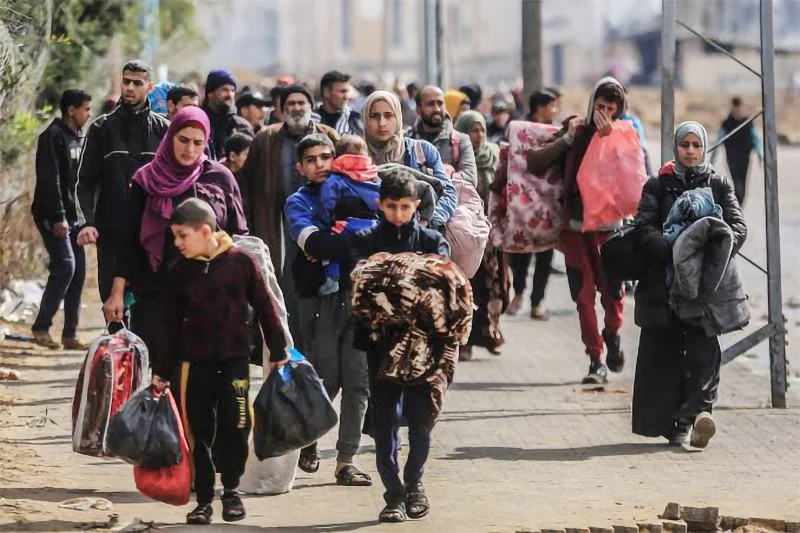
 Despite some sections of the Trump administration persisting with the view that the possibility could not be entirely ruled out of there being a diplomatic solution to the current US-Iran hostilities in West Asia, the skeptic could not be blamed for thinking otherwise. The intensity, scale and frequency of the tit-for-tat strikes by the antagonists over the past few days against selected military targets and civilian infrastructure in particular in West Asia make the adoption of this stance excusable.
The continuing hostilities render the mentioning of the MOU signed between the warring parties in mid-June a laughable matter. While it could very well be that the foes are wishing privately for a cessation of hostilities before long, what seems to be uppermost on their minds right now is to negotiate with each other from a position of strength. This strategy compels them to incapacitate each other militarily to the extent possible, lest they have to concede too much to each other during negotiations. Hence the stepped-up hostilities.
However, even on the question of there being a negotiated political settlement in the West Asian theatre in the longer term, the skeptic could come to be seen as scoring over the optimist. Developments on the ground account for this.
At the time of writing Israel’s Netanyahu government is going ahead in fairly care-free fashion with the establishment of more Jewish settlements in the Gaza and the West Bank, and it’s all happening under the apparently complacent gaze of the US. In fact, some quarters estimate that Israel is in control of some 65% of the Gaza Strip. Ethnic cleansing, that is, is being drastically stepped-up.
Accordingly, in terms of the power relations of West Asia, the world is almost back to the status quo of the late forties of the last century when the state of Israel was established and the Palestinians were reduced to a microscopic minority in the land they came to inhabit. Therefore, even the impartial observer would be compelled to ask: ‘Will a negotiated peace be ever possible in the Middle East?’
The humanist in the observer would prefer to answer this question in the affirmative and it is indeed the ideal stance to adopt considering the staggering human and material costs of the conflict. But the way ahead to peace could be expected to be highly hazardous and arduous. Among other odds, it would also prove an uphill endeavour to win minds and hearts.
The US’ Trump administration would need to be counted out in this pursuit. This is on account of the fact that it has been far too wayward in its management of West Asian affairs in particular over the past couple of years. Given its unpredictable character it is a matter for conjecture whether it could be counted on to live up to its commitments.
Moreover, Israel could be expected to ‘go it alone’ in the Middle East regardless of whether US help is coming or otherwise. It has indicated as much in recent times and Israel could be doubted on this score only at the doubter’s peril. Because time and again Israel has demonstrated that it could steadfastly defend its interests even single-handedly in the Middle East. History bears this out.
However, a durable alliance with the US would stand Israel in good stead. On the matter of military and intelligence assistance, for example, the US’s help proved invaluable for Israel in the past and going forward this is bound to be so as well. Moreover, it is unlikely that the Trump administration would give up on Israel, considering that a strong Israel is crucial for the furtherance of the US’ strategic and economic interests in West Asia.
But whether the above factors would have a considerable bearing on the question of working out a durable solution to the West Asian tangle is an entirely different matter. Israel, as in the case of the Palestinian enclaves, is acutely security conscious and would need to satisfy itself fully that it could live in a security environment that would guarantee its complete safety, going forward.
The Middle East is badly in need of another peace effort on the lines of the Oslo Accords of the mid-nineties that brought the key actors together and helped hammer out a solution that addressed some of their notable concerns. To be sure, that process did not prove to be the ideal answer to the tangle, but it yielded some respite to the region and drove home that one-time sworn foes could indeed negotiate with a degree of success. The West Bank authority, although falling short of fulfilling some key Palestinian aspirations, is testimony that a degree of success is possible if the intent is right.
Given the current realities of West Asia, peace-making is bound to be an uphill challenge. The violence faced in recent times by the Palestinian community, in particular, has been nothing less than mind-numbing. Merciless has been the violence visited on them by the Israeli side. In such circumstances, durable peace in the region could smack of an idealist’s dream.
Nevertheless, there needs to be urgently, a meeting of minds over the divides. The US would need to be counted out as an honest broker in bringing the sides together but the rest of the West would do well to step up to the challenge.
In this exercise the onus would be on the world’s democracies to take the initiative and doggedly stay the course. An acceptable combination would be the EU and the UN. Given their credentials, the main sides in West Asia ought to find them the least controversial.
Even if the relevant institutional and political arrangements could be shored up to take a reconciliation process forward, winning hearts and minds for the peace drive would prove a grueling challenge. Over the past few years in particular tens of thousands of hearts and minds on both sides of the divide have been bruised badly in the runaway murderous violence that has come to define the Middle East.
These badly scarred personalities would need to experience healing without much delay. It is therefore a multi-faceted challenge that is at hand. Since wide-ranging expertise would be needed in the healing process, people’s participation in peace-making, ranging over the divides, would need to be made a durable reality. It will be a time for enthroning humanity and ensuring the rejection of all forms of violence and coercion.
 For many Sri Lankans, Thailand is the go-to holiday — beaches, temples, food, and that famous warm hospitality.
In fact, I’ve been to Amazing Thailand 24 times myself, and was honoured with the Friends of Thailand International Media Award by the Tourism Authority of Thailand for promoting Thai tourism.
The good news I have for you today is that you don’t even need a passport to get a taste of Amazing Thailand.
The Royal Thai Embassy, in Colombo, is bringing a vibrant slice of Thailand, to the city of Colombo, with Thai Festival 2026 — a cultural experience like never before.
Whether you are an avid enthusiast of Thai culture, a total novice, or simply just interested in exploring foreign cultures, Thai Festival 2026 is going to be the perfect opportunity for you to get more than just a glimpse into one of the most celebrated cultural heritages in South East Asia. And ENTRANCE IS FREE.
The festival will be held on the 1st and 2nd of August, 2026, at Siam Nivasa, 43, C.W.W. Kannangara Mawatha, Colombo 7, and the East Parking Area, of the Colombo Municipal Council, from 11:00am to 5:00pm.
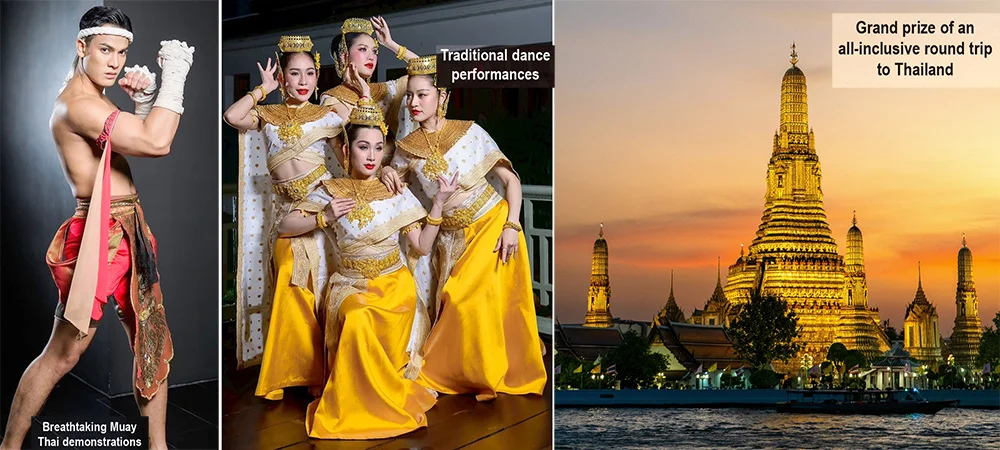
Both days will be full of live entertainment, and dispersed throughout with Thai cultural displays, including exhilarating traditional dance performances and breathtaking Muay Thai demonstrations.
Exploring art and craft specific to Thailand, tasting irresistible authentic Thai cuisine, and playing arcade games, are just a few more fun-filled events available for visitors at the festival premises.
An array of Thai products will also be available for purchase.
While at the festival, you will find Sri Lankan Alumni from Thai universities sharing their experiences with you and willing to answer any questions you might have, related to studying abroad in Thailand.
You can also register for the Muay Thai workshop that will be happening on the 7th and 8th of August, 2026, in Colombo.

Irresistible authentic Thai cuisine
Visitors can also stand a chance to win traditional Thai souvenirs, get exclusive photo opportunities, and, the big one — to enter the raffle draw, at the end of each day, for the grand prize of an all-inclusive round trip to Thailand.
Be sure to avail yourself of this exceptional opportunity and add a cultural spin to your weekend.
To keep up with the latest updates on Thai Festival 2026, head over to the Thai Festival official social media pages.
The Royal Thai Embassy in Colombo official webpage:
https://colombo.thaiembassy.org
Official social media:
Facebook: @RTEColombo
Instagram: @thaiembassysrilanka
Thai Festival official social media:
Facebook: Thai Festival in Colombo
Instagram: @thaifestival_colombo
TikTok: @thaifestival.incolombo
 Hair fall, in this heat, can be so frustrating, and noticing a thin patch is even more worrying. The good news is … yes, with a little care and kitchen ingredients, you can nourish your scalp and support healthy regrowth.
Try these four easy home remedies … even our grandmothers trusted:
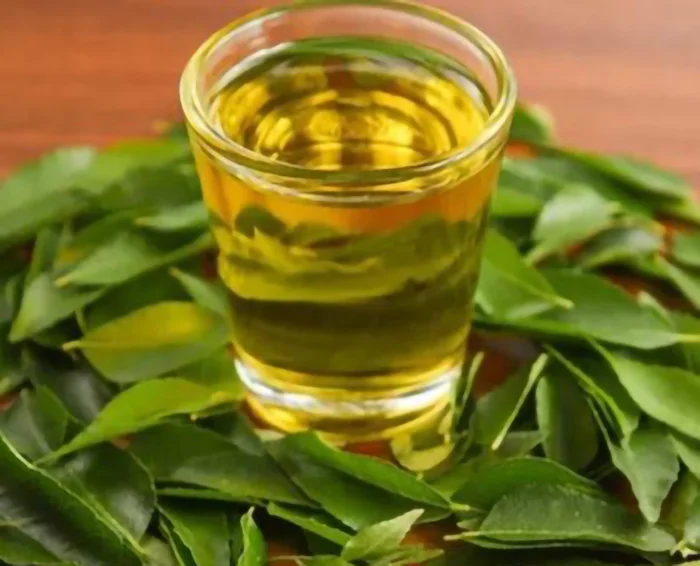
* Coconut Oil and Curry Leaves Tonic:
Warm 04 tablespoons of coconut oil, with a handful of curry leaves, till the leaves turn black. Cool, strain, and massage into scalp 02-03 times a week. Leave for 01 hour, or overnight.
Why:
Coconut oil deeply nourishes, while curry leaves help strengthen roots and add shine.
* Onion Juice for Spot Treatment:
With cotton, dab the juice of 01 small onion, directly on the thin/bald patches. Leave for 20-30 minutes, and then wash with a mild shampoo. Use twice a week.
Why:
Rich in sulfur, onion juice helps boost blood circulation to the scalp.
* Aloe Vera and Castor Oil Mask:
Mix 02 tablespoons of fresh aloe vera gel and 01 tablespoon castor oil and apply to the scalp, focusing on thinning areas. Leave for 45 minutes, and then rinse with cool water.
Why:
Aloe vera soothes the scalp, while castor oil coats hair to make it look thicker.
* Fenugreek and Curd Strengthening Pack:
You will need 02 tablespoons fenugreek seeds, soaked overnight, and 02 tablespoons plain curd.
Grind to a paste, apply to scalp for 30 minutes, and then wash.
Why:
Fenugreek strengthens strands and reduces breakage.
Extra Tips for Healthy Hair:
Avoid tight hairstyles that pull on the scalp.
Eat iron and protein rich foods: greens, dhal, eggs, fish.
Use lukewarm water, not hot.
Be gentle when brushing and drying.
Manage stress — it plays a big role in hair fall.
Important: If bald patches are growing, or there is itching/redness, please consult a dermatologist.
Home remedies support hair health, but a doctor can find the exact cause.
Remember, healthy hair starts with a healthy, happy you.

More than 4,200 Israelis storm Al-Aqsa Mosque in Jerusalem

Feroza, Amin, Sandhu shine as Pakistan go 1-0 up against Sri Lanka

Colombo District Waste Management subcommittee convenes at Parliament

Government to coordinate Kotte Rajamaha Viharaya Sri Dalada Maha Perahera

Taskin Ahmed withdraws from LPL to prepare for Australia tour

US and Saudi Arabia announce nuclear cooperation deal

‘Dates have the highest sugar content to fight Coronavirus’

Sunday Island 27 December – Headlines

#SundayIsland 17th December – Headlines

Sunday Island – 28th March

Sunday Island Headlines – 21 March

Sunday Island – 21st February – Headlines
-
 Features5 days ago
Two memorable excerpts from a former SLAF commander’s memoir
-

 Business5 days ago
‘Giving up was never an option’: The fisherman who fought back after losing millions in SL
-

 Latest News5 days ago
Davis cup Asia/Oceania Group IV 2026 to be held in Colombo from 20th to 25th July
-
 Features5 days ago
Erdoğan’s New Republic
-

 Life style5 days ago
Taste of the Swiss Alps comes to Colombo
-
 News6 days ago
Evidence recorded in money laundering case against Yoshitha Rajapaksa
-
 Midweek Review2 days ago
Three high-profile alleged suicides shaping key investigations
-

 News6 days ago
Dengue outbreak gallops ahead: Infections surpasses 73,455, leaving 50 dead