
News
SLPP constituent hands over far reaching proposals

New Constitution making process underway
By Shamindra Ferdinando
Deputy Leader of the breakaway JVP faction-National Freedom Front (NFF) Jayantha Samaraweera, yesterday (29) told The Island that his party recently submitted 23 proposals to the nine-member expert committee appointed by the Cabinet of Ministers to draft a new Constitution.
President’s Counsel Romesh de Silva leads the expert committee, named in early September, this year.
The proposals consisted of what shouldn’t be included in the new draft Constitution under any circumstances, what should be retained from the current Constitution, sections that needed to be rectified, executive presidency and electoral reforms, the Kalutara district lawmaker said.
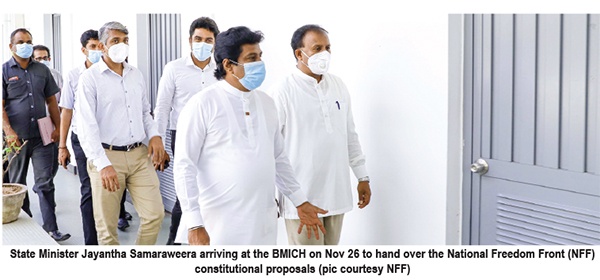
State Minister Samaraweera said that he had posted the NFF’s set of proposals to the committee after an attempt to hand it over personally to Room No 32 (Block 2) of the BMICH, where the committee is located, failed last Thursday (26).
Samaraweera was accompanied by General Secretary of the party S. Wijesiri, politburo member Nimal Piyatissa, MP and Uddika Premaratne, MP. A constituent of the SLPP (Sri Lanka Podujana Peramuna), the NFF group in the 145-member government parliamentary group is represented by six members.
Responding to a query, State Minister of Warehouse Facilities, Container Yards, Port Supply Facilities and Boats and Shipping Industry Development Samaraweera said that their proposals reflected the aspirations of those who voted for Gotabaya Rajapaksa and the SLPP led coalition at the 2019 presidential and 2020 parliamentary polls, respectively.
The expert committee consists of Romesh de Silva, PC, Gamini Marapana, PC, Manohara de Silva, PC, Sanjeewa Jayawardena, PC, Samantha Ratwatte, PC, Prof. Naseema Kamurdeen, Dr. A. Sarveshwaran, Prof. Wasantha Seneviratne and Prof. G.H. Peiris.
Justice Minister Ali Sabry, PC, assured Parliament late last October that the government would present the draft of the proposed Constitution to the House within one year. The assurance was given during the debate on the second reading of the 20th Amendment to the Constitution on Oct. 22.
Responding to another query, the State Minister said the proposed new Constitution should ensure the country’s stability, protect the unitary status, thwart the separatist agenda, protect Buddhism, guarantee human rights of all, protect archeological heritage, food security and non-aligned foreign policy.
SLPP Chairman who is also the Education Minister Prof. G.L. Peiris yesterday told The Island that the party was ready to swiftly respond to the expert committee if it sought to ascertain their views on any matter in respect of the draft constitution. Prof. Peiris emphasized that President Gotabaya Rajapaksa and the SLPP received two massive mandates at the presidential and parliamentary polls to bring in a new Constitution. Well informed sources told The Island that the committee was trying to meet the original deadline to finish the assignment within six months. Therefore, the committee was planning to finalize the document ahead of Sinhala and Tamil New Year. Recently the Justice Ministry extended the time to accept proposals till Dec 31, 2020. Sources said that the committee so far hadn’t received proposals from any major political party. Perhaps, NFF proposals had been delayed in the post, sources said, adding that attorney-at-law Nagananda Kodituwakku too had sent his proposals. The committee has sought views from interested parties on the (1) nature of the state (2) fundamental rights (3) language (4) directive principles of State Policy (5) the executive, cabinet of ministers, the public service (6) the legislature (7) franchise and elections, including referendum (8) decentralization/devolution of power/power sharing (9)the judiciary (10) public finance (11) public security and any other matter not specifically referred to by the Justice Ministry. In spite of the eruption of the second devastating covid outbreak in early Oct that hindered the expert committee, it could make progress thanks to Zoom technology, sources said. Progress had been made, sources said adding that recently face to face meetings resumed.
The NFF Deputy Leader said that they suggested to the expert committee that the authority to introduce laws should be the prerogative of parliament and under no circumstances should such powers be granted to administrative structures at provincial or district level. The NFF also proposed that special laws should be formulated to cater to the needs of any community, constitutional guarantee that administrative structures shouldn’t be named, changed or amalgamated in terms of particular ethnicity and an elected government should function as caretaker not as the owner and the right of the public should be held over the right of an individual as well as constitutional guarantee to protect the national wealth for future generations.
Lawmaker Samaraweera said that the NFF also proposed that the country shouldn’t enter into agreements contrary to non-aligned foreign policy and not allow any foreign power to use Sri Lanka territory for military purposes, transparency in foreign trade agreements, constitutional measures to prevent dual citizens from contesting the Presidency, entering parliament, commanding armed forces, IGP, Attorney General, Governor Central Bank, diplomatic posts and serve as Court of Appeal or Supreme Court judges.
The MP said altogether 23 proposals were made and the NFF expected the expert committee to give them due consideration. Samagi Jana Balavegaya Leader Sajith Premadasa couldn’t be contacted for his party’s position on the new Constitution making process. Fifteen political parties represent the current parliament. Nine of them have just one MP in parliament.


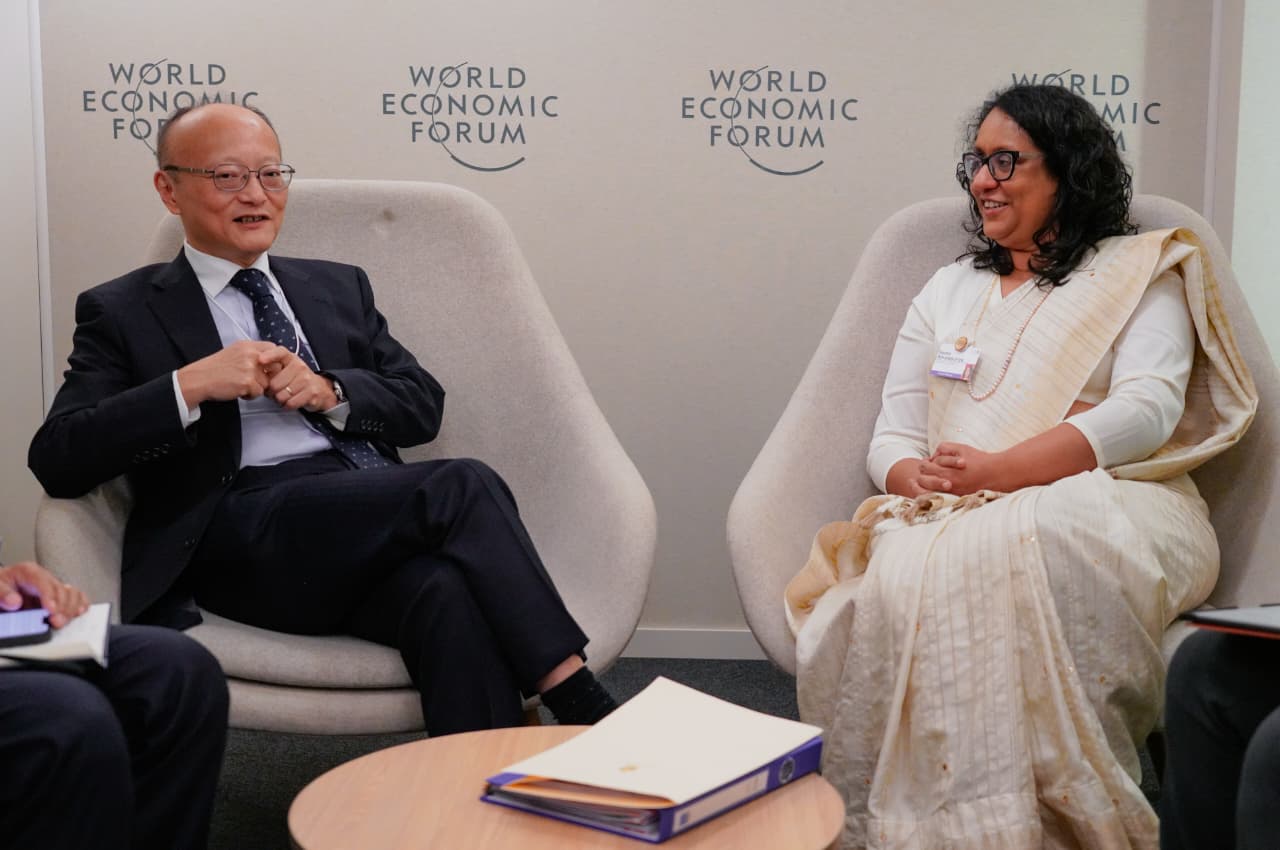
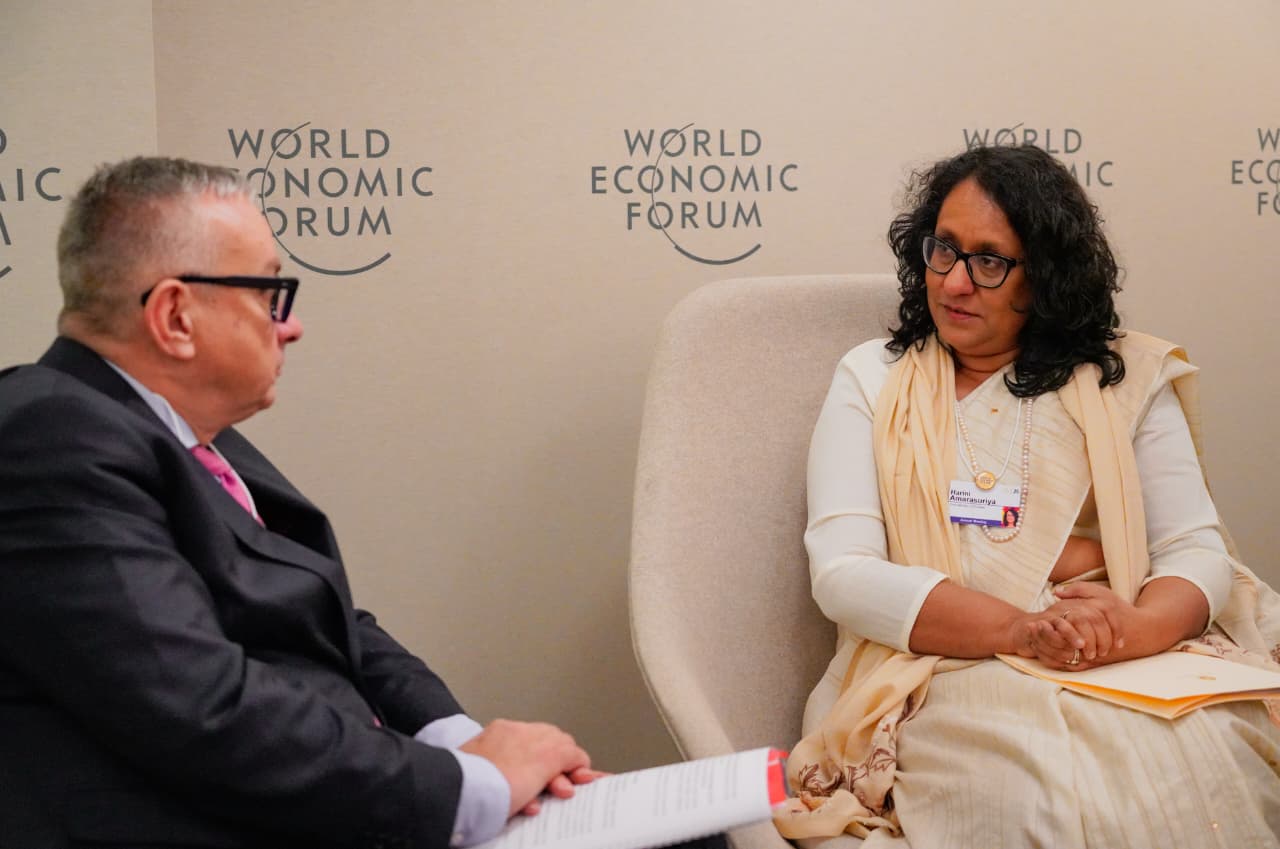
Prime Minister Dr. Harini Amarasuriya participated in a series of high-level bilateral meetings on January 20 on the sidelines of the 56th Annual Meeting of the World Economic Forum in Davos-Klosters, Switzerland.
The Prime Minister attended a productive bilateral meeting with Mr. Jozef Síkela, European Commissioner for International Partnerships. During the discussion, both sides focused on strengthening Sri Lanka–EU cooperation and advancing mutual interests.
Prime Minister Amarasuriya also met with Mr. Masato Kanda, President and Chairperson of the Board of Directors of the Asian Development Bank (ADB), at the WEF Congress Centre. The meeting provided an opportunity to discuss ongoing engagement and future collaboration between Sri Lanka and the ADB.
In addition, the Prime Minister held discussions with Mr. Hassan El Houry, Chairman of Menzies Aviation, where opportunities for collaboration in aviation services and connectivity were explored.
The Prime Minister also participated in a high-level dialogue at the Global Tourism Forum held at the Euronews Hub, Piz Buin, Davos, as part of the World Economic Forum engagements.
Dr. Anil Jayantha, Minister of Labour, and the Deputy Minister of Finance were also present at these meetings.
[Prime Minister’s Media Division]
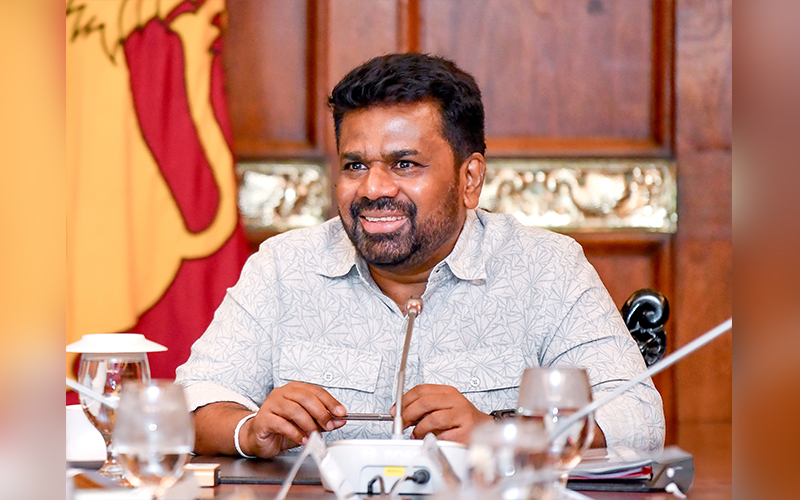
A discussion to review the progress of projects implemented under the Ministry of Digital Economy in 2025 and to examine new projects planned to be implemented under the 2026 budgetary allocations was held on Monday (19) morning at the Presidential Secretariat under the patronage of the Minister of Digital Economy, President Anura Kumara Dissanayake.
Special attention was paid to the plans and progress of programmes to promote a cashless economy.
Accordingly, an extensive discussion was held on the progress of projects planned by the Government to promote a cashless economy in Sri Lanka, including the digitalisation of government institutions, promotion of QR transactions, establishment of a Cloud infrastructure centre, a national programme to provide high-speed broadband facilities, provision of single-window facilities, the digital identity card project and the project to digitalise payment of traffic spot fines.
Noting that much of the economic activity of rural communities remains in the informal sector, the President emphasised the need to formally document these activities and stressed that this is essential when formulating future economic and development plans.
The performance, progress and future plans of institutions under the Ministry of Digital Economy, including Sri Lanka CERT, the Data Protection Authority and the Telecommunications Regulatory Commission (TRC), were also reviewed.
The current status and new recruitments of the GovTech institution, established to implement the Government’s digitalisation programme, were also discussed.
Deputy Minister of Digital Economy, Eranga Weeraratne, Secretary to the President, Dr. Nandika Sanath Kumanayake, Senior Presidential Adviser on Digital Economy, Dr. Hans Wijayasuriya, Senior Additional Secretary to the President, Roshan Gamage, Secretary to the Ministry of Digital Economy, Varuna Sri Dhanapala, senior officials of the Ministry and heads of institutions under the Ministry also participated in the discussion.

A simmering confrontation between the government and the powerful Ceylon Electricity Board (CEB) trade unions intensified yesterday, with the latter signalling continued industrial action, even as authorities moved decisively to prevent any disruption to electricity supply.
The dispute centres on the government’s determination to restructure and unbundle the CEB under amendments to the Electricity Act, a reform drive officials describe as unavoidable to curb losses, strengthen governance and stabilise the national power sector. This has also been a long-standing demand of international donors, particularly the International Monetary Fund and the World Bank.
Some 24 CEB unions, including powerful engineers’ and workers’ organisations, have rejected the move, warning that the proposed restructuring could weaken institutional coordination, undermine job security and eventually place additional pressure on consumers.
Union representatives said work-to-rule campaigns and other limited forms of industrial action would continue, despite electricity services being declared an essential service — a legal measure that effectively curtails full-scale strike action.
“These reforms are being imposed without proper consultation. Decisions taken in haste could have serious consequences for grid stability and public confidence,” a senior union official told The Island.
The government, however, has adopted a firm posture, cancelling all categories of leave for CEB staff and directing management to ensure uninterrupted operations across generation, transmission and distribution.
A senior official at the Power and Energy Ministry said the administration would not allow labour unrest to jeopardise electricity supply, stressing that energy security was central to economic recovery.
“Electricity is a critical public service. Any attempt to disrupt supply will be dealt with firmly,” the official said.
Engineers’ unions have separately cautioned that restructuring without a clearly articulated technical and regulatory framework could compromise long-term planning and system reliability, though they have stopped short of calling for an outright shutdown.
Despite ongoing discussions between union leaders, CEB management and government representatives, there is no indication of an early resolution, raising the prospect of a prolonged standoff at one of the country’s most strategically important state institutions.
The dispute unfolds amid Sri Lanka’s IMF-backed reform programme, under which state-owned enterprises — particularly in the energy sector — are under increasing pressure to reduce losses and ease the burden on public finances.
Analysts warn that sustained unrest at the CEB could complicate reform timelines and dent investor confidence, even as the government seeks to signal policy resolve.
A retired CEB top official said: “For now, while major strike action remains legally constrained, the confrontation has once again placed the power sector at the centre of national debate, with consumers and businesses watching closely for any fallout.”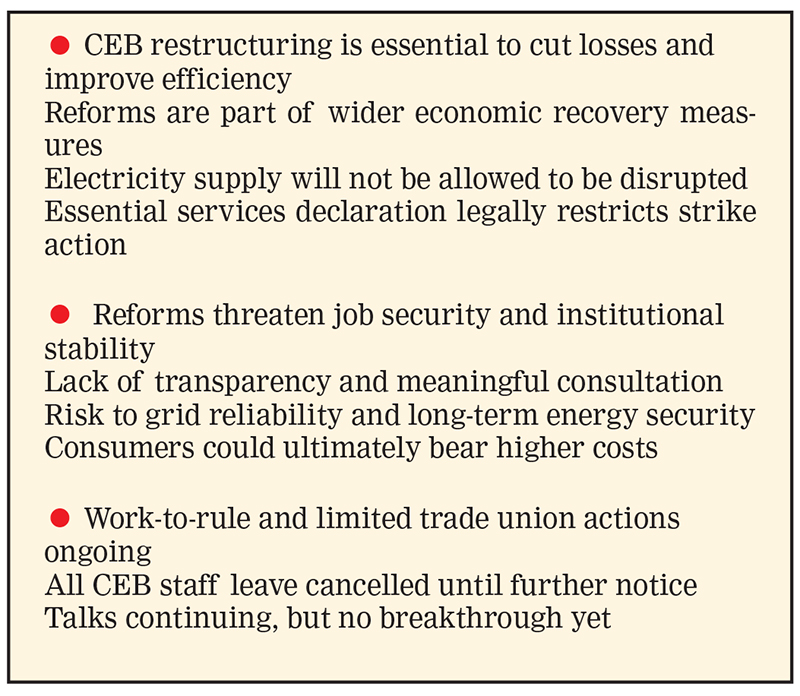
By Ifham Nizam ✍️

Prime Minister participates in high-level bilateral meetings at World Economic Forum

Dushmantha Chameera, Dhananjaya de Silva return for England ODIs

T20 World Cup crisis: PCB writes to ICC supporting Bangladesh’s stance

U – 19 world Cup: Rain disrupts New Zealand vs Bangladesh game in Bulawayo

U – 19 World Cup: Will Malajczuk’s 51-ball century helps Australia blow Japan away

Rodrigues holds nerve as Delhi Capitals hand Mumbai Indians third straight loss

‘Dates have the highest sugar content to fight Coronavirus’

Sunday Island 27 December – Headlines

#SundayIsland 17th December – Headlines

Sunday Island – 28th March

Sunday Island Headlines – 21 March

Sunday Island – 21st February – Headlines
-

 Editorial3 days ago
Illusory rule of law
-

 News4 days ago
UNDP’s assessment confirms widespread economic fallout from Cyclone Ditwah
-

 Business6 days ago
Koaloo.Fi and Stredge forge strategic partnership to offer businesses sustainable supply chain solutions
-

 Editorial4 days ago
Crime and cops
-
 Features3 days ago
Daydreams on a winter’s day
-

 Editorial5 days ago
The Chakka Clash
-
 Features3 days ago
Surprise move of both the Minister and myself from Agriculture to Education
-

 Features2 days ago
Extended mind thesis:A Buddhist perspective