
Latest News
SLINEX-25 concludes

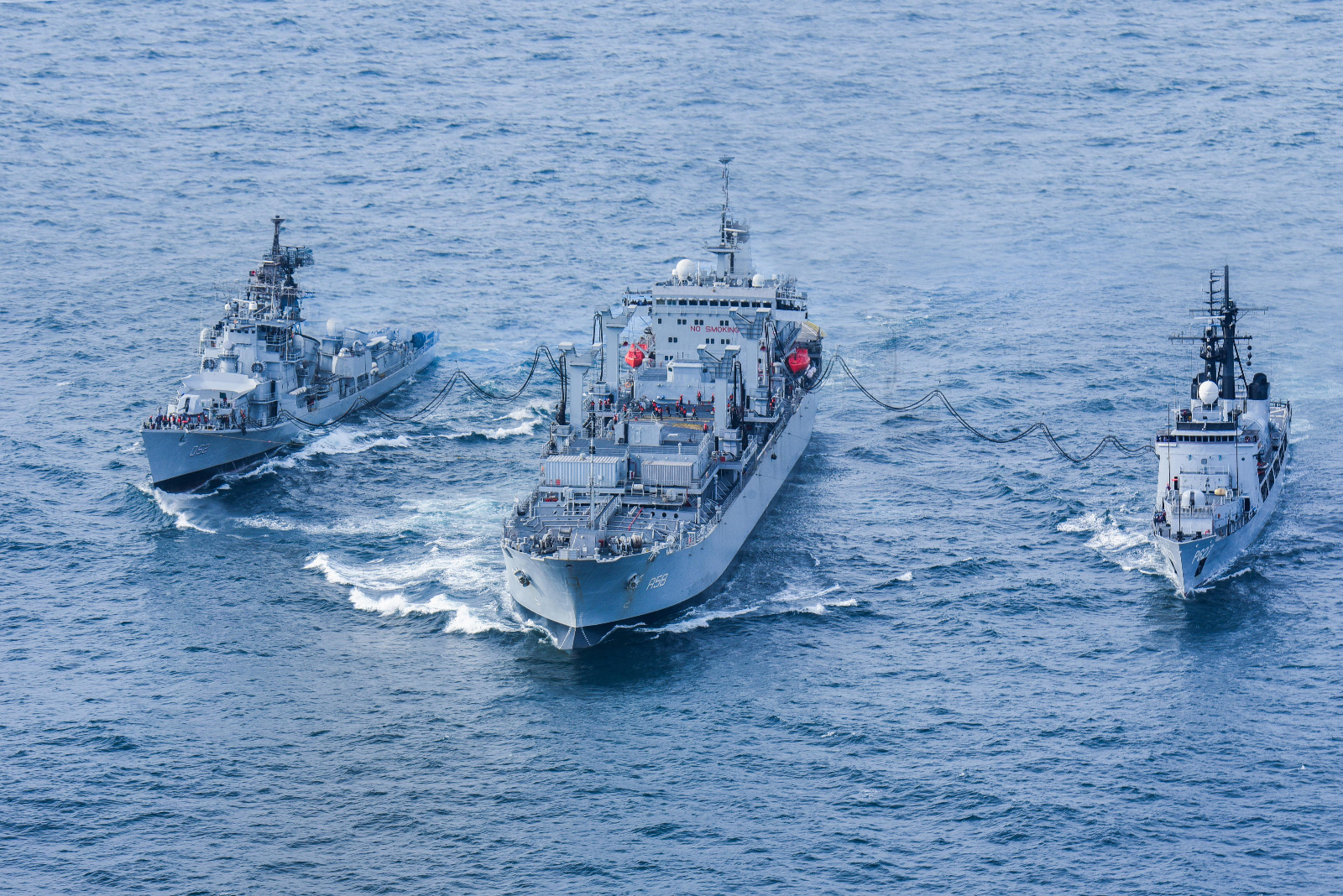
The 12th edition of the Sri Lanka–India Naval Exercise (SLINEX-25) drew to a successful close on 18 Aug 25 in the western seas off Colombo.
As both the navies carry out a wide spectrum of operations across the ocean region to fulfill the nations’ and regional maritime aspirations, these regular maritime exercises play a vital role in sustaining their operational readiness by enhancing its capabilities, advancing technology and sharpening professional skills.
Further, the annual Sri Lanka-India Naval Exercise strengthens cooperation and interoperability between the two navies, reaffirming their shared commitment to safeguarding security in the Indian Ocean Region.
In SLINEX-25, the Sri Lanka Navy was represented by the Offshore Patrol Vessels SLNS Vijayabahu and SLNS Sayura, while the Sri Lanka Air Force contributed a Bell 412 helicopter.
The Indian Navy participated with the tanker-class INS Jyoti and the destroyer-class INS Rana.
Conducted in a spirit of professionalism, both harbour and sea phases of the exercise strengthened the seamless coordination and readiness of the Indian and Sri Lanka naval forces.
On the sidelines of SLINEX-25, Dr. Satyanjal Pandey, Deputy High Commissioner of India to Sri Lanka, embarked on the visiting Indian Naval Ships in Colombo. Additionally , the Indian High Commissioner, Santosh Jha, along with the Commanding Officers of the ships, honoured the fallen by placing floral tributes at the Indian Peace Keeping Force Memorial in Battaramulla.
Adding a vibrant touch of camaraderie, Indian Navy personnel joined a series of goodwill events hosted by the Sri Lanka Navy, from training exchanges and friendly sports events to cultural visits and sightseeing tours, strengthening cooperation and friendship between the two navies.
As Sri Lanka and India continue to work as partners in promoting maritime security, SLINEX serves as a vital platform to bolster collective readiness against a wide range of non-traditional maritime challenges and to safeguard peace and stability in the wider Indian Ocean Region.




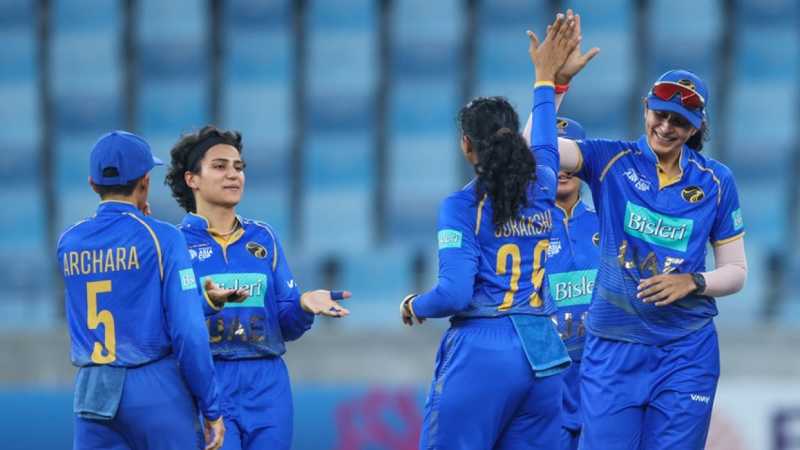
A complete performance from UAE’s bowling unit kept their semi-final hopes alive at the 2026 Women’s T20 Asia Cup, skittling Indonesia for 73 and then completing the chase with six wickets to spare. They now have to beat Bangladesh on September 8 and also hope other results go their way.
UAE were on top right from the first ball courtesy offspinner Suraksha Kotte, who starred with 3 for 16. Kotte struck with the first two balls of the innings, dismissing Indonesia opener Maria Corazon and No. 3 Ni Luh Dewi for first-ball ducks. UAE captain Esha Oza (2 for 11) then dismissed the other opener Rahmawati Pangestuti in the fourth over.
Indonesia captainN8 Puu Ayu Nanda Sakarini top-scored with a lone hand of 39 off 52 balls, with four fours and a six, accounting for 53.4% of Indonesia’s runs. But with little support, they could not find a way back in and were bowled out for 73.
Slow left-arm spinner Heena Hotchandani (2 for 6) and seamer Samaira Dharnidharka (1 for 12) also got among the wickets. Legspinner Vaishnave Mahesh struck twice in the 20th over to clean up the tail.
UAE openers Theertha Satish and Oza put on 17 for the first wicket. After losing Theertha in the fifth over, Oza hit two boundaries in each of the sixth and eighth overs. No. 3 Rinitha Rajith then hit three fours off Sofia Velic in the ninth over.
A brief wobble followed for UAE as they slid from 62 for 1 to 68 for 4. Oza fell for a 29-ball 30 at the start of the 11th over to Ni Ariani and Velic grabbed two wickets in the 12th. However, with only six runs needed, UAE wrapped up the chase at the start of the 14th over, the tournament hosts securing two points with 41 balls to spare. This was also Indonesia’s final match of the campaign, bowing out with losses in all three games.
Scores:
UAE Women 75 for 4 8n 13.1 overs (Esha Oza 30, Rinitha Rajith 22; Ni Riani 1-10, Sang Maypriani 1-17, Sofia Velic 2-25) beat IndonesiaWomen 73 in 19.4 overs (N8 Putu Ayu Nanda Sakarini 39, Desi Wulandari 12; Suraksha Kotte 3-16, Heena Hotchandani 2-06, Esha Oza 2-11, Samira Dharnidarkha 1-12 ) by six wickets
(Cricinfo)
Latest News
Sun directly overhead Moratuwa, Kesbewa, Handapangoda, Idalgashinna, Yudhaganawa, Kotiyagala and Panama about 12.08 noon today (05)

The sun is going to be directly over the latitudes of Sri Lanka from 28th of August to 07th of September due to its apparent southward relative motion.
The nearest places of Sri Lanka over which the sun is
overhead today (05) are Moratuwa, Kesbewa, Handapangoda, Idalgashinna, Yudhaganawa, Kotiyagala and Panama about 12.08 noon
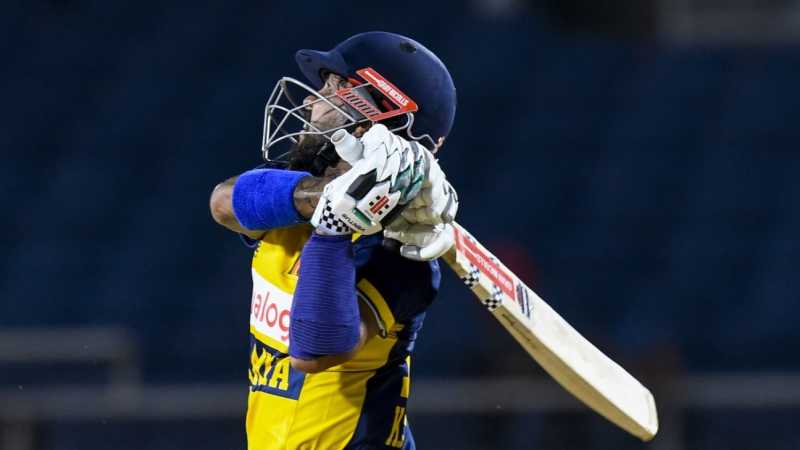
Kusal Mendis and Binura Fernando have been ruled out of Sri Lanka’s upcoming T20I series against England, with the SLC saying that the two were “still undergoing rehabilitation” after injuries picked up at the 2026 Lanka Premier League.
The update came just over a day after the two were named in the 16-member squad, with Kusal retained as captain of both the T20I and the ODI sides.Charith Asalanka, who had returned to the vice-captain’s position for the series, will now lead the side in the T20Is. Though Kusal hasn’t been ruled out of the ODIs just yet, were he to miss out, Asalanka, as the designated vice-captain, might step in there too.
Kusal has been out of action since July 19 with a right hamstring injury, while Binura hasn’t played since August 5, SLC putting his absence down to a back injury.
Pavan Rathnayake, the 24-year-old top-order batter, has replaced Kusal in the T20I touring party, while Dilshan Madushanka, the fast bowler who was in the squad for the Tests against India recently but didn’t get to play, has come in for Binura.
(Cricinfo)

Malaysia declares emergency in Sarawak as haze from Indonesia worsens

UAE keep semi-final hopes alive after convincing win over Indonesia

Sun directly overhead Moratuwa, Kesbewa, Handapangoda, Idalgashinna, Yudhaganawa, Kotiyagala and Panama about 12.08 noon today (05)

Showers above 75 mm are likely at some places in the Uva, Central and Eastern provinces and in Polonnaruwa and Mullaittivu districts after 2.00 p.m

Namal remanded until Sept. 18 over Airbus deal investigation

Dengue cases surpass 96,000 this year

‘Dates have the highest sugar content to fight Coronavirus’

Sunday Island 27 December – Headlines

#SundayIsland 17th December – Headlines

Sunday Island – 28th March

Sunday Island Headlines – 21 March

Sunday Island – 21st February – Headlines
-

 Features7 days ago
“Wrap Me Up in My Blazer”— A Gentlemanly Bradby Reminiscence
-

 Features6 days ago
When Sri Lankan stories find their own voice
-
 Features7 days ago
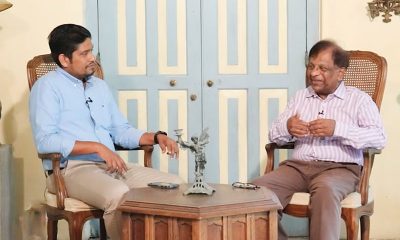
JVP/NPP government as seen from outside by Lionel Bopage now domiciled in Australia
-

 News6 days ago
BASL takes exception to Justice Ganepola being denied a place in SC
-

 Features7 days ago
Prof. Savitri Goonesekere: What has she done?
-

 News3 days ago
Denied of promotion to SC despite vacancies, justice Gurusinghe retires
-

 Latest News3 days ago
Grade 5 scholarship exam results released
-

 News3 days ago
22A: SC urged to suspend hearing, appoint full bench