
Business
SLID moves to Cinnamon Grand

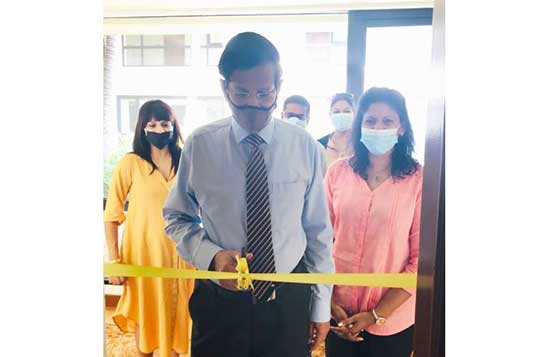
Chairman A.R.Rasiah cutting the traditional ribbon, in a simple ceremony, to open the premises alongside Aroshi Nanayakkara, Deputy Chairperson and Radika Obeyesekere, CEO and Council members Nadija Tambiah and Dilshan Rodrigo
In keeping with its rapid expansion plans, Sri Lanka Institute of Directors moved into a prestigious and convenient location at Cinnamon Grand Hotel very recently.
Cinnamon Hotels are now one of the partners of SLID and offer special rates to members of SLID at all Cinnamon Hotels. Plans are afoot to “tie up” with a credit card company as well as to issue membership cards.
The popular Board Leadership Training (BLT) is being revamped and modernized by Aruni Rajakarier, a council member, with assistance and support from IFC as well as SEC. There are grand plans to upgrade the women directors’ forum under the stewardship of Aroshi Nanayakkara, including the launch of a training program aimed at creating “Board ready Women”. The Independent Directors forum (INED) under senior Deputy Chairman Faizal Sally is also being formulated to clearly highlight the importance, responsibility and liability of independent directors. Audit Committee (AC) forum is as active as ever in partnership with KPMG and completed the 23rd AC forum very recently.
SLID is also in partnership with ACCA, ACA and CIMA to make BLT programs a CPD program for the members of these leading professional bodies. Two special and enthusiastic committees formed to update members on modern technology as well to rebrand SLID are in the final stages with their recommendations. Steps are being taken to tie up with the International Directors’ forum so that SLID becomes a member of a world body.
“We have come a long way from our humble beginnings more than a decade ago to a leading professional body, thanks to the support and assistance of its council, members and sponsors” added the chairman.


18 March 2026; Colombo – SriLankan Airlines wishes to alert customers to social media scams circulating on Facebook, WhatsApp and other platforms, often sent from both known and unknown contacts, featuring fake offers that misuse the SriLankan Airlines name, logo and brand.
SriLankan Airlines will never request payments, OTPs, credit card details, bank information or any other financial details via social media channels.
Customers are advised to always verify that any promotional offer is linked to the airline’s official website, www.srilankan.com, or shared through the verified social media accounts of SriLankan Airlines, as scammers often use fake links with unusual characters or spellings, or impersonate the airline through fake social media accounts.
Business
JSL & Fentons Joint Venture to Construct Double Circuit Transmission Line from Mannar Grid Substation to Mullikulam Collection Grid Substation


Approval has been granted at the Cabinet meeting held on 03-02-2025 to implement the formal procurement procedure to select a contractor for the construction of a 28 km long double circuit transmission line with the capacity of 220 kW, from Mannar Grid Substation to Mullikulam Collection Grid Substation under the Lot B of the Mullikulam Wind Power Transmission Project.
Bids have been invited following the International Competitive Procurement Procedure and five (5) bids have been received.
Accordingly, based on the recommendations submitted by the High-Level Standing Procurement Committee after evaluating the aforementioned bids, the Cabinet of Ministers has approved the resolution furnished by the Minister of Power and Energy to award the contract to the JSL & Fentons Joint Venture – Intend (Jyoti Structure Limited, India and Hayleys Fentons
Limited, Sri Lanka), substantially responsive minimum bidder, for an equal amount of Sri Lankan Rs. 2,269.18 million (without VAT).

Economic pressure likely to push already-strained businesses into a liquidity crunch
By Sanath Nanayakkare
Sri Lanka is slowing to a midweek halt as a deepening fuel shortage has compelled the government to suspend most public sector operations every Wednesday, while courts have been advised to take a lenient view of attendance requirements amid transportation difficulties caused by fuel rationing.
The directive, issued by the Commissioner General of Essential Services, suspends most state functions one day a week until further notice in an attempt to conserve scarce fuel reserves. Authorities have also urged the private sector to adopt a similar arrangement.
Officials say the measure is aimed at reducing commuter traffic into major cities, particularly Colombo, where thousands of public servants travel daily from suburban areas.
Explaining the decision to select Wednesday, officials said declaring Friday a holiday could have effectively denied the public access to government services for three consecutive days when combined with the weekend.
However, the development underscores the fragility of Sri Lanka’s economic recovery as households continue to grapple with rising prices of essential goods.
The impact is already visible on the streets. Long queues have formed outside fuel stations while public buses have been seen overcrowded, with passengers clinging to footboards. Many commuters were also seen attempting to secure rides through the ride-hailing platforms Uber and PickMe, where drivers were demanding higher fares as demand surged.
Recognising these difficulties, the Judicial Service Commission (JSC) has issued a circular instructing judges to take transportation constraints caused by fuel rationing into consideration when making legal determinations.
Judges have been advised to consider the possibility that lawyers, litigants, witnesses and even suspects may be unable to attend court due to limited fuel availability.
While court proceedings are expected to continue, judicial officers have been asked to assess such situations on a case-by-case basis.
The JSC has also directed courts to make greater use of virtual platforms whenever possible. This is expected to apply particularly to proceedings such as extending remand orders, thereby avoiding the need to transport prisoners physically to court.
Authorities believe that conducting such hearings online could significantly reduce fuel consumption associated with prison transport. The temporary measures will remain in effect until further notice.
Meanwhile, officials say special fuel allocations may be considered for critical sectors including tourism, the Colombo Port, agriculture, health services, the plantation industry and public transportation in order to sustain essential services and economic activity.
However, the broader economic outlook remains uncertain. Business leaders warn that companies already burdened with higher taxes, rising operational costs and thin margins could face severe liquidity pressures if global oil prices remain elevated.
Industry observers say some firms may be compelled to seek loan moratoria if the disruption linked to the conflict involving Iran continues for another month.
Public concern has also been heightened by recent comments from Iranian officials indicating that Tehran has not sought a ceasefire in the ongoing conflict.
For President Anura Kumara Dissanayake, the unfolding fuel shortage is emerging as one of the most serious challenges facing his administration. Although the government has been holding internal consultations, critics say an all-party conference has yet to be convened to formulate a unified national response to the crisis.
Within business circles and sections of the public, questions are increasingly being raised about whether the government possesses the institutional capacity and experience required to manage a prolonged energy shock.

SriLankan Airlines Alerts Customers to Social Media Scams

Four dead 32 injured in head on collision at Weerawila

JMSDF ship OONAMI concludes goodwill visit

Cabinet nod to amend Central Cultural Fund Act No. 57 of 1980
’National Namal Uyana’ declared as a National Heritage
Establishment of Supervisory Committees for restoring economic activities.

‘Dates have the highest sugar content to fight Coronavirus’

Sunday Island 27 December – Headlines

#SundayIsland 17th December – Headlines

Sunday Island – 28th March

Sunday Island Headlines – 21 March

Sunday Island – 21st February – Headlines
-

 News7 days ago
Historic address by BASL President at the Supreme Court of India
-

 Sports7 days ago
The 147th Royal–Thomian and 175 Years of the School by the Sea
-

 Business3 days ago
Browns EV launches fast-charging BAW E7 Pro at Rs. 5.8 million
-

 Life style4 days ago
From culture to empowerment: Indonesia’s vision for Sri Lanka
-
 News7 days ago
Power sector reforms jolted by 40% pay hike demand
-
 Latest News4 days ago
QR code system will be implemented for fuel with effect from 06.00 a.m. today (15th)
-

 Opinion6 days ago
M. D. Banda: Memories of Appachchi – II
-

 News2 days ago
Australian HC debunks misleading travel risk claims for Sri Lanka