
Business
SLID and EY organize webinar on “Rising from the Pandemic”

The Sri Lanka Institute of Directors (SLID) together with EY organized a webinar titled “Rising from the Pandemic: Challenges, Responses and Learnings” recently to discuss and share insights on the experiences of leading companies and their successful response to the pandemic. Moderated by A. R. Rasiah – Chairman, SLID, the Keynote Speaker at the event was Jonathan Moreno – Chief Strategy Officer, Metro Retail Stores Group Inc., Philippines. Joining him on the panel were top Sri Lankan corporates Hanif Yusoof – Group CEO, Expolanka Holdings PLC, Suren Fernando – CEO, MAS Holdings (Pvt) Ltd and Nalin Karunaratne – Director/CEO, Ceylon Biscuits Ltd and CBL Exports (Pvt) Ltd.
In his keynote address Jonathan Moreno said that the severity of the pandemic can be seen by the ADB conducted survey in Philippines revealing that out of 74,000 firms surveyed, 40% were closed during the pandemic out of which 16% were permanently closed and 78% saying that they have either decreased or stopped staff payments. “In addition to the challenges faced due to quarantine measures, travel restrictions and inadequate tech infrastructure, executive myopia, attitudinal shifts in the workforce, analog mindsets, outdated business models, silo mentality, skills, leadership and capability gaps, transactional relationships with stakeholders, performance management and governance were some of the specific challenges that we faced” and added that Metro Retail responded with strategies to ensure team welfare and security, financial stability, business continuity, moving to scenario-based stress testing, creating new delivery channels, governance, and communication models.
Describing various events in the past which led to strategies being implemented to make the business agile, and lead and think on its feet had helped its successful response to the pandemic, Hanif Yusoof said “as a global organization with a large monthly overhead, our main challenges were the working capital required to keep the system going with potential losses for the next 6 months, health & safety of our employees, and possible delayed payments from customers aggravating the capital requirements” adding that adopting work from home policies and opening hotlines for employee support, involving the Main Board on a weekly basis with management, focusing on the short term when the future is unclear played a critical role in Expolanka’s successful response to the pandemic.
“Amidst many challenges including order cancellations and pushbacks, operational stability, and the large workforce, our approach at MAS in responding to the pandemic was very clear in that our first and foremost concern was to protecting lives and livelihoods of our people which has been our motto and principle. We have set up many top-of-the-line care centers to treat our impacted employees. This employee first strategy has enabled us to build trust and engagement at all levels including at the shopfloor. We also ensured open, honest, quick communication with our customers regarding the impact on their deliveries” said Suren Fernando. He also added that amongst others, the support of the Board including giving management the independence and autonomy to make calls and move on, and digitalization programmes as positive factors in responding successfully to the pandemic.
“With over 6,000 employees, 24-hour manufacturing, 12,000 farmers supplying produce for our manufacturing processes, distributors, and over 150,000 retail outlets who depend on our brands, CBL’s foremost concerns, in our response to the pandemic, lay in ensuring the health & safety of employees, and ensuring food safety & security in fulfilling a large-scale responsibility to the country. We went to the extent of upgrading facilities in hostels where our employees were residing to ensure their health & safety and made certain that we cared for even the families of our employees who were impacted by the virus which enabled us to gain great trust amongst our employees. Furthermore, any changes to the manufacturing facility were done only with the approval and concurrence of the health authorities. We also ensured that our facilities and processes were always in conformance with the SLS and other standards making us ready even for unannounced compliance audits” said Nalin Karunaratne. He added that sticking to the basics and doing the right things, not taking short-cuts even in the most challenging times, and relying on wisdom which overpowers business rationale helped them to successfully face the pandemic.
In his closing remarks, moderator A. R. Rasiah said that the employee first approach including focus on employee health & safety, wellbeing and caring, and livelihood protection which helped to obtain the trust, support, commitment, and cooperation of their people was highlighted by all panelists as the key and foremost strategy that helped them successfully navigate their companies amidst the challenges of the pandemic.

Business
Arvind Subramanian: Why hasn’t Sri Lanka’s democracy acted as a hedge against economic chaos?
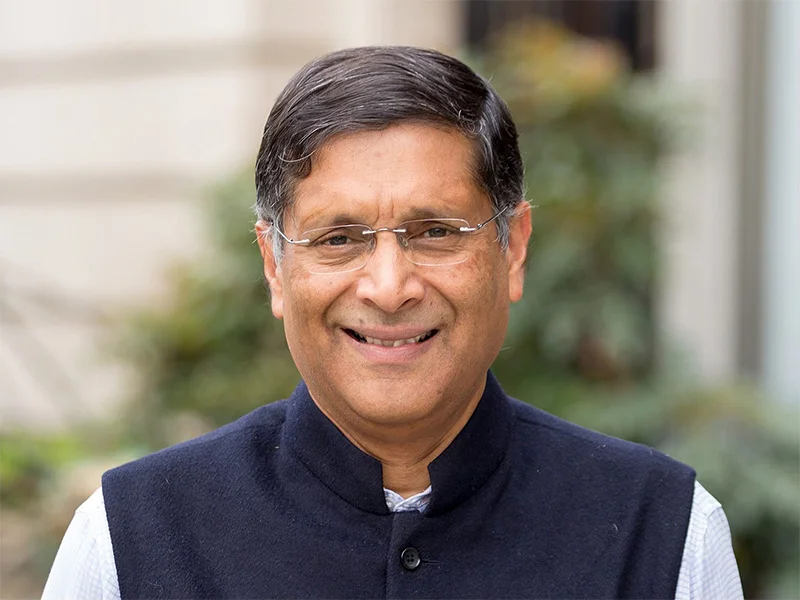
In a sobering and intellectually provocative lecture delivered yesterday at the Central Bank of Sri Lanka, Dr. Arvind Subramanian, former Chief Economic Advisor to the Government of India, posed a “haunting” question to the nation’s policymakers: Why has one of the world’s oldest democracies outside the West failed to leverage its political system to ensure economic stability?
Titled ‘Reviving Growth While Maintaining Stability,’ the lecture moved beyond technical prescriptions. Dr. Subramanian, now a Senior Fellow at the Peterson Institute for International Economics, admitted that his experience with the complexities of the Indian economy had made him “humble and somber,” leading him to focus on the broader socio-political structures that dictate a nation’s fate.
Dr. Subramanian argued that in India, democracy acted as a vital pressure valve that prevented both extreme political violence and economic chaos. He noted that while the process of nation-building is historically violent – citing the West’s decimation of populations and China’s estimated 40–75 million deaths between 1950 and 1976 – India managed to maintain a relatively low degree of mass violence.
“Democracy had a key role to play in that,” he asserted. “It is one of India’s major achievements.”
The speaker extended this logic to the economic sphere, suggesting that Indian democracy created a “societal demand” for low inflation.
In India, he noted, there is a pervasive political belief that if inflation crosses the 5 percent threshold, the government is likely to lose the next election. This political accountability forced the Central Bank and the State to maintain macro-stability.
The crux of Dr. Subramanian’s address was the “intellectual puzzle” of why Sri Lanka, which received universal franchise well before India, did not experience the same stabilising effects of democracy.
He presented two charts that he described as “haunting.” The first revealed that Sri Lanka has spent 60 percent of its time under IMF programmes, indicating a state of “perennial macro-economic stress.” In contrast, India has not sought an IMF programme in the 35 years following its 1991 reforms.
“Why does Indian society demand low inflation and macro-stability, while the same doesn’t happen in Sri Lanka?” he asked. Despite its long democratic tradition, Sri Lanka has consistently seen higher inflation and greater financial instability than its neighbour.
Dr. Subramanian also highlighted a stark difference in how both nations treat foreign capital. Pointing to data on external debt stock as a share of Gross National Income (GNI), he illustrated that Sri Lanka has been consistently and significantly more reliant on foreign capital than India or China.
While some argue that Sri Lanka’s small size necessitates a reliance on foreign capital, Dr. Subramanian remained unconvinced, noting that India also suffered from low domestic savings for decades but chose a more cautious path.
“India has been much more cautious in opening up to foreign capital,” he explained. While foreign capital can drive growth, it brings the “downside of risk and volatility” as capital flows in and out – a reality that came to haunt Sri Lanka in recent years through its high exposure to foreign currency-denominated debt.
The lecture concluded not with a list of “1, 2, 3 points” for recovery as the wider audience had expected, but with a challenge to the Sri Lankan intelligentsia. If democracy is meant to be a safeguard against political and economic disorder, the breakdown of that mechanism in Sri Lanka requires deep introspection.
“Different societies differ,” Dr. Subramanian concluded. “But if democracy had a key role in avoiding volatility in India, why shouldn’t it have been so in such an old democracy as Sri Lanka? It is worth pondering over,” he said.
By Sanath Nanayakkare
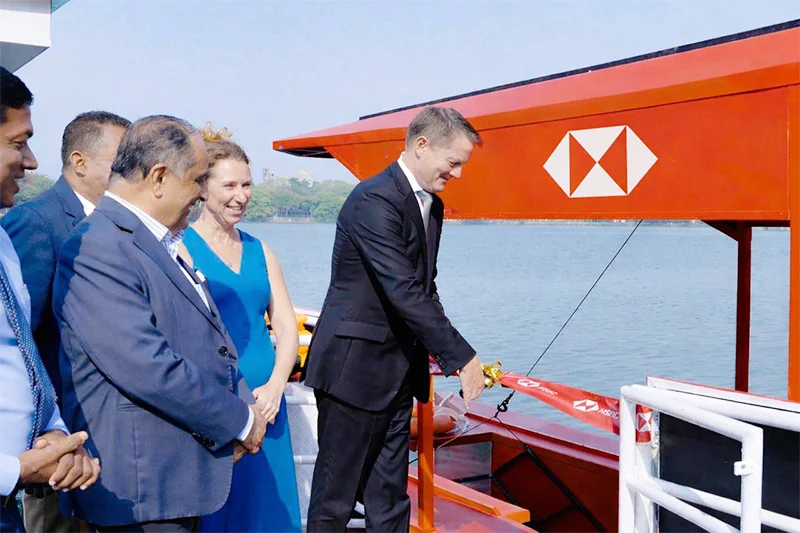
HSBC will launch ‘Clean Waterways’ in partnership with the Beira Lake Restoration Task Force that was convened by the Governor of the Western Province to restore Beira Lake. HSBC in partnership with Clean Ocean Force will build and operate two solar powered, zero emission, waterway cleaning boats, which are the first of their kind in Sri Lanka. They will be used extensively in support of restoring the Beira Lake ecosystem and its surrounding environment.
Once a picturesque centerpiece in Colombo, Biera Lake is now suffering from significant pollution. Urbanization and lack of effective waste management practices have led to large volumes of plastic and floating organic debris, untreated sewage and industrial effluents contaminating the water. Resultant algal blooms, unchecked hyacinth growth and water stagnation further give the lake a detrimental odour and appearance. The pollution has degraded water quality, harmed aquatic life posing health risks to residents living in proximity by attracting disease-carrying fauna.
The Biera Lake Restoration Task Force was convened by the Governor of the Western Province with the purpose of delivering cleaner waterways in the urban environment. It is vital to educate and support change for communities that reside near the Beira Lake. To achieve this, a dedicated community outreach programme will reach over 5000 wider residents through awareness building and education which is anticipated to reduce ‘waste at source’.
Mark Surgenor, Chief Executive Officer, HSBC Sri Lanka stated “With over 130 years presence in Sri Lanka, HSBC understands the importance of Beira Lake to Colombo’s urban environment. Supporting cleaner waterways is a vital step towards restoration of that environment. Through this first ever public-private partnership, multiple stakeholders are coming together to work towards restoring this iconic lake. We have committed to support the Beira Lake Restoration Task force, not just with the much-needed funding, but also bringing best practices through our experience with similar projects in other markets that we operate in. The community outreach programme planned alongside the project is a critical step towards making this impact sustainable. HSBC has always been at the forefront of innovation in Sri Lanka and we look forward to continuing that for our next 130 years here”
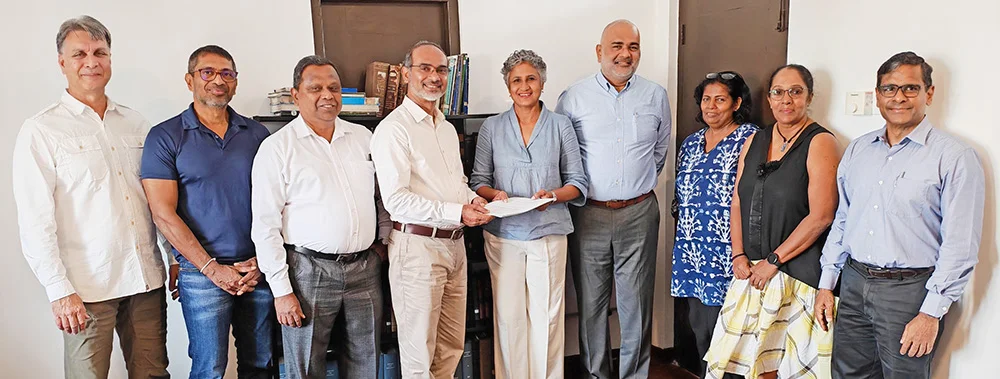
Sri Lanka has moved to strengthen the financial backbone of its marine conservation efforts with the establishment of the country’s first CORALL Conservation Trust Fund, a landmark initiative that positions coral reef protection firmly within the framework of sustainable finance and long-term economic value creation.
The Trust Deed establishing the CORALL (Conservation of Reefs for All Lives and Livelihoods) Conservation Trust Fund was signed on December 31, 2025, by Environment Foundation (Guarantee) Limited (EFL) as Settlor together with the inaugural Board of Trustees. The Fund is designed to support the conservation of Pigeon Island National Park, Bar Reef Marine Sanctuary and Kayankerni Marine Sanctuary, along with their associated seascapes—areas that are central not only to marine biodiversity but also to fisheries, tourism and coastal protection.
From a business and policy perspective, the Trust Fund represents a decisive shift away from short-term, donor-driven conservation projects towards a structured and enduring financing mechanism. It is a key component of the Sri Lanka Coral Reef Initiative (SLCRI), a six-year national programme funded by the Global Fund for Coral Reefs and implemented by the International Union for Conservation of Nature (IUCN), but critically, the Trust itself is structured to continue well beyond the project’s lifespan, offering a permanent vehicle for mobilising state, private sector and international sustainability-linked funding.
Coral reefs within the three targeted seascapes have been increasingly degraded by destructive fishing methods such as blast fishing, overfishing, coastal pollution, unregulated tourism and unplanned coastal development. These pressures carry significant economic consequences, undermining fish stocks, tourism revenues and the natural coastal protection that reefs provide. Project partners note that a major driver of this degradation is the limited understanding among communities and institutions of the true economic value of coral reefs as natural capital that underpins livelihoods and resilience.
EFL, as an implementing partner to IUCN, played a central role in shaping the Trust’s institutional and financial architecture. It carried out a comprehensive legal, policy and institutional review, provided recommendations on the structure of Conservation Trust Funds, and drafted both the Trust Deed and an operational manual embedding governance, accountability and transparency safeguards. These features are seen as critical in building investor and donor confidence, particularly at a time when environmental, social and governance (ESG) considerations are increasingly influencing capital flows.
The Board of Trustees, selected by IUCN and the SLCRI National Steering Committee following a public call for applications, brings together expertise from investment banking, commercial banking and marine science. The Trustees—Palitha Gamage, Prof. (Ms.) Sevvandi Jayakody, Nalin Karunatileka, Dr. (Ms.) Nishanthi Perera, Chanaka Wickramasuriya and Nishad Wijetunga—will oversee grant funding for conservation and restoration proposals submitted by Special Management Area Coordinating Committees, while also ensuring robust monitoring and evaluation to safeguard long-term financial and ecological sustainability.
“This marks a significant step in sustainable financing to conserve coral reef ecosystems which are critical for marine biodiversity conservation, coastal protection, climate resilience, and the livelihoods of coastal communities, said Dr. Shamen Widanage, Country Representative of IUCN Sri Lanka, highlighting the wider economic and social returns expected from the initiative.
EFL chairperson Deshini Abeyewardena said the Trust Fund reflects a broader shift towards innovative financing models for environmental protection.
“EFL is honoured to have been selected by IUCN to implement this landmark initiative. The establishment of the CORALL Conservation Trust Fund reflects EFL’s long-standing commitment to advancing environmental justice through strong governance, legal safeguards and innovative financing mechanisms. As Sri Lanka faces increasing pressures on its marine ecosystems, this Trust provides a credible and transparent platform to secure sustained investment for coral reef conservation, she said.
By Ifham Nizam

Mechanism to be established involving university academics and experts for Education Reforms – President

New integrated framework to bring all stakeholders together to safeguard and rebuild Central highlands – President

ICC T20 World Cup Trophy tour in Sri Lanka launched under President’s patronage

Rasooli, Atal and Mujeeb seal Afghanistan series win

U – 19 World Cup: Afghanistan’s Nooristani Omarzai blows Tanzania away

U – 19 World Cup: Mayes’ 191 helps England crush Scotland

‘Dates have the highest sugar content to fight Coronavirus’

Sunday Island 27 December – Headlines

#SundayIsland 17th December – Headlines

Sunday Island – 28th March

Sunday Island Headlines – 21 March

Sunday Island – 21st February – Headlines
-

 Editorial4 days ago
Illusory rule of law
-

 News5 days ago
UNDP’s assessment confirms widespread economic fallout from Cyclone Ditwah
-
 Editorial5 days ago
Crime and cops
-
 Features4 days ago
Daydreams on a winter’s day
-

 Editorial6 days ago
The Chakka Clash
-
 Features4 days ago
Surprise move of both the Minister and myself from Agriculture to Education
-

 Features3 days ago
Extended mind thesis:A Buddhist perspective
-

 Features4 days ago
The Story of Furniture in Sri Lanka