
Opinion
SLFP, the architect of Sri Lanka’s future


By Dr Suren Raghavan,
PhD, M. P.
Deputy Secretary – International Relations ,
Sri Lanka Freedom Party
TRUE CIVIC NATIONALISM
Very few social forces have managed to live above the deeply dividing ethnic and religious politics of recent Sri Lanka. The Sri Lanka Freedom Party is the only national ruling party that had actively accommodated all identities in Sri Lanka and adopted that as a core value of its political operation. The SLFP is the voice that called for an inclusive multicultural identity and even a power devolution to the region. This was very clear in the original analysis of founder S W R D Bandaranaike.
Departing from its situational ideology of a firm Sinhala Buddhist embodiment, the SLFP always had formulated and remained itself on the multi-ethnic, multi-cultural and multicultural philosophy. This is evident by the very fact that Mr Saravanamuttu Thangarajah of Jaffna and Dr Badiuddin Muhmud of Matara were among the founder members of this party and as earlier as 1960 Alfred Duraiappah was able to win the Parliament seat under SLFP in Jaffna. This is significant because the SLFP is the only non-Marxist party that reached to the edge of the society and to the common citizens of all identities.
The SLFP is a party that believed in multi-party democracy and free, frequent, and fair elections as cornerstones of any functioning democracy. It is for this reason that in 1972 even with some key missing elements in constitutional making process, then SLFP government, while taking steps to make Sri Lanka a Republic, hinged strongly on the principals of social-Democracy as guiding principles of the new republic.
DEMOCRACTIC GOVERNANCE
As the party that had ruled independent Sri Lanka in the greatest number of governments, the SLFP always entered coalition governance as a consociational process. On one hand it listened to the extreme Sinhala Buddhist nationalistic sentiments while trying to balance with the most radical demands of the Tamil polity. It is easy to survive as a regional ethnic party of small pocket ideological party. But the SLFP always strived to make the balance of politics in providing space for democratic voice,s however small of difficult they are. It is for this reason it was tagged as the “party of the common person”
Extreme ethnoreligious forces assassinated S W R D Bandaranaike not only for their personal greed and needs but also for the futuristic vision he carried and how SLFP was planning to implement those as a promising model post-colonial state.
INTERNATIONAL CITIZEN
 It is noteworthy to mention that the SLFP, under the widow turned first woman Prime Minister of the world Sirimavo era solidified Sri Lanka’s foreign policy in the cold war decades, which set the stage for the island to increase bilateral ties with India and China. In fact, Indian Prime Minister Indira Gandhi was a trustworthy friend of Mrs. Bandaranaike and Lanka was able to settle many issues, via negotiations like the Sirima-Shastri agreement and the ownership of the Katchativu island. This period also saw the closest bilateral relations between the neighbouring countries. Especially, Mrs. Bandaranaike was a giant among Non-Alignment leaders. In the summer of 1976 at the fifth Non-Aligned Movement (NAM) summit held at the Bandaranaike Memorial International Conference Hall (BMICH) in Colombo, Mrs. Bandaranaike stated, “The non-aligned countries should fight against injustice, intolerance, inequality, old concept of empire and intervention”Since 1976 keeping with the global political turns SLFP consciously moved away from its working partnership with Marxist-Socialist ideology and looked for a more Homegrown Nationalist mix economic model. The rule of Chandrika Kumaratunge was marked by such attempts to enter a reformed economy and to settle the separatist war by means of negotiation and accepted power sharing mechanisms via transparent peace talks.
Mahinda Rajapaksa became the southern hero of the party and true to that call he was able to lead the country against the separatist Liberation Tigers committed to terrorism as their political mechanism and defeat it militarily in 2009, ending the most dangerous political threat Sri Lanka faced in our post independent rule. Defeating the separatist political ideology within Sri Lank is one of the single most structural consolidation made by the SLFP to the state of Lanka.
President Maithripala Sirisena could be named as the symbolical political alterations that the SLFP introduced to the socially transformative politics of this country. Beginning from a rural, very ordinary family Sirisena was able to win the highest post in the state as the 6th executive president. His simple manner of lifestyle, open mindedness to solve the ethnic political issue and above all a humane approach to International Relations was able to win the many otherwise unfriendly forces in the West as well as in the East. Such “Maithri Doctrine” repaired the deeply damaged image of Lanka. It is with humbleness that the SLFP should take credit to all these modern achievement in Sri Lanka.
PARTY OF THE FUTURE
The SLFP has an unbroken, inseparable, interwoven journey with the independent state of our motherland. While the party has reached 70, the country at 73 is facing some serious economic and socio-cultural challenges. It is therefore even at 70 the SLFP is conferred with the national responsibility of envisaging an economically independent democratic Sri Lanka. In the face of the global pandemic of Covid -19, a striking paradox underlies to most states with weaker economic but situated in highly contested strategic geopolitical locations. National parties are forced to look for a newer form of economic nationalism, an accommodative participatory democratic reform and construct a social platform for the aspirations of the millennial Y2 generation voters. Political theorists, sociologists as well as global political leaders have predicted a newer wave of demand for better democracy to come in the Post Covid global order. Therefore, the question is no longer about how shall we live politically? But how shall we at the short time build and consolidate a stronger consociational, participatory multicultural democracy via which a true indigenous national economy that could be constructed. That will be the new social contract between states and citizens. The Sri Lanka Freedom Party stands as the most qualified candidate to lead such national political transformations. An ideological and applied political teleological analysis that key leaders of the SLFP should take seriously. The 0th anniversary under a restricted social mobility is the most suitable time to mediate such futuristic vision for our motherland.


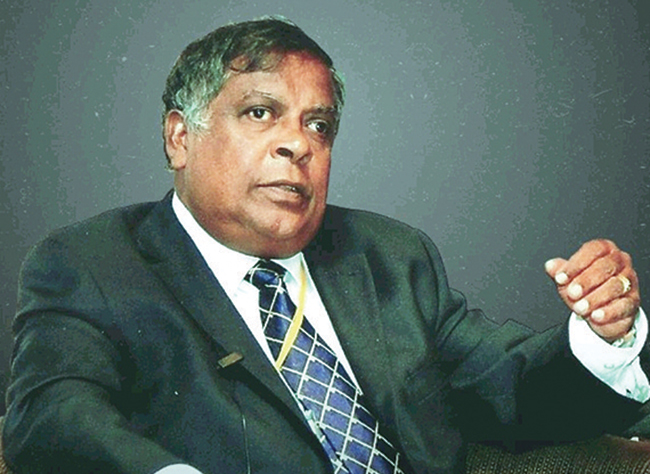
Mr. Tuli Cooray, former Deputy Director General of the Board of Investment of Sri Lanka (BOI) and former Secretary General of the Joint Apparel Association Forum (JAAF), passed away three months ago, leaving a distinguished legacy of public service and dedication to national economic development.
An alumnus of the University of Colombo, Mr. Cooray graduated with a Special Degree in Economics. He began his career as a Planning Officer at the Ministry of Plan Implementation and later served as an Assistant Director in the Ministry of Finance (Planning Division).
He subsequently joined the Greater Colombo Economic Commission (GCEC), where he rose from Manager to Senior Manager and later Director. During this period, he also served at the Treasury as an Assistant Director. With the transformation of the GCEC into the BOI, he was appointed Executive Director of the Investment Department and later elevated to the position of Deputy Director General.
In recognition of his vast experience and expertise, he was appointed Director General of the Budget Implementation and Policy Coordination Division at the Ministry of Finance and Planning. Following his retirement from government service, he continued to contribute to the national economy through his work with JAAF.
Mr. Cooray was widely respected as a seasoned professional with exceptional expertise in attracting foreign direct investment (FDI) and facilitating investor relations. His commitment, leadership, and humane qualities earned him the admiration and affection of colleagues across institutions.
He was also one of the pioneers of the BOI Past Officers’ Association, and his passing is deeply felt by its members. His demise has created a void that is difficult to fill, particularly within the BOI, where his contributions remain invaluable.
Mr. Cooray will be remembered not only for his professional excellence but also for his integrity, humility, and the lasting impact he made on those who had the privilege of working with him.
The BOI Past Officers’ Association
jagathcds@gmail.com
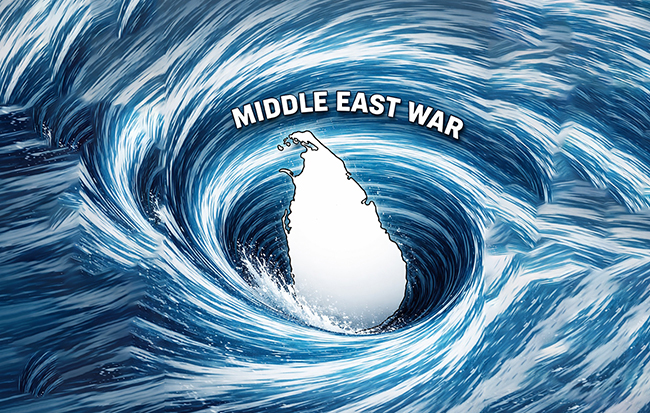
“As a small and open country, Singapore will always be vulnerable to what happens around us. As Lee Kuan Yew used to say: “when elephants fight, the grass suffers, but when elephants make love, the grass also suffers“. Therefore, we must be aware of what is happening around us, and prepare ourselves for changes and surprises.” – Prime Minister Lee Hsien Loong, during the debate on the President’s Address in Singapore Parliament on 16 May, 2018, commenting on the uncertain external environment during the first Trump Administration.
“When elephants fight, it is the grass that suffers”
is a well-known African proverb commonly used in geopolitics to describe smaller nations caught in the crossfire of conflicts between major powers. At the 1981 Commonwealth conference, when Tanzanian President Julius Nyerere quoted this Swahili proverb, the Prime Minister Lee Kuan Yew famously retorted, “When elephants make love, the grass suffers, too”. In other words, not only when big powers (such as the US, Russia, EU, China or India) clash, the surrounding “grass” (smaller nations) get “trampled” or suffer collateral damage but even when big powers collaborate or enter into friendly agreements, small nations can still be disadvantaged through unintended consequences of those deals. Since then, Singaporean leaders have often quoted this proverb to highlight the broader reality for smaller states, during great power rivalry and from their alliances. They did this to underline the need to prepare Singapore for challenges stemming from the uncertain external environment and to maintain high resilience against global crises.
Like Singapore, as a small and open country, Sri Lanka too is always vulnerable to what happens around us. Hence, we must be alert to what is happening around us, and be ready not only to face challenges but to explore opportunities.
When Elephants Fight
To begin with, President Trump’s “Operation Epic Fury”.
Did we prepare adequately for changes and surprises that could arise from the deteriorating situation in the Gulf region? For example, the impact the conflict has on the safety and welfare of Sri Lankans living in West Asia or on our petroleum and LNG imports. The situation in the Gulf remains fluid with potential for further escalation, with the possibility of a long-term conflict.
The region, which is the GCC, Iraq, Iran, Israel, Jordan, Syria and Azerbaijan (I believe exports to Azerbaijan are through Iran), accounts for slightly over $1 billion of our exports. The region is one of the most important markets for tea (US$546 million out of US$1,408 million in 2024. According to some estimates, this could even be higher). As we export mostly low-grown teas to these countries, the impact of the conflict on low-grown tea producers, who are mainly smallholders, would be extremely strong. Then there are other sectors like fruits and vegetables where the impact would be immediate, unless of course exporters manage to divert these perishable products to other markets. If the conflict continues for a few more weeks or months, managing these challenges will be a difficult task for the nation, not simply for the government. It is also necessary to remember the Russia – Ukraine war, now on to its fifth year, and its impact on Sri Lanka’s economy.
Mother of all bad timing
What is more unfortunate is that the Gulf conflict is occurring on top of an already intensifying global trade war. One observer called it the “mother of all bad timing”. The combination is deadly.
Early last year, when President Trump announced his intention to weaponise tariffs and use them as bargaining tools for his geopolitical goals, most observers anticipated that he would mainly use tariffs to limit imports from the countries with which the United States had large trade deficits: China, Mexico, Vietnam, the European Union, Japan and Canada. The main elephants, who export to the United States. But when reciprocal tariffs were declared on 2nd April, some of the highest reciprocal tariffs were on Saint Pierre and Miquelon (50%), a French territory off Canada with a population of 6000 people, and Lesotho (50%), one of the poorest countries in Southern Africa. Sri Lanka was hit with a 44% reciprocal tariff. In dollar terms, Sri Lanka’s goods trade deficit with the United States was very small (US$ 2.9 billion in 2025) when compared to those of China (US$ 295 billion in 2024) or Vietnam (US$ 123 billion in 2024).
Though the adverse impact of US additional ad valorem duty has substantially reduced due to the recent US Supreme Court decision on reciprocal tariffs, the turbulence in the US market would continue for the foreseeable future. The United States of America is the largest market for Sri Lanka and accounts for nearly 25% of our exports. Yet, Sri Lanka’s exports to the United States had remained almost stagnant (around the US $ 3 billion range) during the last ten years, due to the dilution of the competitive advantage of some of our main export products in that market. The continued instability in our largest market, where Sri Lanka is not very competitive, doesn’t bode well for Sri Lanka’s economy.
When Elephants Make Love
In rapidly shifting geopolitical environments, countries use proactive anticipatory diplomacy to minimise the adverse implications from possible disruptions and conflicts. Recently concluded Free Trade Agreement (FTA) negotiations between India and the EU (January 2026) and India and the UK (May 2025) are very good examples for such proactive diplomacy. These negotiations were formally launched in June 2007 and were on the back burner for many years. These were expedited as strategic responses to growing U.S. protectionism. Implementation of these agreements would commence during this year.
When negotiations for a free trade agreement between India and the European Union (which included the United Kingdom) were formally launched, anticipating far-reaching consequences of such an agreement on other developing countries, the Commonwealth Secretariat requested the University of Sussex to undertake a study on a possible implication of such an agreement on other low-income developing countries. The authors of that study had considered the impact of an EU–India Free Trade Agreement on the trade of excluded countries and had underlined, “The SAARC countries are, by a long way, the most vulnerable to negative impacts from the FTA. Their exports are more similar to India’s…. Bangladesh is most exposed in the EU market, followed by Pakistan and Sri Lanka.”
So, now these agreements are finalised; what will be the implications of these FTAs between India and the UK and the EU on Sri Lanka? According to available information, the FTA will be a game-changer for the Indian apparel exporters, as it would provide a nearly ten per cent tariff advantage to them. That would level the playing field for India, vis-à-vis their regional competitors. As a result, apparel exports from India to the UK and the EU are projected to increase significantly by 2030. As the sizes of the EU’s and the UK’s apparel markets are not going to expand proportionately, these growths need to come from the market shares of other main exporters like Sri Lanka.
So, “also, when elephants make love, the grass suffers.”
Impact on Sri Lanka
As a small, export dependent country with limited product and market diversification, Sri Lanka will always be vulnerable to what happens in our main markets. Therefore, we must be aware of what is happening in those markets, and prepare ourselves to face the challenges proactively. Today, amid intense geopolitical conflicts, tensions and tariff shifts, countries adopt high agility and strategic planning. If we look at what our neighbours have been doing in London, Brussels and Tokyo, we can learn some lessons on how to navigate through these turbulences.
(The writer is a retired public servant and can be reached at senadhiragomi@gmail.com)
by Gomi Senadhira
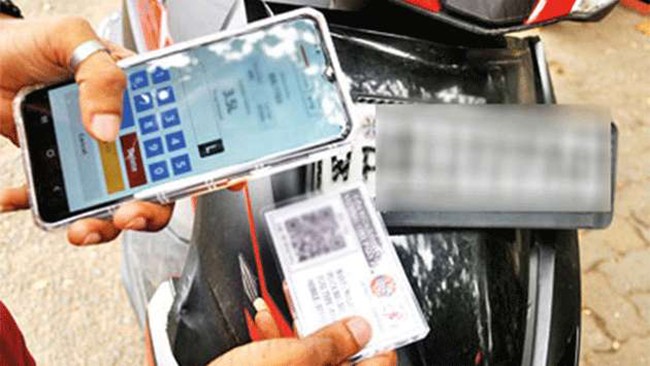
The introduction of the QR code–based fuel quota system can be seen as a timely and necessary measure, implemented as part of broader austerity efforts to manage limited fuel resources. In the face of ongoing global fuel instability and economic challenges, such a system is aimed at ensuring equitable distribution and preventing excessive consumption. While it is undeniable that this policy may disrupt the daily routines of certain segments of the population, it is important for citizens to recognize the larger national interest at stake and cooperate with these temporary measures until stability returns to the global fuel market.
At the same time, this initiative presents an important opportunity for the Government to address long-standing gaps in regulatory enforcement. In particular, the implementation of the QR code system could have been strategically linked to the issuance of valid revenue licenses for vehicles. Restricting QR code access only to vehicles that are properly registered and have paid their revenue dues would have helped strengthen compliance and improve state revenue collection.
Available data from the relevant authorities indicate that a significant number of vehicles—especially three-wheelers and motorcycles—continue to operate without valid revenue licences. This represents a substantial loss of income to the State and highlights a weakness in enforcement mechanisms. By integrating the fuel quota system with revenue license verification, the government could have effectively encouraged vehicle owners to regularise their documentation while simultaneously improving fiscal discipline.
In summary, while the QR code fuel system is a commendable step toward managing scarce resources, aligning it with existing regulatory requirements would have amplified its benefits. Such an approach would not only support fuel conservation but also enhance government revenue and promote greater accountability among vehicle owners.
Sariputhra
Colombo 05

Electricity tariffs to be increased from 1st April

A QR code system to be introduced for agricultural lands and other sectors requiring fuel

Rickelton, Rohit, Shardul break Mumbai’s first-game jinx

Oil tops $116 a barrel as Iran accuses US of preparing invasion

Iranian attack damages Kuwait power and desalination plant, kills worker

Warm weather conditions prevailing over the island are expected to continue

‘Dates have the highest sugar content to fight Coronavirus’

Sunday Island 27 December – Headlines

#SundayIsland 17th December – Headlines

Sunday Island – 28th March

Sunday Island Headlines – 21 March

Sunday Island – 21st February – Headlines
-

 News6 days ago
Senior citizens above 70 years to receive March allowances on Thursday (26)
-

 Features3 days ago
A World Order in Crisis: War, Power, and Resistance
-

 News4 days ago
Energy Minister indicted on corruption charges ahead of no-faith motion against him
-

 News5 days ago
US dodges question on AKD’s claim SL denied permission for military aircraft to land
-

 Business5 days ago
Dialog Unveils Dialog Play Mini with Netflix and Apple TV
-
 News6 days ago
CEB Engineers warn public to be prepared for power cuts after New Year
-

 Sports4 days ago
SLC to hold EGM in April
-
 Business7 days ago
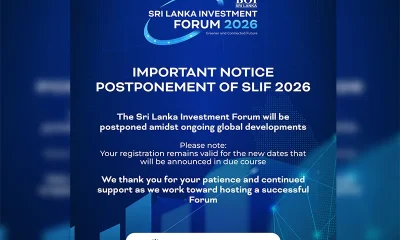
Postponement of Sri Lanka Investment Forum 2026