
News
SLBA rejects “misconceived” diatribe against lending and debt recovery practices of banks

The Sri Lanka Bank’s Association (SLBA) has rejected a reported recent tirade against banks by two senior lawmakers, describing their remarks as “misconceived, inaccurate, misleading and unhelpful.”The SLBA, which represents all banks licensed by the Central Bank of Sri Lanka (CBSL) including state banks, public listed companies and branch offices of international banks, said in a statement that it was compelled to respond to the remarks attributed to the two ministers in the interest of assuring depositors that their monies are safe, and that due process was being strictly followed in lending and recovery of loans from debtors.
“We are concerned that the hyperbole generated about the lending and loan recovery processes of banks could create an impression that due processes are not being followed by banks and that depositors’ funds could be at risk,” the SLBA said. “This is most definitely not the case, and any impression being created that banks are lending on personal connections and political influence, that parate laws are being abused and customers exploited, are misconceived, inaccurate, misleading and unhelpful.”
The SLBA said it wishes to assure depositors that the monies being lent are being recovered, and that it is only a small number of borrowers that want to continue their failed or unproductive businesses, that are unwilling to review their viability with the banks, and are resorting to aggressive lobbying. “Their desire seems to be to continue living their life-style on unsustainable debt rather than on earnings from productive enterprise,” the Association said.
“Banks take deposits from the public and must repay these deposits as promised. These deposits are lent to eligible borrowers — individuals, small scale businesses, the MSME sector which is a significant contributor to the national economy, as well as to large corporates,” the SLBA said, pointing out that according to the annual report of the Ministry of Finance, banks had lent Rs 704 billion to SMEs alone, in 2023.
“It is inevitable that among the banks’ borrowers there will be some who have failed, face debt repayment stress or are simply willful defaulters. This last segment though small, is vociferous and has within it, influential lobbyists. However, the process world over is that loans that have been identified as non-performing are reviewed by both borrower and lender to assess viability with a view to moving to a resolution that preserves residual assets. This prevents forced sale for recovery of what may be available. It needs cooperation from borrowers to work with lenders – not to resort to lobbyists in an attempt to carry on a failed or unproductive enterprise,” the SLBA said.
“All debt recovery remedies are intended to protect the depositors from risk of a bank failing to meet payments of interest and return of their deposits as promised,” the SLBA said.
The Association pointed out that banks have helped and continue to help borrowers including MSMEs that got into difficulty due to their exposure to external risks such as the COVID-19 pandemic, the Easter Sunday attacks of 2019, and the economic crisis, and that many of these borrowers have overcome those difficulties.
“The banking sector though much maligned, also supported the government as well as the country’s economy with US Dollar and Rupee investments in government securities, and providing foreign currency when there was need to fund essential imports,” the Association said.
“The reality however, is that some businesses have gone beyond the resolution stage and need to be exited by the owners. Such businesses must understand that depositors’ funds cannot be misused to support a desire to continue failed businesses with the backing of non-banking sector lobbyists. This is dangerously misleading,” the SLBA said.
“We wish to emphasise,” the SLBA concluded, “that banking is a regulated industry with the highest standards of compliance, and a stable and progressive banking system is the bedrock of future economic growth. Making sweeping generalisations and unfounded accusations about banking practices is therefore extremely ill-advised.”


The Committee for Protecting Rights of Prisoners (CPRP) has complained to the UN regarding custodial deaths.
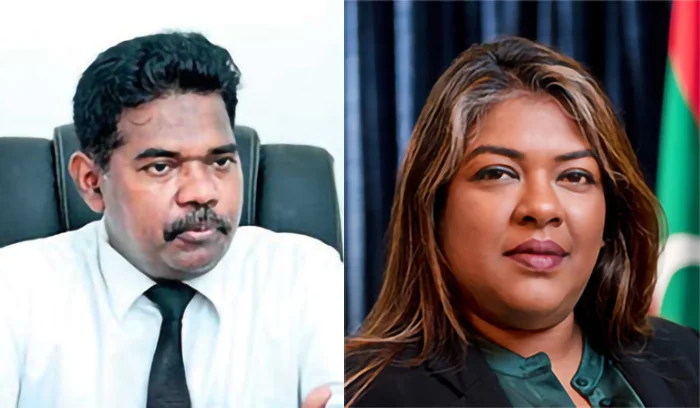
Executive Director of the Committee, Attorney-at-Law Senaka Perera told The Island that they had submitted written submissions to the visiting UN Subcommittee on Prevention of Torture (SPT) on Monday (15). “We are confident that they’ll take up the issues at hand with the government and take tangible measures to improve the conditions in prisons and detention facilities,” Perera said.
The SPT is here from 15 to 24 June. The visiting delegation consists of Aisha Shujune Muhammad, Head of Delegation (Maldives), Jakub Julian Czepek (Poland), Nika Kvaratskhelia (Georgia), Anica Tomsic (Croatia) and two human rights officers from the Office of the High Commissioner for Human Rights.
Claiming that there had been 184 prison deaths in 2024, the Committee asserted that though there was a drop in the number of cases, the deaths caused by underlying health complications and systemic issues weren’t available at the moment.
According to a copy of the submissions made to the SPT, received by The Island, there had been seven custodial deaths this year alone, reported from various parts of the country.
The Committee took a very critical position, while Foreign Minister Vijitha Herath assured the visiting delegation that the government didn’t tolerate torture at all.
The Ministry statement Monday night quoted Herath as having described the government response as zero tolerance policy.
The Committee for Protecting Rights of Prisoners also dealt with several other contentious issues, including special treatment granted to those with political connections and privileged backgrounds. Perera alleged that in spite of a change of government, in 2024 September, the much anticipated improvements failed to materialise and the continuing custodial deaths highlighted the crisis in the prisons and detention facilities.
According to the Committee, the situation was so bad and further deteriorating in overcrowded prisons, the national overcrowding rate has reached an unsustainable 286.6%, with some facilities, like the Vavuniya Remand Prison, exceeding capacity by 300%.
A significant portion of this population (65.4%) consists of persons not convicted awaiting trial, the Committee said, urging the SPT to look into the pathetic situation.
The Committee also complained of torture and ill-treatment at some detention facilities. There had been cases of lawyers, visiting detention centres at Welisara and Boossa, been subjected to degrading and humiliating searches, including forced removal of clothing.
The Committee also brought to the SPT’s notice how the Supreme Court, on 14 December, 2023, held the former Inspector General of Police (IGP), Deshabandu Thennakoon, personally responsible for torture. The failure on the part of prison authorities to grant inmates a fair hearing during internal investigations, too, has been raised by the Committee.
Among the other issues that had been raised were enforced disappearances, health and medical conditions, food, water and sanitation, corporal punishments and the operation of detention facilities within military bases.
Referring to the enforced disappearance of Gonapinuwala Kapila Kumara de Silva on 27 March, 2024, the Committee alleged that the Attorney General failed to take action against the perpetrators, believed to be members of the Special Task Force (STF)
The Committee alleged that in spite of them submitting formal complaints and an urgent letter to the Attorney General demanding prosecution under the International Convention for the Protection of All Persons from Enforced Disappearances Act, No. 5 of 2018, the AG took no meaningful action.
Consequently, CPRP filed a Writ of Mandamus petition in the Court of Appeal (CA/WRIT/185/26) against the Attorney General and other officials, seeking judicial intervention to compel investigation and prosecution. The case remains pending
by Shamindra Ferdinando
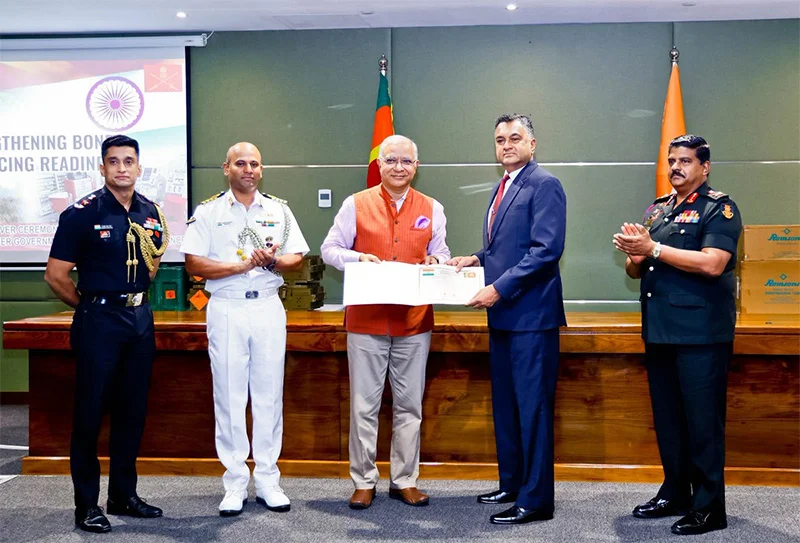
Responding to Sri Lanka’s request, India has approved military stores worth USD 5.5 million to Sri Lanka Army on gratis basis from Indian Army’s operational stocks.
The IHC spokesperson said: “The Sri Lanka Army faced shortage of these military stores, thereby affecting its operational preparedness. The Government of India agreed to meet this urgent requirement within a month and it also agreed to transship these stores onboard Indian Naval Ship Sharda, which was specially detailed to transport these stores to Colombo on gratis basis. The handing over ceremony was attended by H.E. Santosh Jha, High Commissioner of India, Colombo, Air Vice Marshal SampathThuyacontha (Retd), Secretary Defence, Government of Sri Lanka and Lt Gen Lasantha Rodrigo, Commander of the Sri Lanka Army.”
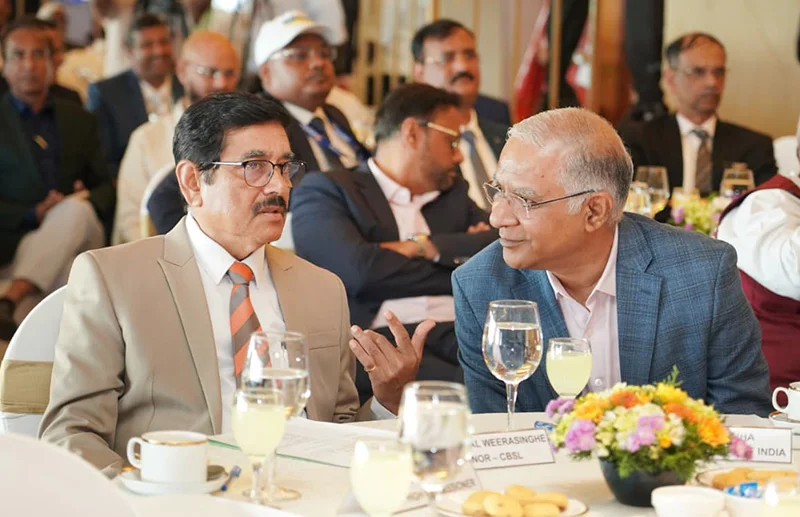
Central Bank Governor Dr. Nandalal Weerasinghe on Monday (15) outlined the recent policy measures undertaken to strengthen the financial framework supporting INR-LKR transactions and emphasized the need to strengthen trade and investment linkages between both countries.
Dr. Weerasinghe said so in his keynote opening remarks at a roundtable on “Rupee to Rupee Strengthening the India-Sri Lanka Commercial Corridor” held in Colombo.
The High Commission of India in Sri Lanka organised the roundtable that brought together senior representatives from government institutions, banking and financial sector organisations, industry leaders, importers, exporters, and business stakeholders from both countries to discuss opportunities for deepening India-Sri Lanka economic and commercial engagement through enhanced use of local currencies.
The Roundtable commenced with welcome remarks by Indian High Commissioner to Sri Lanka Santosh Jha, who highlighted the growing economic partnership between India and Sri Lanka and underscored the importance of local currency settlement mechanisms in facilitating bilateral trade, investment and financial connectivity.
Presentations were subsequently made by State Bank of India and Indian Bank, focusing on the operational aspects of INR-LKR trade settlements, available banking solutions, and recent policy guidelines permitting the disbursement of Indian Rupee-denominated loans through Authorised Dealer Banks in Sri Lanka.
A dedicated industry panel brought together leading voices from Sri Lanka’s banking and corporate sectors, including representatives from Commercial Bank, Seylan Bank, Standard Chartered Bank, AMW, DHT Cement, Lanka Spin Pvt. Ltd., Nithya Paper and Boards Lanka Pvt. Ltd.
Representatives shared practical experiences, benefits, challenges and opportunities related to the use of local currencies in trade and investment transactions, and explored pathways for further strengthening the commercial corridor between India and Sri Lanka.
Discussions during the Roundtable highlighted the growing acceptance of the INR-LKR settlement mechanism and its potential to facilitate smoother cross-border transactions, improve liquidity management, lower transaction costs, and enhance resilience in bilateral trade. Participants also emphasized the need for continued awareness-building, stronger banking linkages, and greater private sector participation to unlock the full potential of local currency settlements.

Nilakshika, Nuthyangana stun New Zealand to seal famous win for Sri Lanka

Showers will occur in the Western, Sabaragamuwa and North-western provinces and in Galle, Matara, Kandy and Nuwara-Eliya districts.

Tharanga heads to Doha as athlete to beat after Ostrava victory

Complaint of custodial deaths and torture submitted to UN

India provides military stores worth USD 5.5 mn to SL

India promotes INR-LKR settlement mechanism

‘Dates have the highest sugar content to fight Coronavirus’

Sunday Island 27 December – Headlines

#SundayIsland 17th December – Headlines

Sunday Island – 28th March

Sunday Island Headlines – 21 March

Sunday Island – 21st February – Headlines
-
 News5 days ago
CIABOC summons Yoshitha over his participation in British Navy training programme
-

 Sports2 days ago
Tharanga set for high-profile javelin clash in Ostrava
-

 News5 days ago
Justice Minister responds to social media claims he represented Easter Sunday ringleader
-

 News4 days ago
Commonwealth lawyers urge Lanka to uphold rule of law
-

 Features3 days ago
Politics of protected species
-

 News2 days ago
Theft of USD 2.5 mn from Treasury: CoPF accused of complicity in NPP cover-up
-

 News1 day ago
Beijing Capital Airlines to resume flights to Colombo signalling boost to tourism
-

 Features3 days ago
Of Whales and Submarines: Sri Lanka’s Security Dilemma