
News
SL wouldn’t have been in this mess if IMF conditions had been complied with – State FM

By Shamindra Ferdinanado
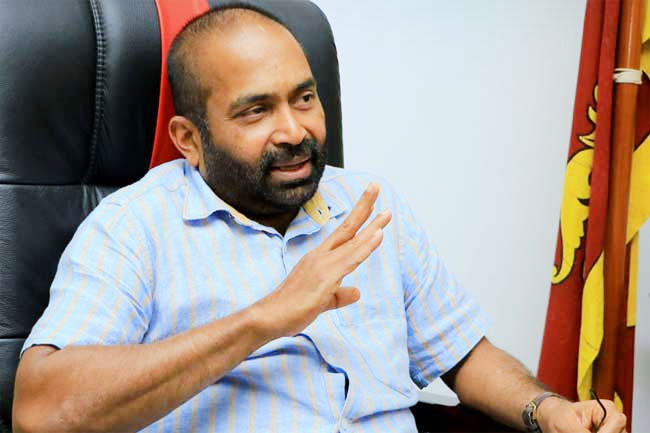
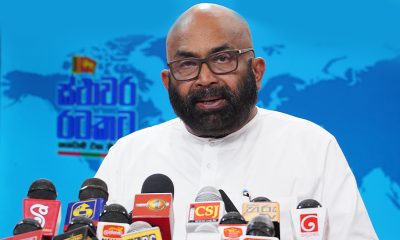
State Finance Minister Ranjith Siyambalapitiya has said that Sri Lanka wouldn’t have ended up being bankrupt if previous governments had adhered to agreements with the International Monetary (IMF).
Reiterating that the country is experiencing the worst ever economic crisis, lawmaker Siyambalapitiya warned that the government would be under IMF scrutiny this time around.
Appearing on weekly Hiru political programme Salakuna on Monday (26), the Kegalle District MP, who had previously served as State Finance Minister during Mahinda Rajapaksa’s tenure as the President, said that successive governments hadn’t been honest with the IMF. “We conveniently forgot what was promised to the IMF after having received a couple of tranches,” MP Siyambalapitiya said adding that the IMF would be alert now.
The State Finance Minister said that the first tranche amounting to USD 400 mn was expected in January 2023. The SLFPer emphasised that the financial mess couldn’t be settled with the USD 2.9 bn received from the IMF over a period of four years. However, the agreement with the IMF would restore the foreign governments’ faith in Sri Lanka, the State Minister mentioned.
Pointing out that Sri Lanka had received IMF loans on 16 previous occasions and the recently finalised Staf- Level agreement would lead to the 17th loan facility, MP Siyambalapitiya said that he signed the 15th agreement on behalf of Sri Lanka.
Responding to Hiru anchor Chamuditha Samarawickrema’s query whether economic crimes had been perpetrated as referred to by the United Nations Human Rights Commissioner’s latest report on Sri Lanka, lawmaker Siyambalapitiya said that there were no such crimes here. Therefore, the Geneva statement was not applicable to Sri Lanka. But, when Samarawickrema pressed the Minister on the accountability on the part of former President Gotabaya Rajapaksa’s government for the economic fallout, the lawmaker acknowledged the wrongdoing on their part.
Commenting on former President Gotabaya Rajapaksa’s government depriving the Treasury of over Rs 500 bn by implementing a wide tax cut, soon after the last presidential election, State Minister Siyambalapitiya faulted those who advised the President on economic matters. The State Minister said that the economy was handled by Presidents and Ministers who didn’t know the subject. When Samarawickrema pointed out that the former President was advised by Dr. P.B. Jayasundera, MP Siyambalapitiya said that he didn’t know that. Subsequently, MP Siyambalapitiya acknowledged the role played by Dr. PBJ, who then functioned as Secretary to the President, and previously as Secretary to the Treasury.
During an heated exchange, the State Finance Minister said that the then government reduced the number of tax files from 1.5 mn to 400,000 and the number registered taxpayers from 1.7 mn to 500,000. The MP said that the country was in a pathetic state today as successive governments followed wrong economic policies. The Covid-19 eruption in 2020 and external factors, too, contributed to the overall deterioration of the situation, the MP said.
In spite of clear indications that the country was heading for an unprecedented crisis, the powers that be steadfastly refused to seek IMF interventions. Instead, they continued the same harmful policies.
Asked whether as the State Finance Minister he felt the need to inquire into those responsible for the economic crisis, the MP said “Geneva was conducting investigations.” Samarawickrema asked why Geneva should be placed in charge of such an investigation when the responsibility lies with Sri Lanka. The Minister said: “I won’t hand over investigations to Geneva. I acknowledge the policies followed by successive governments were utterly wrong.
State Minister Siyambalapitiya also explained actions taken by him to explore ways and means of recovering losses suffered by the Treasury as a result of reduction of duty on a kilo of imported sugar from Rs 50 to 25 cents on Oct 13, 2020. The Minister said that Sri Lanka lacked laws to deal with those who perpetrated the sugar scam, adding that one of the sugar importers immensely benefited from the duty reduction.
State Minister Siyambalapitiya strongly defended his decision to accept ministerial portfolio, regardless of specific instructions from party leader Maithripala Sirisena not to do so.
Dismissing accusations that he switched allegiance to President Ranil Wickremesinghe for personal benefit, lawmaker Siyambalapitiya said that some of them accepted portfolios, as the Samagi Jana Balavegaya (SJB), the JVP and others would never have joined the government. They always feared the consequences of President Wickremesinghe overcoming the crisis, MP Siyambalapitiya said.








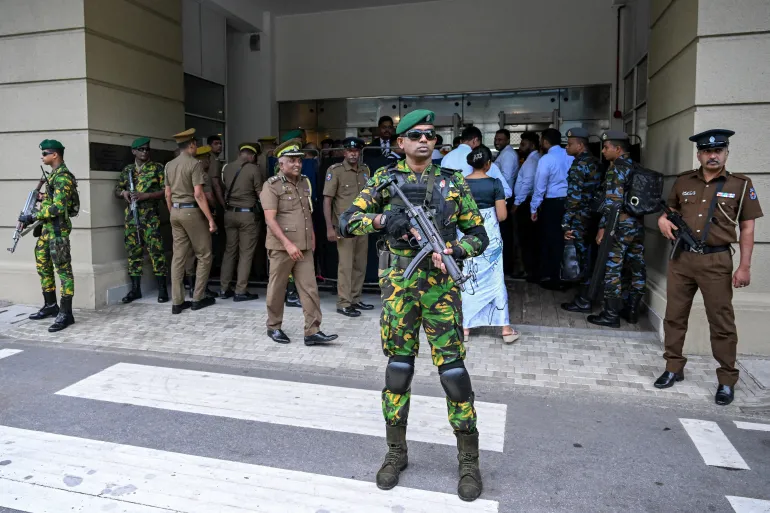
The High Court has convicted 14 of the 24 men accused of being directly involved in the 2019 Easter Sunday bombings, which killed 279 people.
The three-judge bench read out its decision on Tuesday after a five-year trial and said sentencing would take place later, the AFP news agency reported.
The charges included murder and conspiracy to commit terrorism.
Nine others were acquitted, while another defendant was found guilty of only some of the charges, the court said.
[Aljazeera]
By Shamindra Ferdinando
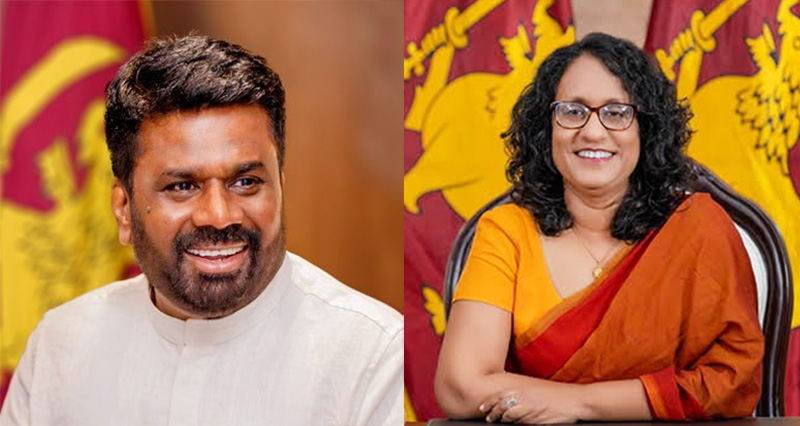
The ruling NPP yesterday (21) dismissed claims of a widening rift, within the government, over the proposed 22nd Amendment. Asked whether the NPP was concerned over a section of the Opposition alleging Prime Minister Dr. Harini Amarasuriya and two dozen MPs taking a view contrary to that of the party in this regard, authoritative party sources said some persons were propagating speculation for their own interest.
Declaring that there was absolutely no issue regarding the controversial Amendment, sources emphasised once it was tabled in Parliament, it would be passed with 2/3 majority.
Sources dismissed claims that out of its 159-member parliamentary group a section of NPPers was opposed to the government move. According to an influential Opposition activist, there are 57 JVPers and 66 NPPers in the government group and the rest contested the last parliamentary polls, having aligned with the JVP.
Ministerial sources told The Island that the government was confident of going ahead with the 22nd Amendment and Judicature (Amendment) Bills. Sources said that the NPP was not bothered about the Opposition protests in and outside Parliament.
Speaker Dr. Jagath Wickremaratne is expected to disclose the confidential ruling that he received from the Supreme Court in respect of more than 65 petitions for and against the 22nd Amendment and Judicial Amendment Bills. The enactment of the 22nd Amendment would pave the way for extending the retirement age of Supreme Court judges, from 65 to 67 years, and Court of Appeal judges, from 63 to 65 years.
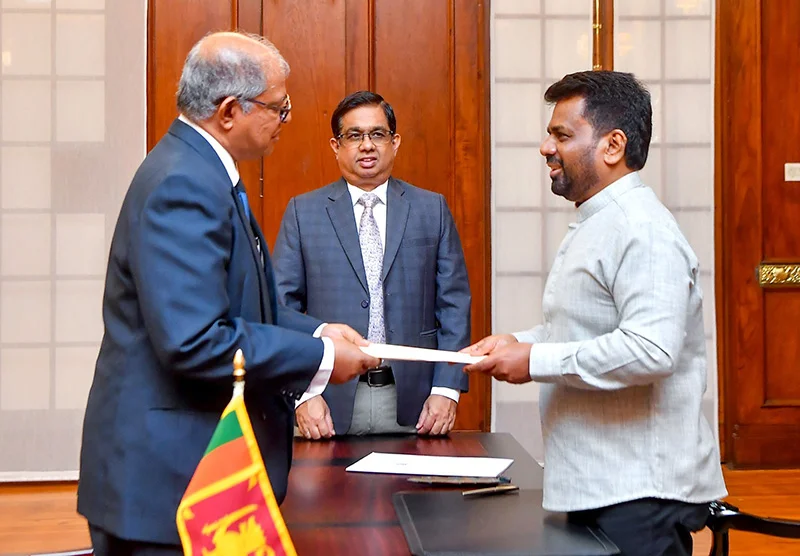
President Anura Kumara Dissanayake has appointed Court of Appeal Judge Mayadunna Sri Mevan Anthony Edirimannasuriya Corea as the Acting President of the Court of Appeal.
The appointment has been made as President’s Counsel Nalin Rohantha Abeysuriya, who currently serves as President of the Court of Appeal, will be overseas until the 24th.
Accordingly Justice Mayadunna Corea was sworn in as Acting President of the Court of Appeal before President Anura Kumara Dissanayake at the Presidential secretariat last morning (21).
Secretary to the President Dr Nandika Sanath Kumanayake was also present at the occasion.

High Court convicts 14 over deadly Easter bombings

Mandhana, Shafali and Ghosh lead dominant India to Asian Games gold

Fatima Sana and Umm-e-Hani secure bronze for Pakistan in Asian Games

India bat first in Asian games womens cricket final

Showers about 100mm will occur in the Western, Sabaragamuwa, Central and North-western provinces and in Galle and Matara Districts

Govt. confident of 2/3 majority despite NPP split speculation

‘Dates have the highest sugar content to fight Coronavirus’

Sunday Island 27 December – Headlines

#SundayIsland 17th December – Headlines

Sunday Island – 28th March

Sunday Island Headlines – 21 March

Sunday Island – 21st February – Headlines
-

 News6 days ago
US embassy won’t comment on IGP’s probe into joint drug raid
-

 News5 days ago
Bid for Basil’s extradition nears final stage: Police
-

 News4 days ago
Shanakiyan urges urgent action over reported death sentence for Lankan in Saudi Arabia
-

 Business6 days ago
All-new Bolero MaXX unveiled in Sri Lanka
-

 News3 days ago
Namal Rajapaksa Buddhist gambit fails, bail denied
-
 Opinion6 days ago
A journalist who wrote across the divide
-

 Editorial7 days ago
More fuel price shocks shrouded in secrecy
-

 Sports7 days ago
MAS Holdings, official clothing sponsor of Sri Lanka team at Aichi–Nagoya 2026 Asian Games