
News
SL will engage major T-bond holders for voluntary optimization: Governor


ECONOMYNEXT –Sri Lanka will not re-structure Treasury bills outside of central bank holdings and will engage with major T-bond holders for voluntary ‘optimization’ Governor Nandalal Weerasinghe said.
“There will be some treatment on central bank held Treasury bills,” Governor Nandal Weeasinghe told a creditor presentation Thursday.
“Other Treasury bill holdings will not be treated. Treasury bonds we envisage voluntary optimization.”
Sri Lanka has to at least extend the maturities of bonds to reach a gross financing need target averaging 13 percent of GDP in 2027-2032 based on projections in an IMF debt sustainability analysis. Of that foreign debt service has be below 4.5 percent of GDP on average.
“Local currency creditors participation in a debt optimization will help reaching the DSA targets,” Treasury Secretary Mahinda Siriwardena said.
“Authorities are exploring options for domestic debt operations aimed at liquidity relief while preserving financial stability to avoid further eroding Sri Lanka’s repayment capacity.”
The government and advisors will “invite consultations with major T-bond holders to gauge options and constraints”, he said.Governor Weerasinghe and Treasury Secretary Mahinda Siriwardene said Sri Lanka is likely to outperform the growth targets in the IMF debt sustainability analysis given past history. The IMF DSA is projecting 3.1 percent growth in the next few years.
Sri Lanka grew at rates around 4 to 5 percent during a 30 year war, but growth started to fall after serial currency crises hit the country under flexible inflation targeting with output gap targeting (monetary stimulus) during peacetime. In 2020 taxes were also cut for stimulus, going beyond open market operations and outright purchases of bonds seen earlier.
Meanwhile state spending went up from 17 to 20 percent of GDP under state expansionist revenue based fiscal consolation after spending based consolidation (cost cutting) was thrown out of the window from 2015 to 2019, critics say.
Sri Lanka is now trying to cut spending and excessive growth of the public sector, based on normal economic principles, to limit the burden of the unaffordable state on productive sectors and the poor, while preserving essential spending.According to the latest IMF program, fiscal consolidation will be “primarily” revenue based.
Sri Lanka’s Treasury bill and bond yields were higher than required due to uncertainty over whether they will be re-structured and the so-called ‘gilt’ status will no longer apply.
The lack of an early cut off date for domestic debt is a key problem in the IMF’s current debt resolution framework as domestic bond buyers are the last resort lenders after most foreign creditors stop lending, when the IMF says a country’s debt is no longer sustainable.
Download presentation from here.
Sri Lanka and debt advisors will engage with major Treasury bond holders, Weerasinghe said.
Key T-bond holders are Employment Provident Fund, Employment Trust Fund, insurance companies and banks.
Sri Lanka is also conducting an asset quality of review of banks.
Based on its results a debt optimization options will be offered paying attention to asset liability mis-matches, Weerasinghe said.
By preserving banking sector stability foreign investors are more likely to get repaid.

News
Cabinet nod to increase the number of new automated passenger clearance gates at the Bandaranayake International Airport to 12


Approval of the Cabinet of Ministers was granted at their meeting held on 19.05.2025 to purchase four (04) automated passenger clearance gates for Bandaranayake International Airport.
In addition, it is expected to extend the automated passenger clearance gates facility so far given only to the Sri Lankans
parallel to the e – passport issuance system to be introduced in the year 2027 also to the foreigners who travel to and from this country.
Furthermore, considering also the number of air passengers rapidly increasing with the fast – forwarding business and tourism field, the appropriateness to increase the total automated passenger clearance gates up to twelve (12) in number has been recognized.
Accordingly, the Cabinet of Ministers, approved the resolution furnished by the Minister of Public Security and Parliamentary Affairs to initiate the procurement and installation of 12
automated passenger clearance gates altogether with the already approved four (04) and another eight (08) automated passenger clearance gates adhering to the formal procurement procedure
Based on the observations submitted by the Task Force on Prevention of Money Laundering and Financing for Terrorism, approval of the Cabinet of Ministers was granted at their meeting held on 18.12.2024 to amend the Trust Ordinance No. 9 of 1917 including amendments proposed by the Financial
Intelligence Unit of the Central Bank of Sri Lanka.
Accordingly, clearance of the Attorney General has been granted for the Trust (Amendment) Draft Bill formulated by the Legal Draftsman.
Therefore, the Cabinet of Ministers approved the resolution furnished by the Minister of Justice and National Integration
to publish the said draft bill in the government gazette notification and thereby, submit the same to the Parliament for its concurrence.
Action was taken to provide a fuel relief for the fuel consumers during the months of April, May and June of 2026 to redress by minimizing the impact caused to the day today life of the citizens of this country as well as the entire economy due to the price hike of petroleum fuel in the global market resulting from the war situation in the Middle East.
Government mediation is essential for minimizing the impact on the day to today life of citizens in this country due to that war situation not being ended further. Therefore, it has been planned to redress on the sale price for Auto Diesel and Industrial Diesel for a period of 03 months by the Government to provide relief to the public as well as to maintain the prices at a bearable level to the consumers without escalating the fuel prices in this country compared to the escalation of fuel prices
in the international market.
Therefore, the Cabinet of Ministers granted approval for the resolution furnished by the President in his capacity as the Minister of Finance, Planning and Economic Development to
allocate provisions subject to the monthly limitations respectively as rupees 15 billion for the month of October, rupees 13.5 billion for the month of November and rupees 12.15 billion for the month of December to provide the said relief

Cabinet nod to increase the number of new automated passenger clearance gates at the Bandaranayake International Airport to 12
Draft Bill for amending the Trust Ordinance
Implementing further relief programme to Public sffected by the Middle East conflict situation
Establishment of a Spectrum Management and Monitoring System and a Quality of Service and Quality of Experience System for the Telecommunications Regulatory Commission of Sri Lanka
Appointment of a Committee for the Restitution of Sri Lankan Cultural Heritage Held Abroad
Ten-Year National Action Plan on the Social Protection Sector (2026–2035)

‘Dates have the highest sugar content to fight Coronavirus’

Sunday Island 27 December – Headlines

#SundayIsland 17th December – Headlines

Sunday Island – 28th March

Sunday Island Headlines – 21 March

Sunday Island – 21st February – Headlines
-

 News7 days ago
Mastermind Naufer Moulavi among 15 found guilty
-
 Midweek Review7 days ago
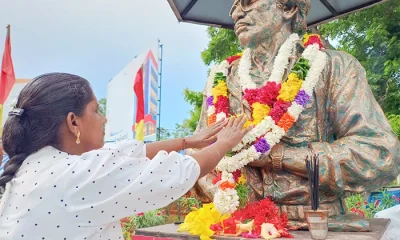
Thileepan’s fast unto death: An authentic narrative that many missed
-

 Latest News6 days ago
Showers above 100 mm are likely at some places in the Western, Sabaragamuwa, Central and North-western provinces and in Galle and Matara Districts
-

 Editorial7 days ago
Big Bad Bills
-
Editorial6 days ago
Crimes punished and unpunished
-

 Features5 days ago
Beyond traditional jobs: Why Sri Lanka needs to facilitate the gig economy
-

 News7 days ago
No referendum needed for passage of 22 A: SC
-

 News7 days ago
One clause in Anti-Corruption (Amendment) Bill requires referendu: SC