
News
Lanka points out flaws in Geneva process, disputes Canada’s genocide claim

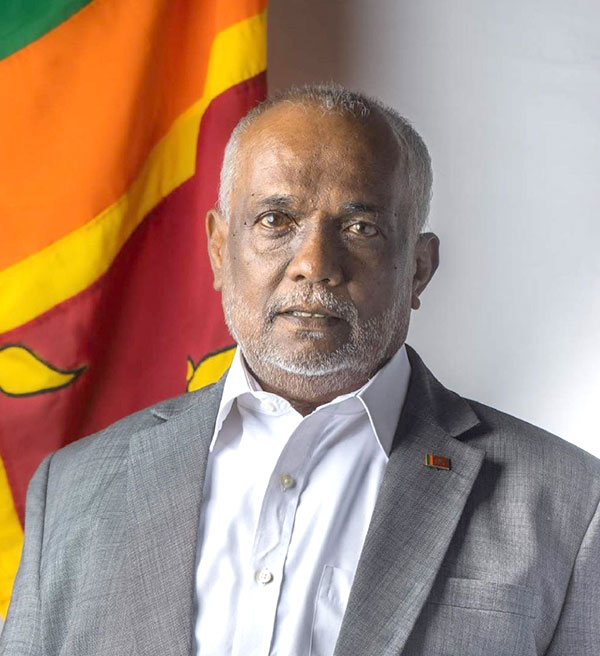
HC Navaratne responds to Ontario’s politico’s allegation 140,000 killed in Vanni war
Sri Lanka has pointed out flaws in the process adopted by the Geneva-based United Nations Human Rights Council (UNHRC) to pursue unsubstantiated war crimes accusations, which paved the way for the 2015 accountability resolution. In spite of serious concerns expressed by the then Opposition and the armed forces, the yahapalana government co-sponsored the controversial resolution against Sri Lanka.
Sri Lanka’s High Commissioner in Ottawa Harsha Kumara Navaratne has pointed out glaring inadequacies in the Geneva process exploited by interested parties, including those in Canada, to accuse Sri Lanka of causing genocide in the final phase of the conflict.
There hasn’t been a previous instance of Sri Lanka directly disputing the Geneva process since the adoption of the 2015 accountability resolution. The much-anticipated position has been taken ahead of the next Geneva sessions scheduled to begin later this month.
The following is the text of the statement titled ‘Refuting the allegation of ‘Tamil Genocide’ in the final phase of the conflict in Sri Lanka issued by the Sri Lankan mission in Ottawa requesting those interested in genuine post-war national reconciliation to initiate a dialogue with HC Navaratne: The term genocide is used to describe one of the gravest crimes against humanity, comprising of specific acts committed with intent to destroy, in whole or in part, a national, ethnical, racial or religious group. Therefore, the Sri Lanka High Commission in Canada notes with serious concern attempts by certain parties in Canada trying to portray the final phase of the conflict in Sri Lanka which ended in 2009 as ‘genocide’ against the Tamil people of Sri Lanka. The Sri Lanka community in Canada is multi-ethnic and multi-religious. In this context, the Private Member Bill 104 on ‘Tamil Genocide Education Week’ passed in Canadian province of Ontario has caused strain in intercommunity relations among the Sri Lankan community by the depiction of a false narrative against one community.
In addition, while appreciating the various Canadian Government focused programs for Sri Lankan Tamil Canadians, we are disappointed to note that on January 31, 2022, at an event announcing funding for Tamil students with targeted mental health and wellness programs and resources, Mr. Stephen Lecce, Ontario’s Minister of Education made comments including “we are very deliberate in our choice of words that we recognize a genocide that transpired against the innocent Tamil people” and “in a genocide that has left over 140,000 innocents perished at the hands of the regime in Colombo”. Mr. Vijay Thanigasalam, MPP Scarborough – Rouge Park, who was also present, referred to “Tamil genocide’ in his remarks.
We are appreciative that the Department of Foreign Affairs, Trade and Development in a
Diplomatic Note dated 7 th April 2021 responding to a clarification stated “that the Department of Foreign Affairs, Trade and Development clarify Canada’s official position with regard to allegations of genocide in Sri Lanka, the department can officially confirm that the Government of Canada has not made a finding that there was genocide in Sri Lanka”. Further, the Government of Canada has proscribed the Liberation Tamil Tigers Eelam Organisation (LTTE) as a Terrorist organization.
In this background, the repeated use of the word “Tamil Genocide” only generates dissention and prejudice amongst the children and community of Sri Lankan Canadians living in Ontario. Therefore, such allegations need to be refuted in the interest of social harmony and to prevent the spread of fallacies about Sri Lanka in the international community.
During the final phase of the conflict in Sri Lanka, the government forces confronted the internationally proscribed terrorist group Liberation Tigers of Tamil Eelam (LTTE), one of the most brutal terror groups the world has witnessed. The aim of the LTTE was to divide Sri Lanka on ethnic lines and carve out a separate State. With this objective, they conducted a three decades long terrorist campaign which brought much suffering and destruction on all communities.
During the last stages of the military conflict in 2009, when the LTTE was facing inevitable defeat, it resorted to holding Tamil civilians hostage as a human shield and refused all efforts to move civilians away from conflict areas. The allegation of civilian casualties and the exaggeration of the numbers was the means by which the LTTE sought to force foreign intervention to halt the government advance.
Nevertheless, the government forces managed to rescue approximately 290,000 Tamil civilians from the clutches of the LTTE, cared for them and resettled them. In addition, over 12,000 armed LTTE cadres were rehabilitated and released, proving thereby that the Sri Lankan government had avoided causing unnecessary deaths even among enemy combatants, not to speak of noncombatant civilians.
Therefore, there is absolutely no evidence to suggest any act and/or intent of the spurious allegations of “genocide” during the military engagement with the LTTE. Neither was there a pattern of events even to suggest “genocide”. Military experts have noted that the tactical options were justifiable and proportionate given the situation in the last phase of the military conflict.
Some parties, including LTTE remnant groups and sympathizers, have seized on hypothetical figures of civilian casualties contained in certain seriously flawed Reports commissioned by the UN, to push a claim of genocide of Tamil people in Sri Lanka during the final stage of the military conflict. However, not even the much-disputed UN Secretary General’s Panel of Experts report (PoE) carry the accusation of “genocide” against the Government of Sri Lanka. The principal findings of the OHCHR Investigation on Sri Lanka (OISL), in 2015 in to the alleged “war crimes” of Sri Lanka do not even suggest “genocide”.
Groups espousing the claim of genocide have seized the claim, made without any proof, in the PoE report “that there could have been as many as 40,000 civilian deaths” during the final months of the conflict. The PoE report came up with the hypothetical figure of 40,000 civilian deaths by setting off the actual number of people finally rescued by the Sri Lanka Army which was approximately 290,000 against the hypothetical figure of 330,000 which they deemed to be the number of civilians who had been in the area (Vanni) before military operations commenced in that region. This hypothetical number of 330,000 civilians used by the PoE is a purely arbitrary construct. Nobody, in Sri Lanka or outside, really knew exactly how many civilians the LTTE was holding in captivity during those months in 2009.
In addition, the PoE report mentions a lower figure of 7,721 deaths (up until 13 May 2009) reported by the United Nations Country Team in Sri Lanka. However, this figure is later disputed by the PoE report without explaining how it is that over 30,000 people could have been killed in the final days up until 18 May 2009 when the conflict ended, if the figure of 40,000 is ever to be correct and accurate.
It may be noted that in July 2011, the data collected by Department of Census and Statistics of Sri Lanka in the Northern Province, found that in 2008 and 2009 when the final battles raged in the Northern Province, the total number of persons who died of causes other than natural causes, was 9,283. The field data collection required for the project, the first enumeration of its kind in that part of the country since the census of 1981, was carried out by the predominantly ethnic Tamil government employees serving in the Northern Province. The number of fatalities suffered by the Sri Lanka Army during the final war against the LTTE between July 2006 and May 2009 was 5,876. It would only be logical to assume that the LTTE would have suffered a greater number of fatalities than the armed forces of Sri Lanka, and that of those reported (9,283) to have died in the Northern Province due to other than natural causes in 2008 and 2009, the vast majority would have been LTTE cadres or those directly involved in hostilities.
Legal experts have identified that the use of the disputed figure, which is the central weakness in the PoE report, is exacerbated by the standard of proof that it professed to adopt. A non-legal analysis (‘I felt sure’, I felt reasonably confident’, I was absolutely convinced’, ‘I had my suspicions’ etc.) is used in a document dealing with alleged criminality on a major scale – that name those who may be responsible and who merit further judicial and other process. They note that international courts and tribunals have not placed reliance on reports of this nature as being probative evidence to prove allegations in trials for war crimes and crimes against humanity.
Since the end of the conflict in 2009, Sri Lanka has pursued a policy of restoration, reparation, re –integration, rehabilitation and reconciliation within the overall concept of restorative justice. At a time when Sri Lanka is moving ahead with these processes, certain groups, including remnants of LTTE international network, have been trying to discredit and destabilize the efforts undertaken by Sri Lanka by pushing agendas such as ‘Tamil genocide’.
As seen in the comments made by Mr. Stephen Lecce, who cited a figure of 140,000 deaths, the contents of unverified reports have succeeded in misleading the international community and influencing opinion-formers and decision makers. If, with the passage of time, the dubious nature of the evidence on which the UN reports are based is forgotten, their accusations, which are in fact unproven, may become potent over repeated use.
The allegations of genocide impact on Sri Lanka’s relations with the international community, at a time when it is engaged in a long-standing cooperation with the UN human rights mechanisms and the UN Human Rights Council and is delivering on its commitment to address accountability and reconciliation through domestic processes and institutions.
Therefore, the High Commissioner of Sri Lanka extends an open invite to all those who are committed to the peace and reconciliation process of Sri Lanka to visit, meet and have a dialogue with him on this subject.”

Latest News
PM departs Sri Lanka to participate in the 56th World Economic Forum Annual Meeting in Davos-Klosters, Switzerland.

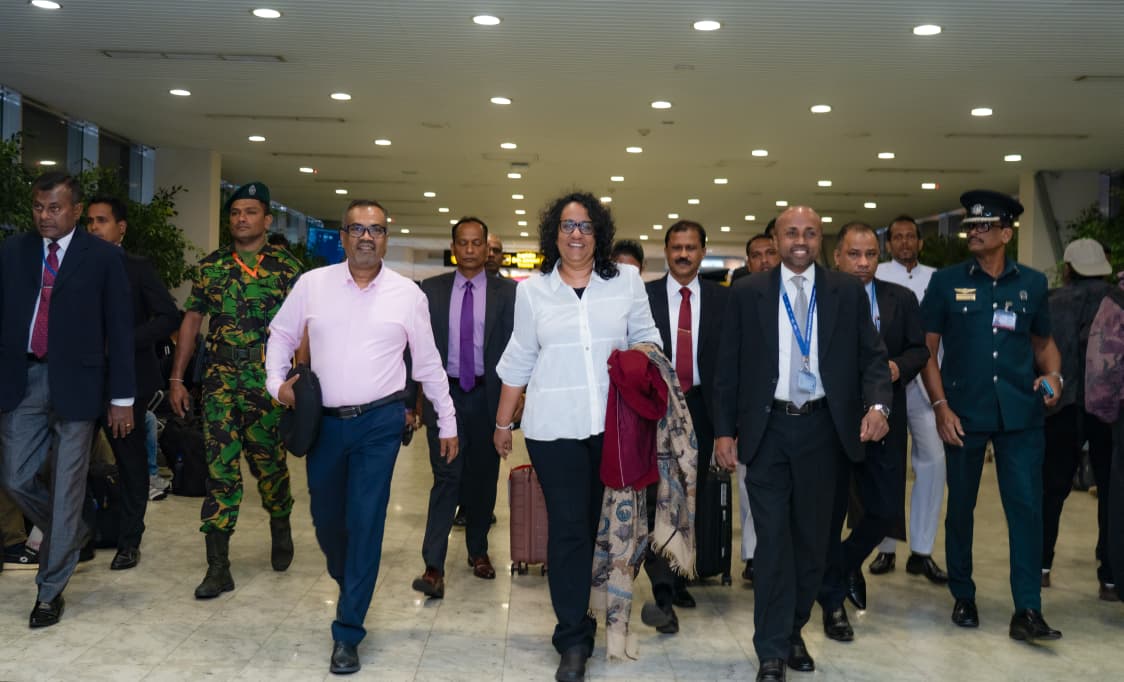
Prime Minister Dr. Harini Amarasuriya departed Sri Lanka on this morning (19 January) to participate in the 56th Annual Meeting of the World Economic Forum (WEF), to be held in Davos-Klosters, Switzerland, from 19 to 23 January 2026.
The World Economic Forum 2026 will be convened under the theme “A Spirit of Dialogue” and will bring together over 3,000 global leaders, including heads of state, government leaders, chief executive officers of leading multinational corporations, policymakers, and technology innovators.
During the visit, the Prime Minister is scheduled to hold a series of high-level bilateral meetings with key international leaders, heads of global institutions, and other distinguished dignitaries.
(Prime Minister’s Media Division)

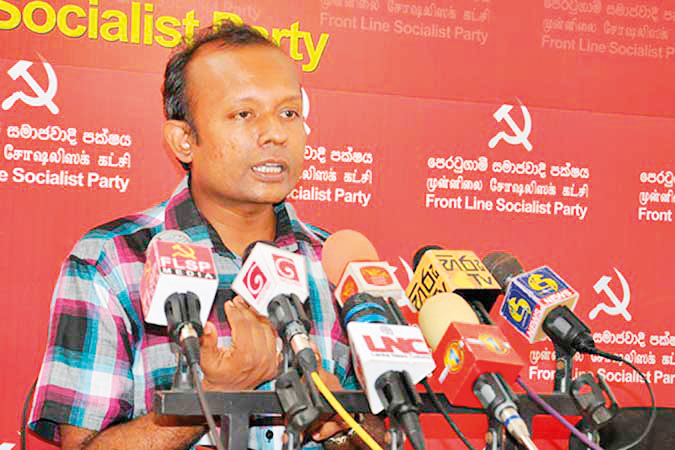
The government is under mounting pressure to release a foreign laboratory report on the controversial coal consignment imported for the Lakvijaya Power Plant, with the Frontline Socialist Party (FSP) accusing the authorities of political interference and tender manipulation.
Speaking to the media after a party meeting in Homagama yesterday, FSP Education Secretary Pubudu Jagoda demanded an immediate explanation for the delay in disclosing the report from a Dutch laboratory, Cotecna, which was commissioned to test samples of the coal stocks in question after doubts were raised about an earlier local laboratory assessment. Jagoda said Cabinet media spokesperson Dr. Nalinda Jayatissa had announced that the report would be submitted by 16 January, but it had yet to be made public.
“The Sri Lankan lab confirmed the coal was substandard and could damage both the environment and power plant machinery. The foreign lab has independently verified the same results, we are told. Yet, political pressure appears to be delaying the release of the report.” He warned that any attempt to issue a false report would eventually be exposed and urged the government and the laboratory to maintain transparency.
SLPP MP D.V. Chanaka told Parliament last week that while 107 metric tonnes of coal were normally required per hour to generate 300 megawatts, but as many as 120 tonnes of newly imported coal were needed to produce the same amount of power due to its lower calorific value. Tests showed the first two shipments had calorific values of 5,600–5,800 kcal/kg, below the required minimum of 5,900 kcal/kg, said.
Jagoda accused the government of tailoring procurement rules to benefit an Indian supplier, citing a drastic reduction in reserve requirements—from one million metric tonnes in 2021 to just 100,000 tonnes in 2025—and alleged previous irregularities by the company, including a 2016 Auditor General finding regarding a rice supply contract and the 2019 suspension of a key agent of the company by the International Cricket Council over match-fixing.
He further criticised systemic manipulation of the coal tender process, including delays in issuing the tender from the usual February-March window to July, and progressively shortening the submission period from six weeks to three, giving an advantage to suppliers with stock on hand.
The Ministry of Energy recently issued an amended tender for 4.5 million metric tonnes of coal for the 2025/26 and 2026/27 periods, following the cancellation of an earlier tender. Jagoda warned that procurement delays and irregularities could trigger coal shortages, higher spot-market purchases, increased electricity costs, and potential power cuts if hydropower falls short.
Jagoda called for urgent investigations into the procurement process, insisting that any mismanagement or corruption should not be passed on to the public.Denying any wrongdoing, the government has said it is waiting for the lab report.
by Saman Indrajith ✍️
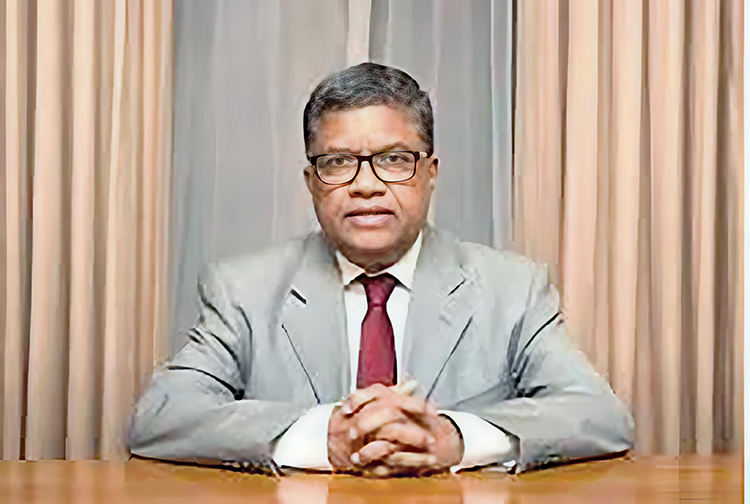
The Communist Party of Sri Lanka yesterday (18) alleged that the US was terrorising countries with unfair tariffs to compel them to align with its bigot policies.
CPSL General Secretary Dr. G. Weerasinghe said so responding to The Island query regarding European countries being threatened with fresh tariffs over their opposition to proposed US take-over of autonomous Danish territory Greenland.
US President Donald Trump has declared a 10% tariff on goods from Denmark, Norway, Sweden, France, Germany, the UK, the Netherlands and Finland with effect from 1 February but could later rise to 25% – and would last until a deal was reached. Targeted countries have condemned the US move.
Dr. Weerasinghe pointed out that none of the above-mentioned countries found fault with the US imposing taxes on countries doing trade with Russia and Iran. Now that they, too, had been targeted with similar US tactics, the CP official said, underscoring the pivotal importance of the world taking a stand against Trump’s behaviour.
Referring to the coverage of the Greenland developments, Dr. Weerasinghe said that news agencies quoted UK Prime Minister Keir Starmer as having said that the move was “completely wrong”, while French President Emmanuel Macron called it “unacceptable.
Dr. Weerasinghe said that Sri Lanka, still struggling to cope up with the post-Aragalaya economic crisis was also the target of discriminating US tariff policy. The top CPSL spokesman said that the recent US declaration of an immediate 25% increase in tariff on imports from countries doing business with Iran revealed the prejudiced nature of the US strategy. “Iran is one of our trading partners as well as the US. Threat of US tariffs on smaller countries is nothing but terrorism,” Dr. Weerasinghe said, stressing the urgent need for the issue at hand to be taken up at the UN.
Responding to another query, Dr. Weerasinghe cited the US targeting India over the latter’s trade with Russia as a case in point. He was commenting on the recent reports on India’s Reliance Industries and state-owned refiners sharply cutting crude oil imports from Russia. The CPSL official said that the EU wouldn’t have even bothered to examine the legitimacy of US tariff action if they hadn’t been targeted by the same action.
Perhaps, those who now complain of US threats over the dispute regarding Greenland’s future owed the world an explanation, Dr. Weerasinghe said. The reportage of the abduction of Venezuela’s President and the first lady underscored that the US intervened because it couldn’t bear the Maduro administration doing trade with China and other countries considered hostile to them, Dr. Weerasinghe said.
The CPSL official said that the NPP couldn’t turn a blind eye to what was happening. Just praising the US wouldn’t do Sri Lanka any good, he said, adding that the Greenland development underscored that the US under Trump was not concerned about the well-being of any other country but pursued an utterly one-sided strategy.
The US dealings with the NPP government, particularly the defence MoU should be examined taking into consideration US tariffs imposed on Sri Lanka at the onset of the second Trump administration and ongoing talks with the US, Dr. Weerasinghe.
By Shamindra Ferdinando ✍️

PM departs Sri Lanka to participate in the 56th World Economic Forum Annual Meeting in Davos-Klosters, Switzerland.

Several killed in Kabul blast, Afghan Interior Ministry says

Senegal beat hosts Morocco to win AFCON 2025 after farcical walk-off

At least six killed in Pakistan as fire rips through Karachi shopping mall

Chile declares ‘state of catastrophe’ as deadly wildfires menace cities

At least 21 killed in Spain after crash involving high-speed trains

‘Dates have the highest sugar content to fight Coronavirus’

Sunday Island 27 December – Headlines

#SundayIsland 17th December – Headlines

Sunday Island – 28th March

Sunday Island Headlines – 21 March

Sunday Island – 21st February – Headlines
-

 Editorial2 days ago
Illusory rule of law
-
 News3 days ago
UNDP’s assessment confirms widespread economic fallout from Cyclone Ditwah
-

 Business5 days ago
Koaloo.Fi and Stredge forge strategic partnership to offer businesses sustainable supply chain solutions
-
 Editorial3 days ago
Crime and cops
-
 Features2 days ago
Daydreams on a winter’s day
-

 Editorial4 days ago
The Chakka Clash
-
 Features2 days ago
Surprise move of both the Minister and myself from Agriculture to Education
-
 Features2 days ago
The Story of Furniture in Sri Lanka