
Business
Skills Beyond Borders: Are Sri Lankan returnee migrant workers equipped for migration triumph?

 Piyumi Ranadewa is a Research Assistant working on migration and urbanisation policy research at IPS. She holds a BSc (Hons) in Agriculture, specialising in Agriculture Economics and Business (First Class) from Wayamba University of Sri Lanka, graduating with Dean’s Honours. She also holds a Master of Agri-Enterprise and Technology Management from Wayamba University of Sri Lanka. Her research interests include urbanisation, tourism, green economy, climate change and agribusiness value chains. (Talk with Piyumi – piyumir@ips.lk)
By Piyumi Ranadewa
“I can speak the language and based on my previous experiences, I believe I can handle the work once I remigrate, and I don’t need further training,” says Ms Herath Manike from Maho in Kurunegala. She has previously migrated to Kuwait and Jordan as a domestic housekeeping assistant and is now contemplating re-migration.
Returnee migrant workers often possess a wealth of knowledge and skills acquired during their time overseas, leading them to feel adequately equipped for the global job market. However, in today’s rapidly evolving international job market, adaptability and acquiring new skill sets are essential for sustained career growth. Relying solely on existing skills can lead to complacency and hinder long-term prospects. Continuous up-skilling can open doors to more stable and higher-earning employment opportunities. The Global Compact for Safe, Orderly and Regular Migration (GCM) also underscores the necessity to invest in skills development and promote mutual recognition of skills, qualifications, and competencies.
A recent study by the Institute of Policy Studies of Sri Lanka (IPS) for Skilled and Resilient Migrant Workers (SRMW) project focusing on 511 return migrants in Sri Lanka revealed that among the surveyed participants, 56% of respondents had taken steps towards re-migration, and 193 are considering re-migration within 2023. Notably, among them [out of 193), 68% have not pursued further formal training. Moreover, 84% of these respondents believed their current skills were sufficient for overseas employment. As Sri Lanka unveils its Labour Migration Policy 2023-2027, it is timely to shed light on the importance of skill development for re-migration.
The Context: Potential for Upskilling
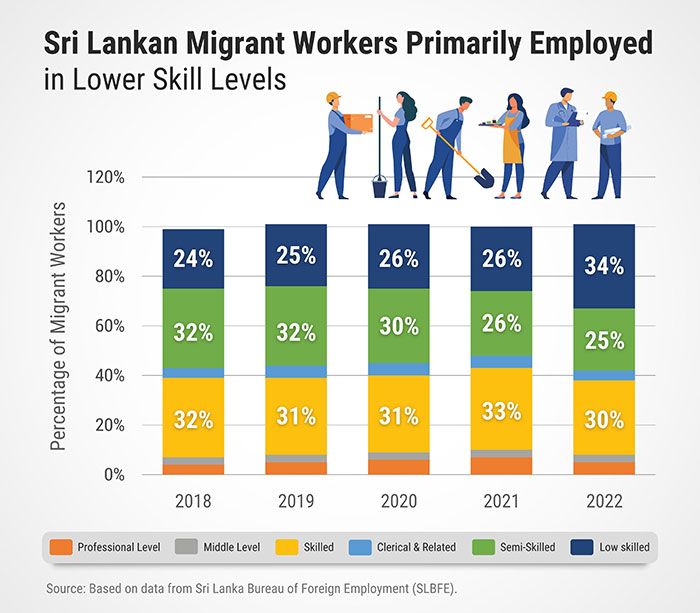
In Sri Lanka, migration is seen as a promising pathway to improved job opportunities, as evident from the recent long queues at passport offices. A significant proportion of Sri Lankan migrant workers were in semi-skilled and low-skilled categories. Most labour migrants are concentrated in Middle Eastern countries, which are common destinations for both skilled and unskilled workers. This aligns with the study findings, which indicated that many of these migrants were engaged in elementary occupations (domestic workers and other low and semi-skilled categories) during their recent overseas employment.
Although most re-migrants from Sri Lanka have been employed in lower-skilled jobs, they have great potential to improve their prospects by acquiring new skills through upskilling. However, the practice of upskilling is not widespread among this group. For example, Sri Lanka predominantly relies on foreign domestic workers among its migrant workers. However, there is a growing demand for specialised services like nursing and elderly care. These specialised jobs often offer better pay than foreign domestic workers. Enhancing the skills of returning domestic workers can open up job opportunities in sectors beyond domestic work, particularly in healthcare.
Reluctance for Skill Development
Ms Manike, who pursued a small coir business after her recent migration, is now facing economic difficulties that have led her to consider re-migration. However, she hesitates to participate in skill development programmes, driven by her immediate need to generate income through migration and her confidence in her past experience. Therefore, her primary focus is on addressing urgent financial needs, leaving limited space for dedicating time and effort to upskilling.
Similar to Manike’s perspective, most returnee migrant workers planning to remigrate believe their previous training or experience from overseas would suffice, overlooking the need for continuous skill upgrading. Furthermore, in scenarios where re-migration is not voluntary but a necessity due to compelling circumstances, individuals may be forced to re-migrate without the opportunity or motivation to upgrade skills to pursue better employment opportunities overseas.
If returnee migrant workers consider upskilling, many often opt for informal training or overlook skill development due to perceived opportunity costs and age-related barriers associated with formal skill training programmes available in the country. They fear that dedicating time and resources to formal training might not yield immediate returns on investment, leading them to choose informal learning options instead. Additionally, age-related concerns can make some migrant workers reluctant to enrol in formal training, as they feel they are past the ideal age for learning new skills.
Another significant barrier to skill development for returning migrants is the lack of targeted and tailored training programmes. For instance, during a Focus Group Discussion (FGD) conducted in Anuradhapura, reluctance to undergo formal training on the grounds that there is no suitable training available in Sri Lanka for the specific machines used while working abroad, was cited as an example. As these workers aspire to find better opportunities upon their return, access to advanced and customised training becomes a pivotal factor in their career growth.
Skill Gap and Awareness
While Sri Lanka has taken many steps to provide support services for upskilling and skill recognition for migrant workers, such as the recent collaboration between the SLBFE and the Vocational Training Authority (VTA) to offer specialised training tailored to foreign employment needs, concerns remain regarding the effective dissemination of vital information to the intended beneficiaries.
As found in the IPS’ study, while a majority of respondents have completed their education up to Grade 10, surprisingly, only 20% were aware of National Vocational Qualification (NVQ) levels. Although returnee migrant workers tend to favour informal training, a notable 76% (out of 511 individuals) had not acquired Recognition of Prior Learning (RPL) credentials. These credentials serve to formally acknowledge the skills acquired through informal means. This highlights a significant gap and lack of awareness regarding formal skill development and recognition among the respondents.
The Way Forward
While the self-perceived competence of returnee migrant workers is a positive attribute, relying solely on existing skills without further training and formal recognition of available qualifications may hinder the personal and professional growth opportunities of returnee migrant workers. Therefore, it is crucial to foster a culture of lifelong learning and skill development to support returnee migrant workers in their re-migration journey and enable them to thrive in a dynamic job market. This involves creating awareness about the importance of ongoing education and training and providing accessible and relevant learning opportunities. Some recommended strategies include:
Improve dissemination of information and guidance about skill development programmes and raise awareness about the importance of upskilling,
Facilitate awareness and accessibility to available skill development programmes through easily accessible user-friendly platforms like websites or mobile applications.
Foster collaboration between the public and private sectors and educational institutes to develop targeted training programmes specifically tailored for migrant workers planning to remigrate. These programmes should align closely with industry needs and incorporate hands-on experience.
Establish networking and mentorship programmes that connect migrant workers with professionals in their fields, providing guidance, collaboration opportunities, and skill enhancement support.
Promote existing RPL and accreditation of informal skills, encouraging migrant workers to pursue upskilling opportunities.
Link to original blog: https://www.ips.lk/talkingeconomics/2023/09/11/skills-beyond-borders-are-sri-lankan-returnee-migrant-workers-equipped-for-migration-triumph/

Business
“We Are Building a Stable, Transparent and Resilient Sri Lanka Ready for Sustainable Investment Partnerships” – PM

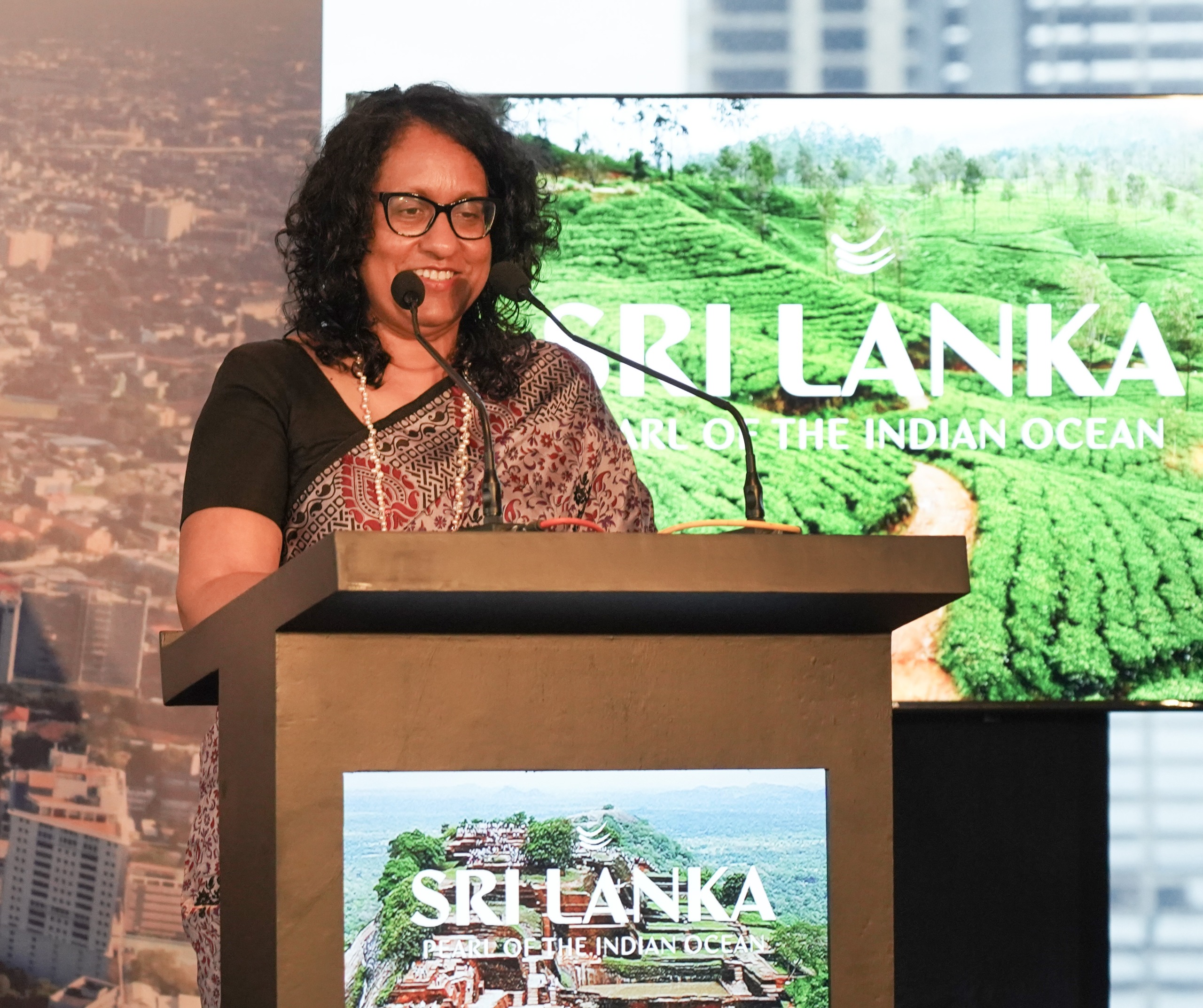
Prime Minister Dr. Harini Amarasuriya addressed members of the Chief Executives Organization (CEO) during a session held on Thursday [3 February 2026] at the Shangri-La Hotel, Colombo, as part of CEO’s Pearl of the Indian Ocean: Sri Lanka programme.
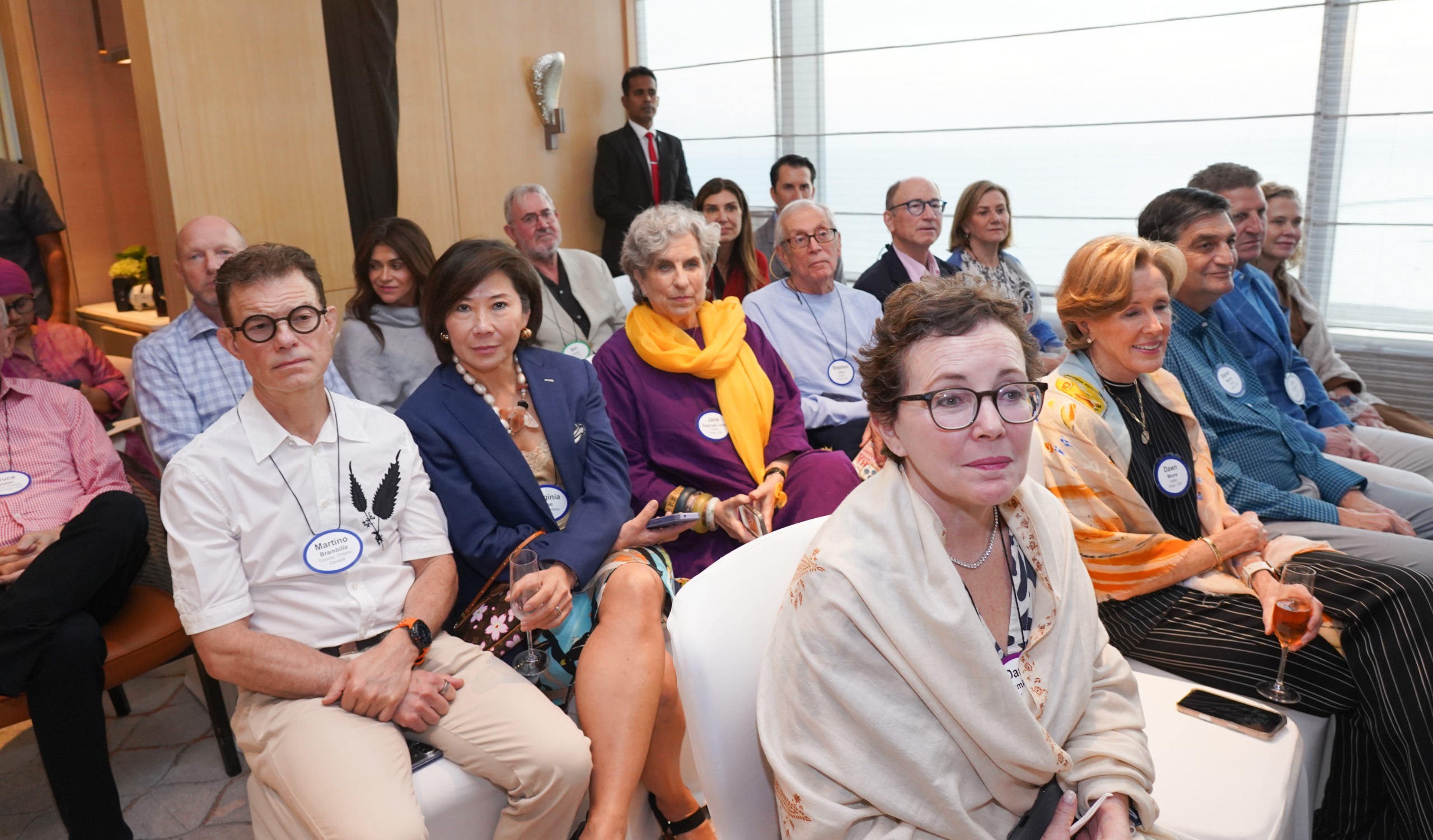
The Chief Executives Organization is a global network of business leaders representing diverse industries across more than 60 countries. The visiting delegation comprised leading entrepreneurs and executives exploring Sri Lanka’s economic prospects, investment climate, and development trajectory.
Addressing the gathering, the Prime Minister emphasized that Sri Lanka’s reform agenda is anchored in structural transformation, transparency, and inclusive growth.
“We are committed not only to ensuring equitable access to education, but equitable access to quality education. Our reforms are designed to create flexible pathways for young people beyond general education and to build a skilled and adaptable workforce for the future.”
She highlighted that the Government is undertaking a fundamental pedagogical shift towards a more student-focused, less examination-driven system as part of a broader national transformation.
Reflecting on Sri Lanka’s recent political transition, the Prime Minister stated:
“The people gave us a mandate to restore accountability, strengthen democratic governance, and ensure that opportunity is not determined by patronage or privilege, but by fairness and merit. Sri Lanka is stabilizing. We have recorded positive growth, restored confidence in key sectors, and are committed to sustaining this momentum. But our objective is not short-term recovery it is long-term resilience.”
Addressing governance reforms aimed at improving the investment climate, she said:
“We are aligning our legislative and regulatory frameworks with international standards to provide predictability, investor protection, and institutional transparency. Sustainable investment requires trust, and trust requires reform.”
Turning to the recent impact of Cyclone Ditwa, which affected all 25 districts of the country, the Prime Minister underscored the urgency of climate resilience.
“Climate change is not a distant threat. It is a lived reality for our people. We are rebuilding not simply to recover, but to build resilience, strengthen disaster mitigation systems, and protect vulnerable communities.”
Inviting CEO members to consider Sri Lanka as a strategic partner in the Indo-Pacific region, she highlighted opportunities in value-added mineral exports, logistics and shipping, agro-processing, renewable energy, pharmaceuticals, and innovation-driven sectors.
“We are not looking for speculative gains. We are seeking long-term partners who share our commitment to transparency, sustainability, and inclusive development.”
She further emphasized collaboration in education, research, vocational training, and innovation as essential pillars for sustained economic growth.
Concluding her address, the Prime Minister expressed appreciation to the Chief Executives Organization for selecting Sri Lanka as part of its 2026 programme and reaffirmed the Government’s readiness to engage constructively with responsible global investors.
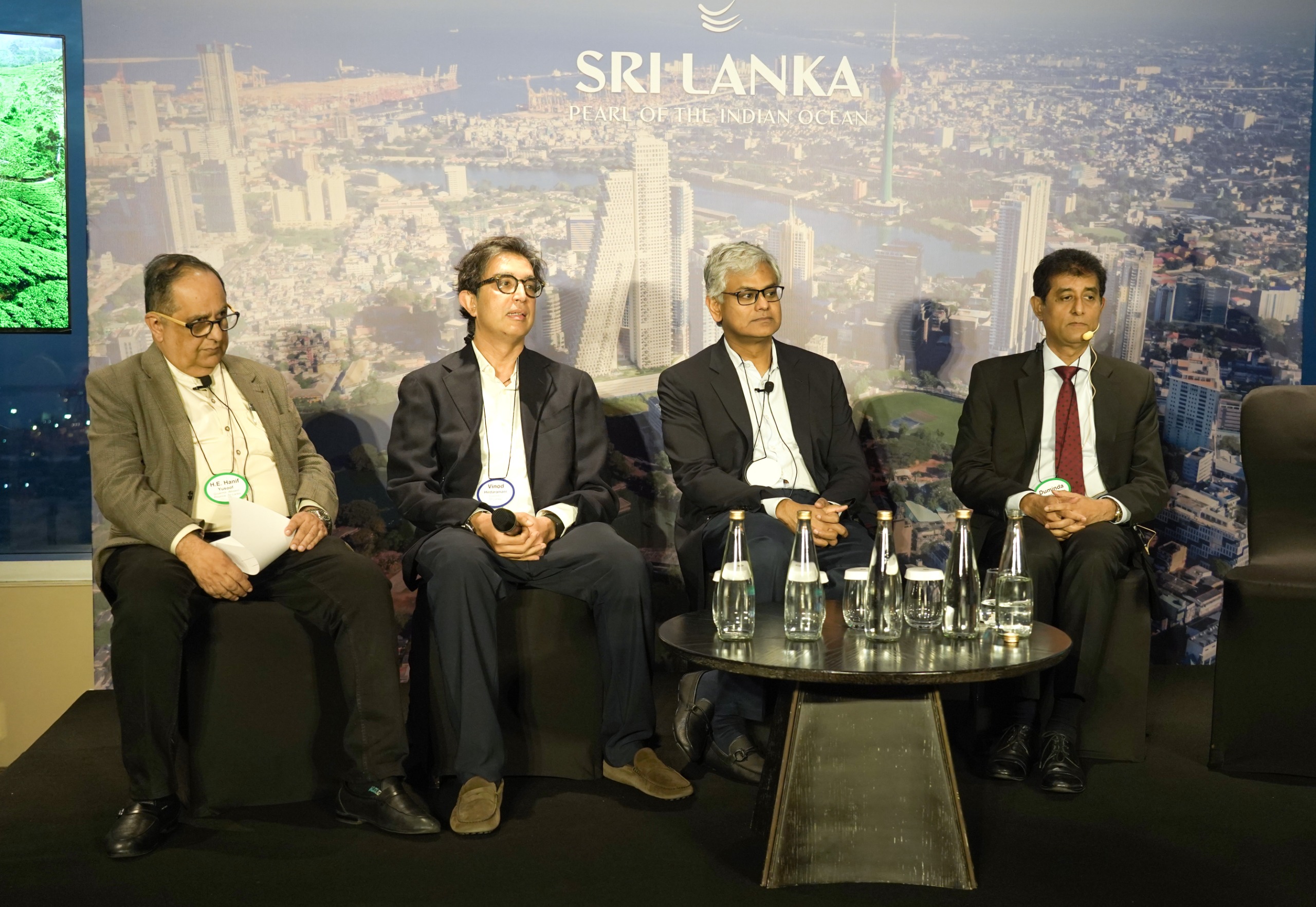
The event was attended by the Governor of the Western Province, Hanif Yusoof, and other distinguished guests.
[Prime Minister’s Media Division]

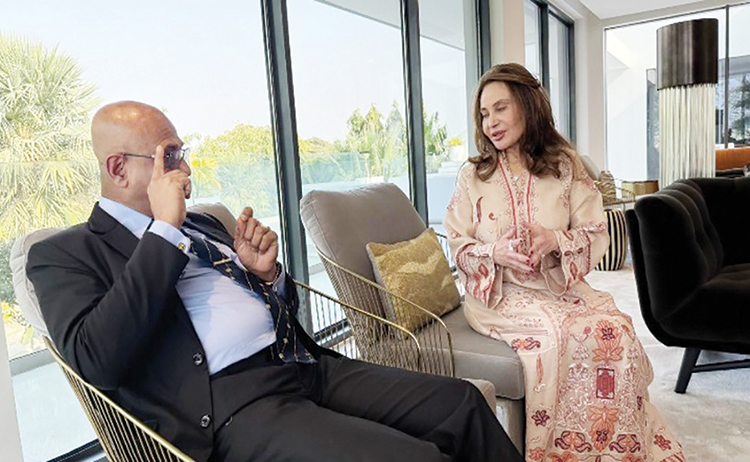
The High Commissioner of Sri Lanka to Pakistan, Rear Admiral Fred Senevirathne, met Dr. Zeelaf Munir, Chairperson of the Pakistan Business Council (PBC), in Karachi on Feb. 6 and urged a high level visit of Pakistani business people to Sri Lanka, a news release from the High Commission said.
Dr. Munir, who also serves as the Managing Director and Chief Executive Officer of English Biscuit Manufacturers (EBM), leads Pakistan’s premier business policy advocacy body, which plays a key role in promoting a conducive business environment, export growth, and industrial development.
The High Commissioner who was warmly received by Dr. Munir at her office briefed her on the current economic and political landscape in Sri Lanka, highlighting the country’s improving economic outlook, enhanced political stability, and a favourable environment for foreign investment, the release said.
He also outlined the policy priorities of the new Government, with particular emphasis on ongoing economic reforms, investment-friendly initiatives, and opportunities to further strengthen bilateral economic and trade cooperation between Sri Lanka and Pakistan, it said.
He invited Dr. Munir to consider leading a delegation of prominent business leaders and investors to Sri Lanka, with a view to engaging with Sri Lankan counterparts and exploring potential investment opportunities and avenues for collaboration across key sectors.
The meeting was facilitated by. Honorary Consul of Sri Lanka in Hyderabad, Mehmood Mandviwalla, who was also present. Minister and Head of Chancery of the Sri Lanka High Commission in Islamabad, Christy Ruban, and Consul General of Sri Lanka in Karachi, Sanjeewa Pattiwila also participated at the meeting.
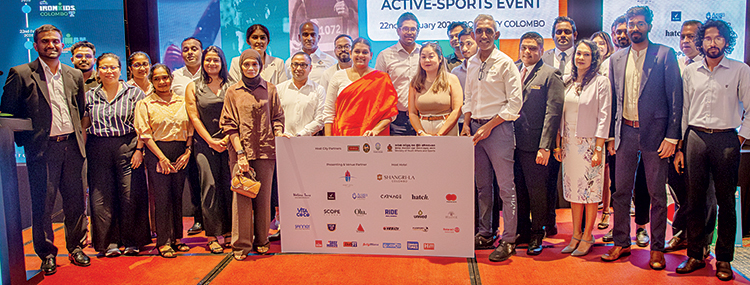
Officials from the Western Provincial Council, Colombo Municipal Council, and event organisers marked the official launch of IRONMAN 70.3 Colombo – Presented by Port City Colombo today at Shangri-La Colombo, the Host Hotel, signalling the return of Sri Lanka’s premier endurance event and the start of the long-term #ActiveColombo initiative.
Scheduled from 19–22 February 2026, the world-class triathlon will anchor #ActiveColombo Week, combining international competition with a city-wide celebration of sport, health, and urban vitality. Highlights include the KAYA Colombo – Active Lifestyle & International Expo (19–21 Feb), the family-focused IRONKIDS Colombo (21 Feb), and the IRONMAN 70.3 Colombo triathlon (22 Feb), featuring swim, bike, and run events at Port City Colombo, the Official Venue Partner.
The event is set to welcome nearly 1,000 athletes from over 49 countries, many visiting Sri Lanka for the first time, bringing international media attention and significant economic impact across hospitality, aviation, retail, and transport. As part of the globally recognised IRONMAN® circuit, Colombo now joins iconic host cities such as Sydney, Nice, and Muscat, reinforcing its position as South Asia’s emerging endurance sports hub.
“IRONMAN 70.3 Colombo embodies the spirit of resilience and excellence,” said Rajan Thananayagam, Director of Serendib Multisport (Pvt) Ltd. “This event puts Sri Lanka on the world stage and showcases Colombo as a vibrant, welcoming destination for athletes and their families.”
The launch also introduced #ActiveColombo, a long-term initiative aimed at transforming Colombo into South Asia’s leading Active City. The programme focuses on activating everyday urban spaces through parks, waterfronts, beaches, clean streets, shaded corridors, and safe environments that encourage walking, cycling, yoga, and other outdoor activities.
“Through #ActiveColombo, we aim to inspire a more active generation while strengthening Colombo’s appeal as a globally competitive capital,” said Hanif Yusoof, Governor of the Western Province. Mayor Vraîe Cally Balthazaar added that the initiative symbolises inclusive growth, promoting healthier streets, greener corridors, and vibrant public spaces for residents and visitors alike.
With signature policies such as the “Every Active Street is a Shaded Street” Shade the Road initiative, Colombo aims to combine urban health, economic growth, and international sports tourism. Experts say cities that invest in active lifestyles see 10–20% reductions in long-term healthcare costs, safer streets, and higher visitor spending.
By linking IRONMAN 70.3 Colombo with #ActiveColombo, organisers hope to position the city as a healthier home for citizens, a premier destination for high-value tourists, and a credible host for global sporting and lifestyle events, cementing Colombo’s reputation as South Asia’s Active Capital.

India vs Pakistan match is a godsend for T20 World Cup hosts Sri Lanka

Imran Khan to be moved to hospital amid rising health concerns

Fairly heavy showers are likely at some places in the Rathnapura, Kalutara, Galle and Matara districts

India vs Pakistan is finally here. Over to cricket now

“We Are Building a Stable, Transparent and Resilient Sri Lanka Ready for Sustainable Investment Partnerships” – PM

US military kills 3 in latest attack on boat in the Caribbean

‘Dates have the highest sugar content to fight Coronavirus’

Sunday Island 27 December – Headlines

#SundayIsland 17th December – Headlines

Sunday Island – 28th March

Sunday Island Headlines – 21 March

Sunday Island – 21st February – Headlines
-
 Business4 days ago
Autodoc 360 relocates to reinforce commitment to premium auto care
-

 Midweek Review4 days ago
A question of national pride
-
 Opinion3 days ago
Will computers ever be intelligent?
-
 Midweek Review4 days ago
Theatre and Anthropocentrism in the age of Climate Emergency
-

 Editorial6 days ago
The JRJ syndrome
-

 Features8 hours ago
The Rise of Takaichi
-
 Opinion4 days ago
The Walk for Peace in America a Sri Lankan initiative: A startling truth hidden by govt.
-
 Opinion5 days ago
Beyond 4–5% recovery: Why Sri Lanka needs a real growth strategy