
News
SJB TU accuses CPC, LIOC and Sinopec of making unconscionable profits

slams Opposition for not taking up issue
by Shamindra Ferdinando
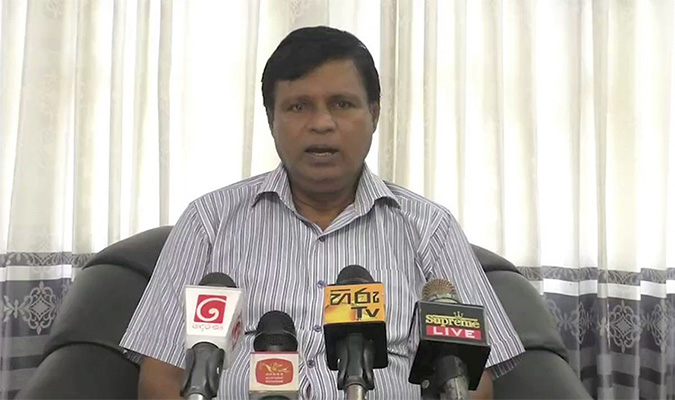
Convenor of the Samagi Joint Trade Union Alliance, Ananda Palitha, yesterday (03), said that the Ceylon Petroleum Corporation (CPC) had increased prices of all products in spite of earning a monthly profit of Rs. 12 bn at present.
Palitha, a former CPC employee, said that from September to December 2022, the CPC had earned a monthly profit of Rs 10 bn. Therefore, there couldn’t have been any justifiable reason for the upward revision of fuel prices. Responding to The Island queries, Palitha pointed out that parliamentary watchdog committees and the ministerial consultative committee should look into the matter without delay. He said the Opposition had not taken up the issue, adding that, the CPC had fuel stocks sufficient for three months.
“The CPC’s September profits will soar sharply at the expense of the public,” Palitha said, adding that the abolition of the QR-based quota system was intended to boost retail sales. Palitha pointed out that Lanka IOC and Chinese enterprise Sinopec, too, had substantial fuel stocks at the time of the latest increase. The CPC had announced the revision within 24 hours after Sinopec opened its first outlet at Mattegoda, Palitha said, claiming that their profits would be massive.
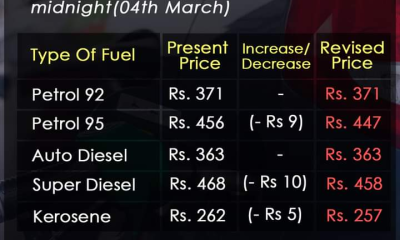
The CPC set the price of petrol (92) at Rs 361 (Rs 13 increase), petrol (95) at Rs 417 (Rs 42 increase), auto diesel Rs 341 (Rs 35 increase), Super diesel Rs 359 (Rs 1 increase), kerosene Rs 231 (Rs 5 increase) at midnight Aug. 31.
“Last month, the CPC earned Rs 12 bn profit. It’ll go up by several billions, definitely passing Rs 15 bn mark,” Palitha said, urging President Ranil Wickremesinghe, who is also the Finance Minister, to inquire into the CPC’s unfair practices which adversely affected all sectors.
Close on the heels of the CPC announcement, the government allowed a four-percent increase in bus fares. Transport costs, too, went up overnight resulting in an increase in the prices of vegetables and all other commodities.
Minister Wijesekera is on record as having said that the entry of a third player (Sinopec) will help stabilise the petroleum market, guarantee an uninterrupted supply of quality product and bring about competitive prices. Instead, the CPC had increased the petroleum, Palitha said.










Four Sri Lankan nationals were hospitalised after sustaining injuries during an Iranian missile attack in Dimona, Israel, the Sri Lankan Embassy in Israel said.
The individuals had reportedly been in a public area at the time of the attack and were attempting to videograph the incident instead of moving to a designated shelter. Footage of the attack is believed to have circulated on social media.
Sri Lankan Ambassador to Israel Nimal Bandara said the injuries were caused by shattered glass from nearby buildings, with fragments striking their heads and other parts of the body.
He noted that the individuals had failed to follow safety instructions issued by Israeli authorities, which require people to seek shelter immediately upon hearing warning sirens.
The Ambassador further said sirens are typically sounded three minutes prior to a missile strike, and urged all Sri Lankans in the area to strictly adhere to safety guidelines and move to secure locations without delay.
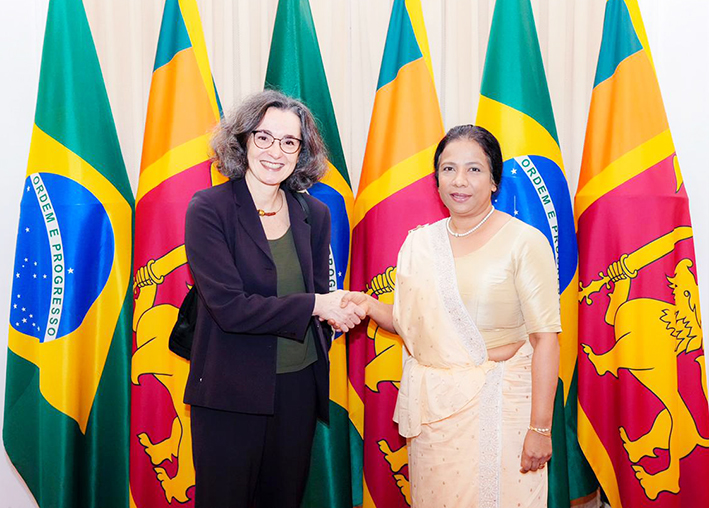
The Second Round of Bilateral Political Consultations between Sri Lanka and Brazil were held on 20 March, 2026 at the Ministry of Foreign Affairs, Foreign Employment and Tourism in Colombo, marking an important step in further strengthening the longstanding and friendly relations between the two countries. The meeting was co-chaired by Secretary to the Ministry, Aruni Ranaraja and Ambassador Susan Kleebank, Secretary for Asia and the Pacific at the Ministry of Foreign Affairs of Brazil.
The consultations provided an opportunity to review the progress achieved since the First Round of Bilateral Political Consultations held in 2022 and identify further areas for possible collaborations.
During the discussions, while acknowledging the steady growth in economic cooperation, the two sides agreed to elevate bilateral trade to USD 1 billion by 2030. Both countries also emphasised the importance of broadening engagement in response to evolving global economic dynamics.
Recognising the value of expediting the conclusion of pending MoUs and Agreements, in key areas, to further strengthen ties, the parties committed to finalising outstanding legal instruments on defence, law enforcement, countering human smuggling and transnational organized crime, traditional and Ayurvedic medicine, and diplomatic training. The two sides expressed satisfaction that the Dairy Livestock Project and the Sugarcane Project, under the framework of technical cooperation, have been finalised and are expected to be signed in the near future, with the support of the Brazilian Cooperation Agency (ABC).
Preparations for President Anura Kumara Dissanayaka’s forthcoming state visit to Brazil were also discussed at the meeting. Noting the importance of enhancing parliamentary diplomacy and fostering closer ties between the legislatures, the two sides agreed to revive the Parliamentary Friendship Groups and exchange delegations. In this regard, a women parliamentary group from the Brazilian legislature is expected to visit Sri Lanka.
The discussions also identified new avenues for cooperation in priority sectors, including agriculture, animal husbandry, agricultural research, ports and shipping, and sports. Both sides also agreed to continue the close collaboration in bilateral and multilateral forums.
Ambassador Susan Kleebank also called on Minister of Foreign Affairs, Foreign Employment and Tourism Vijitha Herath, where both sides reaffirmed their commitment to further strengthening bilateral relations and expanding cooperation in areas of mutual interest.
The delegations to the political consultations also included Ambassador of Sri Lanka to Brazil Chaminda I. Colonne, Chargé d’ Affaires of the Embassy of Brazil Monica Maria Meirelles Nasser, senior officials from the Ministry of Foreign Affairs, Foreign Employment and Tourism and the relevant line Agencies.

The Consumer Affairs Authority (CAA) has launched a series of inspections and investigations from 20 March, ahead of the Sinhala and Hindu New Year celebrations, to protect consumers from unfair market practices.
CAA officials warned that some traders may exploit ongoing geopolitical and economic instability in the Middle East to create artificial shortages of essentials, such as food, gas, and fuel, or to inflate prices.
As part of the operation, CAA officers will be on duty continuously, including weekends and public holidays, inspecting warehouses and wholesale outlets. Legal action will be taken against traders found hoarding goods.
The authority said enforcement will target violations, including exceeding maximum retail prices, selling above marked prices, failing to display prices, selling expired or substandard products, and not issuing bills. Gas distributors and fuel stations will also be closely monitored to ensure uninterrupted supply.
Consumers are urged to report any unfair practices, or market irregularities, to the CAA hotline at 1977, during office hours.

From generation to generation: SINGER secures 20th consecutive People’s Brand title

Four Lankans injured while filming attack in Israel

Trincomalee oil tank farm: An engineering marvel

The scientist who was finally heard

Dambulla – cricket’s crown jewel

Lanka and Brazil agree to elevate bilateral trade to USD 1 Bn

‘Dates have the highest sugar content to fight Coronavirus’

Sunday Island 27 December – Headlines

#SundayIsland 17th December – Headlines

Sunday Island – 28th March

Sunday Island Headlines – 21 March

Sunday Island – 21st February – Headlines
-

 News5 days ago
CIABOC questions Ex-President GR on house for CJ’s maid
-

 News6 days ago
Sri Lankan marine scientist Asha de Vos honoured at UNGA opening
-

 News6 days ago
Australian HC debunks misleading travel risk claims for Sri Lanka
-

 News4 days ago
Bailey Bridge inaugurated at Chilaw
-

 Latest News6 days ago
Wednesdays declared a government holiday with effect from 18th March
-

 News4 days ago
Pay hike demand: CEB workers climb down from 40 % to 15–20%
-

 News3 days ago
CIABOC tells court Kapila gave Rs 60 mn to MR and Rs. 20 mn to Priyankara
-

 News7 days ago
Fuel rationing begins: Police deployed as queues return