
News
SJB promises digital public infrastructure and targeted subsidies within 90 days of coming to power


Within 90-days of coming to power, the Samagi Jana Balawegaya (SJB) will usher in digital public infrastructure which will determine how much a person should pay for fuel based on their economic capacity, Dr. Harsha de Silva, Chairman, Committee on Public Finance (COPF) and SJB MP said.
“Essentially this is a QR code. You go to the shed, present the QR code and make the payment. Let’s say the price of fuel is 400 rupees a litre, the computer system will calculate the subsidy you deserve because of your economic status and transfer that subsidy to your bank account immediately,” he said.
Dr. de Silva said this is one example of targeted subsidies under an SJB administration and they have already prepared the necessary technical infrastructure to implement these complex projects.
“This is a way to reduce prices of goods to selected groups of people. Within three to six months, the SJB government will usher in reforms that will benefit people directly,” he said.
He added that SJB leader Sajith Premadasa told Peter Breuer, Senior IMF Mission Chief for Sri Lanka, that economic reforms must run parallel with significant relief for the people.
He said that the IMF delegation met Premadasa in late July when they visited Sri Lanka.
“We need social justice. Reform with relief is our framework. I also explained, in length, to the IMF delegation what we need to change the current agenda,” he said.
Dr. de Silva said that SJB was never opposed to IMF reforms and that it was he who urged the Gotabaya Rajapaksa administration to start discussions with the IMF in 2020.
“However, we do not think Sri Lanka should implement everything the IMF says. There is a lot that needs to change, and we need to talk to the people to get them on board the proposed reforms,” he said.
The SJB MP said they also stood for the independence of the Central Bank and supported the government’s reforms to minimise political influence on bank officials. Sri Lanka will hold presidential elections on 21 September and whoever comes to power will need to decide whether they would continue the IMF programme, he said.
“The next president will have to decide what changes need to be carried out, if the IMF programme is to continue. Some changes will be non-negotiable for the IMF and can lead to a collapse in the negotiation process,” he said.
Dr. de Silva said any attempts to repeal the independence given to the Central Bank would lead to a collapse in the agreement with the IMF.
“We spoke with the IMF delegation about that too. They asked how long it would take us to form a cabinet, if we win the 21 September election. We spoke about the short-term fixes that are needed to uplift the people. The IMF has two types of agreements. One is called the standby agreement, which provides short-term financial assistance to countries facing balance of payment problems. The other is the Extended Fund Facility (EFF). This provides financial assistance to countries facing serious medium-term balance of payments problems because of structural weaknesses that require time to address. To help countries implement medium-term structural reforms, the EFF offers longer programme engagement and a longer repayment period,” he said.
The EFF in Sri Lanka proposed to stabilise the economy by increasing taxes. The SJB MP said that this is an unfair demand because a democratically elected new government needs space to carry out its economic policies.
“If that policy is in conflict with the IMF and how we can solve that is a political issue. We have the right. Secondly, even if we agree with the IMF policies, we can agree with the short term economic objectives. We need to ensure that the economy blossoms in the medium and long term, to increase it to 10 percent. We can’t achieve these with these restrictive measures,” he said.
The SJB MP said not all debt is the same. There is a difference between local debt and dollar debt. “In the same way growth is achieved by shielding local industries from global competition and the other way to achieve growth is by exporting globally competitive products. For example, under Mahinda Rajapaksa the economy grew by 9 percent, due to the massive construction that took place in Hambantota. However, this was not sustainable and didn’t lead to any competitiveness in the economy,” he said.
Dr. de Silva said most Sri Lankans do not consume adequate quantities of food. SJB wants to ensure that the price of food drops, so people can eat. “About 40 percent of our produce is wasted before they enter the retail market. If we can reduce this, this will be a solution itself. We can build climate-controlled warehouses across the country,” he said.
Commenting on the debt restructuring with commercial debt holders, the SJB MP said that any agreement with the private bond holders must be just and must not come at the expense of the Sri Lankan people.
“I told the IMF that the Employment Provident Fund (EPF) was heavily targeted during domestic debt restructuring. The government, until the very end, said they will not touch EPF funds. This was done at the behest of commercial debt holders. Now the government is going to agree to issue a Macro Linked Bond (MLB). In reality, only in 2028 will we decide how much of a haircut on international debt we will receive. Right now, the government says the haircut will be 28 percent, but 90 percent of commercial debt holders believe that the haircut will be less than 15 percent. They think that the way things are going, the economy will develop, and they will profit from that,” he said.
Dr. de Silva said that bi-lateral creditors have told the government that if they are giving significant concessions to commercial debt holders, they too will take back some of the concessions given to Sri Lanka, i.e., introduce a claw back clause. A clawback clause is a way for a company to reclaim compensation payments based on preset criteria. Bilateral creditors have not asked for such a clawback clause in the history of debt restructuring, he said.
“We told the IMF that we will bring a clawback clause for the EPF too. The IMF didn’t ask us to restructure domestic debt. Sri Lanka is also the only country that placed the onus of debt restructuring on workers pensions. Sri Lankans have suffered and if we make progress, the benefits of the hard work must not only go to bilateral and commercial creditors. (RK)

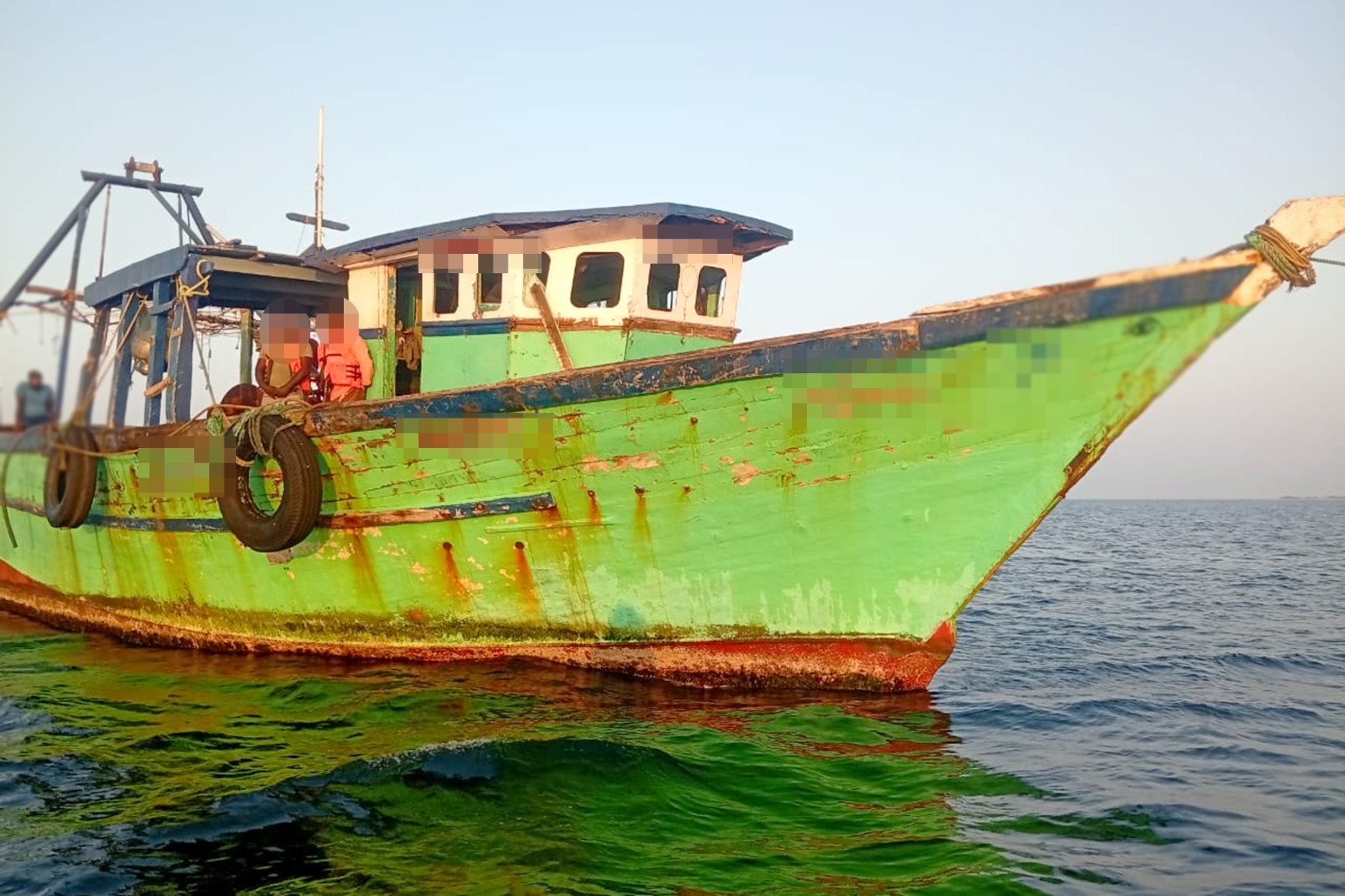
During an operation conducted in the dark hours of 11 Mar 26, the Sri Lanka Navy seized an Indian fishing boat and apprehended 02 Indian fishermen while they were poaching in Sri Lankan waters, in the sea area North of Mannar.
The North Central Naval Command spotted a group of Indian fishing boats engaging in illegal fishing, trespassing into Sri Lankan waters. In response, naval craft of the North Central Naval Command were deployed to drive away those Indian fishing boats from island waters off Mannar.
The seized boat (01) and Indian fishermen (02) were handed over to the Fisheries Inspector of Kilinochchi for onward legal proceedings.

The bodies of 84 Iranian sailors killed in a torpedo attack by a US submarine last week in the Indian Ocean are due to be flown home on Friday, Sri Lanka’s defence ministry has said.
The seamen were among 130 thought to be aboard the Iranian warship, the Iris Dena, when it was sunk on 4 March about 40km (25 miles) from Sri Lanka’s southern coastline.
A police escort transferred bodies to Mattala Rajapaksa International Airport on Friday morning for the repatriation to Iran, after they were stored in two freezers at Galle National Hospital.
Sri Lanka said 32 sailors rescued by its navy after the torpedo attack “will remain in Sri Lanka”, according to news agency AFP.
A magistrate in the Sri Lankan city of Galle ordered that the 84 bodies should be released to the Iranian embassy.
US Defense Secretary Pete Hegseth said shortly after the sinking that the Iranian warship had died a “quiet death”.
Iran’s Foreign Minister Abbas Araghchi said the US had “perpetrated an atrocity at sea, 2,000 miles away from Iran’s shores”, adding that “the US will come to bitterly regret precedent it has set”.
Video released by the US Department of Defense after the incident showed a ship being struck, causing the stern to rise up before exploding.
The Iris Dena had been returning from a military exercise hosted by India when it was attacked.
Its sinking in international waters came during the current US-Israeli war with Iran and marked a dramatic widening of the conflict.
Iran has since launched retaliatory strikes across the Middle East – targeting Gulf countries allied with the US.
Latest News
Safeguarding linguistic heritage is not only a cultural responsibility, but also a shared commitment to preserving the diversity of our world – PM

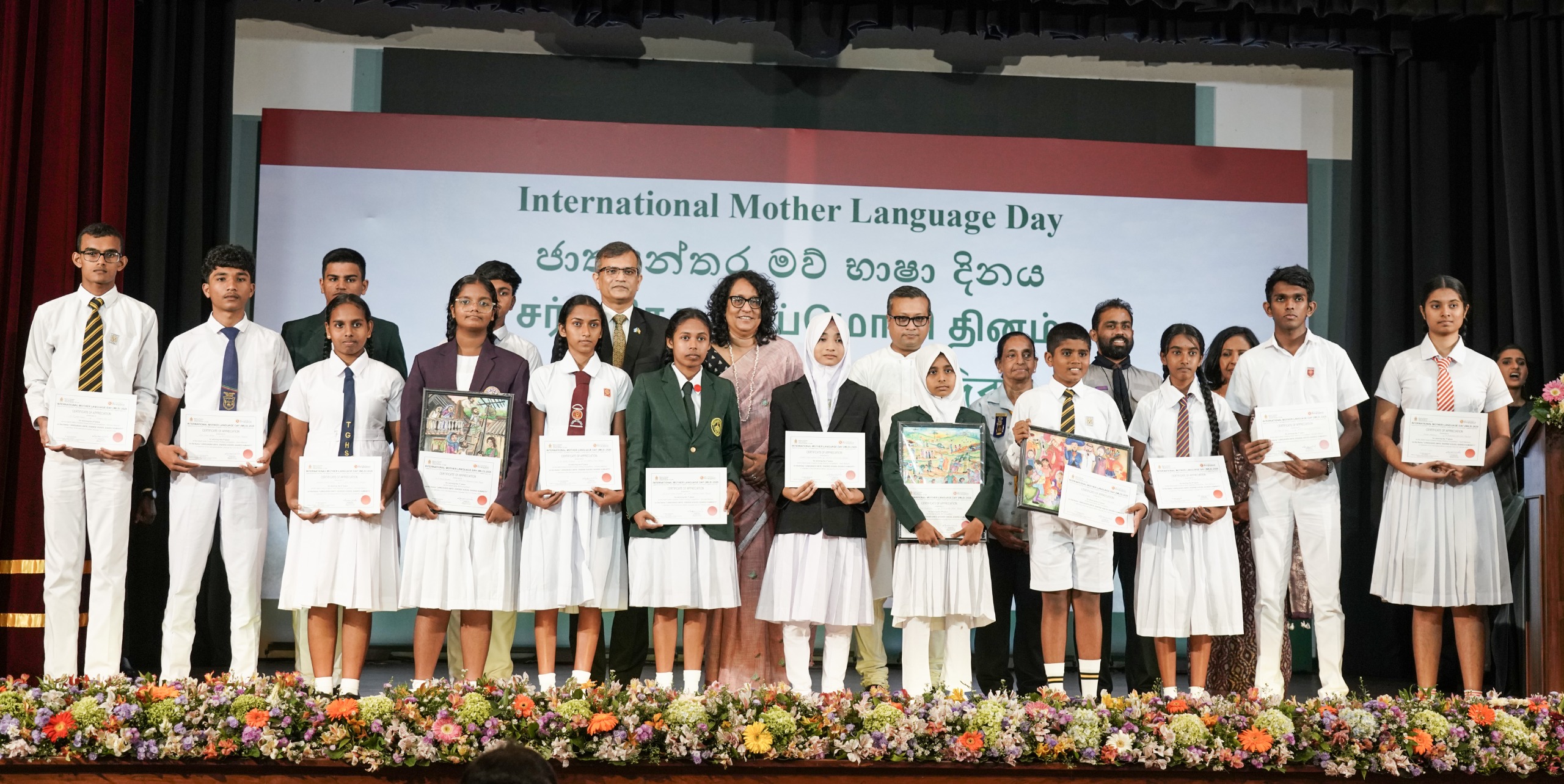
Minister of Education, Higher Education and Vocational Education Prime Minister Dr. Harini Amarasuriya participated as the Chief Guest in the special event organized to commemorate International Mother Languages Day 2026 on 13 March 2026 at the New Arts Theatre of the University of Colombo. The event was held under the theme ’Languages Unite: Diverse Voices, Shared Humanity’.
The event was jointly organized by the High Commission of Bangladesh and the Ministry of Education of Sri Lanka with the support of the United Nations, the Sri Lanka Scout Association, and the Sri Lanka Girl Guides Association.
Certificates and awards were presented to school winners of the painting, essay, and short video creation competitions organized in conjunction with the celebration of International Mother Language Day 2026.
Addressing the occasion, the Prime Minister Dr. Harini Amarasuriya stated:
“International Mother Language Day stands as a powerful reminder of the profound connection between language, identity, and dignity.
This global observance owes its origins to the visionary initiative of the People’s Republic of Bangladesh. Bangladesh’s advocacy transformed a national commemoration into a global movement one that celebrates the rich mosaic of humanity’s linguistic heritage.
Sri Lanka’s language diversity reflects the richness of our pluralistic heritage. This diversity should not be seen as a challenge to be managed, but as a strength to be valued and cherished.
When we protect language rights, we nurture social harmony. When we promote multilingual education, we empower future generations. And when we listen to one another in our own languages, we affirm each other’s humanity. At a time when divisions can easily take root, respect for linguistic diversity can instead serve as a bridge of empathy and cooperation.
In an increasingly digital age, we must also reflect on the importance of preserving linguistic diversity in cyberspace. Thousands of languages around the world remain vulnerable. Without conscious efforts in education, technology, and policy, many risk fading into silence. Safeguarding linguistic heritage is therefore not only a cultural responsibility, but also a shared commitment to preserving the diversity of our world”.
The Prime Minister remarked that the partnership between Sri Lanka and Bangladesh continues to grow in friendship and cooperation with the shared commitment to multilateralism, cultural understanding, and people-to-people engagement strengthens the bonds between the two nations.
The event was attended by the Bangladesh High Commissioner, Andalib Elias, Deputy Speaker Dr. Rizvie Salih, Secretary to the Prime Minister Pradeep Saputhanthri, FAO Country Representative for Sri Lanka and Maldives Vimlendra Sharan, Chief Commissioner of the Sri Lanka Girl Guides Association Dr. Kushantha Herath, diplomatic crops, members of the Sri Lanka Scout Association, and the Sri Lanka Girl Guides Association and students.
[Prime Minister’s media division]

Navy seizes an Indian fishing boat poaching in Mannar seas

Bodies of 84 Iranian sailors killed in US torpedo strike to be repatriated

Four crew members killed after US refuelling plane crashes in Iraq

Safeguarding linguistic heritage is not only a cultural responsibility, but also a shared commitment to preserving the diversity of our world – PM

This is not an ordinary scholarship programme. It defines the future vision of our country – PM

West Indies name unchanged squad for home T20Is against Australia

‘Dates have the highest sugar content to fight Coronavirus’

Sunday Island 27 December – Headlines

#SundayIsland 17th December – Headlines

Sunday Island – 28th March

Sunday Island Headlines – 21 March

Sunday Island – 21st February – Headlines
-

 News7 days ago
Peradeniya Uni issues alert over leopards in its premises
-

 News5 days ago
Repatriation of Iranian naval personnel Sri Lanka’s call: Washington
-

 News7 days ago
Wife raises alarm over Sallay’s detention under PTA
-
 Features5 days ago
Winds of Change:Geopolitics at the crossroads of South and Southeast Asia
-

 News4 days ago
Prof. Dunusinghe warns Lanka at serious risk due to ME war
-

 Sports3 days ago
Royal start favourites in historic Battle of the Blues
-

 Latest News7 days ago
Heat Index at ‘Caution Level’ in the Sabaragamuwa province and, Colombo, Gampaha, Kurunegala, Anuradhapura, Vavuniya, Hambanthota and Monaragala districts
-

 Features7 days ago
The final voyage of the Iranian warship sunk by the US