
News
Sirisena urges world leaders to promote peace

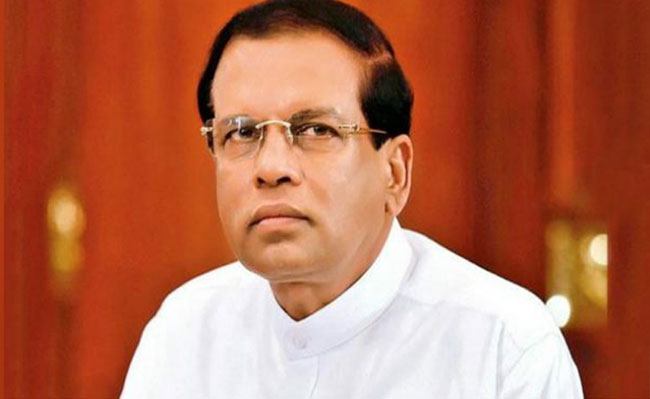
Former President and Polonnaruwa District MP Maithripala Sirisena has called upon all world leaders to promote global peace.
Speaking at the World Summit 2022 (Summit for Peace on the Korean Peninsula) in Seoul, South Korea, on Saturday, Sirisena said: “The experiences in the unification of Germany and Vietnam show how two contrasting political ideologies could positively merge. It could happen even in Korea similarly since the two political systems differ.”
World Summit 2022 (Summit for Peace on the Korean Peninsula) gathered world leaders and a worldwide virtual audience around topics related to peaceful reconciliation on the Korean Peninsula.
“The experiences in the unification of Germany and Vietnam show how two contrasting political ideologies could positively merge. It could happen even in Korea similarly since the two political systems differ,” he said.
Excerpts of Sirisena’s speech:
There is a long history of efforts to unify the divided two geographical units, created by internal and external involvements. This status has created economic downturns and suffering, especially in the North, though revival has happened voluminously in the South. This had been the case in some other non-reunified troubled countries too. Unified states have triumphed. The German experience is a good example of collapsing of the separating wall and building a strong economy. Vietnam exhibited another novel political institutional arrangement, and now a bubbling economy. These two countries achieved unification in two ways.
I quote Kohler, a commentator who stated four takeaways from the German experience of reunification: They were: First: Get ahead of developments, prepare to expect the improbable, and have the guts to lead, second: Keep your promises and make sure others are aware of it. Three: Foreign policy begins at home, and, finally, do not go it alone. I hope those who are following unification would note these learned lessons.
Due to the potential political and economic downturn, sometimes certain populations resist unification. It happens mostly in the sector or unit where economic status is affluent. Studies have proved this status even in the case of Koreas. It is due to migration that may be caused by a unification exercise that could negatively affect the lives of the affluent people. However, economic affluence is also predicted due to unification. In such a background, some argue that other factors such as shared history, culture, language, traditions, etc. should motivate unification.
The historical perimeters of the two Koreas are complex, though well known to this noble audience. I may approach the issues from our experiences in Sri Lanka, less known to many over here. It is because the Summit expects sharing collective experiences, wisdom, and insights.
Our ethnic communities were united for generations throughout the history of Sri Lanka. Though there were aberrations in relationships, total segregation was prevented, and they remained as friends, upon culture, religion, traditions, and beliefs-wise, etc. When foreign powers were ruling Ceylon, which is now known as Sri Lanka, especially towards the mid-twentieth century, our leaders fought unitedly for independence from the British, irrespective of the languages they spoke, religions they professed, ethnic groups they belonged to.
However, due to several domestic reasons, sometimes fueled by foreign influences who wished to divide and rule, hatred, jealousy, animosity was developed, and unity was compromised and jeopardized. This led to political conflicts which were later converted to violence against the state and to open violence in the streets, cities, villages, and jungles. Though we are a small island of 65,000 square kilometers the demand by an ethnic terrorist group was for a separate state. Certain arrangements were made by our governments several times to settle this issue, and even had a ceasefire brokered by Norway in 2002, but ultimately everything failed. This is another lesson we can share on failures one could experience, on the way to peace or unification.
This type of failure is observed even in the Korean environment. I may quote a commonly known episode to prove my stand. The spring and summer of 2018 saw an extraordinary rapprochement between the two Koreas. It led to successive face-to-face meetings. They culminated with a visit of South Korean President Moon Joe-in to Pyongyang. This visit followed several joint declarations, agreements, hotlines, and other confidence-building measures, including an inter-Korean liaison office in Kaesong, close to the demilitarized zone. It was the first full-time communication channel and was an ‘embassy’ between the two sides, still at war. In June 2020 it was blasted by North Korea, which resulted in blasting much of the progress made in two years. This is the complexity and unpredictability one experiences in unification or finally peacebuilding.
The terrorists in Sri Lanka did similar things to us and consequently the peace processes we carried out failed. Instead of peacemaking, we did battle it out. It is not a good lesson to learn., because war is the bitterest treatment of people. However, this is the way politics, war, egos, personalities sometimes react to certain peacebuilding, reunifying efforts.Excellency Ban Ki-Moon as the Secretary-General of the UN did his utmost to bring peace, reconciliation, democratic control of the situation after the conflict was over in May 2009. I believe in peace and avoidance of war, and conflict should not be the answer to any aberrations. What we require at such a point is confidence-building between parties and rebuilding the economies. Therefore, Sri Lanka stepped into reconciliation, basing our actions on the internationally acclaimed “four pillars of reconciliation.”
Of course, the internationals anticipated and demanded extremely revolutionary and immediate remedial actions. They are lofty expectations, but unfortunately, the expected speed does not reflect in the execution of reconciliatory mechanisms. Ours was a conflict of more than 25 years. Korea is about 70 years old. Reconciling competing interests and horrific pasts do not happen quickly, because scars are deep-rooted and thus adamancy rules. Egos prosper. Hence, patience is required, which reminds me of the statement made by the Japanese business tycoon Konosuke Matsushita “Storms may pass, patience is a virtue.” Therefore, step-by-step movement may be preferred here too. But what we need is not a step backward, but always a consistent step forward.
The economic impact on us was severe and we are still paying for such sectarian behavior. This too is not only a lesson to us in Sri Lanka. Many experiences are observed in proximity and far away too. United efforts always give better yields. Of course, the need may arise for people to sacrifice certain conveniences and comforts enjoyed before reunification or peacemaking, especially in socio-economic spheres. This was the German experience just after the unification and will happen elsewhere too.
However, governments, bilateral and multilateral internationals must find solutions to integrate, make peace, unify quarreling groups, militaries, and countries. It is because war, conflict does not have winners. There are no short or instant solutions. Ours is an excellent example. I have learned that there had been studies done even in Korea and opposition to reunification has been observed. Though short-term difficulties could be observed, one must look at the long-term effects.
Our conflict was over in May 2009. Still, twelve years later we have not found a firm power-sharing mechanism or fulfilled total reconciliation as expected by international standards. The experiences in the unification of Germany and Vietnam show how two contrasting political ideologies could positively merge. It could happen even in Korea similarly since the two political systems differ. Though such conflicts may occur regarding Korea, one may reconsider the situation in the light of common language, culture, traditions, living patterns which are binding glues for sustainable integration. . Possession of resources and technology to manufacture long-range missiles and shoot them from deserts or sub-marines, etc. is insufficient for integration or unification. Threatening nuclear attacks is insufficient for the same. What good such missiles and nuclear armaments serve the people positively? Similarly, it is not drawing a line on the 38th latitude. Marking boundaries based on surveyor’s lines have not solved issues with our neighbors as seen even today from the Radcliffe Line between India and Pakistan, and Chief British negotiator, Sir Henry McMahon’s line dealing with the boundaries of Tibet, China, Bhutan, and even India. Conflicts continue for decades and even today on these boundary lines. Again, I say, it is not an easy task, especially when such threatening warmongering hawks control decision-making.
I may quote the greatest Indian next to Lord Buddha- Mahatma Gandhi who said, “Was not war itself a crime against God and humanity, and therefore, were not all those who sanctioned, engineered and conducted wars, war criminals?” We have the choice in front of us. Do we sanction, engineer, and conduct wars and become war criminals or go by Martin Luther King Junior who said “It is not enough to say we must not wage war. Is it necessary to love peace and sacrifice for it?”
Let us take a solemn pledge that we will not be warmongers and war criminals but peacemakers and sacrifice in whatever way required because the effects will be universal and benefit humanity forever with bestowed peace.

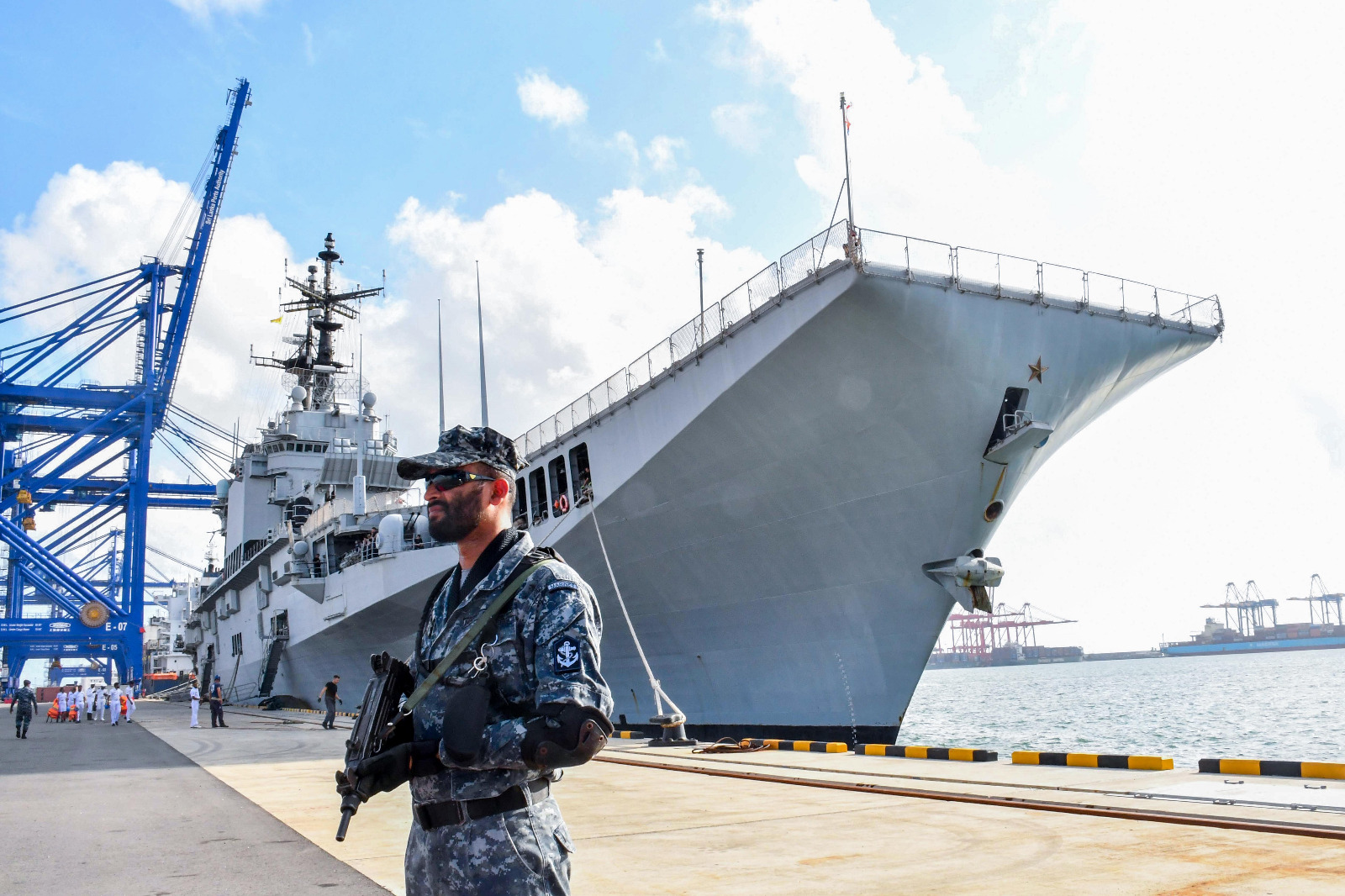
The Italian Naval Vessel ‘ITS Giuseppe Garibaldi’ arrived in Sri Lanka today, 9 September 2026, on a replenishment visit.
The Sri Lanka Navy welcomed the visiting ship in accordance with naval traditions at the port of Colombo.
‘ITS Giuseppe Garibaldi’ is a 180m long Landing Helicopter Aircraft Vessel commanded by Captain Marco GUERRIERO.
During the ship’s stay in Sri Lanka, the Commanding Officer of ‘ITS Giuseppe Garibaldi’ is scheduled to call on the Commander Western Naval Area.
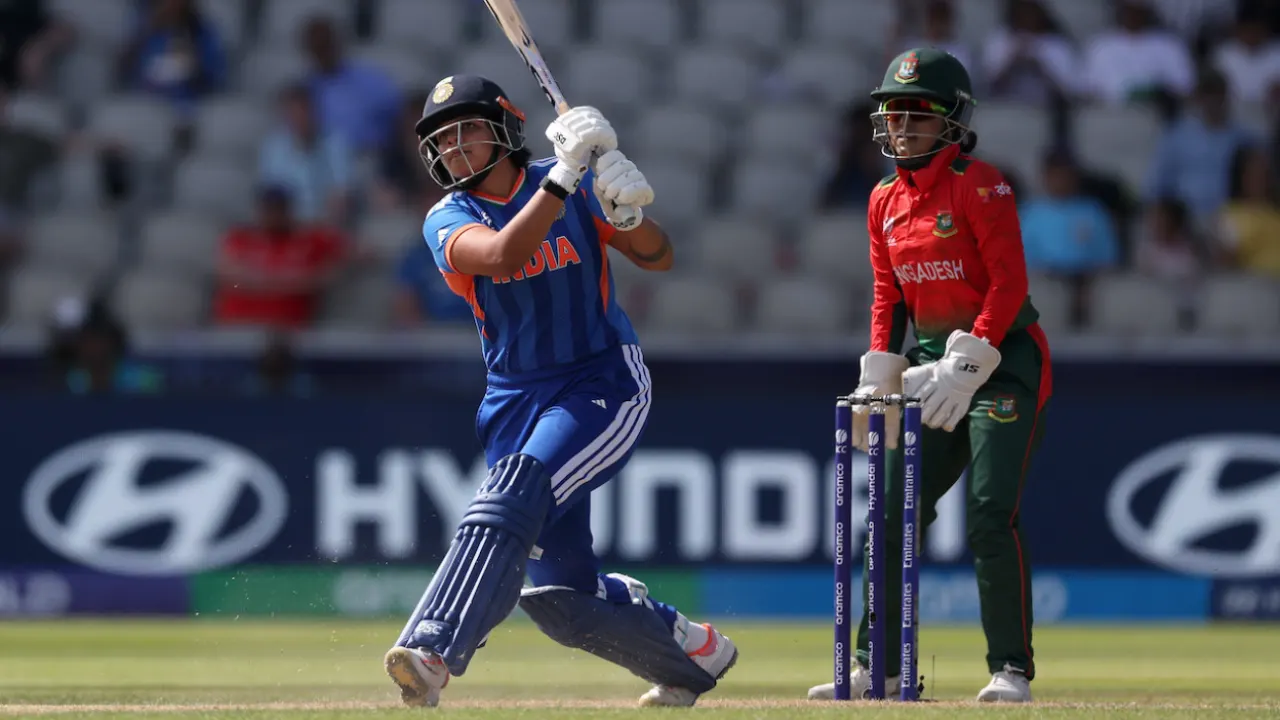
If Bangladesh take the route of seeking inspiration from the past to bring down heavyweights India on Thursday, they will have to squint their eyes and go back to pre-Covid times for their last victory against them in the Women’s Asia Cup. India have had the better of their neighbours over their last eight meetings, and last lost to Bangladesh in a T20I three years ago, when a very similar-looking Indian batting line-up was kept to 102 for 9.
Before that, Bangladesh had shocked India with back-to-back wins that culminated in their maiden Asia Cup title, by again stifling India to an underwhelming 112 for 9.
The Bangladesh team of today – as their recent fights have shown over the last two World Cups – is a version far improved from the ones of 2018 and 2023. They have scared teams like Australia and England (ODI World Cup) and India (T20 World Cup) in the last 12 months and they recently beat the higher ranked Pakistan in the UK by keeping them to 100 for 8.
It is this bowling strength that Bangladesh must bank on to try and bring down India, whose batting has stuttered every now and then, including a collapse of 8 for 46 against Thailand earlier in the tournament. India have had middle-order issues for a while now – it’s one of the things that kept them from a knockout berth in the last T20 World Cup – and Bangladesh will be itching to strike while the iron is hot.
They have laid the foundations in the last 10 days by routing Indonesia for 58, making Sri Lanka sweat in a chase of 115, and suffocating UAE’s batters to 69 for 9 with semi-finals qualification on the line.
Pratika Rawal, India’s No. 3 for this tournament in place of the injured Jemimah Rodrigues, hasn’t quite shown the promise in this format that she has in ODIs. Her 36 runs in three innings have come at a strike rate of just 109.09, against some of the lower-ranked teams in the world. Now into the knockouts, the time is ripe for Rawal to step up against one of the stronger bowling attacks of the tournament, especially if one of the openers doesn’t get going.
Swing bowler Marufa Akter is doing Marufa Akter things at this Asia Cup. She has struck in her opening spell in each of her three games so far – including the big scalp of Chamari Athapathuthu for 1. She has made the ball talk with her prodigious swing, and is the top wicket-taker in this Asia Cup among pace bowlers, with an economy rate of 3.27. She will hold the key for Bangladesh as they come up against a top order comprising Smriti Mandhana, Shafali Verma and Rawal.
Team news
After constant chopping and changing during the T20 World Cup in the UK, India have gone unchanged in the three games of this tournament. They will be expected to field the same XI again.
India (probable): Smriti Mandhana, Shafali Verma, Pratika Rawal, Harmanpreet Kaur (capt), Richa Ghosh (wk), Bharti Fulmali, Deepti Sharma, Prema Rawat, Kranti Gaud, N Shree Charani, Nandani Sharma.
Bangladesh have used 14 players, in comparison, including a debut for 17-year-old allrounder Farjana Easmin. They may not make too many changes this time as the two players who came into the XI on Tuesday – Rabeya Khan and Sharmin Akter – played starring roles in beating UAE.
Bangladesh (probable): Juairiya Ferdous, Nigar Sultana (capt & wk), Sobhana Mostary, Dilara Akter, Shorna Akter, Rabeya Khan, Sharmin Akter, Nahida Akter, Sultana Khatun, Marufa Akter, Fahima Khatun.
[Cricinfo]
News
Establishment of National Trade Negotiation Committee (NTFC) and Trade Policy Consultation Committee.

Approval has been granted at the cabinet meeting held on 24-08-2026 to implement the recommendations submitted by the committee appointed to review Sri Lanka’s current Free Trade Agreements and future course of Free Trade Agreements in Sri Lanka.
Taking into account these recommendations, it has been
recognized the necessity of establishing a National Trade Negotiation Committee and Trade Policy Consultation Committee enabling Sri Lanka to follow a more targeted, sequential, and evidence-based approach in conducting negotiations for Sri Lanka’s future Free Trade Agreements and to ensure a sustainable and meaningful stakeholder consultation process.
The Cabinet of Ministers has approved the resolution furnished by the Minister of Trade, Commercial, Food Security, and Cooperative Development to act as follows.
• Establishment of a National Trade Negotiation Committee to guide trade discussions conducted with potential bilateral or regional trade partners
• Appointment of the Secretary to the Ministry of Trade, Commerce, Food Security, and Cooperative Development as the Chairman of the National Trade Negotiation Committee and
the Chief National Trade Negotiator.
• Establishment of 12 subject specific sub- committees with the required technical working groups under the National Trade Negotiation Committee
• Appointment of Trade Policy Consultative Committee comprising of trade experts, researchers engaged in research relevant to trade field, business community, unions, civil societies and relevant public officers to instruct the National Trade Negotiation Committee on active and technical sectors, to submit the policy recommendations to the Cabinet of Ministers regarding the matters relevant to the trade agreements, to inquire sustainable ideas regarding the Free Trade Agreements, and to ensure the communication mechanism.
• The Minister in charge of the Subject international trade and the Minister in charge of the subject of Industry to serve as Co-Chairpersons of the Trade Policy Advisory Committee.

Italian Naval Vessel ‘ITS Giuseppe Garibaldi’ arrives in Colombo

England Women appoint Leah Poulton as managing director

Bangladesh bank on bowlers in bid to bring India down

Avindu makes history with first World University gold for Sri Lanka

Establishment of National Trade Negotiation Committee (NTFC) and Trade Policy Consultation Committee.

Showers will occur in the Western and Sabaragamuwa provinces and in Galle and Matara districts

‘Dates have the highest sugar content to fight Coronavirus’

Sunday Island 27 December – Headlines

#SundayIsland 17th December – Headlines

Sunday Island – 28th March

Sunday Island Headlines – 21 March

Sunday Island – 21st February – Headlines
-

 News7 days ago
Denied of promotion to SC despite vacancies, justice Gurusinghe retires
-

 News7 days ago
22A: SC urged to suspend hearing, appoint full bench
-

 News5 days ago
Namal remanded until Sept. 18 over Airbus deal investigation
-

 Latest News4 days ago
Tharanga creates history with Diamond League crown in Brussels
-

 News7 days ago
Govt. seeks NATO assistance
-

 News4 days ago
Dispute which triggered listed company director being detained at BIA resolved
-

 Editorial7 days ago
Strange arithmetic goes unchallenged
-

 Features3 days ago
After the parade: What a traffic OIC’s walk-out tells us