
Opinion
Simon’s Thomia : For School and Country – II


Review
THOMIA
by Richard Simon. 2 Volumes, 81Chapters, 896 pages. Published by Lazari Press, Colombo (2025). Dedicated to the memory of his classmate, Richard de Zoysa.
(Part I of this article appeared in The Island yesterday)
Simon’s writing highlights the events in Ceylon which was often referred to as the model colony, and enjoyed imperial prestige as one of the most prosperous, stable and strategic possessions in the British Empire during the 19th and early 20th centuries. Colombo had developed as one of the busiest export posts in Asia, as Ceylon Tea became world famous.
The Port of Trincomalee, one of the three largest natural deep-water harbours in the world, was the most strategically located port of western defence in the East.
HMS Trincomalee from the times of the Napoleonic Wars is to date the centrepiece of the National Museum of the Royal Navy. It was named to mark The Battle of Trincomalee of 1782 when the British first defeated the French, and then the Dutch in 1796 to take control, to colonise strategic Ceylon. HMS Trincomalee indicates how deeply Trincomalee was ingrained in the western defence psyche.
By 1944 the Soulbury Commission for constitutional reform in Ceylon was appointed. When the commission withdrew to London in 1945 to prepare the final report, D.S.Senanayake followed them to London, determined to gain the outcome he sought, by all means available.
Ceylon was already a mature democracy under its Donoughmore Constitution. With universal suffrage for women in Britain in 1928, followed by Ceylon in 1931, it was a first in Asia. Politically, Ceylon was heading to be the first in Asia to nurture a Westminster style parliamentary democracy.
Senanayake arrived in London amid an unexpected change in Whitehall, with the sudden collapse of Nazi power in Europe. Victory for the allies was imminent. Senanayake knew his representations had been well received. For the first time after five hundred years of colonisation by the Portuguese, the Dutch and the British, a Sinhala leader had succeeded with foreign help, in bringing the people of Sri Lanka together.
On February 4th 1948, D.S Senanayake led the country to independence.
Senanayake was Ceylon’s first Prime-Minister. Dr.N.M.Perera, a Trotskyite tutored by Harold Laski at the London School of Economics (LSE), was Leader of the Opposition. It was the first time anywhere in the world that a Trotskyite was in the corridors of power.
The “Men of Stone” dominated the country’s political landscape for nearly the next quarter century. D.S. Senanayake was succeeded by his Cambridge educated son, Dudley Senanayake, and the Oxford educated Solomon West Ridgeway Dias (S.W.R.D.) Bandaranaike was Leader of the Opposition. The third old Thomian Prime-Minister was S.W.R.D. Bandaranaike with Dr.N.M. Perera as Leader of the Opposition. The fourth Prime-Minister, the school produced was Don Wijeyananda Dahanayake with Dr.N.M. Perera, and another old boy C.P. de Silva, serving terms as Leader of the Opposition.
Thomia as political analysis is unique in its insight into the idiosyncrasies of its characters during their schooldays and adult life, before they emerged as political players in the national arena.
Of all the powerful and influential men who emerged from S.Thomas’, the man who had the greatest impact on the life of the nation was S.W.R.D. Bandaranaike. A most elitist Anglican Christian, Secretary of the Oxford Union, in politics he unleashed the aspirations of the majoritarian Sinhala Buddhist mass. In power, he made Sinhala the official language of the country.
Ironically, his political journey was ended by commercial interests of a rouge Buddhist monk he resisted, who misled another radical Buddhist monk to assassinate the Prime-Minister.
What he stood for and did are regularly falsified or exaggerated by partisan interests of all colours. But it is widely acknowledged, that this most elitist intellectual, ushered the era of the common man in Sri Lanka.

Winchester House and The Sick Room
His widow, Sirima Bandaranaike was returned to parliament by the electorate to become the world’s first woman Prime-Minister. The Trotskyite, Dr NM Perera survived as her Finance-Minister up to 1975, till she sacked the leftist from government.
The Bandaranaike legacy and political dynasty was continued by the wife and daughter of that famous Old Thomian. His daughter, the Sorbonne educated Chandrika Kumaratunga was returned to office for two terms, as the Executive President of the Republic, to which post-independent Sri Lanka evolved, and she held the reins of power until 2005.
Thomia affords an in-depth view of the characteristics inherent in the men it describes, as among those equal. This writing reflects shades of subtlety, in its treatment of the ethnic, religious and caste and class issues of Ceylonese society under colonial rule.
In post-independent Ceylon, ethnic Tamil separatist tendencies were beginning. Another Old Thomian who was Bandaranaike’s classmate, S.J.V.Chelvanayakam, a Methodist, who led a Tamil political party played a vital role.
Between the demands of Tamil and Sinhala extremists, Chelvanayakam negotiated a reasonable solution with Bandaranaike. S.W.R.D conceded the use of Tamil for official purposes in the Northern and Eastern Provinces of the country which was predominantly Tamil, and agreed to the creation of special regional or provincial councils with administrative powers, and local autonomy. Under pressure from extremists from both communities it failed.
Chelvanayakam then negotiated the same with another Old Thomian Prime-Minister Dudley Senanayake, but the pact met the same fate. Chelvanayakam was one who might have been able to wield the demand for Tamil separatism. But that was not to be, and the demand for Tamil separatism resulted in armed struggle. A thirty-year civil war which devastated the country, was finally militarily defeated by the Sri Lanka armed forces in 2010.
In another greater realm, Thomia is a commentary of the larger intra-religious issues of Protestant Christianity vs the emerging evangelical puritanism, to inter-religious issues such as Christianity vs Buddhism, which were major intellectual and popular vociferous issues of the day.
In post-independent Ceylon, Bandaranaike’s 1956 shocked the anglophiles who had not anticipated the power of the Sinhala Buddhist mass, they had not taken it seriously.
Warden Canon De Saram was Bandaranaike’s classmate. They had been rivals at S.Thomas’ and at Oxford. De Saram was determined that S.Thomas’ will remain one of the few Christian private schools in the country, with an emphasis on English and Classics. He was openly critical of the Bandaranaike government’s policy on education in which Sinhala and Tamil received emphasis.
De Saram was criticised by the Minister of Education for S.Thomas’ teaching the boys about world geography, without knowing about our own country. De Saram stood his ground and replied, he did not want his boys to grow up believing that the highest mountain in Sri Lanka, was the highest mountain in the world.
S.Thomas’ and the few Christian private schools which opted to remain private were now on their own. They would not receive any state patronage. They will survive on school fees. The Schools Old Boys Association, one of the oldest in the world, was to sustain its existence. In a country of a few protestant Christians, its few Christian private schools are supported by “Old Boys and Old Girls” – the majority of whom are Buddhists, Hindus and Muslims. They still staunchly believe in the ideals of their alma mater, which remain Christian private schools.
De Saram, as the last defender of Anglican missionary education in its classic sense in Ceylon, took his place among the three great men in the evolution of S.Thomas’, as Chapman, Stone and De Saram.
In 1947 during the De Saram years, a Chaplain of King’s College Cambridge, Roy Bowyer-Yin was made Chaplain of S.Thomas. He was inspired to install and institute the famous “Festival of Nine Lessons and Carols” of King’s, at the college Chapel of the Transfiguration. It is the story of the fall of humanity, the promise of the saviour and the birth of Christ read from the Book of Genesis, and sung with Christmas carols.
It perhaps fulfilled a dream of the founder of S.Thomas’ to resemble his Eton and Kings.
In 1968 David Paynter was inspired to paint his massive masterpiece, The Mural of the Chapel of Transfiguration, upon the interior East wall behind the altar. It completely transformed the inner face of the chapel, to reflect the atmosphere of the transfiguration.

Miller-Chapman and Copleston-Claughton Houses
The unusual face of the beardless Christ stands out with a singular appropriateness, of youthfulness in contrast with Elijah and Moses. It has been described as a meditation on leadership, of the old order giving away to the new, which begins on the mountaintop and travels to the reality of the plain. It is said, Paynter reflected the features of Bowyer-Yin in his face of Christ.
The author writes “the debt I owe to S. Thomas’, is incalculable”. His claim that his alma mater entangled in the rise of a political elite in independent Sri Lanka, to become her greatest public school, is unpretentious.
As a moment of aesthetic and intellectual expression of S.Thomas’, Richard Simon writing Thomia (2025) is a monumental life work. He has dedicated it to the memory of his classmate Richard De Zoyza, who inspired him to write, and laid down his life as a reporter for what he believed.
(The writer formerly worked with The Island Daily Mirror, & the Daily News as a journalist.)
Reviewed by
by Shavindra Fernando

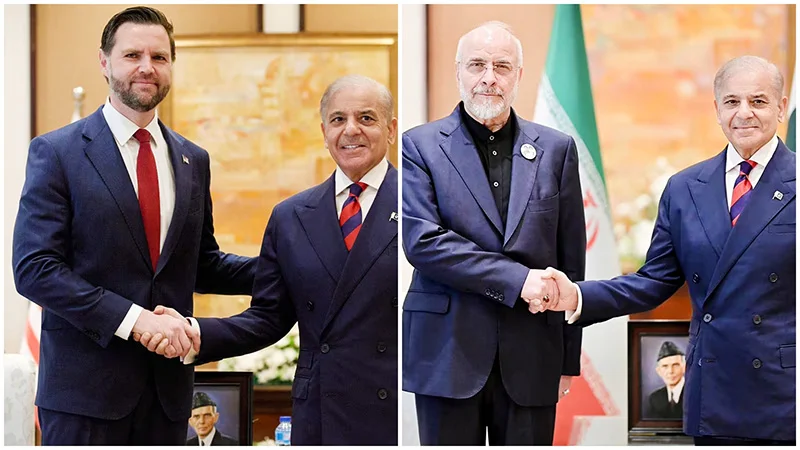
“Thanks to the tireless mediation efforts of Pakistan and Qatar, significant progress has been made in ending the war in Lebanon…”
–Iran’s Foreign Minister Abbas Araghchi on X
The recent Memorandum of Understanding (MoU) between Iran and the United States which resulted in a high-level meeting in Lucerne, Switzerland, is a testament to the highly skilled diplomacy of the South Asian nation, Pakistan, and is admirable for the very difficult task they undertook and achieved with panache. They remained unruffled throughout and continue to do so, despite the unpredictable nature of the relationship between the parties to the conflict, the US and Iran, at times turning publicly hostile, and subject to an influential spoiler in Israel determined to sabotage a positive outcome, making the process as delicate as defusing an explosive device with seconds to detonate.
Pakistan remained engaged steadfastly, even when the parties walked out of negotiations, refused to attend them, or seemed to give up any hope of a diplomatic endgame and returned to the Strait of Hormuz for actual and verbal wars. In the meantime, Lebanon was clearly being turned into the new Gaza, which was a red line for the Iranians.
The Pakistanis kept talking, visiting not only the two main belligerents USA and Iran, but the regional actors paying the price of an escalating conflict; perfecting the draft agreements while broadening the stakeholders who were invested in a peaceful diplomatic outcome, and aiming to do so as fast as was possible. It seemed like a long shot, especially with X messaging playing its now indispensable, often colorful role. The Pakistani team’s faith in the process was magnificently rewarded in the news coming out of Lucerne after the first day of negotiations of encouraging progress, with Qatar supporting Pakistan as joint mediator in the important venture.
This stage in the negotiations was described by Pakistani Prime Minister Shehbaz Sharif as “make or break”, which was also echoed by some analysts and mainstream media. The expectations were cautious but positive, and the world watched with renewed hope, if somewhat muted, as Pakistan presided over the opening media conference with confidence.
It wasn’t a perfect pitch to play on by any means: the Israelis had escalated their bombing of Lebanon, a million Lebanese were displaced and the Iranians had closed the Strait, yet again, with a day to go for the talks. As the teams were about to start negotiations, X swooped over Lake Lucerne dropping President Trump’s message about the Iranians being unable to return to “their f…..g country” if they didn’t open the Strait, the unprintable language no longer shocking through regular usage.
It was reported that the Iranians had included psychologists in their communications team in Teheran to comprehend the cultural idiosyncrasies of the President of the United States, which clearly helped them to remain engaged with the process in Lucerne despite the provocation. Iran’s response that the US should choose their words carefully because their weapons were at the ready to strike at Israel, had the media rushing to report that the talks had broken down. In a secondary issue, according to the Tasnim news agency, the US had wanted International Atomic Energy Agency (IAEA) Director General Rafael Grossi who was on site in Lucerne to be present at the talks, but Iran wouldn’t have it.
Great Innings
It is on this unenviable wicket that Pakistan, supported now by Qatar as mediators, seem to have played a beautiful innings.
The process was flawless. According to reports, the mediators met separately with the two teams to discuss the draft, before the main negotiations began. This would have minimised the points of disagreements which may have soured the atmosphere between the two signatories, while the mediators did the work to accommodate those views. The results announced after 12 hours of negotiations showed that all concerned stayed engaged with the process and were persuaded to sign on to a viable diplomatic roadmap.
According to the Ministry of Foreign Affairs of Qatar, which released the statement on the 22nd of June 2026 from Lucerne, they agreed to establish several creative mechanisms which have every chance of keeping things on track:
* A High Level Committee, which will provide political oversight on the mediation.
* Chief negotiators will report regularly to the High Level Committee
* Working groups on nuclear issues
* Working group on sanctions
* Working group for monitoring, and dispute resolution group to ensure the effective implementation of the MoU and on other matters.
* A communication line between the parties to avoid incidents and miscommunication with the aim of safe passage for commercial vessels through the Strait of Hormuz.
· A de-confliction cell between the parties, the Lebanese Republic and facilitated by the Mediators, to ensure the adherence of the termination of military operations in Lebanon.
Pakistan has always had well-trained, sophisticated diplomats. I was lucky to have met several and see their outstanding performances at the United Nations in Geneva, Paris, Lisbon and Singapore. They played a role well above the size of their economy or weight in world affairs. My first encounters with Pakistani diplomats were in Islamabad, where my father was Chargé d’Affaires at the Sri Lankan High Commission, and I made lifelong friends at the Institute of Modern Languages where trainee diplomats and military officers studied, and which I too attended.
Their diplomats were always well-spoken, well-versed in diplomatic practice and were often the first to protest if procedure was violated in those forums. They worked tirelessly, were no strangers to long hours, and were motivated to keep going until a result was reached. Their language skills, especially in the most widely used global language English, which they retained, as did India, as the language of higher education and administration, served them very well.
Pakistan and Sri Lanka
From what I have seen, Pakistan was impressive in their solidarity with their regional partners, often taking the lead to resolve issues, being regularly elected to speak for the OIC (Organization of the Islamic Conference), for example. Sri Lanka could unhesitatingly rely on their firm friendship and support, and played a leading role during my husband, Dr Dayan Jayatilleka’s tenure as Ambassador/PR in Geneva during the decisive last years of Sri Lanka’s war and in the immediate aftermath, when Sri Lanka was under severe pressure at the UN Human Rights Council.
As trusted supporters, my husband invited them to be part of a mechanism that he proposed to the EU of a “Quad” which would represent Sri Lanka’s interest, together with him as Sri Lanka’s Permanent Representative to the UNHRC, in all further negotiations with the EU which had 12 members in the Human Rights Council. The EU was exerting pressure on him to meet with the 12 of them for further talks on the draft resolution into which they meant to insert accountability for war crimes and to remove any reference to Sri Lanka’s sovereignty which Dayan had refused to countenance.
Pakistan readily agreed, as did India, as well as Cuba as the current chair of the NAM and Egypt as the incoming Chair of NAM, to form the Quad. As it happened, while the Quad was more than ready to debate any issues, the EU decided not to continue with the meeting after that show of regional and Global South solidarity and strength. The Quad however continued to operate as a unit and played a critical role at a moment in the proceedings when unexpected negotiations were called by the President of the Human Rights Council in the middle of the Special Session, and stood solidly together refusing to budge on the agreed draft. In this instant, India and Pakistan worked closely together in support of Sri Lanka, earning our eternal gratitude.
Pakistan’s emergence as a global player navigating complex international issues with such sophistication and facility, was no surprise to those who had seen them function. And yet it was not known widely. When Lakshman Kadirgamar was Foreign Minister of Sri Lanka, he sent my husband together with a few others to observe Pakistani Foreign Policy think tanks and to learn their modus operandi. The group returned impressed. The only surprise perhaps has been its overtaking of India, a great regional power, in global conflict resolution. India has been conspicuously silent, and has had no role in these important initiatives.
Exceptional Global Diplomacy
The Pakistani diplomatic initiatives taken when all seemed lost, and sustained against all odds have offered the world a valuable interlocutor in conflict resolution, and their place in global diplomacy is now acknowledged. The MoU between the United States and Iran is called the “Islamabad Memorandum of Understanding”. Analysts have said that this initiative is significant for the fact that unlike the JCPOA, regional actors rather than extra-regional ones have been made stakeholders, therefore has a considerable probability of success.
This is a significant achievement of no small measure, because Iran and the United States have been hostile for decades. In the only high-level meeting since 1979 between the two countries which took place recently in Islamabad, Pakistan has managed the process with remarkable patience, confidence and faith, to bring it along to a place of hope. According to Pakistan TV, at the end of the Lucerne meeting, JD Vance praised Pakistan’s role in bringing the US and Iran together to the negotiating table, calling PM Sharif and Field Marshal Munir, his best friends in the region. He had also said “We love Pakistan”.
Considering what Pakistan had actually attempted and succeeded in doing, this is remarkable. It has been able to by-pass the decade’s old propaganda against Iran as an existential threat in the region, especially to Israel, which was an established position in US policy circles. Consider the context: Trita Parsi, Executive Vice President of the Quincy Institute based in Washington revealed in an interview with Tucker Carlson that Israel has been pushing the narrative of Iran as an existential threat to their country for decades with success, while not believing it themselves within Israel. He said when he did his PhD on the subject, he interviewed several top officials including those in intelligence services in Israel, and found that rather than the irrational, destabilizing, suicidal actor they were portraying Iran as, successfully, to US policy circles, they believed the opposite, and regarded their adversary as a cautious calculating, rational actor. ().
JD Vance’s optimistic framing of the Lucerne discussions as a historic opportunity to transform the Middle-Eastern region for long term, sustainable peace is a testament to Pakistan‘s expert navigation of the diplomatic Hormuz Strait where a number of intractable issues had no safe passage, but are now freed for discussion.
With the dedication, expertise and diplomatic skills that the mediators have shown, the on-going process

itself may be considered a victory. The new development in this round of negotiations, that of active engagement of regional countries, may yet help protect the process, and assist in the complex navigation required to circumvent the mines that may be placed in its way.
by Sanja de Silva Jayatilleka
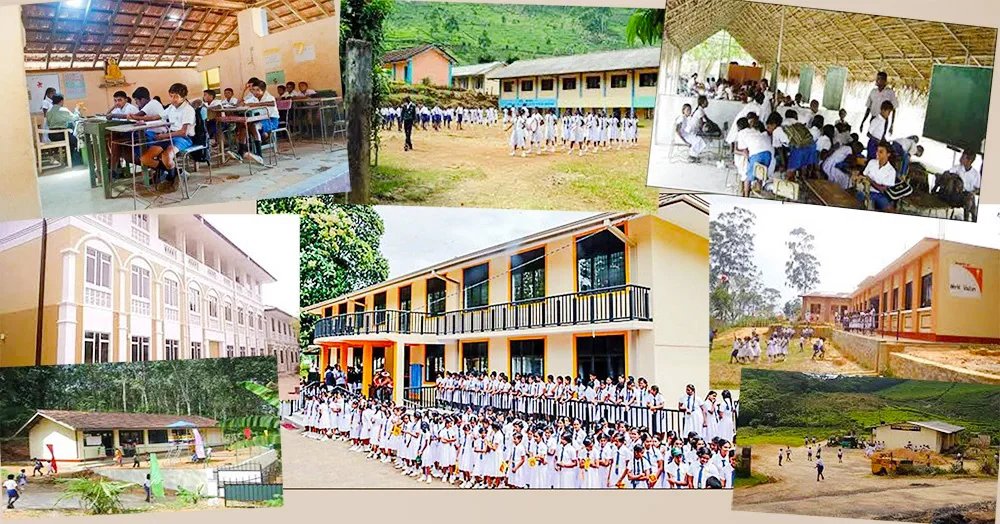
Education is widely recognised as the foundation of national development. For decades, Sri Lanka has maintained a strong commitment to free education, producing a highly literate population and creating opportunities for millions of students regardless of their socioeconomic background. While this achievement deserves recognition, the challenges of the twenty-first century demand a new approach to education. The modern world is characterised by rapid technological advancement, globalisation, and an increasingly competitive international job market. To ensure economic growth and prosperity, Sri Lanka needs an education system that prepares students not only for local employment but also for opportunities across the global workforce.
The traditional Sri Lankan education system has largely been designed around academic examinations and university entrance. Success is often measured by performance in the Grade Five Scholarship Examination, G.C.E. Ordinary Level Examination, and G.C.E. Advanced Level Examination. While these assessments have helped maintain academic standards, they have also created a culture that prioritizes memorization and examination results over practical skills, innovation, and adaptability. As a result, many graduates possess theoretical knowledge but lack the competencies required by modern employers.
The global job market is undergoing significant transformation. Technological innovations such as artificial intelligence, automation, robotics, and digital communication are reshaping industries worldwide. Many occupations that existed a decade ago have evolved dramatically, while entirely new professions have emerged. In this environment, employers seek individuals who can think critically, solve problems creatively, work collaboratively, and adapt quickly to change. Therefore, Sri Lanka’s education system must move beyond traditional learning models and embrace a curriculum that develops these essential skills.
One of the most important reforms should be the integration of digital literacy and technology education across all levels of schooling. In today’s world, computer skills are no longer optional; they are fundamental requirements for employment in nearly every sector. Students should be introduced to coding, data analysis, cybersecurity, artificial intelligence concepts, and digital communication tools from an early age. Familiarity with technology not only increases employability but also encourages innovation and entrepreneurship. By equipping students with technological competencies, Sri Lanka can create a workforce capable of competing in international markets and attracting foreign investment.
Another critical area is English language proficiency. English remains the dominant language of international business, science, technology, and higher education. Although English is taught in schools, many students complete their education without achieving fluency. This language barrier limits access to global employment opportunities and international professional networks. A modern education system should place greater emphasis on practical communication skills, including speaking, listening, presentation, and professional writing. Enhanced English proficiency would allow Sri Lankan graduates to engage confidently in multinational workplaces and global industries.
In addition to technical and language skills, the education system must focus on developing soft skills that are highly valued by employers worldwide. These include communication, teamwork, leadership, emotional intelligence, time management, and problem-solving abilities. Many international companies report that technical knowledge alone is insufficient for workplace success. Employees must also collaborate effectively with colleagues from diverse cultural and professional backgrounds. Schools can nurture these qualities through group projects, debates, leadership programmes, extra-curricular activities, and community service initiatives.
Furthermore, vocational and technical education should be given greater recognition and support. For many years, Sri Lankan society has emphasised university education as the primary path to success. However, global economies increasingly require skilled technicians, engineers, healthcare professionals, digital specialists, and tradespeople. Countries with strong vocational education systems often experience lower unemployment rates and better alignment between education and labour market needs. Sri Lanka should expand vocational pathways and create stronger partnerships between educational institutions and industries. Such collaboration can provide students with hands-on experience, internships, apprenticeships, and direct exposure to workplace environments.
Entrepreneurship education should also become a key component of the curriculum. The future workforce will not consist solely of employees working for established organizations. Many young people will create their own businesses, develop innovative products, and participate in the digital economy. Schools should teach financial literacy, business planning, marketing, innovation management, and basic economic principles. Encouraging an entrepreneurial mindset can help students identify opportunities, manage risks, and contribute to economic growth through job creation.
Another important reform involves the modernization of assessment methods. The current examination-focused system often rewards memorization rather than genuine understanding and practical application. Global employers are increasingly interested in competencies rather than examination scores alone. Therefore, schools should adopt more diverse forms of assessment, including research projects, presentations, portfolios, practical assignments, and collaborative problem-solving activities. Such methods provide a more accurate reflection of students’ abilities and encourage meaningful learning.
Teacher development is equally essential for successful educational transformation. Teachers play a central role in shaping student learning experiences. If educators continue to rely on outdated teaching methods, curriculum reforms will have limited impact. Continuous professional development programs should train teachers in modern pedagogical approaches, digital technologies, student-centered learning, and industry-relevant skills. Empowering teachers with contemporary knowledge and resources will enable them to prepare students more effectively for global career opportunities.
The education system should also foster global awareness and cultural understanding. As businesses increasingly operate across national borders, employees must be capable of working in multicultural environments. Subjects such as global studies, international relations, environmental sustainability, and intercultural communication can broaden students’ perspectives and prepare them for participation in a globalized world. Exposure to international issues helps students develop adaptability and appreciation for diversity, qualities that are highly valued in multinational organizations.
Moreover, stronger connections between education and industry are necessary. Curriculum development should involve input from employers, professional organizations, and industry experts to ensure that educational content remains relevant to labor market demands. Regular reviews and updates can help schools respond quickly to changing economic trends and technological advancements. Such collaboration reduces the gap between what students learn and what employers require.
Sri Lanka stands at a critical moment in its educational journey. While the country’s free education system has produced significant achievements, the demands of the global economy require a more future-oriented approach. An education system focused on the world job market should emphasize digital literacy, English proficiency, soft skills, vocational training, entrepreneurship, global awareness, and practical learning experiences. It should move beyond rote memorization and examination-centered learning toward the development of adaptable, innovative, and skilled individuals.
By implementing these reforms, Sri Lanka can create a workforce that is competitive on the international stage, capable of securing high-quality employment opportunities, and prepared to contribute meaningfully to national economic development. Investing in such an education system is not merely an educational reform; it is a strategic investment in the future success and prosperity of the nation.
BY Saumya Aloysius

Sri Lanka stands at a defining juncture where the pursuit of accountability for the 2019 Easter Sunday bombings intersects with fragile economic recovery, communal sensitivities, and renewed demands for political devolution. The arrest of former State Intelligence Service chief Retired Major General Suresh Sallay in February 2026, and subsequent high-level statements linking him to directing aspects of the attacks that killed 279 people, mark a significant escalation in the investigation. Actions such as the impounding of passports of key figures, including former President Gotabaya Rajapaksa and Defence Ministry Intelligence officers, signal seriousness. Yet the process risks being derailed by partisan politics, social media manipulation, and selective narratives. True national security demands that this remains a forensic, evidence-based exercise rather than a political spectacle.
The visible participation of Muslim communities in demanding justice for the victims while articulating long-suppressed grievances represents one of the most important developments. Many within the community are increasingly recognising that they were subjected to a calculated, gradual anti-Muslim agenda in the aftermath of the attacks, one that collectively stigmatised an entire faith group, portrayed them as inherent extremists, and created fertile ground for the radicalisation of vulnerable youth. This manufactured climate of suspicion and marginalisation did not enhance security; it damaged social cohesion and inadvertently aided the very extremist narratives it claimed to counter.
The current government’s handling of the Easter investigations appears to be fostering cautious but noticeable confidence among sections of the Muslim community. When investigations target individuals based on evidence rather than community affiliation, and when senior figures from previous regimes face scrutiny without fear or favour, it sends a powerful message that the state is capable of impartial justice.
This emerging trust is a vital asset in the broader battle against radicalisation. It must be nurtured through consistent, transparent action rather than undermined by political grandstanding or social media campaigns that seek to reignite old fault lines. The Catholic Church’s measured support for the process while insisting on its integrity offers a constructive template that political actors and online platforms would do well to follow.
Parallel to these developments, another significant demand has resurfaced with renewed vigour: calls from the Tamil community, the diaspora, and sections of the international community for the holding of long-overdue provincial council elections. This is not a peripheral governance issue; it is intrinsically linked to national security, reconciliation, and the prevention of future instability in the North and East. Prolonged delays in devolution fuel perceptions of centralised neglect, provide ammunition for external actors seeking to internationalise domestic matters, and risk allowing legitimate grievances to be exploited by fringe elements.
Conducting credible provincial elections would demonstrate the government’s commitment to democratic decentralisation, strengthen local legitimacy, and reduce the space for both domestic radicalisation and foreign interference. Conversely, further postponement risks turning a constitutional requirement into another source of communal tension and international pressure.
The government must therefore treat these calls with strategic seriousness rather than tactical delay. Provincial council elections, conducted fairly and on schedule, can serve as a confidence-building measure that complements the pursuit of justice in the Easter case. Both processes, accountability for past security failures and meaningful devolution, are essential components of a holistic approach to preventing the recurrence of violence, whether from Islamist extremism, ethno-nationalist mobilisation, or hybrid threats amplified through social media.
Economic constraints continue to form the underlying substrate of national vulnerability. While the current administration has maintained a degree of macroeconomic stabilisation under the IMF programme, poverty levels remain elevated, youth unemployment is a persistent concern, and investor sentiment is sensitive to political noise. High-profile investigations that are perceived as selective or politically motivated will deter the very Foreign Direct Investment the country needs to generate sustainable growth and employment. Security and economic resilience are mutually reinforcing; prolonged political turbulence or loss of institutional credibility directly undermines the ability to attract capital and create opportunities that reduce the appeal of extremist ideologies.
On the geopolitical front, the recent visit of General Kevin Schneider, Commander of the United States Pacific Air Forces, for the Indo-Pacific Safety Air Forces Exchange, and US Assistant Secretary of State for South and Central Asian Affairs S. Paul Kapur, who arrived in the island on an official visit, met with the President. Newsfirst.lk highlights both opportunity and the need for careful navigation. Discussions on maritime domain awareness, cybersecurity, and disaster response offer tangible avenues for capacity enhancement. At the same time, Sri Lanka must maintain a balanced engagement with India and China while monitoring broader regional dynamics, including Pakistan’s active mediation role in the US-Iran talks underway in Switzerland. These developments underscore the interconnected nature of Indian Ocean security and the importance of professional intelligence assessments that transcend partisan domestic agendas.
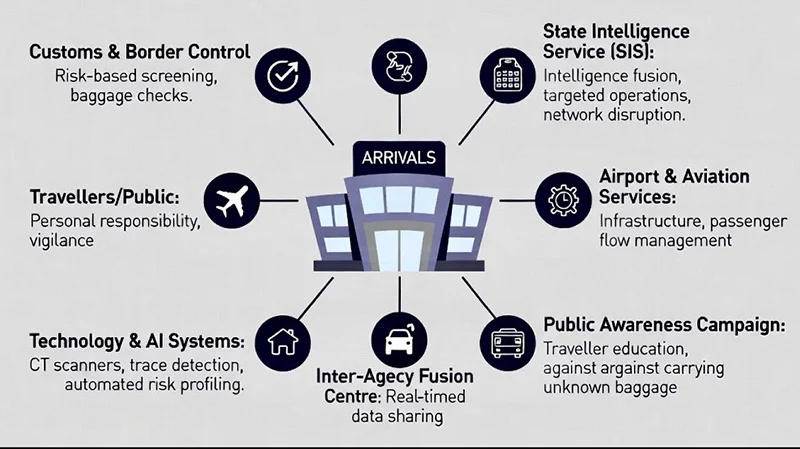
Drug trafficking remains a persistent and serious national security threat. Despite consistent detections at arrival points, particularly at Bandaranaike International Airport (BIA), and within the country, attempts to smuggle narcotics continue unabated. These detections clearly demonstrate that the menace is far from over: demand persists and supply networks remain active. The State Intelligence Service has played a pivotal role in several major detections through its strategic networks and effective fusion of intelligence, enabling more qualitative and targeted operations. However, the operational environment at BIA arrival terminals becomes highly complicated when multiple aircraft land simultaneously.
Many passengers proceed through the “nothing to declare” channel, while customs officers conduct random checks that often create complications for both travellers and enforcement personnel. It would be prudent for authorities to undertake a comparative study of the number of random checks conducted against the number of successful detections achieved, in order to objectively evaluate the effectiveness of this approach. The optimal strategy lies in combining modern technology with intelligence-led operations. In parallel, a sustained public awareness campaign should be launched among travellers, strongly discouraging them from carrying baggage belonging to others, whether known or unknown persons.
Perhaps, the most under-appreciated dimension of contemporary national security is the rise of non-traditional threats. The recurring effects of El Niño and broader climate variability, erratic monsoons, agricultural stress, water scarcity, and potential displacement, carry direct implications for social stability and resource competition. The persistent challenge of Dengue outbreaks further strains state capacity and public health resilience. These are not peripheral issues for intelligence agencies; they are core components of a modern threat landscape that includes hybrid warfare, disinformation campaigns, and climate-induced instability.
National intelligence agencies must expand their analytical frameworks beyond traditional kinetic threats to integrate climate intelligence, health security indicators, and the monitoring of disinformation campaigns that exploit economic hardship or communal grievances. The Easter Sunday tragedy was itself a catastrophic failure of intelligence coordination and threat assessment. Repeating such blind spots in an era of hybrid and non-traditional risks would be inexcusable.
The professional intelligence community has a clear duty at this moment. Its role is to provide objective, evidence-based assessments to the state, insulated from political pressure and focused on protecting the nation rather than serving transient interests. This requires rigorous focus on the actual threat picture: monitoring attempts to exploit the Easter investigations for divisive ends, tracking foreign influence operations, assessing the intersection of economic distress with radicalisation pathways, and integrating climate and health stressors into strategic warning. Inter-agency coordination, professional training, and institutional autonomy are not optional luxuries; they are prerequisites for credible national security.
Sri Lanka cannot afford another cycle in which legitimate demands for justice and devolution are hijacked by partisan actors or amplified into communal polarisation by social media. The emerging recognition within the Muslim community that past anti-Muslim campaigns contributed to radicalisation, coupled with tentative confidence in the current government’s approach, represents a narrow but valuable window. Similarly, addressing the long-standing call for provincial council elections offers a pathway to strengthen democratic legitimacy and reduce external leverage points. Both require the government to demonstrate consistency, transparency, and strategic vision.
Conclusion
Sri Lanka’s national security will not be secured by half-measures or political expediency. The time has come for decisive, professional, and coordinated action across all fronts. The pursuit of justice in the Easter Sunday investigations must remain evidence-driven and impartial, not a tool for partisan score-settling. Meaningful devolution through timely provincial council elections and the full implementation of the 13th Amendment within the unitary framework must be delivered without further delay, as unresolved grievances remain fertile ground for division and external interference.
Drug trafficking and other hybrid threats demand the immediate fusion of modern technology with superior intelligence-led operations, supported by robust public awareness campaigns. Non-traditional threats such as climate-induced instability and public health risks must be elevated to the core of national security planning.
True national security is built on institutional integrity, social cohesion, economic resilience, and strategic foresight. Sri Lanka has paid an unbearably high price in the past for allowing political calculations and institutional failures to override professional security management. The current moment offers a rare opportunity to break that destructive cycle. The government, intelligence community, political parties, religious and community leaders, and all stakeholders must rise above narrow interests. They must choose evidence over expediency, unity over division, and long-term national interest over short-term political gain. Anything less would be a betrayal of the sacrifices made and the future that belongs to the next generation. The choice is clear, and the time to act with courage and clarity is now.
Mahil Dole, SSP (Retired), is fthe former Head of the Counter-Terrorism Division of the State Intelligence Service of Sri Lanka, and has served as Head of the Sri Lankan Delegation at three BIMSTEC Security Conferences. With over 40 years of experience in policing and intelligence, he writes on regional security, interfaith relations, and geopolitical strategy.
This opinion draws on public records and professional experience. The views expressed are personal
By Mahil Dole
Senior Superintendent of Police (Retd.)
Former Head of Counter Terrorism,
State Intelligence Service.

Representatives from the Ceylon Chamber of Commerce meet PM

Progress of Housing Project for Malayagam Community families funded by India reviewed

South Africa stun South Korea to reach World Cup knockouts for the first time

Tremors of 7.5, 7.2 kill 32, injure hundreds in Venezuela

Former Minister Wijeyadasa Rajapakshe’s son arrested by CIABOC

Morocco come back after historic Haiti goals to reach World Cup last 32

‘Dates have the highest sugar content to fight Coronavirus’

Sunday Island 27 December – Headlines

#SundayIsland 17th December – Headlines

Sunday Island – 28th March

Sunday Island Headlines – 21 March

Sunday Island – 21st February – Headlines
-

 News6 days ago
Creditor receives USD 2.5 mn as Lankan public bears loss from theft of Treasury funds
-

 News5 days ago
Creditor not yet paid
-
 News5 days ago
Consumers bearing 22% tax burden despite 18% VAT claim: Dr. Harsha de Silva
-

 Features4 days ago
Nanda Pethiyagoda Wanasundara as three generations of family saw her
-

 Features3 days ago
Sri Lanka developing independent hydrographic capabilities
-

 Opinion6 days ago
SriLankan Airbus struck by lightning
-

 Editorial4 days ago
Fuel crisis: Beyond price debate
-

 Latest News4 days ago
Sooryavanshi thumps fastest List A fifty as India A win tri-series