
News
Shortages: Auditor General’s report sheds light on many ills in health sector


By Saman Indrajith
The expenditure on medical supplies in the first quarter of 2022 was only Rs. 12.4 billion, a sharp drop from 2020 and 2021, the Auditor General’s Special Report on Procedures taken to avoid the Shortage of Pharmaceuticals in government hospitals by 13 May 2022, has revealed.
The amounts spent on medical supplies during the year 2020 and year 2021 were Rs. 83.5 billion and Rs. 73.6 billion respectively.
The actual quarterly average expenses on medical supplies in 2020 and 2021 were Rs. 20.8 billion and Rs. 18.4 billion respectively, the report has said.
The number of pharmaceutical items used in hospitals as Vital, Essential and Non-essential is 1,146; the number of surgical items is 8,648; the number of laboratory items is 3,900 and the number of the X-ray items is 44.
By 13 May, the number of Vital and Essential drugs out of stock in the Medical Supplies Division and hospitals was 190 and 51 respectively. Besides, 2,724 and 2,156 Vital and Essential surgical items were out of stock in the Medical Supplies Division and hospitals respectively at that time.
The number laboratory items and X-ray items out of stock in the Medical Supplies Division and hospitals was 850 and 18 respectively.The report says the future annual requirement is estimated by the respective hospital authorities based on the consumption and the remaining stocks, and sent to the Medical Supplies Division 13 months prior to the month in which the supply is required.
In the process of procuring medical supplies, the Medical Supplies Division has to send orders to the State Pharmaceutical Corporation for the procurement of estimated items with a supply period of 11 months.
The report has stated that the National Drug Quality Assurance Laboratory was established under the National Medicine Regulatory Authority to assist in the process of verifying the standards of procured medical supplies. Cabinet approval was given, on 15 October 2009, for the five-year Development Plan from 2010 to 2015, which was prepared at a cost of Rs. 410 million to develop the infrastructure and human resources of the National Pharmaceutical Quality Control Laboratory with a view to increasing the number of laboratory tests to check the quality of medical supplies.
According to the Manual on Management of Drugs, pharmaceuticals should be stored in well-ventilated spaces at specified temperatures. The Medical Supplies Division should maintain a secure stock for three months, and in addition to regular checks by a staff officer, sample testing should be done for the confirmation of the accuracy of drug storage and accounting.
The Auditor General’s report has said a number of other factors have contributed to shortages––poorly maintained computer system, lack of proper coordination and coordination between the Medical Supplies Division, the Ministry of Health, the State Pharmaceutical Corporation of Sri Lanka and the State Pharmaceutical Manufacturing Corporation of Sri Lanka, lack of regular monitoring, and progress of orders issued to the State Pharmaceutical Corporation of Sri Lanka and noncompliance with the procurement schedule.
The AG has found that the Medical Supplies Division submitted lists of orders for the respective year to the State Pharmaceutical Corporation of Sri Lanka through MSMIS or PRONTO computer system with a lead time of 11 months, but the corporation had not immediately commenced procurement process for those orders and the procurement was delayed until written copies of the order list were received by the corporation.
It took more than 18 days to send the written copies of the orders to the Import Division of the State Pharmaceutical Corporation, and since procurement had only begun thereafter, part of the supply period of 11 months had elapsed. Pharmacists and senior officials in the Medical Supplies Division placed the order through the computer system, but there had been a delay in sending written documents., the Auditor General has said.
Although 41 orders out of 90 for eight vital items and essential items were issued by the computer system to the State Pharmaceutical Corporation of Sri Lanka in the first two months of the year, it had taken between 18 days and six months for the Import Division of the State Pharmaceutical Corporation to receive the written copies of the order lists, the report found.
This shows that there is a lack of coordination among the Medical Supplies Division, Ministry of Health, State Pharmaceutical Corporation of Sri Lanka and State Pharmaceutical Manufacturing Corporation, which are mainly involved in the management of medical supplies, the Auditor General has observed in his report.

Latest News
PM departs Sri Lanka to participate in the 56th World Economic Forum Annual Meeting in Davos-Klosters, Switzerland.

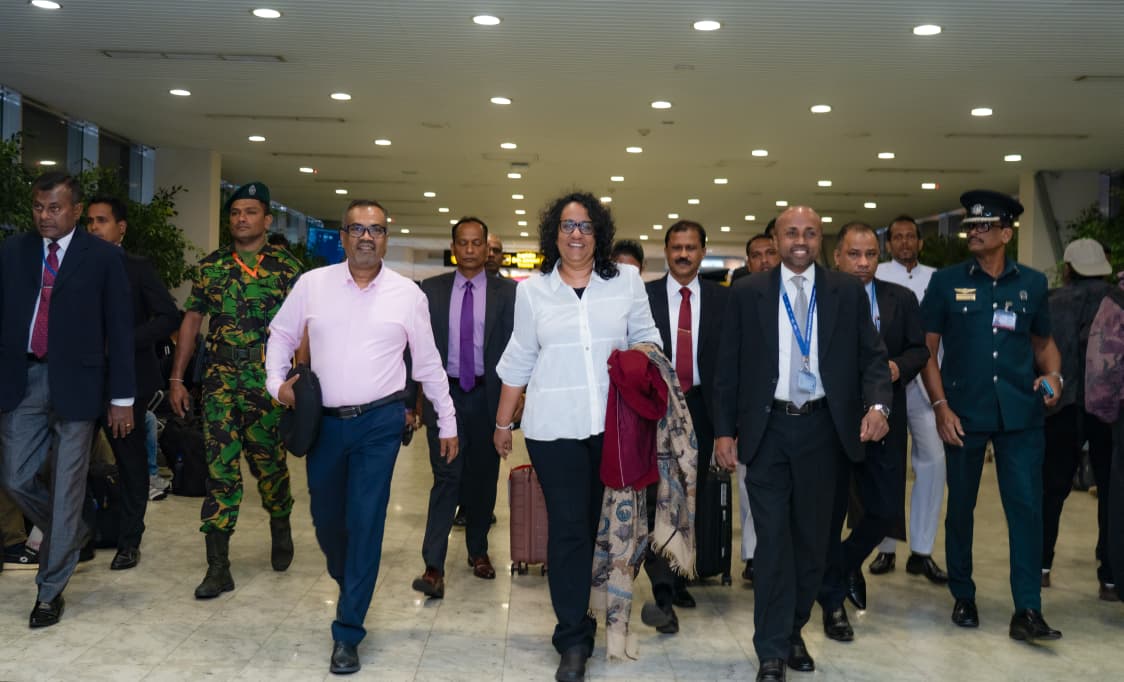
Prime Minister Dr. Harini Amarasuriya departed Sri Lanka on this morning (19 January) to participate in the 56th Annual Meeting of the World Economic Forum (WEF), to be held in Davos-Klosters, Switzerland, from 19 to 23 January 2026.
The World Economic Forum 2026 will be convened under the theme “A Spirit of Dialogue” and will bring together over 3,000 global leaders, including heads of state, government leaders, chief executive officers of leading multinational corporations, policymakers, and technology innovators.
During the visit, the Prime Minister is scheduled to hold a series of high-level bilateral meetings with key international leaders, heads of global institutions, and other distinguished dignitaries.
(Prime Minister’s Media Division)
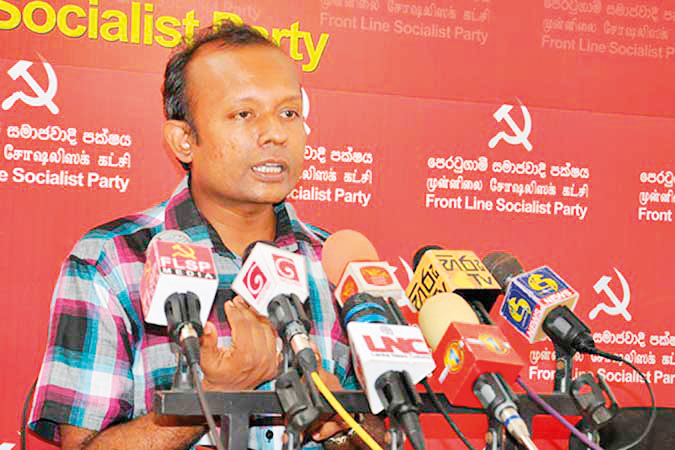
The government is under mounting pressure to release a foreign laboratory report on the controversial coal consignment imported for the Lakvijaya Power Plant, with the Frontline Socialist Party (FSP) accusing the authorities of political interference and tender manipulation.
Speaking to the media after a party meeting in Homagama yesterday, FSP Education Secretary Pubudu Jagoda demanded an immediate explanation for the delay in disclosing the report from a Dutch laboratory, Cotecna, which was commissioned to test samples of the coal stocks in question after doubts were raised about an earlier local laboratory assessment. Jagoda said Cabinet media spokesperson Dr. Nalinda Jayatissa had announced that the report would be submitted by 16 January, but it had yet to be made public.
“The Sri Lankan lab confirmed the coal was substandard and could damage both the environment and power plant machinery. The foreign lab has independently verified the same results, we are told. Yet, political pressure appears to be delaying the release of the report.” He warned that any attempt to issue a false report would eventually be exposed and urged the government and the laboratory to maintain transparency.
SLPP MP D.V. Chanaka told Parliament last week that while 107 metric tonnes of coal were normally required per hour to generate 300 megawatts, but as many as 120 tonnes of newly imported coal were needed to produce the same amount of power due to its lower calorific value. Tests showed the first two shipments had calorific values of 5,600–5,800 kcal/kg, below the required minimum of 5,900 kcal/kg, said.
Jagoda accused the government of tailoring procurement rules to benefit an Indian supplier, citing a drastic reduction in reserve requirements—from one million metric tonnes in 2021 to just 100,000 tonnes in 2025—and alleged previous irregularities by the company, including a 2016 Auditor General finding regarding a rice supply contract and the 2019 suspension of a key agent of the company by the International Cricket Council over match-fixing.
He further criticised systemic manipulation of the coal tender process, including delays in issuing the tender from the usual February-March window to July, and progressively shortening the submission period from six weeks to three, giving an advantage to suppliers with stock on hand.
The Ministry of Energy recently issued an amended tender for 4.5 million metric tonnes of coal for the 2025/26 and 2026/27 periods, following the cancellation of an earlier tender. Jagoda warned that procurement delays and irregularities could trigger coal shortages, higher spot-market purchases, increased electricity costs, and potential power cuts if hydropower falls short.
Jagoda called for urgent investigations into the procurement process, insisting that any mismanagement or corruption should not be passed on to the public.Denying any wrongdoing, the government has said it is waiting for the lab report.
by Saman Indrajith ✍️
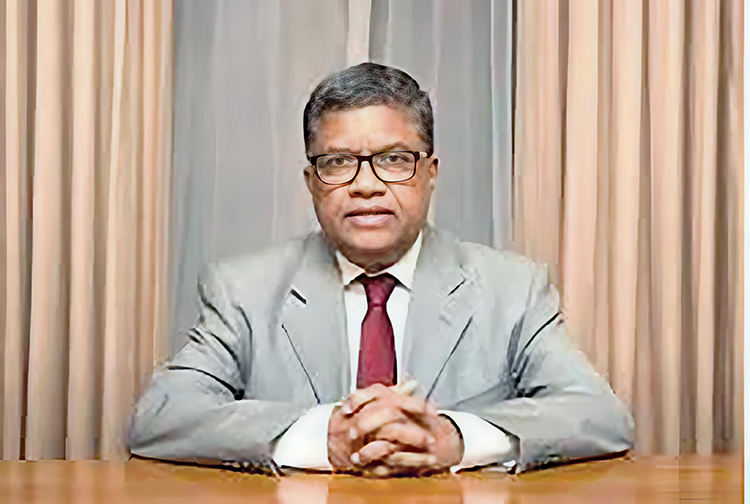
The Communist Party of Sri Lanka yesterday (18) alleged that the US was terrorising countries with unfair tariffs to compel them to align with its bigot policies.
CPSL General Secretary Dr. G. Weerasinghe said so responding to The Island query regarding European countries being threatened with fresh tariffs over their opposition to proposed US take-over of autonomous Danish territory Greenland.
US President Donald Trump has declared a 10% tariff on goods from Denmark, Norway, Sweden, France, Germany, the UK, the Netherlands and Finland with effect from 1 February but could later rise to 25% – and would last until a deal was reached. Targeted countries have condemned the US move.
Dr. Weerasinghe pointed out that none of the above-mentioned countries found fault with the US imposing taxes on countries doing trade with Russia and Iran. Now that they, too, had been targeted with similar US tactics, the CP official said, underscoring the pivotal importance of the world taking a stand against Trump’s behaviour.
Referring to the coverage of the Greenland developments, Dr. Weerasinghe said that news agencies quoted UK Prime Minister Keir Starmer as having said that the move was “completely wrong”, while French President Emmanuel Macron called it “unacceptable.
Dr. Weerasinghe said that Sri Lanka, still struggling to cope up with the post-Aragalaya economic crisis was also the target of discriminating US tariff policy. The top CPSL spokesman said that the recent US declaration of an immediate 25% increase in tariff on imports from countries doing business with Iran revealed the prejudiced nature of the US strategy. “Iran is one of our trading partners as well as the US. Threat of US tariffs on smaller countries is nothing but terrorism,” Dr. Weerasinghe said, stressing the urgent need for the issue at hand to be taken up at the UN.
Responding to another query, Dr. Weerasinghe cited the US targeting India over the latter’s trade with Russia as a case in point. He was commenting on the recent reports on India’s Reliance Industries and state-owned refiners sharply cutting crude oil imports from Russia. The CPSL official said that the EU wouldn’t have even bothered to examine the legitimacy of US tariff action if they hadn’t been targeted by the same action.
Perhaps, those who now complain of US threats over the dispute regarding Greenland’s future owed the world an explanation, Dr. Weerasinghe said. The reportage of the abduction of Venezuela’s President and the first lady underscored that the US intervened because it couldn’t bear the Maduro administration doing trade with China and other countries considered hostile to them, Dr. Weerasinghe said.
The CPSL official said that the NPP couldn’t turn a blind eye to what was happening. Just praising the US wouldn’t do Sri Lanka any good, he said, adding that the Greenland development underscored that the US under Trump was not concerned about the well-being of any other country but pursued an utterly one-sided strategy.
The US dealings with the NPP government, particularly the defence MoU should be examined taking into consideration US tariffs imposed on Sri Lanka at the onset of the second Trump administration and ongoing talks with the US, Dr. Weerasinghe.
By Shamindra Ferdinando ✍️

PM departs Sri Lanka to participate in the 56th World Economic Forum Annual Meeting in Davos-Klosters, Switzerland.

Several killed in Kabul blast, Afghan Interior Ministry says

Senegal beat hosts Morocco to win AFCON 2025 after farcical walk-off

At least six killed in Pakistan as fire rips through Karachi shopping mall

Chile declares ‘state of catastrophe’ as deadly wildfires menace cities

At least 21 killed in Spain after crash involving high-speed trains

‘Dates have the highest sugar content to fight Coronavirus’

Sunday Island 27 December – Headlines

#SundayIsland 17th December – Headlines

Sunday Island – 28th March

Sunday Island Headlines – 21 March

Sunday Island – 21st February – Headlines
-

 Editorial2 days ago
Illusory rule of law
-
 News3 days ago
UNDP’s assessment confirms widespread economic fallout from Cyclone Ditwah
-

 Business5 days ago
Koaloo.Fi and Stredge forge strategic partnership to offer businesses sustainable supply chain solutions
-
 Editorial3 days ago
Crime and cops
-
 Features2 days ago
Daydreams on a winter’s day
-

 Editorial4 days ago
The Chakka Clash
-
 Features2 days ago
Surprise move of both the Minister and myself from Agriculture to Education
-
 Features2 days ago
The Story of Furniture in Sri Lanka