
Business
Shortage of medicines likely to exacerbate from Paracetamol to life-saving drugs: SLCPI

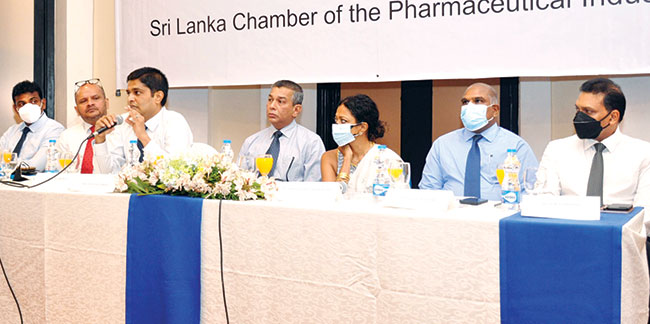
by Sanath Nanayakkare
The current shortage of Paracetamol and Panadol in the market could aggravate to a situation where life-saving drugs would not be available to patients in a few months, Sri Lanka Chamber of the Pharmaceutical Industry (SLCPI) warned yesterday.
“This could happen if the US dollar shortage is not properly addressed and a realistic pricing formula for imported medicines is not introduced forthwith by the authorities,” they said.
“At present, the shortage of medicines is about 5%. One might say it is small or unimportant as to be not worth considering. But in 4-6 weeks from now it could increase to about 25%,” they warned.
SLCPI made these comments at a press briefing held at Taj Samudra Colombo.
“We have a fear. We want to update the general public of Sri Lanka on the current situation with regard to medicine imports because what is on the horizons is not good. Delays at the National Medicines Regulatory Authority (NMRA), the unrealistic price mechanism and the dollar crisis are biting our industry. The dollar crisis is common to every industry, but we also have a serious problem as medicine importers. Until last month, we didn’t have a major crisis. But this month and in the last two weeks, the banks have been advised to prioritise allocation of dollars for fuel purchases and it appears that medicine imports have received de-prioritisation on the list of essential imports. If this trend continues, we will have a serious problem in even importing life-saving drugs. At the moment, it is under control. We have to inform the general public of the evolving situation,” Azam Jaward, Vice President, SLCPI said.
“The last price increase on drugs was allowed in August 2021 when the USD was trading at Rs. 194. Now the dollar has incresed to Rs. 203 which is the ‘published rate’ by the Central Bank of Sri Lanka, but unfortunately there is no mechanism to address the current disparity in the exchange rate. We need asustainable pricing mechanism which addresses the exchange rate, freight rate, current global prices, inflation, cost of fuel etc,” they said.
“Our industry is quite energy-driven. Some drugs need to be stored in temperatures between 2- 8 Celsius. Some need -20 Celsius. If we don’t have electricity, we face big issues. We have to run generators and multiple storage facilities. At present, we are managing it. But all of this depends on the availability of fuel. To run a generator for 7-8 hours a day, we need 2,000 litres of diesel per day,” they said.
“The NMRA charges dollars from us to register a product. They adjust it monthly based on the change of the exchange rate. The government has a fee- charging mechanism based on the US dollar. Then why don’t they do the same for drugs that are imported for sale? These are two conflicting policies,” they argued.
“We don’t need a price increase. Just amend the prices relative to the value of the dollar. For this we need an intervention by the Central Bank. If we can obtain a monthly allocation of USD 25-30 million per month, we believe that we can supply essential drugs to the general public without any disruption,” they said.
“We have had discussions with the authorities on these matters and we have submitted these facts for them to consider, but we have not yet achieved any results other than discussions.There is undue delay at the NMRA in granting the re-registration of products which have been available in the market for a considerable period, and new product registrations. With regulatory fees increasing by an average of 11-fold, the service of the regulator is below expectation,” they said.
Some excerpts of the SLCPI press statement are reproduced below.
“Over 85% of pharmaceutical products are imported, and these imports are paid for by US dollars. The current US dollar shortage in the country has increased the difficulty of importing essential medicines. In addition to this, companies have been unable to pay their dues. As a result, suppliers are no longer interested in supplying to Sri Lanka.”
“The situation is further worsened as banks find it difficult to honour the Letters of Credit (LCs) that are opened to import drugs. Banks delay opening the LCs until there are sufficient dollars. This has resulted in shipments being scheduled according to the availability of dollars and not according to the needs of the patients.”
acceptable pricing mechanism as well as immediately ironing out NMRA red tape for registrations are prerequisites for resolving this crisis.”
SLCPI serves as the representative of over 60 members who account for more than 80% of the private pharmaceutical industry, spanning manufacturers, importers, distributors and retailers. These stakeholders supply Sri Lankan patients with 1,200 molecules from 435 manufacturers from across the world.
SLCPI told The Island that banks ask them to purchase dollars from exporters to finance their medicine imports, but when they reach exporters to buy their dollars, they ask Rs. 245 per US dollar which is the price in the gray market. “So, how can we buy dollars from them and import and sell at controlled prices?” they said.




The Colombo Stock Exchange (CSE) announces the following change in S&P Sri Lanka 20 index constituents made by S&P Dow Jones Indices at the 2026 Mid-Year rebalance.
The exclusion and inclusion as announced by S&P Dow Jones Indices, effective from 22nd June 2026 (after the market close of 19th June 2026) are presented below.
The S&P SL 20 index includes the 20 largest companies, by total market capitalization, listed on the CSE that meet minimum size, liquidity and financial viability thresholds. The constituents are weighted by float-adjusted market capitalization, subject to a single stock cap of 15%, which is employed to reduce single stock concentration.


The S&P SL 20 index has been designed in accordance with international practices and standards. All stocks are classified according to the Global Industry Classification Standard (GICS®), which was co-developed by S&P Dow Jones Indices and MCSI and is widely used by market participants throughout the world.
To be eligible for inclusion, a stock must have a minimum float-adjusted market capitalization of 500 million Sri Lankan rupees (Rs), a six-month median daily value traded of Rs 0.25 million and have positive net income over the 12 months prior to the rebalancing reference date. For information, including the complete methodology, please visit: www.spindices.com
Effective from 22nd June 2026 the stocks in the S&P Sri Lanka 20 in alphabetical order are as above.

The Teejay Group recorded revenue of LKR 60.04 billion during the period, reflecting a 10% year-on-year decline, primarily due to continued softness in global textile demand. This performance was largely impacted by reciprocal tariffs imposed by the United States, intensified pricing pressures across key markets, and the resulting decline in volumes, all of which collectively weighed on topline growth.
Group Gross Profit declined by 36% year-on-year to LKR 5.02 billion, mainly attributable to lower production volumes, underutilization of plant capacity, sustained pricing pressures, and an unfavorable product mix. Together, these factors adversely affected margin performance amid a challenging operating environment.
The Group reported a Profit After Tax (PAT) of LKR 54.7 million, representing a 98% year-on-year decline. This was primarily driven by higher rupee-denominated costs and non-recurring items, provision for doubtful debts, and restructuring costs associated with right-sizing initiatives.
Ajit Gunewardene, Chairman of the Teejay Group said, “The year was marked by persistent global demand softness and pricing pressures, which impacted results. Despite this, we focused on operational efficiency, cost discipline, and strengthening our financial resilience. These actions position the Group to navigate ongoing uncertainty while remaining committed to long-term value creation for our shareholders.”
Despite these near-term challenges, the Teejay Group continues to maintain a strong financial position, supported by disciplined working capital management and a robust liquidity base. As at 31 March 2026, cash and cash equivalents stood at LKR 8.3 billion, while the Group’s net asset base increased by 3% year-on-year to LKR 32.4 billion, reinforcing the resilience of its balance sheet.

Fairfirst Insurance has once again partnered with the Sri Lanka Police K9 Unit, continuing its support for the seventh consecutive year. This partnership reflects the company’s long-standing commitment to giving back to the community.
Through this initiative, Fairfirst will provide comprehensive insurance coverage for the highly trained canines attached to the Sri Lanka Police K9 Unit. These dogs play a critical role in supporting police operations across the country, assisting with crime detection, narcotics investigations, search and rescue missions, and public safety efforts.
As a company that believes business should create a meaningful impact beyond insurance, Fairfirst remains committed to initiatives that support communities and recognise the vital contributions of those who help keep society safe. This shared commitment to protection and responsibility continues to drive the company’s long-standing partnership with the Sri Lanka Police K9 Unit.
Commenting on the continued partnership, Ravishankar Wickneswaran, CEO of Fairfirst Insurance, said, “It is a privilege for us to continue supporting the Sri Lanka Police K9 Unit for the seventh consecutive year. These dogs serve the country with incredible discipline and loyalty, often in challenging situations. Supporting their wellbeing is one small way for us to give back, and it reflects the FairfirstWay of standing by those who protect and serve our communities every day.”
Fairfirst looks forward to continuing this partnership and contributing to the wellbeing of the Sri Lanka Police K9 Unit in the years ahead.

Should not drop someone just to give Sooryavanshi an opportunity: Sitanshu Kotak

Hetmyer, Stoinis and Jasdeep combine to hand Freedom 88-run defeat

Row over alleged theft of donations from India’s landmark Ram temple

Over 40 persons injured in head on crash at Talalla

Turkiye beat US 3-2 with stoppage-time goal in dead rubber

Japan draw 1-1 with Sweden at World Cup to finish second in Group F

‘Dates have the highest sugar content to fight Coronavirus’

Sunday Island 27 December – Headlines

#SundayIsland 17th December – Headlines

Sunday Island – 28th March

Sunday Island Headlines – 21 March

Sunday Island – 21st February – Headlines
-

 News7 days ago
Creditor not yet paid
-
 News7 days ago
Consumers bearing 22% tax burden despite 18% VAT claim: Dr. Harsha de Silva
-

 Features6 days ago
Nanda Pethiyagoda Wanasundara as three generations of family saw her
-

 Features5 days ago
Sri Lanka developing independent hydrographic capabilities
-

 Editorial6 days ago
Fuel crisis: Beyond price debate
-
 Opinion4 days ago
Ranasinghe Premadasa: The man who would not take ‘No’ for an answer
-

 Latest News5 days ago
Sooryavanshi thumps fastest List A fifty as India A win tri-series
-

 News4 days ago
US Assistant Secretary of State for South and Central Asian Affairs meets President