
Business
Sharp pick-up in share trading; CSE turnover hits Rs. 3.35 billion


By Hiran H.Senewiratne
The CSE yesterday saw a sharp pick-up in trade, in terms of turnover and volume, with indices staying positive following Foreign Minister Ali Sabry hinting on the IMF agreement, which is likely to be signed in early January. Assurances are likely to be given by main creditors, China India and Japan, for restructuring of debt, stock market analysts said.
Shares rose over 3 per cent within the first hour of trade, pushed up by strong positive sentiments, following last week’s Expolanka expansion news and speculation on interest rates to be eased in line with inflation, market analysts said.
“Since last week the market is moving on strong positive sentiments on Expolanka and interest rates to fall in line with inflation; this has also brought in some bargain hunting, analysts opined.
Central bank Governor Dr Nandalal Weerasinghe also said market rates should eventually ease despite fears over domestic debt restructuring, as inflation falls, liquidity increases in dollar markets and inter-bank liquidity improves.
Prices in blue-chip counters also showed significant gains and both indices moved upwards. The All- Share Price Index was up by 276 points and S and P SL20 rose by 81.2 points. Turnover stood at Rs 3.35 billion with five crossings.
Those five crossings reported in Overseas Realty, where 98.5 million shares crossed to the tune of Rs 276 million, its shares traded at Rs 14, Lanka IOC 250,000 shares crossed to the tune of Rs 47.5 million and its shares traded at Rs 190, Kelani Tyre 728,000 shares crossed for Rs 40.1 million, its shares traded at Rs 55, hZenid Business Solutions two million shares crossed for Rs 34 million and its shares traded at Rs 17 and CT Holdings 114,000 shares crossed to the tune of Rs 20 million, its shares traded at Rs 175.
In the retail market top seven companies that mainly contributed to the turnover were, Browns Investments Rs 554 million (76.7 million shares traded), Expolanka Holdings Rs 425 million (2.2 million shares traded), Lanka IOC Rs 197 million (one million shares traded), LOLC Finance Rs 158 million (21.2 million shares traded), First Capital Holdings Rs 150 million (5.9 million shares traded), Capital Alliance Rs 143 million (6.7 million shares traded) and First Capital Treasuries Rs 122 million (5.2 million shares traded).During the day 281 million share volumes changed hands in 28000 transactions.
It is said that high net worth and institutional investor participation was noted in Melstacorp and Ceylon Cold Stores. Mixed interest was observed in Expolanka Holdings, Lanka IOC and ACL Cables, while retail interest was noted in Browns Investments, First Capital Holdings and First Capital Treasuries.
The Transportation sector was the top contributor to the market turnover (due to Expolanka Holdings), while the sector index gained 3.97 per cent. The share price of Expolanka Holdings increased by Rs. 7.25 (3.98 per cent) to close at Rs. 189.50.
The Food, Beverage and Tobacco sector was the second highest contributor to the market turnover (due to Browns Investments and Melstacorp), while the sector index increased by 2 per cent. The share price of Browns Investments moved up by 40 cents (6.56 per cent) to close at Rs. 6.50. The share price of Melstacorp appreciated by Rs. 2 (4.38 per cent) to close at Rs. 47.70.
Yesterday, the Central Bank- announced US dollar buying rate was Rs 361.24 and the selling rate Rs 371.72. The Colombo Consumer Price Index showed some decline of 61 per cent in November, while in October it was 66 per cent. Therefore, the inflation has indicated some decline.








By Ifham Nizam
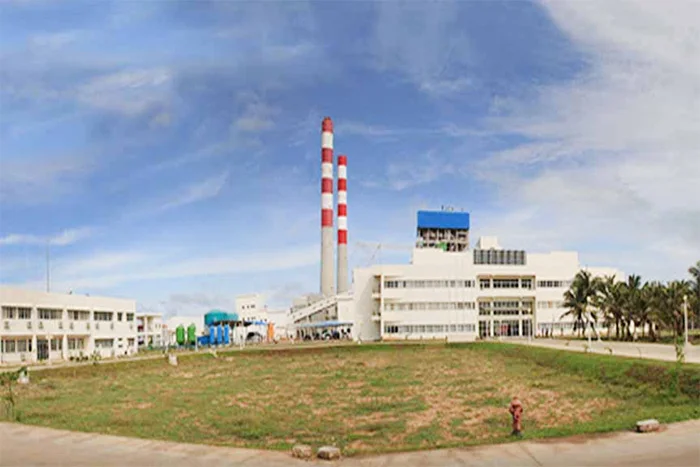
A Rs.160 million-plus diesel discrepancy at the Lakvijaya power plant in Norochcholai has triggered an internal investigation, raising questions over the handling of public funds and the controls governing fuel purchased for electricity generation.
The discrepancy surfaced during an internal audit of diesel supplied to the plant from the Kolonnawa and Sapugaskanda fuel terminals, according to senior officials familiar with the inquiry.
The audit has identified five transactions—two in December 2025 and three in January 2026—in which diesel recorded as delivered to the plant allegedly could not be fully accounted for in its physical stocks.
The investigation is now examining whether these were isolated discrepancies or part of a longer-running practice.
One transaction under scrutiny relates to January 16, when records reportedly showed that 10 diesel bowsers had arrived at the plant. Investigators subsequently found indications that the fuel stock corresponded to only nine bowsers.
A storekeeper responsible for the relevant fuel operation has reportedly been temporarily removed from those duties pending the investigation.
A senior official said investigators were reviewing historical records amid indications that similar discrepancies may have occurred over a longer period. If established, the financial exposure could therefore exceed the Rs.160 million currently identified.
The investigation is comparing fuel-terminal dispatch records, tanker movements, plant-entry records, receiving documents and physical stocks to establish exactly how much fuel was dispatched, received and accounted for.
That audit trail will also be critical in determining who authorised, received and certified the disputed consignments, and whether established controls were followed.
Relevant documents were reportedly transferred from Norochcholai to the company’s Colombo head office on September 26 for further examination, with electricity-sector security personnel assisting in the transfer.
The internal audit has also reportedly uncovered expired chemical stocks worth several hundred thousand rupees in the plant’s stores. Investigators are examining whether further inventory-management irregularities occurred.
The matter was also reportedly taken to the Puttalam Police Special Crimes Investigation Unit on September 26.
When contacted by Puttalam-based journalist Hiran Priyankara Jayasinghe for The Island Financial Review, Lakvijaya Power Plant Manager Nalaka Kumara confirmed that an investigation was under way but declined to provide further details.
The financial issue is direct: if the plant paid for diesel it did not receive, public-sector funds were spent without the electricity sector receiving the corresponding fuel.
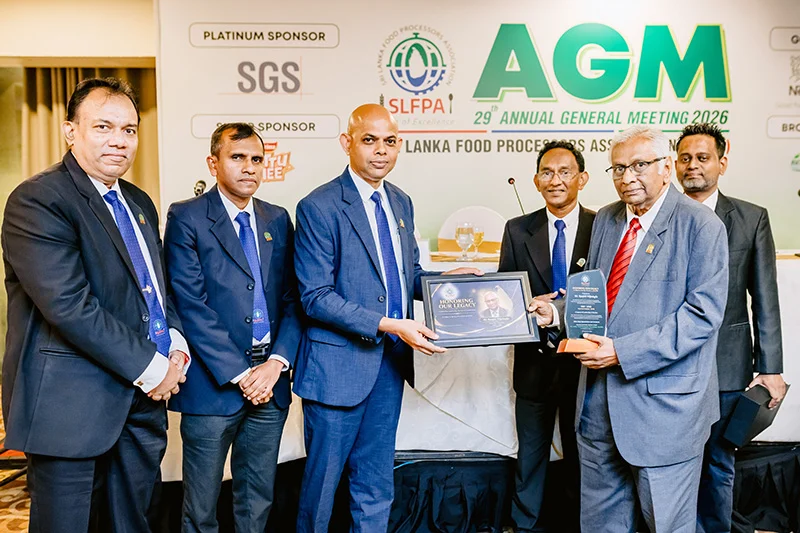
The Sri Lanka Food Processors Association (SLFPA) successfully convened its 29th Annual General Meeting (AGM) on September 23, 2026, at the Water’s Edge Hotel, Battaramulla. Bringing together key industry stakeholders and member organizations, the event served as a platform to review milestone achievements from the 2025/2026 term and outline strategic priorities for the nation’s food and beverage processing sector.
At the AGM, the new Executive Committee for 2027/2028 was appointed, comprising: Honorary President Aruna Senanayake C.W. Mackie PLC Imme. Past President Thusith Wijesinghe Trans Continental Packaging & Commodities (Pvt) Ltd.
President Elect Nadishan Guruge Meadlee Trading Co. (Pvt) Ltd.
1st Vice President Damitha Perera Forbes & Walkers Commodity Brockers (Pvt) Ltd.
2nd Vice President Rasika Seneviratne Diesel & Motor Engineering PLC 3rd Vice President Deepal De Alwis Neochem International (Pvt) Ltd.
Honorary Secretary Amila Weerasinghe Nestle Lanka Limited.
Asst. SecretaryDineth Alahakoon Country Style Foods (Pvt) Ltd.
Honorary Treasurer Sameera Jayathilaka Westmann Engineering Company (Pvt) Ltd.
Asst. Treasurer Niroshan Dalpethado C D De Fonseka & Sons (Pvt) Limited. In addition to the above office bearers, the following ten Executive Committee Members were appointed:
Sanjeewa De Silva Unilever Sri Lanka Limited Sheran De Alwis MA’S Tropical Food Processing (Pvt) Limited
Thusitha Ekanayake Anods Cocoa (Pvt) Ltd.
Vijitha Govinna Plenty Foods (Pvt) Limited Ms. Praharshi Wickramasekara International Commodity Exports (Pvt) Ltd.
Sanjeewa Niroshan SGS Lanka (Pvt) Ltd. Kushan Amarasinghe Finagle Lanka (Pvt) Ltd.
Rangajeewa Hettiarrachchi Fonterra Brands Lanka (Pvt) Ltd.
Harindra Abeyrathna Vision Technologies International (Pvt) Ltd. Thilina Weerasekara Ceylon Cold Stores PLC
The event was proudly supported by key industry partners, with SGS Lanka (Pvt) Ltd serving as the Platinum Sponsor. Unilever Sri Lanka Ltd. and Nestlé Lanka Ltd. joined as Gold Sponsors, Ceylon Agro Industries – Prima as the Silver Sponsor, while Lanka Exhibition & Conference Services (LECS) and Hero Nature Products (Pvt) Ltd., supported as Bronze Sponsors.
The proceedings concluded with a vote of thanks delivered by Hony. Secretary Deepal De Alwis, followed by cocktails and a fellowship networking session, providing an opportunity for members to connect and strengthen industry ties.

New premium ride option expands Uber’s portfolio from affordable Moto and Tuk rides to premium on-demand travel
Uber announced the launch of Uber Black in Sri Lanka, bringing its premium ride experience to the country for the first time. Designed as the “business class of back seats,” Uber Black combines premium vehicles and highly-rated drivers for riders looking for greater comfort, quality and a more elevated travel experience.
The launch comes as demand for premium products and experiences grows across Sri Lanka, with consumers seeking greater choice and quality in their everyday experiences. Uber Black brings this choice to on-demand mobility, whether for an airport journey, an important business meeting, a special occasion or simply when riders want to travel in greater comfort.

What happened on diverted Flydubai flight from Dubai to Tel Aviv?

“Vishishta Seva Vibhushana” medals presented under President’s patronage

Hindu Priests Seek State Intervention for Sivarasa Anojan

“A Nation United” National Steering Committee meets under President’s Chairmanship

PM declares open 2nd Day of National AI Expo 2026

Waste management and recycling to receive priority in the 2027 Budget – PM

‘Dates have the highest sugar content to fight Coronavirus’

Sunday Island 27 December – Headlines

#SundayIsland 17th December – Headlines

Sunday Island – 28th March

Sunday Island Headlines – 21 March

Sunday Island – 21st February – Headlines
-

 Latest News7 days ago
Showers above 100 mm are likely at some places in the Western, Sabaragamuwa, Central and North-western provinces and in Galle and Matara Districts
-

 Editorial7 days ago
Crimes punished and unpunished
-

 Features6 days ago
Beyond traditional jobs: Why Sri Lanka needs to facilitate the gig economy
-

 Editorial5 days ago
Birth of a bad law
-

 News3 days ago
Police remove Thileepan statue in Jaffna
-
 Latest News6 days ago
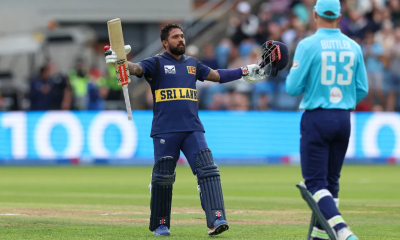
Kusal, Wellalage star as Sri Lanka defend 322 in Headingley thriller
-

 News5 days ago
TIN mandatory for key transactions from Nov. 1
-

 News7 days ago
IMF: Sri Lanka on course for 2027 market return