
Business
Shaping the future of Sri Lanka’s insurance industry


Sri Lanka’s insurance industry today stands at a decisive and promising crossroads. We are a country with a commendably high general literacy rate, a strong foundation on which to build. While our financial literacy, particularly in the area of insurance, has room to grow, this also presents us with an exciting opportunity. By addressing this gap, we can identify new avenues for industry growth and strengthen national resilience. As the Insurance Association of Sri Lanka (IASL), we see this moment as an opportunity to drive impactful change. Our vision, as a collective, is to expand penetration, embrace technology and build lasting trust through greater financial awareness.
The future of Sri Lanka’s insurance industry
At present, Sri Lanka’s insurance penetration is just over one per cent of GDP, a figure that compares poorly even with many of our regional peers. India and Indonesia, for example, have already surpassed us despite their larger and more complex markets. Over the next three years, we aim to double this penetration in Sri Lanka.
To achieve this, we are working on developing new products and channels that can reach segments of the population which have remained underserved. From micro-insurance and telco-driven products that appeal to lower and middle-income households, to tailor-made solutions for high-net-worth individuals, our approach must be inclusive and adaptive. Ultimately, our goal is to increase GDP contribution while ensuring that every Sri Lankan has access to the protection and peace of mind that insurance provides.
Our vision also extends beyond numbers. Inspired by India’s commitment to insuring its population, we aspire to “insure the nation.” I believe that more than half of Sri Lanka’s working population is already touched by insurance in some form, whether through micro products, corporate schemes or motor coverage. But vast gaps remain, especially in areas such as household property insurance, where coverage is low unless tied to mortgages. These are the areas where the industry must redouble its efforts.
Innovation, technology and digitalisation
Technology will be at the heart of this transformation. The global insurance industry is racing towards digitisation, data analytics, and automation and Sri Lanka must keep pace. Digital platforms enable faster processes, more accurate risk assessments and a seamless customer experience.
Within IASL, we are prioritising digitalisation initiatives that will streamline operations across the industry and align our practices with global standards. A key part of this effort is ensuring that the entire industry is ready to comply with the new IFRS 17 guidelines by January next year. While some companies are well on their way to readiness, others are still preparing.
Artificial intelligence, in particular, presents both opportunities and challenges. If used effectively, AI can improve underwriting, enhance claims management and help insurers understand risks more precisely, allowing for fairer and more accurate pricing. This benefits both the customer, who pays a premium that reflects their real risk and the insurer, who is protected against unsustainable losses.
Yet Sri Lanka still faces
hurdles in harnessing the full potential of AI. Much of our health and property data remains in paper-based formats, making it challenging to analyze. Hospitals, for instance, are only slowly adopting digital records, and there is little standardisation across institutions. To truly reap the benefits of AI, we must invest in digitizing critical infrastructure and data systems, ensuring that information can be collected, shared and analyzed responsibly.
Building consumer trust and financial literacy in insurance
Equally important to our growth agenda is the task of strengthening financial literacy and consumer trust. While awareness of insurance has improved in recent years, particularly in the wake of the pandemic and the economic downturn, many Sri Lankans still view insurance with scepticism. Some see it as a luxury, others doubt whether claims will be honoured. Additionally, a worrying number of policies lapse after the first year due to poor need-based assessments at the point of sale. These issues erode confidence in the industry as a whole.
To change this narrative, IASL has launched awareness programs aimed at educating both young people and adults on the importance of financial planning and protection both online and on ground. Furthermore, earlier this year, the Insurance Regulatory Commission of Sri Lanka initiated a series of regional awareness sessions, which we as the IASL were very pleased to join in as we jointly conducted the first awareness session in Matara and a second program is planned for Jaffna later this year. Our goal is to hold such sessions every quarter, reaching schools, universities and community groups. By starting with the younger generation, we can help instill a culture of financial discipline and ensure that future decision-makers recognize the role of insurance in securing their lives and families.
The insurance industry cannot achieve its objectives in isolation. We are actively working to build stronger partnerships with reinsurers, brokers, banks, telecommunications providers, healthcare institutions and IT companies. Through bancassurance models, digital hospital networks and cross-sector CEO forums, we are aiming for a more connected ecosystem that can expand access to insurance while improving service delivery.
At the same time, we must recognize the importance of discipline and ethical conduct within our industry. Regulators are stepping in with stricter frameworks, such as mandatory welcome calls, customer satisfaction tracking and more rigorous need-based analysis, to prevent mis-selling and enhance customer confidence. IASL fully supports these reforms and has gone a step further by maintaining an industry-wide database to prevent unethical advisors from moving unchecked between companies. By tightening standards and raising accountability, we are determined to ensure that every customer receives the value and protection they are promised.
The essence of this vision is a call to every Sri Lankan, which is not to view insurance as a luxury, but as a vital necessity for a secure future; an indispensable financial safety net which helps one surmount untold hardships if life were to throw a curveball. It is the peace of mind that allows you to face an uncertain future with confidence. It relieves the burden on government services, protects families from financial ruin and ensures that hard-earned assets are preserved. Whether it is life, health, retirement or property coverage, adequate insurance is one of the most responsible decisions an individual can make.
Sri Lanka has much to learn from developed markets, where insurance penetration is far higher and the benefits are widely understood. By combining innovation, technology, financial literacy and strong governance, we too can build an industry that secures the well-being of our nation. The journey ahead will not be easy, but with determination and collaboration, we can ensure that every Sri Lankan enjoys the protection and peace of mind that insurance provides.
(The writer is the President of the Insurance Association of Sri Lanka)
By Lasitha Wimalaratne ✍️


By Ifham Nizam
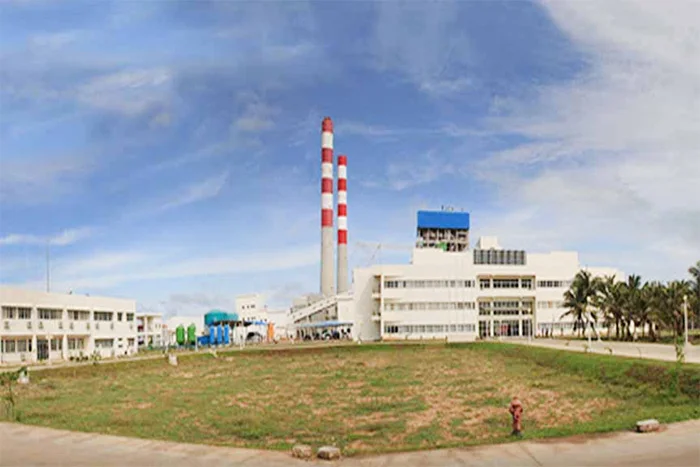
A Rs.160 million-plus diesel discrepancy at the Lakvijaya power plant in Norochcholai has triggered an internal investigation, raising questions over the handling of public funds and the controls governing fuel purchased for electricity generation.
The discrepancy surfaced during an internal audit of diesel supplied to the plant from the Kolonnawa and Sapugaskanda fuel terminals, according to senior officials familiar with the inquiry.
The audit has identified five transactions—two in December 2025 and three in January 2026—in which diesel recorded as delivered to the plant allegedly could not be fully accounted for in its physical stocks.
The investigation is now examining whether these were isolated discrepancies or part of a longer-running practice.
One transaction under scrutiny relates to January 16, when records reportedly showed that 10 diesel bowsers had arrived at the plant. Investigators subsequently found indications that the fuel stock corresponded to only nine bowsers.
A storekeeper responsible for the relevant fuel operation has reportedly been temporarily removed from those duties pending the investigation.
A senior official said investigators were reviewing historical records amid indications that similar discrepancies may have occurred over a longer period. If established, the financial exposure could therefore exceed the Rs.160 million currently identified.
The investigation is comparing fuel-terminal dispatch records, tanker movements, plant-entry records, receiving documents and physical stocks to establish exactly how much fuel was dispatched, received and accounted for.
That audit trail will also be critical in determining who authorised, received and certified the disputed consignments, and whether established controls were followed.
Relevant documents were reportedly transferred from Norochcholai to the company’s Colombo head office on September 26 for further examination, with electricity-sector security personnel assisting in the transfer.
The internal audit has also reportedly uncovered expired chemical stocks worth several hundred thousand rupees in the plant’s stores. Investigators are examining whether further inventory-management irregularities occurred.
The matter was also reportedly taken to the Puttalam Police Special Crimes Investigation Unit on September 26.
When contacted by Puttalam-based journalist Hiran Priyankara Jayasinghe for The Island Financial Review, Lakvijaya Power Plant Manager Nalaka Kumara confirmed that an investigation was under way but declined to provide further details.
The financial issue is direct: if the plant paid for diesel it did not receive, public-sector funds were spent without the electricity sector receiving the corresponding fuel.
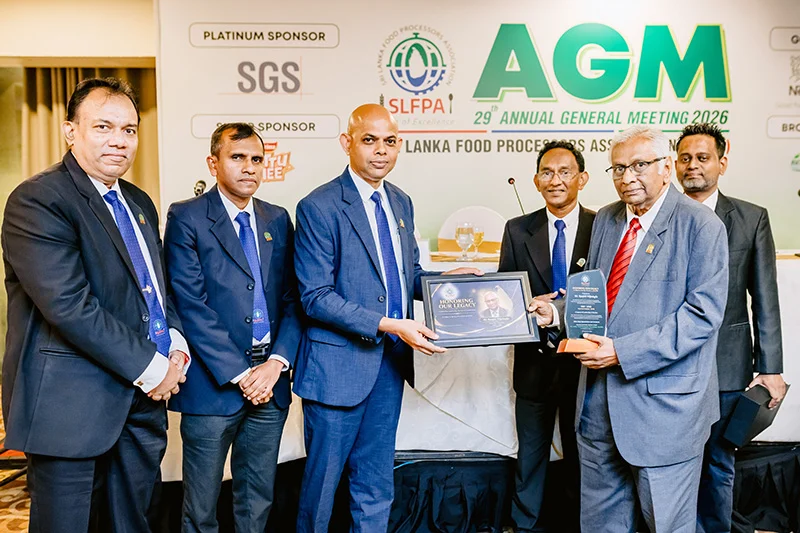
The Sri Lanka Food Processors Association (SLFPA) successfully convened its 29th Annual General Meeting (AGM) on September 23, 2026, at the Water’s Edge Hotel, Battaramulla. Bringing together key industry stakeholders and member organizations, the event served as a platform to review milestone achievements from the 2025/2026 term and outline strategic priorities for the nation’s food and beverage processing sector.
At the AGM, the new Executive Committee for 2027/2028 was appointed, comprising: Honorary President Aruna Senanayake C.W. Mackie PLC Imme. Past President Thusith Wijesinghe Trans Continental Packaging & Commodities (Pvt) Ltd.
President Elect Nadishan Guruge Meadlee Trading Co. (Pvt) Ltd.
1st Vice President Damitha Perera Forbes & Walkers Commodity Brockers (Pvt) Ltd.
2nd Vice President Rasika Seneviratne Diesel & Motor Engineering PLC 3rd Vice President Deepal De Alwis Neochem International (Pvt) Ltd.
Honorary Secretary Amila Weerasinghe Nestle Lanka Limited.
Asst. SecretaryDineth Alahakoon Country Style Foods (Pvt) Ltd.
Honorary Treasurer Sameera Jayathilaka Westmann Engineering Company (Pvt) Ltd.
Asst. Treasurer Niroshan Dalpethado C D De Fonseka & Sons (Pvt) Limited. In addition to the above office bearers, the following ten Executive Committee Members were appointed:
Sanjeewa De Silva Unilever Sri Lanka Limited Sheran De Alwis MA’S Tropical Food Processing (Pvt) Limited
Thusitha Ekanayake Anods Cocoa (Pvt) Ltd.
Vijitha Govinna Plenty Foods (Pvt) Limited Ms. Praharshi Wickramasekara International Commodity Exports (Pvt) Ltd.
Sanjeewa Niroshan SGS Lanka (Pvt) Ltd. Kushan Amarasinghe Finagle Lanka (Pvt) Ltd.
Rangajeewa Hettiarrachchi Fonterra Brands Lanka (Pvt) Ltd.
Harindra Abeyrathna Vision Technologies International (Pvt) Ltd. Thilina Weerasekara Ceylon Cold Stores PLC
The event was proudly supported by key industry partners, with SGS Lanka (Pvt) Ltd serving as the Platinum Sponsor. Unilever Sri Lanka Ltd. and Nestlé Lanka Ltd. joined as Gold Sponsors, Ceylon Agro Industries – Prima as the Silver Sponsor, while Lanka Exhibition & Conference Services (LECS) and Hero Nature Products (Pvt) Ltd., supported as Bronze Sponsors.
The proceedings concluded with a vote of thanks delivered by Hony. Secretary Deepal De Alwis, followed by cocktails and a fellowship networking session, providing an opportunity for members to connect and strengthen industry ties.

New premium ride option expands Uber’s portfolio from affordable Moto and Tuk rides to premium on-demand travel
Uber announced the launch of Uber Black in Sri Lanka, bringing its premium ride experience to the country for the first time. Designed as the “business class of back seats,” Uber Black combines premium vehicles and highly-rated drivers for riders looking for greater comfort, quality and a more elevated travel experience.
The launch comes as demand for premium products and experiences grows across Sri Lanka, with consumers seeking greater choice and quality in their everyday experiences. Uber Black brings this choice to on-demand mobility, whether for an airport journey, an important business meeting, a special occasion or simply when riders want to travel in greater comfort.

Waste management and recycling to receive priority in the 2027 Budget – PM

Rain stays away as India and Sri Lanka look for fair contest to enter final

Gold winner Tharanga gets brand-new Honda Vezel from SLAAJ

Showers above 50 mm are likely at some places inthe Uva, Eastern and Central provinces and in Polonnaruwa and Mullaittivu districts after 1.00 p.m.

Civil society activist accuses govt. of favouring Ven. Gnanasara

More cops than cones

‘Dates have the highest sugar content to fight Coronavirus’

Sunday Island 27 December – Headlines

#SundayIsland 17th December – Headlines

Sunday Island – 28th March

Sunday Island Headlines – 21 March

Sunday Island – 21st February – Headlines
-
 Latest News6 days ago
Showers above 100 mm are likely at some places in the Western, Sabaragamuwa, Central and North-western provinces and in Galle and Matara Districts
-

 Editorial7 days ago
Crimes punished and unpunished
-

 Features6 days ago
Beyond traditional jobs: Why Sri Lanka needs to facilitate the gig economy
-

 Editorial5 days ago
Birth of a bad law
-

 News3 days ago
Police remove Thileepan statue in Jaffna
-
 Latest News6 days ago
Kusal, Wellalage star as Sri Lanka defend 322 in Headingley thriller
-

 News5 days ago
TIN mandatory for key transactions from Nov. 1
-

 News7 days ago
IMF: Sri Lanka on course for 2027 market return