
News
Several opposition parties to work together in areas where they share common ground

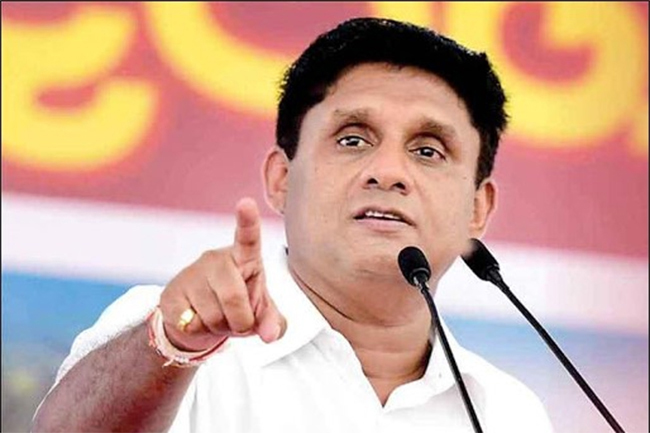
SJB and Opposition Leader Sajith Premadasa Wednesday told a Colombo meeting attended by several opposition parties and groups sharing common ground on forthcoming legislation that the proposed Anti-Terrorist law now moved to the back burner by the government endangered Sri Lanka’s entire 22 million population of being labeled terrorists.
The meeting at the Mandarin Hotel in Colombo on World Media Day was attended, in addition to the SJB by SLMC Leader Rauf Hakeem, SLPP dissidents Prof. GL Peiris, Mr. Gevindu Cumaranatunga, Ven. Athureliya Ratana, Chandima Weerakkody, SJBs Lakshman Kiriella, Ranjith Maddumabandara,Imthiyaz Bakeer Markar, Harshana Rajakaruna, Gyanatha Karunathilake and a representative of the Kandurata Janata Party’s leader C Chandrasekran.
Premadasa said that despite some differences among them, they shared a lot of common ground on many matters related to what the government was doing and they would act together to resist such developments.
“Different political parties have their own standpoints on many matters,” Premadasa said. “But today we have to come together on a number of issues that are nationally important. The Broadcasting Authority Act the government is preparing today for media control, is one example. We are all of the view that it will deal a death blow to media freedom. So also the Anti-Terrorism Act to democracy.”
SLMC Leader Rauf Hakeem said that there was no need for a new anti-terror law. Emergency law provisions under the Public Security Ordinance are sufficient to counter threats of terrorism. Minority parties in the opposition have a strong position on the Anti-Terrorism Act, he said. It is their position that any act of terrorism could be controlled through laws such as the Penal Code, the Criminal Law Provisions Act and the Evidence Act.”
Prof. GL Peiris raised the X-Pess Pearl issue that had created massive environmental devastation and will come up for discussion in parliament next week. The possibility of obtaining USD 6.4 million damages (not a loan) has been endangered by what the government is doing. This was over double the IMF’s Extended Fund Facility and much worse than the Central Bank bond scam.
Many questions on this issue must be raised and presented to the people to build up massive public opinion.
SLPP dissident MP Gevindu Cumaratunga said that the attention must be paid during parliamentary discussions to the X-Press Pearl matter and the unconstitutional Central Bank Act as determined by the courts.
“Only one day has been reserved for the debate on the Central Bank Act. The court suggested alternatives to all 46 basic clauses. This could be passed subject to those alternative proposals being adopted. The Speaker announced this determination distorting its meaning. After MPs protested about this, it had to be read again,” he said.
SLPP dissident MP Aturaliye Ratana thero said that opposition parties must come together to find common answers to the country’s present problems.
“In today’s world, there is no left-right divides. At this time, there is a major issue on why the Anti-Terrorism Act is being presented when a solution should be sought for the present crisis,” he said.


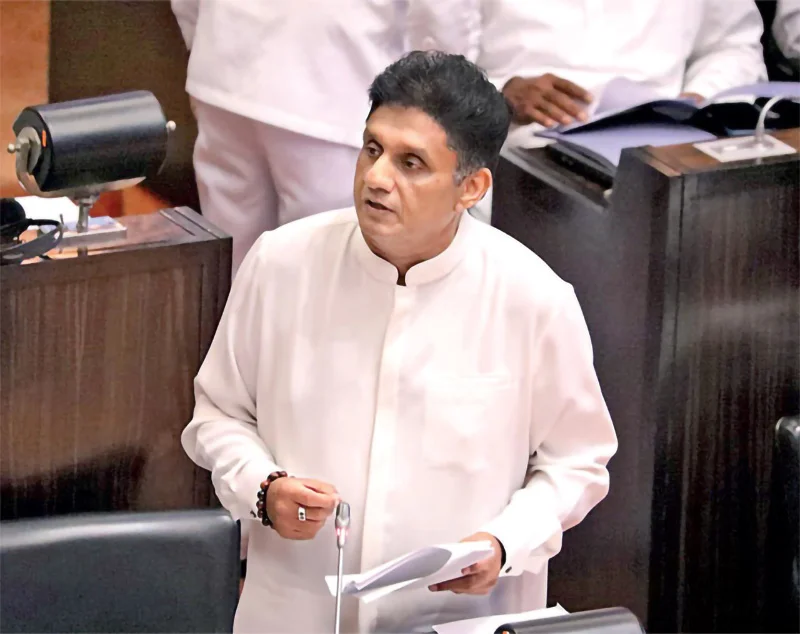
Opposition and SJB Leader Sajith Premadasa yesterday raised concerns over the recent suspension of Parliament’s Deputy Secretary General and Chief of Staff, G.K.A. Chaminda Kumara Kularatne, alleging that the process appeared to be mala fide. Addressing Speaker Jagath Wickramaratne in Parliament, Premadasa said that the existence of a personal disagreement between the Speaker and the suspended official had created a potential conflict of interest.
Premadasa said disciplinary action against senior parliamentary officials had to be taken in keeping with established parliamentary precedents. He also questioned the legality and propriety of a lower-ranking official leading an inquiry against a senior officer.
“For the first time, we are witnessing a rift between the Speaker and the staff of the Secretary-General. All parties must step back, act democratically and ensure that the fundamental rights of Chaminda Kularatne are safeguarded,” he added.
ITAK Batticaloa District MP Shanakiyan Rasamanickam said Kularatne had not been given an opportunity to respond to the allegations made against him.
“This is a disgraceful situation. A complaint has been lodged against you with the Bribery Commission. Parliament is the supreme institution of democracy in this country, and the precedent being created here is dangerous,” Rasamanickam said, addressing the Speaker.
SJB Kandy District MP Chamindranee Kiriella said the Speaker was duty-bound to inform the House before disciplinary action was taken against a parliamentary official. SJB MP Ajith P. Perera said it was unethical for the Speaker to assume a leadership role in the inquiry, and called for the matter to be entrusted to an independent authority.
Responding on behalf of the Government, Chief Government Whip and Health and Mass Media Minister Dr Nalinda Jayatissa said the chief investigating officer, S.K. Liyanage, an Additional Secretary, had been appointed by the Staff Advisory Committee on 25 August, 2025. He said Liyanage had been selected from a pool of qualified officers at the Ministry of Public Administration and had prior experience in conducting investigations.
Leader of the House and Transport Minister Bimal Rathnayake said the Staff Advisory Committee had agreed on the respective powers of parliamentary officials, noting that the Secretary General would hold powers equivalent to those of Ministry Secretary, while the Deputy Secretary General would hold powers equivalent to those of an Additional Secretary.
“There is no irregularity in the conduct of the investigation or in the appointment of the investigating officers,” Rathnayake said.
On 24 January, 2026, Parliament announced the immediate suspension of Deputy Secretary General and Chief of Staff Chaminda Kularatne with effect from 23 January, citing concerns relating to his appointment. Kularatne had assumed duties on 15 September, 2023.
On Monday, Kularatne filed a complaint with the Commission to Investigate Allegations of Bribery or Corruption against Speaker Jagath Wickramaratne, alleging corruption. His legal counsel, Attorney-at-Law Mithun Dias, said the complaint had been filed against the Speaker in his personal capacity and not against the government.
However, Dr Jayatissa told the House that the investigation into Kularatne was based on concerns relating to his appointment, qualifications and the process by which he had been confirmed in that post and was not linked to any personal dispute with the Speaker.
By Saman Indrajith
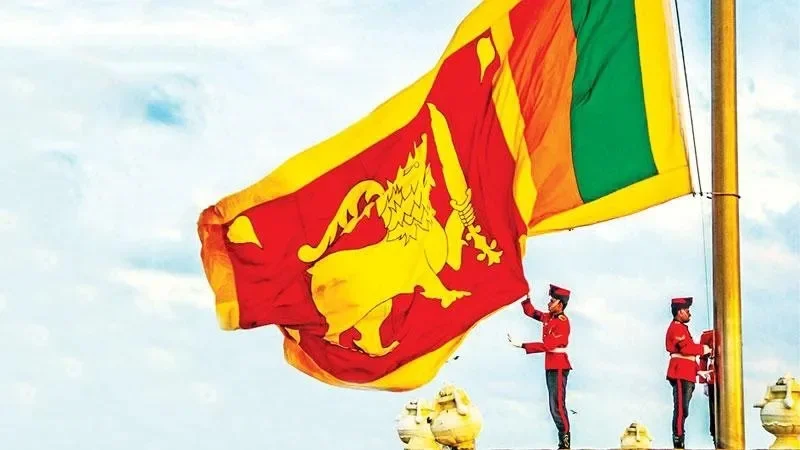
The 78th Independence Day celebrations in the Central Province are scheduled to be held today from 8:00 AM at the Bogambara Stadium, Kandy.
The celebrations are jointly organised by the Central Provincial Council and the Kandy District Secretariat. The Governor of the Central Province, Prof. S.B.S. Abeykoon, is expected to grace the occasion as the Chief Guest.
The event will also see the participation of Kandy District Members of Parliament, the Chief Secretary of the Central Province, Mr. Ajith Premathilake, as well as representatives from the Tri-Forces, Police, school students, and various voluntary organisations.
The ceremony will feature a formal parade and cultural performances by school children.
By S.K. Samaranayake
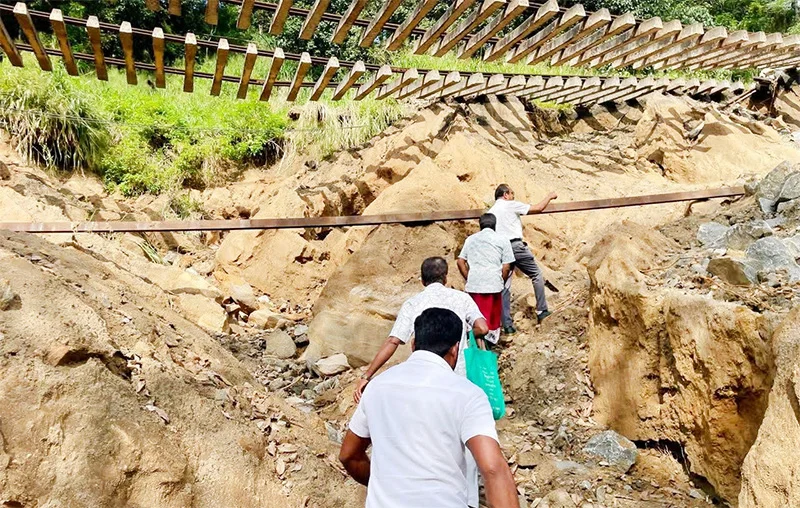
Minister of Transport, Highways, and Urban Development, Bimal Rathnayake, has announced that the reconstruction of the Colombo-Kandy railway line, which was severely damaged by landslides in the Balana and Kadugannawa areas, will be completed within this year to restore normal train services.
The Minister made this statement during the Kandy District Development Committee meeting held at the District Secretariat. He noted that work will commence following the observations and technical reports provided by the National Building Research Organisation (NBRO) regarding the stability of the landslide-affected areas.
Financial Management and Development
Minister Rathnayake emphasised that the government possesses the necessary funds for development projects.
“Our government has the funds. However, all officials must ensure these funds are managed efficiently so that they are fully utilised for development, without being returned to the Treasury at the end of the year,” he stressed.
Improvements in Public Transport
Highlighting the progress in the transport sector, the Minister shared several key updates
• Recruitment: 700 new employees have been recruited to the Sri Lanka Transport Board (SLTB) and are currently undergoing training.
• School Transport: Steps are being taken to strengthen the ‘Sisu Sariya’ school bus service within the Kandy District.
• Infrastructure: The reconstruction of the Peradeniya Black Bridge (Kalu Paalama), which was damaged during the ‘Ditwah’ disaster, is nearing completion.
Welfare facilities for Private Transport Workers
The Minister also revealed plans to support the welfare of private bus drivers and conductors.
“We must look after the workers in the private transport sector as well. We are planning to establish a welfare fund for them and are taking steps to include them in the Employees’ Provident Fund (EPF) system,” he added.
Concluding his remarks, the Minister urged state officials to perform their duties responsibly and ensure that the inefficiencies seen under previous administrations do not recur.
By S.K. Samaranayake

BCB receives investigation report on sexual misconduct allegation

Trump confirms talks with Iran as US military shoots down Iranian drone

Shower will occur in the Northern, North-central, Eastern and Uva provinces and in Nuwara-Eliya and Matale districts

House erupts over suspension of Deputy Secretary General

78th Independence Day celebrations at Bogambara Stadium

Colombo-Kandy railway line to be fully restored this year – Minister Bimal

‘Dates have the highest sugar content to fight Coronavirus’

Sunday Island 27 December – Headlines

#SundayIsland 17th December – Headlines

Sunday Island – 28th March

Sunday Island Headlines – 21 March

Sunday Island – 21st February – Headlines
-
 Opinion6 days ago
Sri Lanka, the Stars,and statesmen
-
 Business7 days ago
Climate risks, poverty, and recovery financing in focus at CEPA policy panel
-

 Business5 days ago
Hayleys Mobility ushering in a new era of premium sustainable mobility
-

 Business2 days ago
SLIM-Kantar People’s Awards 2026 to recognise Sri Lanka’s most trusted brands and personalities
-
 Business5 days ago
Advice Lab unveils new 13,000+ sqft office, marking major expansion in financial services BPO to Australia
-
 Business5 days ago
Arpico NextGen Mattress gains recognition for innovation
-

 Business4 days ago
Altair issues over 100+ title deeds post ownership change
-

 Business4 days ago
Sri Lanka opens first country pavilion at London exhibition